🇹🇷 Türkçe | yorgan sandığı ve taşınmalar boyunca eve eşlik eden hatırası: neden bugün yeniden ilgi görüyor
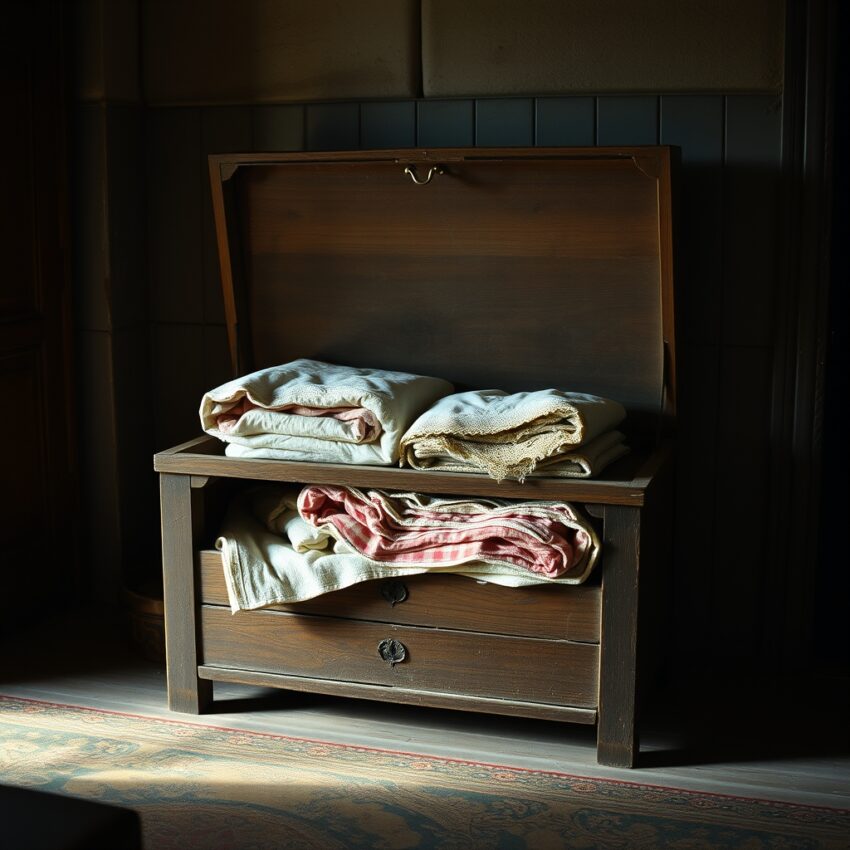
Bir zamanlar evin en ağır ama en sessiz eşyalarından biri yorgan sandığıydı. Yalnızca yün yorganların, dantel bohçaların ya da kışlık örtülerin konduğu bir saklama yeri değildi; evin düzenini ve ailenin geçmişini taşıyan büyük bir hafıza kutusuydu. Odanın bir kenarında duran sandığın kapağı açıldığında naftalin kokusu, sabunla temizlenmiş kumaşların serinliği ve yılların usulca katlanmış izleri yayılırdı. Üzerine bazen bir örtü serilir, bazen misafir geldiğinde oturulacak ek yer gibi kullanılır, bazen de çocukların gözünde içinde sır saklayan bir eşya gibi büyürdü. Taşınmalar olduğunda ise en çok dikkat edilen parçalardan biri yine oydu; çünkü yalnız eşya değil, evin kendisini temsil ediyordu.
Obje Hikayeleri içinde yorgan sandığını özel kılan, işlevi ile duygusu arasındaki sıkı bağdır. Bir dolap gibi sadece depolamaz; nesneleri aile hikâyesinin parçası haline getirir. Gelin çeyizinin en özenli parçaları, bebek battaniyeleri, kullanılmayan ama atılmaya da kıyılamayan örtüler, çoğu kez bu sandığın içinde saklanırdı. Bu yüzden her taşınmada sandığın da dikkatle taşınması, yalnız pratik bir zorunluluk değil; geçmişe gösterilen saygıydı. Kamyon kasasına yüklenirken köşeleri korunur, yeni eve girince önce nereye konacağı düşünülürdü. Bir eşyanın o kadar çok eve eşlik etmesi, onu sıradan kullanım nesnesinden çıkarıp ailenin dolaşan tanığına dönüştürürdü.
Bugün yeniden ilgi görmesinin sebebi de biraz burada yatıyor. İnsanlar artık yalnız yeni olanı değil, iz taşıyanı da arıyor. Yorgan sandığı, seri üretim mobilyaların arasında yaşanmışlık hissi veren az sayıdaki objeden biri olarak öne çıkıyor. Ahşabındaki çizikler, menteşesindeki ses, kapağı kaldırınca duyulan eski kumaş kokusu; hepsi ona ev içi bir derinlik kazandırıyor. Modern evlerde bazen sehpa, bazen oturma bankı, bazen de dekoratif saklama alanı olarak yeniden kullanılması, aslında geçmişle bugünün aynı odada buluşma isteğini gösteriyor. İnsanlar o sandıkta sadece eşya değil; taşınmalar boyunca dağılmadan kalmış bir aile sürekliliği görüyor.
Yorgan sandığının hatırası bu yüzden yalnız nostaljik değil, aynı zamanda öğreticidir. Ev dediğimiz şeyin yalnız duvarlardan değil, kuşaktan kuşağa aktarılan eşyalardan da kurulduğunu hatırlatır. Bir ev taşınırken gardıroplar değişebilir, perdeler yenilenebilir, halılar başka renge dönebilir; ama sandık aynı kalır ve bulunduğu her yere biraz önceki evin havasını taşır. Bugün ona duyulan ilgi, belki de hızla değişen hayat içinde sabit kalmış bir iz arayışıdır. Yorgan sandığı eve yalnız eşlik etmedi; eve süreklilik duygusu verdi. Bu yüzden yeniden sevilmesi şaşırtıcı değil, neredeyse gecikmiş bir hatırlayıştır.
🇬🇧 English | The Memory of the Quilt Chest Accompanying the Home Through Every Move: Why Is It Drawing Interest Again Today?
There was once no object in the home quite as heavy and yet as quiet as the quilt chest. It was not merely a place for storing wool quilts, lace bundles, or winter covers, but a large memory box carrying the order of the house and the family’s past. When the lid was opened, the smell of mothballs, the coolness of carefully washed fabric, and the softly folded traces of years spread into the room. A cloth might be laid over it, guests might be seated on it when needed, and to children it often seemed like a mysterious object keeping secrets inside. When the family moved, it was one of the pieces watched most carefully, because it did not represent only furniture, but the home itself.
What makes the quilt chest special within the stories of objects is the close bond between its function and its emotion. It does not store things in the manner of an ordinary cupboard; it turns them into part of family history. The finest pieces of a bride’s dowry, baby blankets, and covers no longer used yet impossible to throw away were often kept inside it. That is why carrying the chest carefully during each move was not only a practical necessity, but a gesture of respect toward the past. Its corners were protected when it was loaded into the truck, and once it entered the new house people first thought about where it ought to stand. An object that accompanies so many homes ceases to be an ordinary item and becomes a traveling witness of the family.
The reason it draws interest again today lies partly there. People are no longer looking only for what is new, but also for what bears traces. Among mass-produced furniture, the quilt chest stands out as one of the few objects that still gives a room the feeling of having been lived in. The scratches in the wood, the sound of the hinge, the old fabric smell rising with the lid all lend it a domestic depth. Its reuse in contemporary homes as a coffee table, a bench, or a decorative storage space shows a desire for past and present to meet within the same room. People see in that chest not only stored belongings, but a continuity of family life that survived each move without falling apart.
For that reason, the memory of the quilt chest is not only nostalgic, but instructive as well. It reminds us that what we call home is built not only from walls, but also from objects passed across generations. When a household moves, wardrobes may change, curtains may be replaced, carpets may take on other colors, yet the chest remains the same and carries a little of the previous house into each new one. The interest shown toward it today may simply be a search for something stable within a rapidly changing life. The quilt chest did not merely accompany the home; it gave the home a sense of continuity. That is why its renewed appeal is not surprising, but rather a belated act of remembering.
🇧🇷 Português (Brasil) | A Memória do Baú de Colchas que Acompanhou a Casa ao Longo das Mudanças: Por que Ele Volta a Despertar Interesse Hoje?
Houve um tempo em que um dos objetos mais pesados e mais silenciosos da casa era o baú de colchas. Ele não servia apenas para guardar colchas de lã, trouxas rendadas ou cobertas de inverno, mas funcionava como uma grande caixa de memória que carregava a ordem da casa e o passado da família. Quando a tampa era aberta, espalhavam-se pelo quarto o cheiro de naftalina, o frescor dos tecidos bem lavados e os vestígios dos anos cuidadosamente dobrados. Às vezes se punha um pano sobre ele, às vezes servia como assento extra para as visitas, e para as crianças ele parecia um objeto cheio de segredos. Nas mudanças, era uma das peças que recebiam mais atenção, porque não representava apenas um móvel, mas a própria casa.
O que torna o baú especial nas histórias dos objetos é a ligação estreita entre sua função e sua emoção. Ele não guarda coisas como um armário qualquer; transforma o que guarda em parte da história da família. As peças mais cuidadas do enxoval, mantas de bebê e cobertas que já não eram usadas, mas também não podiam ser descartadas, ficavam muitas vezes ali dentro. Por isso, levá-lo com cuidado em cada mudança não era apenas uma necessidade prática, mas um gesto de respeito ao passado. Suas quinas eram protegidas ao ser colocado no caminhão, e ao entrar na nova casa pensava-se logo em qual seria o seu lugar. Um objeto que acompanha tantas casas deixa de ser apenas utilitário e passa a ser testemunha viajante da família.
A razão de ele voltar a despertar interesse hoje está um pouco nisso. As pessoas já não procuram apenas o que é novo, mas também o que carrega marcas. Em meio aos móveis produzidos em série, o baú de colchas se destaca como um dos poucos objetos capazes de dar a sensação de vida vivida a um ambiente. Os riscos na madeira, o som da dobradiça, o cheiro de tecido antigo que sobe quando a tampa se abre, tudo isso lhe dá profundidade doméstica. O fato de ele ser reutilizado em casas modernas como mesa de centro, banco ou espaço decorativo de armazenamento mostra um desejo de fazer passado e presente se encontrarem no mesmo cômodo. As pessoas veem nesse baú não apenas coisas guardadas, mas uma continuidade familiar que atravessou as mudanças sem se desfazer.
Por isso a memória do baú de colchas é não apenas nostálgica, mas também instrutiva. Ela lembra que aquilo que chamamos de lar não é feito só de paredes, mas também de objetos passados de geração em geração. Quando uma casa muda, os guarda-roupas podem ser trocados, as cortinas podem ser renovadas e os tapetes podem mudar de cor; o baú, porém, permanece igual e leva um pouco da atmosfera da casa anterior para a seguinte. O interesse atual por ele talvez seja uma busca por algum traço estável em meio a uma vida muito acelerada. O baú de colchas não apenas acompanhou a casa; ele deu à casa um sentimento de continuidade. Por isso voltar a ser querido não é surpresa, mas quase uma lembrança tardia.