 Eski Pano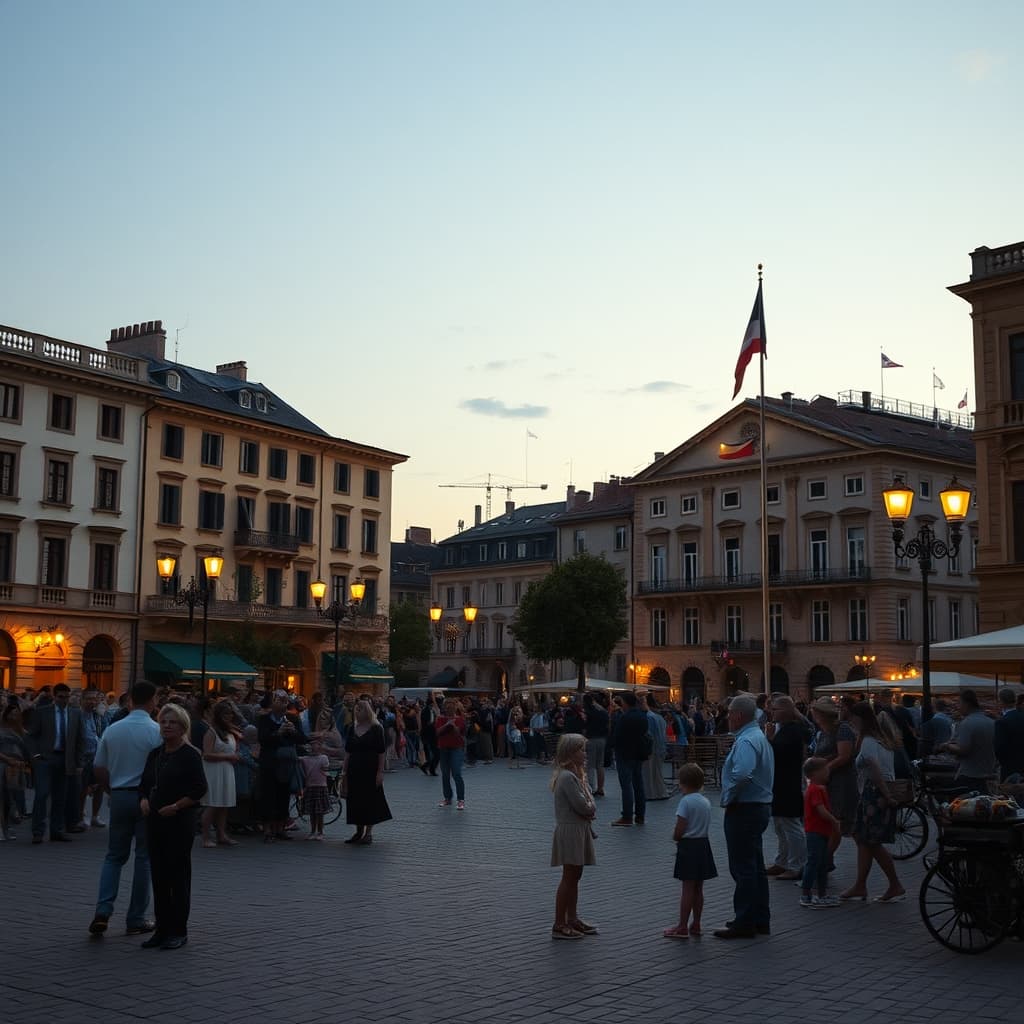
Old city squares carried a different kind of excitement on official ceremony days. Long before the event began, people gathered under streetlights, shop signs, balcony shadows, and the slow warmth of a summer evening. Cultural memory often remembers these ceremonies not only through speeches or flags, but through the small details around them: polished shoes, restless children, paper programs folded into pockets, and neighbors trying to find a better place to stand.
The Square As A Shared Stage
A city square turns ordinary when people only pass through it. On ceremony days, however, it became a stage shared by everyone. The lamps above the pavement, the sound system being tested, the careful rows of chairs, and the hum of waiting gave the place a ceremonial rhythm. These details did not always enter official records, yet they stayed in memory because they belonged to the crowd.
For many families, attending such a ceremony was also an evening outing. Children learned the weight of public occasions by watching adults stand more carefully, speak more softly, and follow a program together. The experience joined civic formality with neighborhood familiarity.
Why The Details Still Speak
What remains powerful is the mixture of order and warmth. The ceremony gave the square a formal purpose, while the summer air, streetlights, and familiar faces made it feel close. That combination explains why old ceremony days still speak to cultural memory: they show a city learning to gather, remember, and recognize itself in public.