🇹🇷 Türkçe | Emekle kurulan şehirlerin hafızası: 1 Mayıs’ın meydanlarda bıraktığı iz
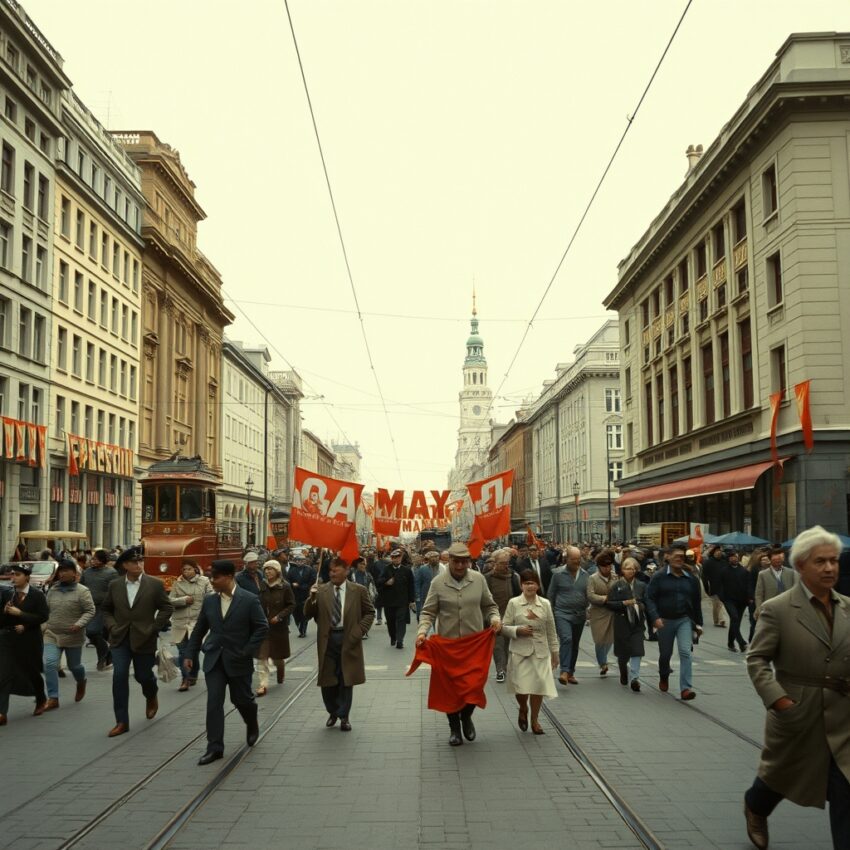
Bir zamanlar takvimler 1 Mayıs’a yaklaşırken şehirlerin ritmi gözle görülür biçimde değişirdi. Sabah erken saatlerde henüz dükkân kepenkleri tam açılmadan, ara sokaklardan meydana doğru yürüyen insanların ayak sesleri duyulur; ütülü gömlekler, yün ceketler, elde taşınan pankart sopaları ve cebine özenle katlanmış gazete kupürleri aynı sabahın parçası olurdu. Mahalle fırınından yeni çıkan ekmek kokusu, işçi servislerinin bıraktığı dizel izi ve apartman pencerelerinden sarkan meraklı bakışlar birbirine karışırdı. 1 Mayıs, yalnızca bir toplantı günü değil, emeğin şehir içinde görünür hâle geldiği özel bir eşikti. Meydanlara varan kalabalık, kentin taşına, tramvay hattına, köprü ayaklarına ve duvar yazılarına başka bir hafıza katardı.
Zamanın İzinde açısından bakıldığında 1 Mayıs’ın şehir belleğinde bıraktığı iz, resmi tarihin büyük cümlelerinden çok gündelik ayrıntılarda saklıdır. Eski gazetelerin sararmış sayfalarında yalnız manşetler değil, fotoğrafların arka planında görünen meydan saatleri, simit arabaları, belediye otobüsleri ve kalabalığın arasındaki çocuk yüzleri de dikkat çeker. İşçiler, memurlar, öğrenciler ve aileler aynı alanda buluştuğunda şehir, kendi sosyal haritasını yeniden çizerdi. Bir meydanın adı, bir cadde köşesi ya da bir heykelin çevresi yıllar boyunca yalnız mimari bir nokta olarak değil, ortak sesin yankılandığı yer olarak hatırlanırdı. Bu yüzden 1 Mayıs’ın hafızası, slogan kadar güçlü bir yürüyüş düzeninde, pankart kumaşının rüzgârla kıvrılışında ve meydan dönüşü eve taşınan sessizlikte yaşar.
Bu günün kültürel ağırlığı biraz da evle meydan arasında kurduğu bağdan gelirdi. Sabah çıkmadan önce evde hazırlanan peynirli ekmekler, termoslara doldurulan çaylar, annelerin “kalabalıkta dikkatli olun” diye tembih eden sesleri ve akşam dönüldüğünde sofrada anlatılan izlenimler bu hafızanın ev içi tarafını oluştururdu. Çocuklar çoğu zaman o günün anlamını önce meydandaki kalabalıktan değil, eve dönen büyüklerin yüz ifadelerinden öğrenirdi. Ceket yakasına iliştirilmiş küçük rozet, cebinde taşınan kırmızı mendil ya da bir gazeteden kesilip saklanan fotoğraf, sonraki yıllarda bir aile albümünde yeniden ortaya çıkar ve 1 Mayıs’ın toplumsal olduğu kadar kişisel bir hatıra olduğunu hatırlatırdı. Meydanlarda atılan adımlar, akşam oturma odasında usulca yeniden anlatılan hikâyelere dönüşürdü.
Bugün geriye dönüp bakıldığında 1 Mayıs’ın şehirlerde bıraktığı derin izin nedeni daha iyi anlaşılıyor. O gün, emek yalnız fabrikalarda, atölyelerde ya da bürolarda kalan görünmez bir güç olmaktan çıkar; meydanın ortasında ses, renk ve topluluk olarak görünür olurdu. Şehirlerin hafızası da tam burada kurulurdu: birlikte yürüyen insanların birbirine verdiği cesarette, eski belediye meydanlarının tanıklığında ve gündelik hayatın bir günlüğüne ortak bir dile kavuşmasında. Emekle kurulan şehirlerin gerçek belleği, biraz da bu toplanma anlarında saklıdır. Çünkü bazı günler yalnız takvimde yer almaz; bir kentin taşına, fotoğraflarına ve kuşaktan kuşağa aktarılan anlatısına işlenir. 1 Mayıs, böyle günlerden biri olarak hâlâ şehir hafızasının en canlı sayfalarından birini oluşturur.
🇬🇧 English | The Memory of Cities Built with Labor: The Trace Left by May 1 in the Squares
There was a time when the rhythm of cities visibly changed as the calendar approached May 1. Early in the morning, before shop shutters were fully raised, the sound of people walking from side streets toward the square could be heard; ironed shirts, wool jackets, banner sticks carried by hand, and newspaper clippings folded carefully into pockets all belonged to the same morning. The smell of fresh bread from the neighborhood bakery, the diesel trace left by worker buses, and the curious glances leaning out of apartment windows blended into one atmosphere. May 1 was not only a day of gathering, but a threshold at which labor became visible inside the city. The crowd reaching the square added another layer of memory to paving stones, tram lines, bridge pillars, and walls marked by old slogans.
Seen through the lens of time, the mark May 1 left on urban memory survives less in the grand sentences of official history than in everyday details. On the yellowed pages of old newspapers, it is not only the headlines that matter, but also the square clocks in the background of photographs, the simit carts, municipal buses, and the faces of children standing within the crowd. When workers, clerks, students, and families gathered in the same place, the city redrew its own social map. The name of a square, the corner of an avenue, or the base of a monument could be remembered for years not merely as architecture, but as a place where a shared voice once echoed. For that reason, the memory of May 1 lives in the disciplined movement of a march, in the folding of banner cloth in the wind, and in the quiet that returned home at the end of the day.
Part of the cultural weight of the day came from the bridge it formed between home and square. Cheese sandwiches prepared before leaving, tea poured into thermoses, mothers warning, “Be careful in the crowd,” and the stories told around the dinner table after returning all shaped the domestic side of that memory. Children often learned the meaning of the day not first from the slogans in the square, but from the expressions on the faces of the adults who came back. A small badge pinned to a jacket, a red handkerchief in a pocket, or a photograph cut from a newspaper and saved in a drawer could reappear years later in a family album and remind everyone that May 1 was both a collective and a personal memory. The steps taken in the square were transformed in the evening into stories retold softly in the living room.
Looking back now, it becomes easier to understand why May 1 left such a deep trace in cities. On that day, labor stopped being an invisible force confined to factories, workshops, or offices and became visible in the middle of the square as voice, color, and community. Urban memory was built precisely there: in the courage people gave one another while walking together, in the witness of old municipal squares, and in the way everyday life found a shared language for a single day. The true memory of cities built with labor is preserved in these moments of gathering. Some days do not remain only on the calendar; they are engraved into a city’s stone, its photographs, and the narratives passed from one generation to the next. May 1 remains one of the most vivid of those pages in urban memory.
🇧🇷 Português (Brasil) | A Memória das Cidades Construídas com Trabalho: A Marca que o 1º de Maio Deixou nas Praças
Houve um tempo em que o ritmo das cidades mudava de forma visível quando o calendário se aproximava do 1º de Maio. Bem cedo, antes de as portas das lojas se abrirem por completo, ouviam-se passos vindo das ruas laterais em direção à praça; camisas bem passadas, casacos de lã, mastros de faixas levados na mão e recortes de jornal dobrados com cuidado no bolso faziam parte da mesma manhã. O cheiro do pão recém-saído da padaria do bairro, o rastro de diesel deixado pelos ônibus de trabalhadores e os olhares curiosos pendurados nas janelas dos prédios se misturavam no mesmo cenário. O 1º de Maio não era apenas um dia de encontro, mas um momento em que o trabalho se tornava visível dentro da cidade. A multidão que chegava à praça deixava outra camada de memória nas pedras, nos trilhos do bonde, nos pilares das pontes e nas paredes da cidade.
Quando olhamos pelo rastro do tempo, a marca deixada pelo 1º de Maio na memória urbana aparece menos nas frases solenes da história oficial do que nos detalhes do cotidiano. Nas páginas amareladas dos jornais antigos, importam não só as manchetes, mas também os relógios da praça ao fundo, os carrinhos de simit, os ônibus municipais e os rostos das crianças no meio da multidão. Quando operários, funcionários, estudantes e famílias se reuniam no mesmo espaço, a cidade redesenhava seu próprio mapa social. O nome de uma praça, a esquina de uma avenida ou a base de um monumento passavam a ser lembrados não apenas como pontos arquitetônicos, mas como lugares onde uma voz coletiva ecoou. Por isso, a memória do 1º de Maio vive no compasso do cortejo, no tecido das faixas ondulando ao vento e no silêncio levado de volta para casa no fim da tarde.
Parte do peso cultural desse dia vinha da ponte que ele criava entre a casa e a praça. Os sanduíches preparados antes de sair, o chá colocado na garrafa térmica, as mães dizendo para tomar cuidado na multidão e os relatos compartilhados à mesa no retorno formavam o lado doméstico dessa lembrança. Muitas crianças entendiam o significado da data não primeiro pelos gritos na praça, mas pela expressão do rosto dos adultos ao voltar. Um pequeno broche preso à lapela, um lenço vermelho guardado no bolso ou uma foto recortada do jornal e mantida em casa podiam reaparecer anos depois em um álbum de família e lembrar que o 1º de Maio era uma memória coletiva, mas também íntima. Os passos dados na praça se transformavam, à noite, em histórias contadas baixinho na sala.
Hoje, olhando para trás, fica mais claro por que o 1º de Maio deixou uma marca tão funda nas cidades. Naquele dia, o trabalho deixava de ser uma força invisível restrita às fábricas, oficinas ou escritórios e se tornava presença no centro da praça, como voz, cor e coletividade. É justamente aí que a memória urbana se formava: na coragem trocada entre pessoas que caminhavam juntas, no testemunho das antigas praças municipais e no fato de a vida cotidiana encontrar, por um dia, uma linguagem comum. A verdadeira memória das cidades construídas com trabalho se guarda nesses instantes de reunião. Há dias que não ficam apenas no calendário; eles se gravam na pedra da cidade, nas fotografias e nas narrativas passadas de geração em geração. O 1º de Maio continua sendo uma das páginas mais vivas dessa memória urbana.