🇹🇷 Türkçe | Bayramlık Yaprak Sarmada Paylaşmanın Lezzeti: Kalabalık Sofraların Kültürel Hafızası
Bayram sabahı yaklaşırken bazı evlerde mutfağın ritmi günler öncesinden değişirdi. Tencere kapaklarının sesi, yıkanan asma yapraklarının hışırtısı, ince doğranan soğanın kokusu ve pirinç yıkama suyu aynı hazırlık cümlesinin parçalarıydı. Yaprak sarma, yalnız bir yemek değildi; aileyi aynı masa etrafında birleştiren uzun soluklu bir ortak emekti. İç harç hazırlanır, yapraklar tek tek açılır, her sarımda parmakların hafızası devreye girerdi. Bu süreçte tarif kadar önemli olan şey, birlikte çalışma biçimiydi.
Bayramlık sarma geleneğinin unutulmayan tadı, önce bu kolektif hazırlıkta saklıdır. Evde biri yaprakları ayıklar, biri harcı karıştırır, biri sarılanları tencereye dizerdi. Çocuklar bile “uçlarını içe kıvır” gibi küçük görevlerle bu zincire katılırdı. Böylece mutfak, kuşaklar arası bir öğrenme alanına dönüşürdü. Tarifteki ölçüler sözlü aktarılır: “tuzunu eliyle hisset”, “pirinci çok bastırma”, “yaprağı yırtmadan sar.” Bu cümleler sadece teknik bilgi değil, sabır ve dikkat eğitimi de verirdi.
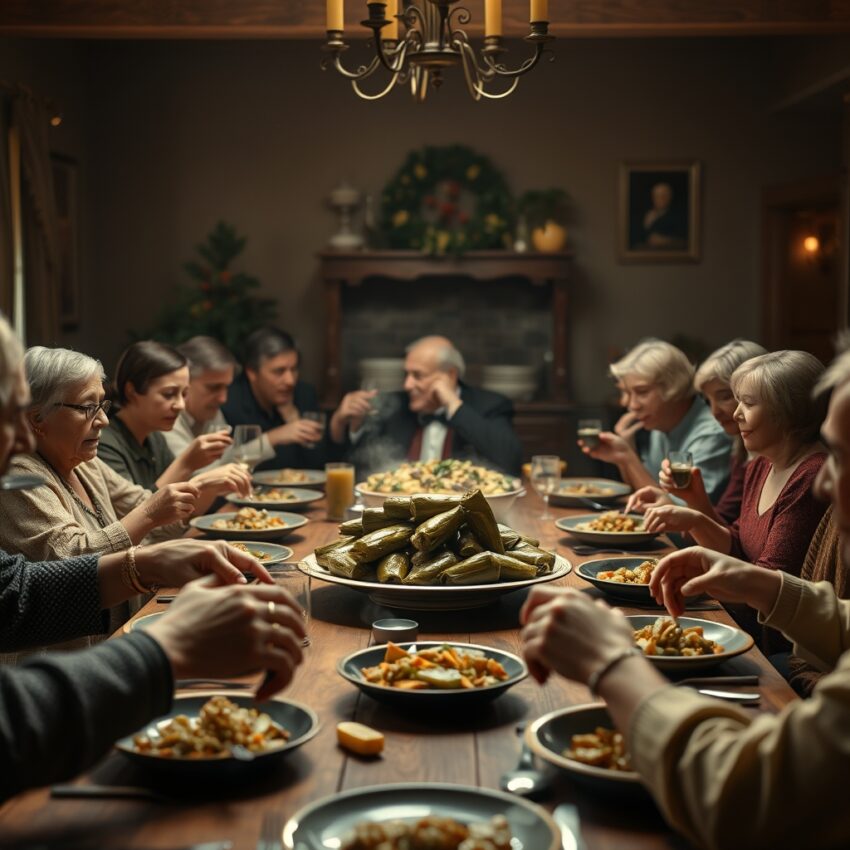
Kalabalık aile sofralarının gücü, çeşit bolluğundan çok paylaşım düzeninden gelirdi. Sarma tabağı masanın tam ortasına gelir, herkes aynı kaptan uzanır, kimse porsiyon hesabını bireysel düşünmezdi. Birinin tabağına son sarma düşmesin diye sessiz bir nezaket oluşur; çocuklara “önce büyüklere ver” denir, büyükler de gizlice en iyisini çocuklara bırakırdı. Bu küçük jestler, bayram sofrasını yalnız beslenme alanı olmaktan çıkarıp ahlaki bir karşılaşma mekânına dönüştürürdü.
Damak hafızası açısından yaprak sarmanın unutulmayan tadı, asit dengesi, zeytinyağı parlaklığı ve baharat kokusuyla kadar eşlik eden sohbetten de oluşur. Bayram günü masada geçmiş bayramlar anlatılır, uzakta yaşayan akrabalar anılır, komşuya gönderilecek tabaklar planlanırdı. Bir yemeğin tadı böylece tek damakta değil kolektif bir konuşma içinde şekillenirdi. Yıllar sonra aynı sarma tarifi yapılsa bile eksik hissedilen şey çoğu zaman bu sohbet yoğunluğudur.
Bir dönemin paylaşma kültürünü taşıyan bu yemek, dolaşım ekonomisi de kurardı. Tencereden çıkan ilk tabak komşuya gider, komşudan gelen tatlı ile sofra tamamlanırdı. “Bizden de tadın” cümlesi hem ikram hem ilişki tazeleme aracıdır. Böylece bayram, sadece akraba buluşması değil mahalle ölçeğinde bir dayanışma döngüsüne dönüşürdü. Yaprak sarma, bu döngünün merkezindeki güven simgelerinden biriydi; çünkü emek yoğundu ve emek paylaşınca anlam kazanırdı.
Zamanla aile yapıları küçülüp bayram sofraları daralsa da bu geleneğin hafızadaki ağırlığı azalmadı. Çünkü sarma yapmak, bir tarif uygulamasından çok ritüel örgütleme becerisiydi: hazırlık, iş bölümü, servis, ikram, artanı değerlendirme ve ertesi güne saklama. Bu çok katmanlı süreç, ev ekonomisini ve sosyal ilişkileri birlikte düzenlerdi. Bugün hızlı tüketim çağında bir tencere sarma hâlâ özel kabul ediliyorsa, sebebi sadece lezzet değil; geçmişten kalan paylaşım diliyle kurduğu bağdır.
Sonuçta bayramlık yaprak sarma ve kalabalık sofraların unutulmayan tadı, bir dönemin kültürel kodlarını taşıyan yaşayan bir hafıza alanıdır. Bu yemekte malzeme kadar hatıra, teknik kadar ilişki, sunum kadar dayanışma vardır. Nostalji burada geçmişi idealize etmek değil; ortak emeğin ve ortak sofranın toplumsal dokuyu nasıl güçlendirdiğini görmek demektir. Her sarım, her tabak ve her ikram cümlesi, paylaşmanın kuşaklar boyunca aktarılan sessiz bir anlaşmasıdır.
🇬🇧 English | The Taste of Sharing in Festive Stuffed Grape Leaves: Cultural Memory of Crowded Family Tables
As holiday mornings approached, kitchen rhythm changed days in advance in many homes. The sound of pot lids, the rustle of washed grape leaves, the aroma of finely chopped onions, and cloudy rice water formed one preparation sentence. Stuffed grape leaves were never just a dish; they were long-form collective labor that gathered the family around one table. Filling was mixed, leaves opened one by one, and fingers activated inherited muscle memory with each roll. In this process, method of working together mattered as much as recipe.
The unforgettable taste of festive sarma begins in this collective preparation. One person sorts leaves, another mixes filling, another arranges rolls in the pot. Even children join through small tasks: “fold edges inward,” “line them tight.” The kitchen becomes intergenerational workshop. Measurements are transmitted orally: “feel the salt by hand,” “don’t pack rice too hard,” “roll without tearing the leaf.” These lines teach not only technique, but patience and attentiveness.
The power of crowded family tables comes less from abundance and more from sharing order. The sarma plate sits at the table center, everyone reaches from the same dish, and portions are not treated as private territory. A quiet courtesy emerges so no one takes the last piece unfairly. Children are taught to serve elders first; elders quietly save best pieces for children. These micro-gestures transform holiday meals from nutrition events into ethical encounters.
In palate memory, unforgettable sarma taste consists not only of acidity balance, olive-oil sheen, and spice profile, but of conversation surrounding it. On holiday tables, stories of earlier holidays return, distant relatives are remembered, and plates for neighbors are planned. Flavor forms inside collective dialogue, not inside isolated tongues. Years later, even when the same recipe is cooked, what feels missing is often this conversational density.
This dish carried a wider sharing culture through circulation economy. The first plate from the pot went to neighbors; incoming desserts completed the table in return. “Please taste from us” worked as both hospitality and relationship renewal. Holiday became not only kin gathering, but neighborhood solidarity cycle. Stuffed grape leaves stood at the cycle’s center as a symbol of trust, because labor was intense and labor gained meaning through distribution.
Even as family units became smaller and holiday tables narrowed, memory weight of this tradition did not fade. Making sarma is more than executing ingredients; it is ritual management: preparation, division of tasks, serving, gifting, storing leftovers for next day. This multi-layered process organized both household economy and social relations. If one pot of sarma is still treated as special in high-speed consumption culture, the reason is not only taste; it is its tie to inherited language of sharing.
Ultimately, festive stuffed grape leaves and the unforgettable taste of crowded tables form a living archive of cultural codes. In this dish there is memory with ingredients, relationships with technique, solidarity with presentation. Nostalgia here is not idealization of the past; it is recognition of how shared labor and shared table strengthened social texture. Every roll, every plate, every offering sentence carries a quiet agreement of intergenerational sharing.
🇧🇷 Português (Brasil) | O Sabor da Partilha na Sarma de Feriado: Memória Cultural das Mesas Familiares Cheias
Quando o feriado se aproximava, o ritmo da cozinha mudava dias antes em muitas casas. O barulho das tampas, o som das folhas de uva lavadas, o cheiro da cebola picada e a água do arroz formavam uma mesma frase de preparo. A sarma de folha não era apenas comida; era trabalho coletivo de longa duração, capaz de reunir a família em torno de uma mesa. O recheio era preparado, as folhas abertas uma a uma, e os dedos acionavam memória aprendida em cada dobra. Nesse processo, o jeito de fazer junto valia tanto quanto a receita.
O sabor inesquecível da sarma festiva começa justamente nessa preparação coletiva. Uma pessoa separa folhas, outra mistura o recheio, outra organiza os rolinhos na panela. Até as crianças participam com tarefas simples: dobrar as pontas, alinhar sem apertar demais. A cozinha vira oficina entre gerações. As medidas passam de forma oral: sentir o sal com a mão, não compactar demais o arroz, enrolar sem rasgar. Essas frases ensinam técnica, mas também paciência e atenção.
A força das mesas familiares cheias vem menos da quantidade e mais da ordem de partilha. O prato de sarma fica no centro, todos se servem do mesmo recipiente, e a porção não é pensada como território individual. Surge uma cortesia silenciosa para que ninguém fique sem. Crianças aprendem a servir os mais velhos primeiro; os mais velhos, discretamente, deixam os melhores pedaços para as crianças. Esses gestos pequenos transformam a refeição de feriado em encontro ético.
Na memória do paladar, o gosto inesquecível da sarma não depende só do equilíbrio de acidez, do brilho do azeite e do tempero, mas da conversa que acompanha. Na mesa de feriado, histórias de anos anteriores voltam, parentes distantes são lembrados, pratos para vizinhos são combinados. O sabor se constrói no diálogo coletivo. Anos depois, mesmo repetindo a receita, o que falta muitas vezes é essa densidade de conversa e presença.
Esse prato também carregava cultura de partilha por meio de circulação. O primeiro prato da panela ia para o vizinho, e a sobremesa recebida completava a mesa em troca. “Prove um pouco do nosso” era gesto de hospitalidade e renovação de vínculo. O feriado deixava de ser apenas encontro de parentes e virava circuito de solidariedade do bairro. A sarma ocupava o centro desse circuito porque exige trabalho e o trabalho ganha sentido quando é dividido.
Mesmo com famílias menores e mesas mais curtas ao longo do tempo, o peso dessa tradição na memória não diminuiu. Fazer sarma é mais do que seguir ingredientes; é organizar ritual: preparo, divisão de tarefas, serviço, oferta, reaproveitamento no dia seguinte. Esse processo em camadas regula economia doméstica e relações sociais ao mesmo tempo. Se uma panela de sarma ainda é considerada especial hoje, é porque preserva uma linguagem de partilha herdada.
No fim, a sarma de feriado e o sabor inesquecível das mesas cheias formam um arquivo vivo de códigos culturais. Nesse prato há memória com ingrediente, vínculo com técnica, solidariedade com apresentação. A nostalgia aqui não idealiza o passado; ela mostra como trabalho e mesa compartilhados fortaleciam o tecido social. Cada rolinho, cada prato servido, cada convite para provar mantém vivo esse pacto silencioso entre gerações.