🇹🇷 Türkçe | Serinleyen İkindiden Sahil Yürüyüşüne: Kıyı Kasabalarının Unutulmayan Yaz Ritmi
Yaz ikindisinin serinlemeye başladığı saatler, eski kıyı kasabalarında günün en beklenen eşiğiydi. Güneş henüz denizin üstünde durur, ama yakıcılığını geri çeker; evlerin içindeki ağır sıcak yavaşça çözülürdü. Anneler balkon demirlerine serilmiş havluları toplar, babalar akşamüstü gömleğini değiştirir, çocuklar “az sonra çıkıyoruz” cümlesini duyar duymaz kapıya yakın yerde beklemeye başlardı. O kısa hazırlık anı, yalnız dışarı çıkmak için değil, günün ruhunu değiştirmek için yapılırdı. Çünkü sahil yürüyüşü bir gezinti değil, kuşakların aynı ritimde nefes aldığı ortak bir törendi.
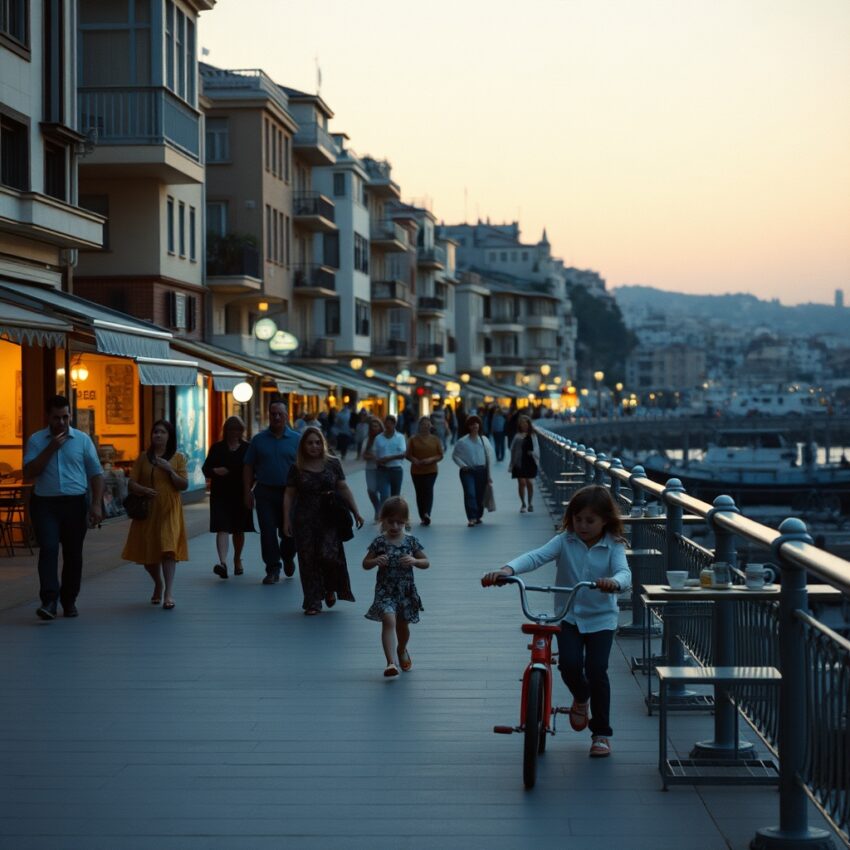
Kasabanın ana caddesi denize doğru açıldığında, herkesin adımı birbirine uyardı. Fırından yeni çıkan ekmek kokusu, dondurmacının vanilyası, sahil kahvesinden taşan taze çay buharı aynı akşam havasında buluşurdu. Kaldırımda kol kola yürüyen teyzeler, bankta gazetesini katlayıp ufka bakan emekliler, bisikletini yavaşlatıp arkadaşını selamlayan gençler, tek bir sahnenin parçalarıydı. Kimse bu yürüyüşe “etkinlik” demezdi; bu, kasabanın nabzını kontrol ettiği gündelik bir alışkanlıktı. Gün içinde ayrı ayrı yaşayan hayatlar, ikindi serinliğinde sahil hattında yeniden birbirine bağlanırdı.
Bu ritüelin şehir belleğinde derin iz bırakmasının bir nedeni de tekrarın huzuruydu. Aynı saat, aynı rota, aynı küçük duraklar; ancak her akşam ufakta bir fark olurdu. Bir gün mendireğe yeni bir tekne yanaşır, ertesi gün belediye hoparlöründen eski bir şarkı duyulur, başka bir akşam komşu çocuğun boyunun uzadığı fark edilirdi. Bellek tam da bu küçük farklılıkları aynı çerçevede biriktirir. O yüzden yıllar sonra biri “sahilde yürürdük” dediğinde, söz sadece mekânı değil, düzenli bir aidiyet duygusunu çağırır.
Kıyı kasabalarında akşam gezmesi, kuşaklar arası görgü aktarımının da görünmez okuluydu. Büyükler, çocuklara selam vermeyi, karşıdan geleni rahatsız etmeden yürümeyi, dondurma külahı yere düşerse nasıl toparlanacağını, bankta yaşlı birine yer açmayı bu yürüyüşlerde öğretirdi. Kasabanın esnafı da bu dersin parçasıydı: balıkçı “yarın sabah erken gel” der, simitçi “annenlere selam” diye seslenir, eczacı vitrinden gülümserdi. Böylece şehir yalnız mimarisiyle değil insan ilişkileriyle hafızaya kazınırdı.
Serinleyen ikindiler aynı zamanda mevsimsel zaman bilincini güçlendirirdi. Yazın ortasında daha uzun yürüyüşler yapılır, eylül yaklaşınca rüzgâr artar ve adımlar erkene çekilirdi. Çocuklar bu değişimi takvimden önce derilerinde hissederdi. Bir dönemin insanı için zamanın geçişi, dijital bildirimlerden değil deniz kokusunun tonundan, akşam ışığının renginden, rıhtımdaki oturma süresinden anlaşılırdı. Bu beden hafızası, bugünün hızlı şehirlerinde en çok özlenen kültürel miraslardan biri olarak kaldı.
Bugün geriye bakınca o akşam yürüyüşlerinin gücü, sadece romantik manzarada değil toplumsal birlikte olma kapasitesinde yatıyor. Kıyı kasabası, serinleyen ikindiyi bir toplumsal arayüz gibi kullanıyor; insanları aynı güzergâhta karşılaştırıyor, gündelik gerilimi yumuşatıyor, ortak bir tempo üretiyordu. Bu yüzden bir kuşağın içini ısıtan o yazlar unutulmadı. Şehir belleğinde derin iz bırakan şey denizin rengi kadar, her akşam yeniden kurulan o sade ama güçlü komşuluk koreografisiydi.
🇬🇧 English | From Cooling Afternoon to Seaside Walk: The Unforgettable Summer Rhythm of Coastal Towns
In old coastal towns, the hour when summer afternoons began to cool was the most anticipated threshold of the day. The sun still hovered above the water, yet pulled back its harshness; heat inside homes slowly loosened. Mothers gathered towels from balcony rails, fathers changed into lighter evening shirts, and children waited near the door as soon as they heard, “we’re going out soon.” That short preparation was not only for stepping outside, but for changing the mood of the day itself. The seaside walk was never just a stroll; it was a shared ritual through which generations breathed in the same tempo.
As the main street opened toward the shore, people’s steps aligned almost naturally. The smell of fresh bread from the bakery, vanilla from the ice-cream stand, and tea steam from the seaside cafe met in one evening breeze. Elderly women walked arm in arm, retirees folded newspapers on benches while facing the horizon, teenagers slowed their bicycles to greet friends. Nobody called it an “event.” It was the town’s daily way of checking its pulse. Lives that moved separately during the day reconnected along the waterfront in the cool of late afternoon.
One reason this ritual left such a deep mark in urban memory was the comfort of repetition. The same hour, the same route, the same small stops, yet each evening offered a minor variation. One day a new boat moored at the breakwater; the next day an old song played through municipal speakers; another evening someone noticed how much a neighbor’s child had grown. Memory keeps precisely these small differences within the same frame. That is why, years later, when someone says “we used to walk by the sea,” the phrase evokes not only a place but a disciplined sense of belonging.
Evening walks in coastal towns were also an invisible school of intergenerational manners. Elders taught children how to greet people, how to walk without blocking others, what to do when ice cream dropped on the pavement, and how to offer a bench spot to an older person. Local shopkeepers joined that lesson: the fishmonger said, “come early tomorrow,” the simit seller called, “send greetings to your family,” the pharmacist smiled from the window. In this way, the city entered memory not only through architecture but through social contact.
Cooling afternoons also strengthened seasonal awareness. In high summer, walks lasted longer; as September approached, winds rose and outings shifted earlier. Children felt that change on their skin before any calendar date announced it. For that generation, time moved not through digital alerts but through the tone of sea smell, the color of evening light, and how long people stayed on the quay. This body-based memory remains one of the most missed cultural inheritances in today’s accelerated cities.
Looking back now, the strength of those evening walks lies not only in romantic scenery but in a social capacity for togetherness. The coastal town used the cooling afternoon as a civic interface: bringing people onto the same route, softening daily tension, producing common rhythm. That is why those summers that warmed a generation from within were never forgotten. The deep trace in urban memory came as much from nightly neighborhood choreography as from the sea itself.
🇧🇷 Português (Brasil) | Da Tarde que Refresca ao Passeio na Orla: O Ritmo de Verão Inesquecível das Cidades Costeiras
Nas antigas cidades costeiras, a hora em que a tarde de verão começava a refrescar era o limiar mais esperado do dia. O sol ainda ficava sobre o mar, mas já sem a dureza do meio-dia, e o calor preso dentro de casa começava a ceder. As mães recolhiam toalhas da varanda, os pais trocavam de camisa, e as crianças se posicionavam perto da porta ao ouvir “já vamos sair”. Essa breve preparação não servia apenas para ir à rua; servia para mudar o espírito do dia. O passeio ao entardecer era mais que caminhada: era um ritual coletivo em que gerações inteiras respiravam no mesmo compasso.
Quando a rua principal desembocava na orla, os passos se ajustavam quase sozinhos. O cheiro de pão saindo do forno, a baunilha da sorveteria e o vapor do chá no cafe da praia se misturavam no mesmo vento. Senhoras caminhavam de braco dado, aposentados dobravam o jornal no banco olhando o horizonte, jovens desaceleravam a bicicleta para cumprimentar conhecidos. Ninguem chamava isso de “programa”; era o modo cotidiano de a cidade medir o próprio pulso. Vidas separadas ao longo do dia se reencontravam nesse corredor costeiro quando a tarde ficava amena.
Uma razão para essa prática ter deixado marca tão profunda na memória urbana era o conforto da repetição. Mesmo horário, mesmo trajeto, mesmas pequenas paradas, mas sempre com uma diferença discreta. Num dia, um barco novo no quebra-mar; no outro, uma canção antiga no alto-falante público; em outra noite, alguém percebia como o filho do vizinho tinha crescido. A memória guarda justamente essas variações mínimas dentro do mesmo quadro. Por isso, quando alguém diz anos depois “a gente passeava na orla”, não está falando apenas do lugar, mas de um pertencimento organizado.
Esses passeios também eram uma escola silenciosa de convivência entre gerações. Os mais velhos ensinavam as crianças a cumprimentar, a caminhar sem atrapalhar quem vem de frente, a agir com calma quando o sorvete caía no chão, e a ceder espaço no banco para quem tinha mais idade. O comércio local reforçava essa pedagogia: o peixeiro avisava sobre a manhã seguinte, o vendedor de simit mandava lembranças para a família, o farmacêutico sorria da vitrine. A cidade, assim, se gravava na memória por relações humanas, não apenas por paisagem.
As tardes refrescadas também fortaleciam a noção de tempo sazonal. No auge do verão, o passeio se estendia; com a aproximação de setembro, o vento aumentava e o horário mudava. As crianças percebiam isso no corpo antes de qualquer calendário. Para aquela geração, o tempo era lido no tom do cheiro do mar, na cor da luz do fim do dia e no tempo de permanência no cais. Essa memória corporal virou um dos patrimônios culturais mais saudosos na vida urbana acelerada de hoje.
Olhando para trás, a força desses passeios não está só na paisagem romântica, mas na capacidade social de estar junto. A cidade costeira usava a tarde que refresca como interface cívica: aproximava pessoas no mesmo percurso, diminuía tensões do dia e criava ritmo comum. Por isso aqueles verões que aqueceram uma geração por dentro não foram esquecidos. A marca profunda na memória urbana ficou tanto na cor do mar quanto na coreografia simples e poderosa da vizinhança a cada entardecer.