🇹🇷 Türkçe | seramik sürahi ve gündelik kullanımın içinde görünmeden bıraktığı iz: neden bugün yeniden ilgi görüyor
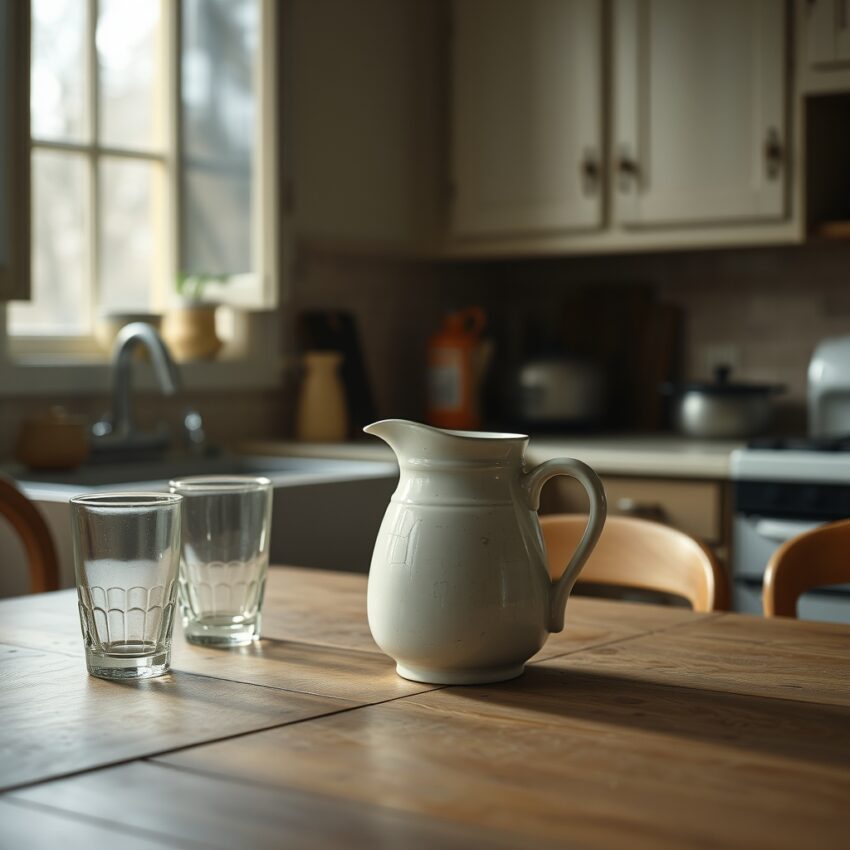
Eski mutfaklarda seramik sürahi çoğu zaman masanın tam ortasında durmaz, ama evin günlük ritmine sessizce karışırdı. Bazen pencere önünde suyu serin tutar, bazen kahvaltı sofrasında ayranı taşır, bazen de akşam yemeğinde elden ele dolaşırdı. Üzerindeki küçük desenler, sırın altındaki ince çatlaklar ve kulpundaki hafif aşınma, yıllarca kullanılmış olmanın izlerini saklardı. Kimse ona özel bir vitrin eşyası gibi davranmazdı; çünkü değeri tam da gündelik hayatın içinde görünmeden iş görmesinden gelirdi.
Obje Hikayeleri açısından seramik sürahi, işlevle estetiğin doğal biçimde birleştiği ev eşyalarından biridir. Toprak, su ve ateşin bir araya gelmesiyle oluşan gövdesi, plastik ya da metal kapların veremediği dokunsal bir sıcaklık taşırdı. Sürahinin ağırlığı, dökerken çıkardığı yumuşak ses ve sofrada bıraktığı serinlik hissi, basit bir su kabını hatıralı bir nesneye dönüştürürdü. Bazı evlerde beyaz zemin üstüne mavi çiçekler, bazılarında kahverengi çizgiler ya da el yapımı düzensizlikler bulunurdu. Her biri evin zevkini yüksek sesle değil, alçakgönüllü bir süreklilikle anlatırdı.
Gündelik kullanımın içinde bıraktığı iz, çoğu zaman fark edilmeden büyürdü. Sürahi her gün yıkanır, rafına konur, tekrar sofraya iner, kimi zaman misafire ayran ikram eder, kimi zaman çocukların susuzluğunu giderirdi. Yazın içine birkaç nane yaprağı atılır, kışın rafın arkasında daha sakin bekler, bayramda en temiz örtünün üstüne çıkarılırdı. Kırılmasın diye dikkatle tutulur, boşken bile yerinden kolay kolay kaldırılmazdı. Yıllar geçtikçe ev halkı onun yerini düşünmeden bilir, sofraya gelmediğinde eksikliğini sezebilirdi. Bir nesnenin hafızaya yerleşmesi için gösterişli olması gerekmez; tekrar tekrar kullanılması, aynı ellerden geçmesi ve aynı sofralara tanıklık etmesi yeterlidir. Seramik sürahi bu yüzden sessiz bir aile üyesi gibi evin hareketlerini izlerdi.
Bugün seramik sürahilerin yeniden ilgi görmesi, yalnız nostaljik tasarım merakından kaynaklanmıyor. İnsanlar hızla tüketilen, kolay değiştirilen ve iz bırakmadan kaybolan eşyalardan sonra elde ağırlığı olan, kusuru görünen, malzemesi hissedilen nesnelere yeniden yakınlık duyuyor. Seramik sürahi, yavaş sofranın ve dokunulabilir ev kültürünün hatırlatıcısı hâline geliyor. Onu masaya koymak, suyu ya da ayranı yalnız servis etmek değil; gündelik hayata biraz daha dikkat, biraz daha sıcaklık ve biraz daha süreklilik çağırmak anlamına geliyor. Bu ilgi, geçmişe kaçıştan çok malzemeyle yeniden bağ kurma isteğidir.
Seramik sürahi bugün bize eski evlerin sade inceliğini anlatmayı sürdürüyor. Çatlak sır izleri, hafif yamuk ağız, kulpta kalan parmak aşınması ve serin gövde, kullanılmış olmanın güzelliğini taşır. Onun yeniden sevilmesi, gündelik eşyaların da hafıza taşıyabileceğini fark etmemizle ilgilidir. Eski mutfaklarda görünmeden bıraktığı iz, şimdi daha görünür hâle geliyor; çünkü insan, hayatını dolduran nesnelerin yalnız işe yaramasını değil, kendisine zaman, emek ve dokunma duygusu da anlatmasını istiyor.
🇬🇧 English | The Ceramic Pitcher and the Trace It Left Invisibly Within Everyday Use: Why It Is Drawing Interest Again Today
In old kitchens, the ceramic pitcher often did not stand at the exact center of the table, yet it quietly entered the daily rhythm of the home. Sometimes it kept water cool by the window, sometimes carried ayran at breakfast, and sometimes passed from hand to hand at dinner. Its small patterns, fine cracks beneath the glaze, and slight wear on the handle held the traces of years of use. No one treated it like a special display object, because its value came precisely from serving invisibly within everyday life.
From the perspective of object stories, the ceramic pitcher is one of the household items in which function and beauty naturally joined. Its body, formed through earth, water, and fire, carried a tactile warmth that plastic or metal containers could not provide in the same way. The weight of the pitcher, the soft sound it made while pouring, and the coolness it left on the table turned a simple water vessel into an object of memory. In some homes there were blue flowers on a white ground, in others brown lines or handmade irregularities. Each described the taste of the home not loudly, but through humble continuity.
The trace it left within daily use often grew unnoticed. The pitcher was washed every day, placed on its shelf, brought back to the table, used to serve ayran to guests, or to satisfy the thirst of children. In summer a few mint leaves might be dropped inside; in winter it waited more quietly at the back of a shelf; during holidays it was placed on the cleanest cloth. As years passed, the household knew its place without thinking and could sense its absence when it did not appear at the table. An object does not need to be showy in order to settle into memory. It is enough for it to be used again and again, to pass through the same hands, and to witness the same tables. For that reason, the ceramic pitcher watched the movements of the home like a quiet family member.
The renewed interest in ceramic pitchers today does not come only from nostalgia for old design. After objects that are consumed quickly, replaced easily, and disappear without leaving a trace, people are again drawn to things that have weight in the hand, visible imperfections, and materials that can be felt. The ceramic pitcher has become a reminder of the slow table and a touchable culture of home. Placing it on the table means not only serving water or ayran, but also inviting a little more attention, warmth, and continuity into everyday life. This interest is less an escape into the past than a desire to reconnect with material.
The ceramic pitcher continues to tell us today about the simple refinement of old homes. Glaze cracks, a slightly uneven mouth, the wear left by fingers on the handle, and a cool body carry the beauty of having been used. Its return to favor is connected to our realization that everyday objects can also carry memory. The trace it once left invisibly in old kitchens is now becoming more visible, because people want the objects filling their lives not only to function, but also to speak of time, labor, and the feeling of touch.
🇧🇷 Português (Brasil) | A Jarra de Cerâmica e o Rastro que Deixou Invisivelmente no Uso Cotidiano: Por que Hoje Volta a Despertar Interesse
Nas cozinhas antigas, a jarra de cerâmica muitas vezes não ficava exatamente no centro da mesa, mas entrava em silêncio no ritmo diário da casa. Às vezes mantinha a água fresca perto da janela, às vezes levava ayran no café da manhã, e às vezes passava de mão em mão no jantar. Seus pequenos desenhos, as fissuras finas sob o esmalte e o leve desgaste da alça guardavam marcas de muitos anos de uso. Ninguém a tratava como objeto especial de vitrine, porque seu valor vinha justamente de servir sem aparecer dentro da vida cotidiana.
Do ponto de vista das histórias de objetos, a jarra de cerâmica é uma das peças domésticas em que função e beleza se uniam naturalmente. Seu corpo, formado por terra, água e fogo, carregava um calor tátil que recipientes de plástico ou metal não ofereciam da mesma forma. O peso da jarra, o som suave ao servir e a sensação de frescor que deixava na mesa transformavam um simples recipiente de água em objeto de memória. Em algumas casas havia flores azuis sobre fundo branco; em outras, linhas marrons ou irregularidades do trabalho manual. Cada uma contava o gosto da casa não em voz alta, mas por uma continuidade humilde.
O rastro deixado no uso cotidiano crescia muitas vezes sem ser percebido. A jarra era lavada todos os dias, colocada na prateleira, voltava à mesa, servia ayran às visitas ou matava a sede das crianças. No verão, algumas folhas de hortelã podiam ser colocadas dentro dela; no inverno, esperava mais quieta no fundo da prateleira; nas festas, ia para cima da toalha mais limpa. Com o passar dos anos, a família sabia seu lugar sem pensar e percebia sua falta quando ela não aparecia à mesa. Um objeto não precisa ser vistoso para entrar na memória. Basta ser usado repetidas vezes, passar pelas mesmas mãos e testemunhar as mesmas refeições. Por isso, a jarra de cerâmica observava os movimentos da casa como uma integrante silenciosa da família.
O interesse renovado pelas jarras de cerâmica hoje não vem apenas da nostalgia pelo desenho antigo. Depois de objetos consumidos depressa, trocados facilmente e desaparecidos sem deixar marca, as pessoas voltam a se aproximar de coisas que têm peso na mão, imperfeições visíveis e material que se pode sentir. A jarra de cerâmica se tornou lembrança da mesa lenta e de uma cultura doméstica tocável. Colocá-la na mesa significa não só servir água ou ayran, mas chamar para a vida cotidiana um pouco mais de atenção, calor e continuidade. Esse interesse é menos fuga para o passado e mais desejo de refazer o vínculo com a matéria.
A jarra de cerâmica continua hoje a contar a delicadeza simples das casas antigas. Fissuras no esmalte, uma boca levemente irregular, o desgaste deixado pelos dedos na alça e o corpo fresco carregam a beleza do uso. O fato de ela voltar a ser apreciada tem relação com percebermos que objetos cotidianos também podem guardar memória. O rastro que antes deixava invisivelmente nas cozinhas antigas agora se torna mais visível, porque as pessoas querem que os objetos de sua vida não apenas funcionem, mas também falem de tempo, trabalho e sensação de toque.