🇹🇷 Türkçe | plak temizleme fırçası: anteni çevirdikçe netleşen umut içinde tamircilerin elinde neden ikinci bir ömür bulduğunu açıklıyor defter kokulu sabahlarda sessiz bir yaz akşamına karışarak
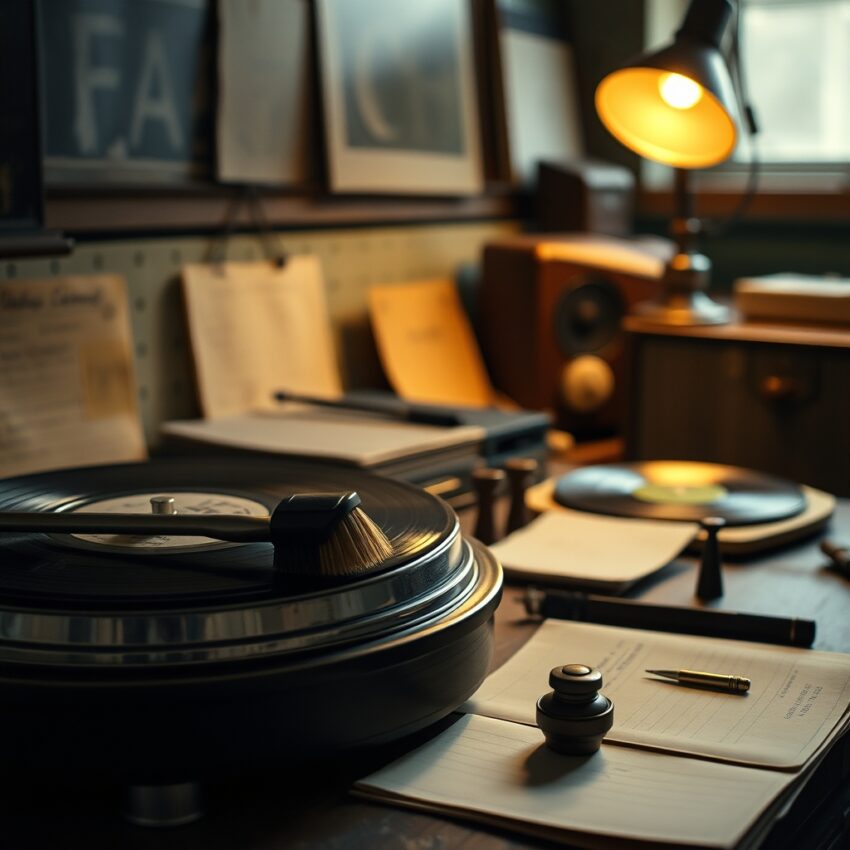
Bazı nesneler ilk bakışta küçük görünür, ama bir dönemin teknoloji terbiyesini içlerinde taşırlar. Plak temizleme fırçası da böyle bir eşyadır. Yaz sabahı pencere açıkken masanın üstüne bırakılmış okul defterlerinin kâğıt kokusu odaya yayılır, radyonun cızırtısı anten çevrildikçe biraz daha toparlanır ve bir köşede duran pikabın yanında ince saplı bir fırça sessizce görevini beklerdi. O fırça, yalnız toz almak için değil; sesin hakkını vermek için kullanılırdı. Plağın yüzeyindeki en ufak kiri bile ciddiye alan bu hareket, eski teknolojilerle kurulan ilişkinin aceleci değil özenli olduğunu hatırlatır. Belki de tam bu yüzden, bir süre sonra tamircilerin elinde ikinci bir ömür bulması şaşırtıcı değildir.
Teknoloji Mirası açısından plak temizleme fırçası, analog çağın görünmez ama çok önemli yardımcılarından biridir. Eski şehirlerde radyo ve pikap tamircileri yalnız arızayı gideren ustalar değildi; cihazın çevresindeki küçük kültürü de koruyan insanlardı. Anten ayarının sabır istediği, iğnenin dikkatle yerleştirildiği, kapağın yavaşça kapandığı o dönemde ses cihazları bir düğmeye basıp geçilen eşyalar sayılmazdı. Onlarla ilgilenmek, onları silmek, tozdan korumak ve bozulduklarında doğru ele teslim etmek gerekirdi. Plak temizleme fırçası bu bakım kültürünün el altında duran sade aracıdır. Evde bir genç müziğe daha net ulaşmak için kullanır, dükkânda bir tamirci aynı fırçayla müşterinin getirdiği eski plağı yeniden dinlenebilir hâle getirirdi.
Bu nesnenin tamircilerin elinde ikinci bir ömür bulmasının nedeni biraz da çok amaçlı ve güvenilir yapısıdır. Kılları sert olmayacak kadar yumuşak, yüzeyi koruyacak kadar hafif, ama birikmiş tozu alacak kadar kararlı olmalıydı. Ustalar onu yalnız plakta değil, pikap kapağında, radyo ızgarasında, düğmelerin çevresinde ve bazen teybin hassas köşelerinde bile kullanırdı. Böylece evin müzik köşesine ait görünen küçük bir obje, atölyenin günlük aletlerinden birine dönüşürdü. Defter kokulu sabahlarda gençlerin elinde başlayan özen, sessiz yaz akşamlarında tamirhane lambasının altında devam ederdi. Bir cihazın yeniden çalışması, çoğu zaman yalnız teknik bilgiye değil; bu tür ince bakım alışkanlıklarına da bağlıydı.
O yıllarda umut bazen gerçekten anten çevirdikçe netleşirdi. İyi bir frekans yakalandığında odadaki herkesin yüzü değişir, cızırtının arasından beliren tanıdık bir ses ya da sevilen bir şarkı evde küçük bir sevinç yaratırdı. Plakta da benzer bir beklenti vardı: yüzey temizlenirse ses daha berrak gelecek, şarkı daha az takılacak, kayıt biraz daha canlı duyulacaktı. Tamirciler bu beklentiyi iyi bilirdi. Müşterinin getirdiği eski bir pikap ya da çiziklerle dolu birkaç plak, yalnız eşya değil; sahibinin gençliğinden kalmış seslere yeniden ulaşma isteğiydi. Fırça bu isteğin en sessiz ortaklarından biri olurdu. Büyük, gösterişli bir alet değildi; ama bazen asıl farkı yaratan küçük aracı oydu.
Bugün plak temizleme fırçasına bakıldığında görülen şey sadece bir aksesuar değildir. Asıl görülen, teknolojiye kullanım kadar bakım da gerektiğini bilen bir dönemin alışkanlığıdır. Tamircilerin elinde ikinci bir ömür bulması da buradan gelir; çünkü iyi ustalık, nesnelerin görünmeyen değerini tanır. Defter kokulu sabahların düzeni, anten çevrilirken duyulan sabır ve sessiz yaz akşamlarında atölyeden sokağa taşan hafif müzik; bütün bunlar bu küçük fırçanın etrafında toplanan kültürel çerçeveyi kurar. O yüzden hafızada kalan yalnız plağın üstünden çekilen birkaç kıllık temas değil; sese saygı duyan, tamire vakit ayıran ve eşyaya ikinci şans vermeyi bilen bir hayat biçimidir.
🇬🇧 English | Record Cleaning Brush: Explaining Why It Found a Second Life in the Hands of Repairmen, Blending into a Quiet Summer Evening Within the Hope That Grew Clearer as the Antenna Was Turned on Notebook-Scented Mornings
Some objects look small at first glance, yet they carry within them the discipline of an entire technological era. The record cleaning brush is one of them. On summer mornings, with the window open and the paper scent of school notebooks spreading from the table, the static of the radio would become a little more ordered as the antenna was turned, and beside the turntable a slim-handled brush would wait quietly for its task. That brush was not used merely to remove dust, but to do justice to sound. The care that took even the smallest particle on a record seriously reminds us that the relationship people once had with technology was not hurried, but attentive. That is why it is hardly surprising that such a brush later found a second life in the hands of repairmen.
From the perspective of technological heritage, the record cleaning brush is one of the invisible yet essential assistants of the analog age. In old cities, radio and turntable repairmen were not merely craftsmen who fixed faults; they were also guardians of the small culture surrounding those devices. In a time when adjusting an antenna required patience, when the needle had to be placed carefully and lids were closed gently, sound machines were not objects to be used with a casual press of a button. They had to be wiped, protected from dust, and entrusted to the right hands when they failed. The record cleaning brush stood ready within that culture of maintenance. A young listener used it at home to reach clearer music, while in the shop a repairman used the same kind of brush to make an old record listenable once more.
Part of the reason the object found a second life with repairmen lay in its dependable versatility. Its bristles had to be soft enough not to scratch, light enough to respect the surface, yet firm enough to gather what had settled there. Craftsmen used it not only on records, but on turntable lids, radio grilles, around knobs, and sometimes even on the delicate corners of tape decks. In that way, a small object that seemed to belong to a music shelf at home became one of the everyday tools of the workshop. The care that began in the hands of young people on notebook-scented mornings continued under the lamp of the repair shop on quiet summer evenings. The revival of a device often depended not only on technical knowledge, but on such habits of delicate maintenance.
In those years, hope could quite literally become clearer as the antenna was turned. When a good frequency was caught, everyone’s expression changed, and a familiar voice or a loved song emerging from the static created a small happiness in the room. There was a similar expectation with records: if the surface was cleaned, the sound would arrive more clearly, the song would skip less, and the recording would seem more alive. Repairmen understood this expectation well. An old turntable or a stack of scratched records brought to the shop were not merely objects, but an owner’s wish to reach voices preserved from youth. The brush became one of the quietest partners in that wish. It was not large or spectacular, yet often it was the small instrument that made the real difference.
When we look at a record cleaning brush today, what we see is not only an accessory. What truly appears is the habit of an era that knew technology required care as much as use. Its second life in repair shops comes from exactly that truth, because good craftsmanship recognizes the hidden value of objects. The order of notebook-scented mornings, the patience felt while turning the antenna, and the faint music drifting from the workshop into the street on quiet summer evenings together create the cultural frame around this small brush. What remains in memory is therefore not only the light pass of bristles across vinyl, but a way of life that respected sound, made time for repair, and knew how to give objects a second chance.
🇧🇷 Português (Brasil) | Escova de Limpeza de Discos: Explica por que Encontrou uma Segunda Vida nas Mãos dos Consertadores, Misturando-se a uma Silenciosa Noite de Verão Dentro da Esperança que Ficava Mais Nítida à Medida que a Antena Era Girada em Manhãs com Cheiro de Caderno
Alguns objetos parecem pequenos à primeira vista, mas carregam dentro de si a disciplina tecnológica de uma época inteira. A escova de limpeza de discos é um deles. Nas manhãs de verão, com a janela aberta e o cheiro de papel dos cadernos escolares espalhado sobre a mesa, o chiado do rádio se organizava um pouco mais cada vez que a antena era girada, e ao lado do toca-discos uma escova de cabo fino aguardava silenciosamente a sua função. Ela não servia apenas para tirar pó, mas para fazer justiça ao som. O cuidado que levava a sério até a menor partícula sobre o disco lembra que a relação antiga com a tecnologia não era apressada, e sim zelosa. Talvez por isso não surpreenda que essa escova tenha encontrado depois uma segunda vida nas mãos dos consertadores.
Do ponto de vista da herança tecnológica, a escova de limpeza de discos é uma das assistentes invisíveis, porém indispensáveis, da era analógica. Nas cidades antigas, os consertadores de rádio e toca-discos não eram apenas homens que resolviam defeitos; eram também guardiões da pequena cultura que cercava esses aparelhos. Num tempo em que ajustar a antena exigia paciência, em que a agulha precisava ser colocada com cuidado e a tampa era fechada devagar, os aparelhos de som não eram objetos usados com um toque distraído. Era preciso limpá-los, protegê-los da poeira e levá-los às mãos certas quando falhavam. A escova ficava sempre por perto dentro dessa cultura de manutenção. Em casa, um jovem a usava para ouvir a música com mais nitidez; na oficina, o consertador recorria ao mesmo tipo de escova para tornar um disco antigo novamente audível.
Uma das razões para esse objeto ter ganhado uma segunda vida na oficina estava em sua versatilidade confiável. As cerdas precisavam ser macias o bastante para não riscar, leves o suficiente para respeitar a superfície, mas firmes para retirar o que havia se acumulado. Os mestres a usavam não só nos discos, mas na tampa do toca-discos, na grade do rádio, ao redor dos botões e às vezes até nos cantos delicados do gravador. Assim, um pequeno objeto que parecia pertencer apenas ao canto musical da casa se transformava em ferramenta diária do ateliê. O cuidado que começava nas mãos dos jovens em manhãs com cheiro de caderno continuava sob a luz da oficina em noites de verão silenciosas. Fazer um aparelho voltar a funcionar dependia muitas vezes não apenas de conhecimento técnico, mas desses hábitos de manutenção delicada.
Naqueles anos, a esperança às vezes realmente ficava mais nítida à medida que a antena era girada. Quando uma boa frequência era encontrada, o rosto de todos mudava, e uma voz conhecida ou uma canção querida surgindo do chiado criava uma pequena alegria no ambiente. Com os discos acontecia algo parecido: se a superfície fosse limpa, o som sairia mais claro, a música engasgaria menos e a gravação pareceria mais viva. Os consertadores conheciam bem essa expectativa. Um toca-discos antigo ou alguns discos riscados levados à oficina não eram apenas objetos, mas o desejo do dono de voltar a ouvir sons guardados da juventude. A escova se tornava uma das parceiras mais silenciosas dessa vontade. Não era grande nem chamativa, mas muitas vezes era o instrumento pequeno que fazia a diferença real.
Quando olhamos hoje para uma escova de limpeza de discos, vemos mais do que um acessório. O que aparece de verdade é o costume de uma época que sabia que a tecnologia precisava de cuidado tanto quanto de uso. O fato de ter encontrado uma segunda vida nas mãos dos consertadores nasce exatamente daí, porque o bom ofício reconhece o valor invisível dos objetos. A ordem das manhãs com cheiro de caderno, a paciência de girar a antena e a música suave escapando da oficina para a rua nas noites de verão montam juntas o quadro cultural dessa pequena escova. O que permanece na memória não é apenas o leve contato das cerdas sobre o vinil, mas uma forma de vida que respeitava o som, reservava tempo ao conserto e sabia dar uma segunda chance às coisas.