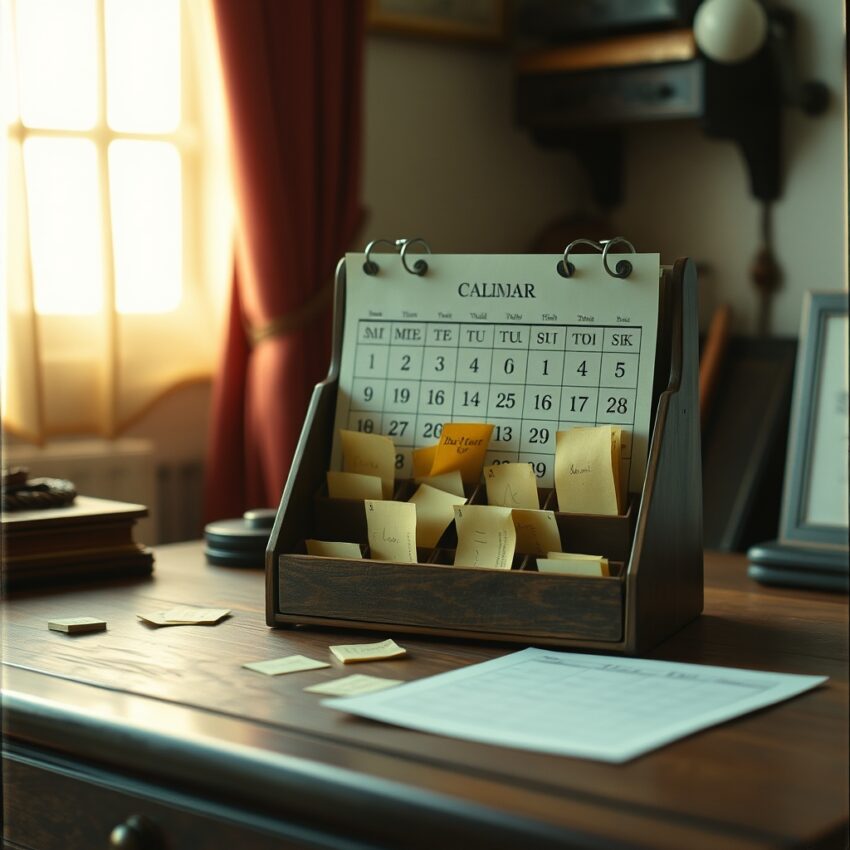
🇹🇷 Türkçe | masa üstü takvimlik ve sandıkların dibinden çıkan ince hikâyesi: nostalji meraklılarının gözünde neden hemen parlıyor
Bazı objeler büyük değildir, ama bakıldıkları anda bütün bir odanın zamanını geri çağırırlar. Masa üstü takvimlik de böyle bir eşyadır. Sandıkların dibinden, eski çekmece örtülerinin, sararmış mektupların ve bir köşeye kaldırılmış küçük ev eşyalarının arasından çıktığında ilk bakışta sade görünür. Oysa metal ayaklarındaki hafif aşınma, kartların yerleştiği ince yuva ve üzerinde bir zamanlar durmuş günlerin sessiz izi, bu küçük objeyi sıradanlıktan çıkarır. Takvimin yaprakları çoktan dağılmış olsa bile takvimlik kalır; çünkü o, yalnız tarihi tutan bir aparat değil, ev içinde zamanın nasıl düzenlendiğini gösteren zarif bir tanıktır. Nostalji meraklılarının gözünde hemen parlaması biraz da bu yüzden olur.
Obje Hikayeleri açısından masa üstü takvimlik, kullanım ile estetik arasındaki eski dengeyi hatırlatır. Bir dönemde masa üstü eşyaları yalnız işe yarasın diye değil, ortama bir düzen ve karakter katsın diye de seçilirdi. Kalemlik, mürekkep hokkası, küçük kâğıt ağırlığı ve takvimlik birlikte bir çalışma ya da oturma köşesinin terbiyesini kurardı. Evlerde babanın çalışma masasının, dükkânda muhasebe tezgâhının, bazen de telefonun yanındaki küçük sehpanın üstünde yer alırdı. Her sabah yaprağının çevrilmesi, günün başladığını ilan eden sessiz bir hareketti. Bu nedenle takvimlik, işlevinin ötesinde, eski zaman anlayışının gündelik ritmini simgeler. Zamana bakmanın bile daha dokunulur ve daha törensel olduğu yıllardan kalma bir davranışı taşır.
Sandıkların dibinden çıkan ince hikâyesi de tam burada başlar. Böyle objeler genellikle atılmadıkları için değil, bir gün yeniden hatırlanabilecekleri sezildiği için saklanır. Ev taşınırken gazeteye sarılır, çekmece boşaltılırken “bunu da koyalım” denir, modası geçse bile kırılmamışsa saklanmaya devam eder. Aradan yıllar geçtikten sonra bir sandık açıldığında takvimlik birdenbire görünür ve onu bulan kişi sadece nesneyi değil, onun çevresindeki hayat düzenini de hatırlar. Hangi odada durduğu, kimlerin her sabah yaprak çevirdiği, yanına not bırakılıp bırakılmadığı, bayram günlerinde kırmızı rakamların nasıl fark edildiği… İnce hikâye, işte bu küçük ayrıntıların birikiminden oluşur. Objenin kendisi hafiftir; ama çağırdığı zaman ağırdır.
Nostalji meraklılarının bu nesneye hemen ilgi duymasının bir nedeni de tasarımındaki ölçülülüktür. Gösterişli değildir; ama tam da bu sebeple güven verir. Pirinç, alüminyum ya da bakalit dokunuşlar; sade ama dengeli bir form; bazen yuvarlatılmış ayaklar, bazen yazıyı taşıyan çizgisel bir yüzey… Hepsi, kullanım eşyasının aynı zamanda estetik bir terbiye taşıdığı dönemi anlatır. Bugün dijital takvimler görünmeden iş görürken, masa üstü takvimlik zamanı görünür ve elle temas edilir kılardı. Yaprak koparmak ya da çevirmek, günün geçtiğini hem zihne hem ele bildirirdi. Bu fiziksel temas, nostalji duygusunu kuvvetlendiren en önemli özelliklerden biridir. İnsan böyle bir objeye baktığında sadece eski bir tasarımı değil, daha yavaş akan bir zamanı da görür.
Bugün bir sandığın dibinden çıkan masa üstü takvimlik neden hemen parlıyor sorusunun cevabı, onun hem mütevazı hem yoğun bir hafıza taşıyıcısı olmasında yatar. Ne tek başına çok değerli bir antikadır ne de bütünüyle işlevsiz bir kalıntı. Tam tersine, günlük hayatın en sıradan ritüellerinden birini estetik bir ciddiyetle üstlenmiş küçük bir objedir. Bu yüzden bakıldığında ev içi düzen, masa başı sessizliği, sabah ışığı ve gün çevrildikçe ilerleyen hayat birlikte görünür. Nostalji meraklıları o parlaklığı objenin yüzeyinde değil, onun içinden sızan zaman duygusunda fark eder. Masa üstü takvimlik, sandığın dibinden çıkan ince hikâyesiyle tam da bunu hatırlatır: bazen en küçük eşyalar, bir dönemin en düzgün özetidir.
🇬🇧 English | The Desk Calendar Holder and the Delicate Story Emerging from the Bottom of Chests: Why Does It Immediately Shine in the Eyes of Nostalgia Enthusiasts?
Some objects are not large, yet the moment one looks at them they call back the time of an entire room. The desk calendar holder is such an object. When it emerges from the bottom of a chest, from among yellowing letters, drawer cloths, and small household items set aside long ago, it appears simple at first glance. Yet the slight wear on its metal feet, the narrow slot where the date cards once stood, and the quiet trace of days that used to rest upon it lift it out of ordinariness. Even if its pages are long gone, the holder remains, because it is not merely an apparatus that carried dates. It is an elegant witness to the way time was once arranged inside the home. That is one reason it shines immediately in the eyes of those who love nostalgia.
From the perspective of object stories, the desk calendar holder recalls an older balance between use and aesthetics. There was a time when desktop objects were chosen not only to function, but to give order and character to a space. A pen stand, an inkwell, a small paperweight, and a calendar holder together established the discipline of a work corner or sitting room. It might stand on a father’s desk at home, on an accountant’s counter in a shop, or on a small side table beside the telephone. Turning the page each morning was a quiet gesture announcing that the day had begun. For that reason, the holder symbolizes more than utility. It carries a daily rhythm belonging to an older understanding of time, from years when even looking at the date was more tactile and more ceremonial.
Its delicate story begins precisely in the fact that it survived at the bottom of chests. Such objects are often kept not merely because they were never thrown away, but because someone sensed they might one day be remembered again. During a move they were wrapped in newspaper; while clearing a drawer someone would say, “let’s keep this too.” Even after their fashion had passed, if they were not broken they continued to be stored. Years later, when a chest is opened, the calendar holder suddenly appears, and the person who finds it remembers not only the object, but the domestic order surrounding it. In which room did it stand? Who turned the page every morning? Were notes left beside it? How did the red numbers of holidays look? Its delicate story is made of such small details. The object itself is light; the time it summons is heavy.
One reason nostalgia enthusiasts are drawn to it so quickly lies in the restraint of its design. It is not showy, and for that very reason it feels trustworthy. Brass, aluminum, or Bakelite touches; a form that is simple yet balanced; sometimes rounded feet, sometimes a linear face that carried lettering: all speak of a period when an object of use also bore aesthetic discipline. Today digital calendars operate invisibly, while the desk calendar holder made time visible and touchable. Tearing off a page or turning a card told both the hand and the mind that a day had passed. That physical contact is one of the strongest sources of its nostalgic power. When a person looks at such an object, one sees not only an old design, but a slower-moving time.
The answer to why a desk calendar holder discovered in an old chest shines so quickly today lies in the fact that it carries memory in a form both modest and dense. It is neither a grand antique nor a completely useless remnant. On the contrary, it is a small object that once carried one of daily life’s simplest rituals with aesthetic seriousness. That is why, when we look at it, domestic order, desk-side quiet, morning light, and a life advancing one turned page at a time all become visible together. The lovers of nostalgia see that brightness not on its surface, but in the feeling of time leaking through it. With its delicate story rising from the bottom of a chest, the desk calendar holder reminds us that sometimes the smallest things are the clearest summary of an era.
🇧🇷 Português (Brasil) | O Suporte de Calendário de Mesa e sua História Delicada que Sai do Fundo dos Baús: Por que Brilha Imediatamente aos Olhos dos Apaixonados por Nostalgia?
Alguns objetos não são grandes, mas no instante em que os vemos devolvem o tempo inteiro de um cômodo. O suporte de calendário de mesa é um deles. Quando sai do fundo de um baú, de entre cartas amareladas, forros de gaveta e pequenos objetos domésticos guardados de lado, parece simples à primeira vista. Mas o leve desgaste em seus pés de metal, a fenda estreita onde antes ficavam as folhas e o rastro silencioso dos dias que já repousaram sobre ele tiram esse pequeno objeto da banalidade. Mesmo que as folhas tenham desaparecido há muito tempo, o suporte permanece, porque não é apenas um aparelho para mostrar datas. Ele é uma testemunha elegante de como o tempo era organizado dentro de casa. É por isso que brilha de imediato aos olhos dos amantes da nostalgia.
No campo das histórias dos objetos, o suporte de calendário de mesa recorda um antigo equilíbrio entre utilidade e estética. Houve um tempo em que os objetos sobre a mesa eram escolhidos não só para funcionar, mas para dar ordem e caráter ao ambiente. Porta-canetas, tinteiro, peso de papel e calendário formavam juntos a disciplina de um canto de trabalho ou de uma sala. Ele podia ficar na escrivaninha do pai, no balcão do contador da loja ou numa mesinha ao lado do telefone. Virar a folha todas as manhãs era um gesto silencioso que anunciava o começo do dia. Por isso o suporte simboliza mais do que sua função. Ele carrega o ritmo cotidiano de uma maneira antiga de viver o tempo, de anos em que até olhar a data era algo mais palpável e mais cerimonial.
Sua história delicada começa justamente no fato de ter sobrevivido no fundo dos baús. Objetos assim não costumam ser guardados apenas porque ninguém os jogou fora, mas porque alguém sentiu que um dia poderiam ser lembrados de novo. Numa mudança eram embrulhados em jornal; ao esvaziar uma gaveta alguém dizia: “vamos guardar isso também”. Mesmo quando saíam de moda, se não estivessem quebrados, continuavam reservados. Anos depois, quando o baú se abre, o suporte aparece de repente, e quem o encontra recorda não apenas o objeto, mas a ordem doméstica ao seu redor. Em que quarto ele ficava? Quem virava a folha toda manhã? Havia bilhetes deixados ao lado? Como apareciam os números vermelhos dos feriados? Essa história delicada é feita do acúmulo desses pequenos detalhes. O objeto é leve; o tempo que convoca é pesado.
Uma das razões pelas quais os apaixonados por nostalgia se interessam por ele tão depressa está na medida do seu desenho. Não é chamativo, e exatamente por isso transmite confiança. Toques de latão, alumínio ou baquelite; uma forma simples, mas equilibrada; às vezes pés arredondados, às vezes uma face linear que sustentava a escrita: tudo isso fala de um período em que o objeto útil também carregava disciplina estética. Hoje os calendários digitais funcionam sem serem vistos, enquanto o suporte de calendário de mesa tornava o tempo visível e tocável. Arrancar uma folha ou girar um cartão avisava à mão e à mente que um dia havia passado. Esse contato físico é uma das fontes mais fortes da sua potência nostálgica. Ao olhar para ele, a pessoa vê não apenas um design antigo, mas um tempo que corria mais devagar.
Se perguntarmos por que um suporte de calendário de mesa achado no fundo de um baú brilha tão rapidamente hoje, a resposta está no fato de ele ser um portador de memória ao mesmo tempo modesto e denso. Não é uma grande antiguidade nem um resto totalmente inútil. Pelo contrário, é um pequeno objeto que assumiu com seriedade estética um dos rituais mais simples da vida cotidiana. Por isso, quando o observamos, tornam-se visíveis ao mesmo tempo a ordem da casa, o silêncio junto à mesa, a luz da manhã e a vida avançando folha por folha. Os amantes da nostalgia percebem esse brilho não na superfície do objeto, mas no sentimento de tempo que escapa dele. Com sua história delicada saída do fundo do baú, o suporte de calendário de mesa lembra exatamente isso: às vezes os menores objetos são o resumo mais preciso de uma época.