🇹🇷 Türkçe | Dönemin ruhunu ele veren o eski saatlerde okul çıkışı pasajlarda oyalanmanın gençliğe karıştığı yıllar: geçmişe bakınca neden daha parlak görünüyor tatil kokulu günler
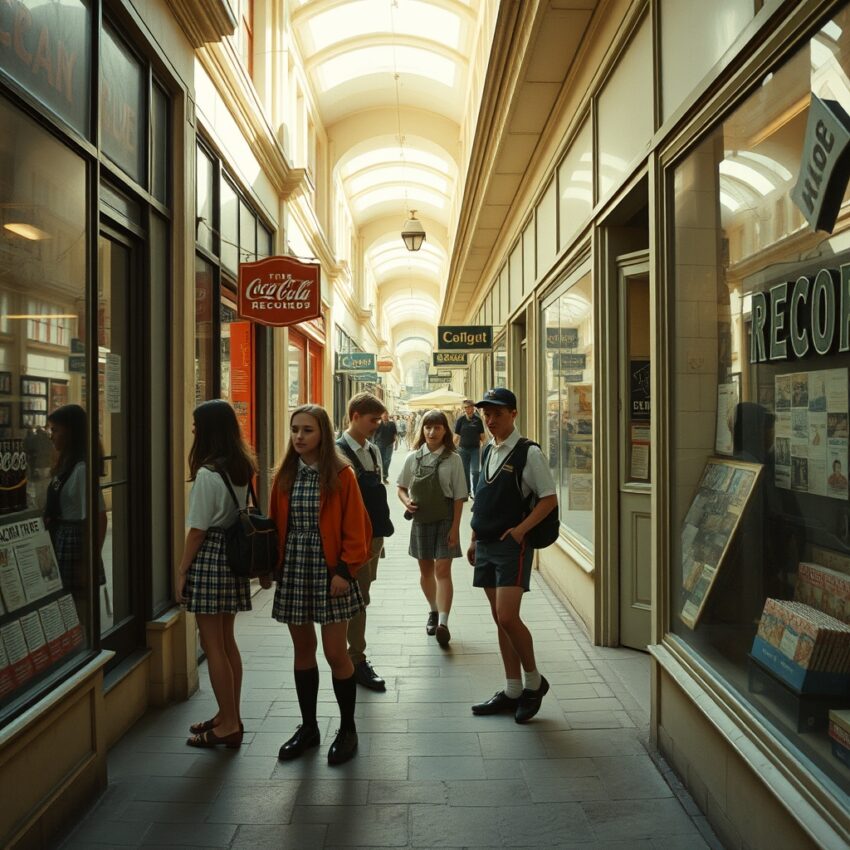
Bazı şehirlerin hafızası, tam ders zili sustuktan sonra başlar. Okul çantasının omuza bir parça daha hafif asıldığı, lacivert önlüklerin ya da ceketlerin gün boyu taşıdığı ciddiyetin yavaş yavaş çözüldüğü o saatlerde pasajların içi başka türlü parlar. Cam vitrinlere vuran ikindi ışığı, kasetçiden sızan hafif müzik, kırtasiye raflarında dizili defterlerin kâğıt kokusu ve ayakkabı tamircisinin önündeki küçük tabureler; bütün bunlar gençliğin acele etmeyen tarafına alan açardı. Eve hemen dönmek yerine birkaç dükkân önünde oyalanmak, bakmadan geçilen bir afişe yeniden göz atmak ya da arkadaşlarla gazozu paylaşarak merdiven başında durmak, sanki yaz tatilinin provası gibiydi. Bu yüzden geçmişe bakınca o günler yalnız eski değil, daha parlak görünür.
Zamanın İzinde açısından okul çıkışı pasajları, şehir hayatının hem gündelik hem de duygusal eşiklerinden biriydi. Eski gazetelerde yeni açılan pasajlardan, vitrin yarışlarından ya da gençlerin uğradığı meşhur dükkânlardan söz edilirdi; fakat asıl hikâye satır aralarında kalan gündelik bekleyişte saklıydı. Pasajlar sadece alışveriş yeri değildi. Öğrenciler için biraz serbestlik, biraz merak, biraz da büyüme duygusu taşıyan yarı kamusal sahnelerdiler. Dışarıda sokak tozu, içeride serin taş zemin, tavandan sarkan sarı ışıklar ve dükkân sahiplerinin yarı tanıdık bakışları arasında çocuklukla gençlik birbirine karışırdı. Şehir, okuldan çıkmış bir gencin üzerindeki disiplinle boş zaman arzusunu tam bu dar koridorlarda uzlaştırırdı.
O yılların bugün tatil kokulu hatırlanmasının sebebi, mevsimin gerçekten yaz olması kadar, yaz hissinin erkenden başlamasıydı. Mayıs sonundan itibaren dersler sürse bile zihnin bir yanı çoktan denize, bağa, memlekete ya da uzun akşamlara açılırdı. Pasajlarda oyalanmak bu bekleyişin küçük töreniydi. Bir plak kapağına uzun uzun bakmak, ucuz bir güneş gözlüğünü denemek, tezgahtaki renkli tokalara göz gezdirmek ya da sinema gişesindeki afişleri incelemek; bunların her biri yaklaşan tatilin henüz başlamamış özgürlüğünü taşırdı. Çocuklar harçlığını dikkatle sayar, gençler aynı dükkâna ikinci kez uğramanın bahanesini bulur, esnaf ise bu telaşsız dolaşmayı yadırgamazdı. Çünkü pasajlar, şehirde oyalanmanın meşru ve güvenli adresleriydi.
Bu hafızayı kuvvetlendiren şeylerden biri de pasajların ses düzeniydi. Yarı açık kapılardan gelen vantilatör uğultusu, terzinin makine sesi, saatçinin çekmecesi, çaycı tabağının şıngırtısı ve uzak bir radyodan duyulan yaz şarkısı birbirine karışırdı. Hiçbiri baskın değildi; ama hepsi birlikte okul sonrasının gevşeyen ritmini kurardı. Arkadaş grubundan biri eve geç kalmaktan çekinir, biri yeni aldığı kalemi gösterir, biri de vitrindeki ayakkabıya bakıp susardı. Gençliğin kendini kurduğu pek çok küçük duygu, işte bu aralarda şekillenirdi. Büyük olaylar yaşanmazdı belki, ama kişi ilk kez kendine ait zamanı olduğunu oralarda hissederdi. Tatil kokulu günler, biraz da bu yüzden bugünden bakınca ışığı artmış sahneler gibi görünür.
Bugün aynı saatleri hatırlarken hissedilen parlaklık, geçmişin kusursuzluğundan değil; o geçiş anlarının toplu sıcaklığından gelir. Okul çıkışı pasajlar, ne bütünüyle çocukluğa ne de bütünüyle yetişkinliğe ait yerlerdi. Tam arada dururlar, insana deneme hakkı verirlerdi. Bir dükkâna girip çıkmak, vitrinde kendine bakmak, arkadaşla rota uzatmak, eve birkaç dakika geç dönmek… Bunların hepsi gençliğin sessiz terbiyesiydi. Eski şehir hayatında pasajlar bu yüzden yalnız ticaret koridorları değil, büyümenin görünmez derslikleri olarak kaldı. Geçmişe dönüp baktığımızda o günlerin daha parlak görünmesi şaşırtıcı değil; çünkü orada gençlik, serin taş zeminde ve yaklaşan yazın kokusunda kendi sesini ilk kez duyuyordu.
🇬🇧 English | In Those Old Hours That Revealed the Spirit of the Era, the Years When Lingering in Arcades After School Mixed with Youth: Why Do the Vacation-Scented Days Look Brighter When We Look Back?
The memory of some cities begins only after the school bell has fallen silent. In those hours when a schoolbag seemed to hang a little lighter from the shoulder and the seriousness carried all day by uniforms or jackets slowly dissolved, the interiors of old arcades shone in a different way. Afternoon light struck the shop windows, faint music drifted out of the cassette store, the scent of paper rose from the stationery shelves, and the little stools in front of the cobbler made room for the unhurried side of youth. Instead of going straight home, students lingered before a few shops, looked once more at a poster they would normally pass, or shared a soda with friends while standing at the edge of a stairway. It felt like a rehearsal for summer vacation. That is why those days seem not only old, but brighter when we look back.
From the perspective of time, the arcades after school were among the emotional thresholds of city life. Old newspapers mentioned newly opened passages, competitions of shop windows, and the famous stores frequented by the young, yet the real story remained hidden in the ordinary waiting that lived between those lines. Arcades were not merely places of shopping. For students they were semi-public stages carrying a little freedom, a little curiosity, and a little sense of growing up. Between the dust of the street outside and the cool stone floor within, beneath yellow lights hanging from the ceiling and the half-familiar gaze of shopkeepers, childhood and youth blended together. The city reconciled discipline and the desire for free time precisely in those narrow corridors.
The reason those years are remembered today as smelling of vacation is not only that the season itself approached summer, but that the feeling of summer began earlier than the calendar. By late May, even while classes continued, one part of the mind had already turned toward the sea, the family hometown, country gardens, or long evenings outdoors. Lingering in the arcade became a small ritual of that expectation. To stare at a record sleeve, try on a cheap pair of sunglasses, glance over colorful hair clips on a counter, or study the posters at the cinema booth was to hold the freedom of a holiday not yet begun. Children counted their pocket money carefully, teenagers found excuses to pass the same shop twice, and shopkeepers did not find this slow wandering strange. Arcades were the legitimate and safe address of lingering in the city.
One thing that deepened the memory was the soundscape of those passages. The hum of a fan from a half-open door, the tailor’s machine, the watchmaker’s drawer, the clink of tea glasses, and a summer song heard from a distant radio blended into each other. None of these sounds dominated, yet together they built the loosened rhythm of the hour after school. One friend feared getting home too late, one showed a newly bought pen, and another fell silent before a pair of shoes in the window. Many of the small feelings through which youth begins to shape itself took form in such intervals. Nothing grand may have happened, yet it was there that one first sensed having time of one’s own. The vacation-scented days seem brighter from today partly for that reason.
The brightness we feel now does not come from the past having been flawless, but from the collective warmth of those moments of transition. The after-school arcades belonged neither entirely to childhood nor entirely to adulthood. They stood in between and granted room for trial. To step into a shop and out again, to see oneself in a window, to prolong the route with a friend, to arrive home a few minutes late: all these were part of youth’s quiet education. In old city life, arcades remained therefore not only commercial corridors, but invisible classrooms of growing up. It is not surprising that those days appear brighter in memory, because there youth first heard its own voice on cool stone floors in the scent of an approaching summer.
🇧🇷 Português (Brasil) | Naquelas Velhas Horas que Revelavam o Espírito da Época, os Anos em que Ficar nas Passagens Depois da Escola se Misturava à Juventude: Por que os Dias com Cheiro de Férias Parecem Mais Brilhantes Quando Olhamos para Trás?
A memória de certas cidades começa justamente depois que o sinal da escola se cala. Naquelas horas em que a mochila parecia pender um pouco mais leve no ombro e a seriedade carregada o dia inteiro pelo uniforme ou pelo casaco começava a se desfazer, o interior das passagens brilhava de outro jeito. A luz da tarde batia nas vitrines, uma música suave escapava da loja de fitas, o cheiro de papel subia das prateleiras da papelaria, e os banquinhos diante do sapateiro abriam espaço para o lado menos apressado da juventude. Em vez de voltar logo para casa, os estudantes paravam diante de algumas lojas, olhavam mais uma vez um cartaz que normalmente passariam sem notar ou dividiam um refrigerante com os amigos no alto da escada. Era quase um ensaio para as férias. Por isso, quando olhamos para trás, aqueles dias parecem não só antigos, mas mais luminosos.
Na trilha do tempo, as passagens depois da escola eram um dos limiares afetivos da vida urbana. Jornais antigos falavam de novas galerias, de vitrines premiadas e de lojas famosas entre os jovens, mas a verdadeira história ficava escondida na espera cotidiana que existia entre essas linhas. As passagens não eram apenas lugares de compra. Para os estudantes, eram palcos semi-públicos cheios de um pouco de liberdade, um pouco de curiosidade e um pouco do sentimento de crescer. Entre a poeira da rua lá fora e o piso de pedra fresco lá dentro, sob lâmpadas amareladas e os olhares meio familiares dos lojistas, infância e juventude se misturavam. A cidade conciliava a disciplina escolar e o desejo de tempo livre justamente nesses corredores estreitos.
O motivo de esses anos hoje serem lembrados com cheiro de férias não está apenas no fato de o verão se aproximar de verdade, mas em o sentimento de verão começar antes do calendário. A partir do fim de maio, mesmo com as aulas ainda em andamento, uma parte da cabeça já se voltava para o mar, para a cidade natal da família, para o campo ou para as noites mais longas. Ficar um pouco mais na passagem virava um pequeno ritual dessa espera. Observar longamente a capa de um disco, experimentar um óculos escuro barato, olhar os grampos coloridos no balcão ou examinar os cartazes na bilheteria do cinema era segurar por alguns minutos a liberdade de férias que ainda não havia começado. As crianças contavam a mesada com cuidado, os adolescentes inventavam motivo para passar duas vezes pela mesma loja, e os comerciantes não estranhavam essa demora serena. As passagens eram o endereço seguro e legítimo de quem queria ficar um pouco mais pela cidade.
Uma das coisas que tornava essa lembrança mais viva era a paisagem sonora desses lugares. O zumbido do ventilador vindo de uma porta entreaberta, a máquina da costureira, a gaveta do relojoeiro, o tilintar do pires do chá e uma canção de verão saindo de um rádio distante se misturavam. Nenhum desses sons dominava, mas juntos criavam o ritmo solto do pós-aula. Um amigo temia chegar tarde em casa, outro mostrava a caneta recém-comprada, e outro ficava calado diante de um sapato na vitrine. Muitos dos pequenos sentimentos com que a juventude começa a se formar tomavam corpo nesses intervalos. Talvez não acontecesse nada grandioso, mas era ali que a pessoa percebia pela primeira vez que tinha um tempo próprio. Os dias com cheiro de férias parecem mais brilhantes hoje também por isso.
O brilho que sentimos agora não vem de um passado perfeito, mas do calor coletivo daqueles instantes de passagem. As passagens depois da escola não pertenciam totalmente nem à infância nem à vida adulta. Ficavam no meio do caminho e ofereciam espaço para experimentar. Entrar e sair de uma loja, ver-se refletido numa vitrine, alongar o percurso com um amigo, chegar alguns minutos mais tarde em casa: tudo isso fazia parte da educação silenciosa da juventude. Na antiga vida urbana, as passagens permaneceram, por isso, não só como corredores comerciais, mas como salas invisíveis de crescimento. Não surpreende que aqueles dias pareçam mais luminosos na memória, porque foi ali, sobre o piso frio de pedra e no cheiro do verão que se aproximava, que a juventude ouviu pela primeira vez a própria voz.