🇹🇷 Türkçe | daktilo günleri: anteni çevirdikçe netleşen umut ile büyüyen bir alışkanlık neden unutulmadı sokak lambasının altında çocukluğun kıyısında bekler gibi
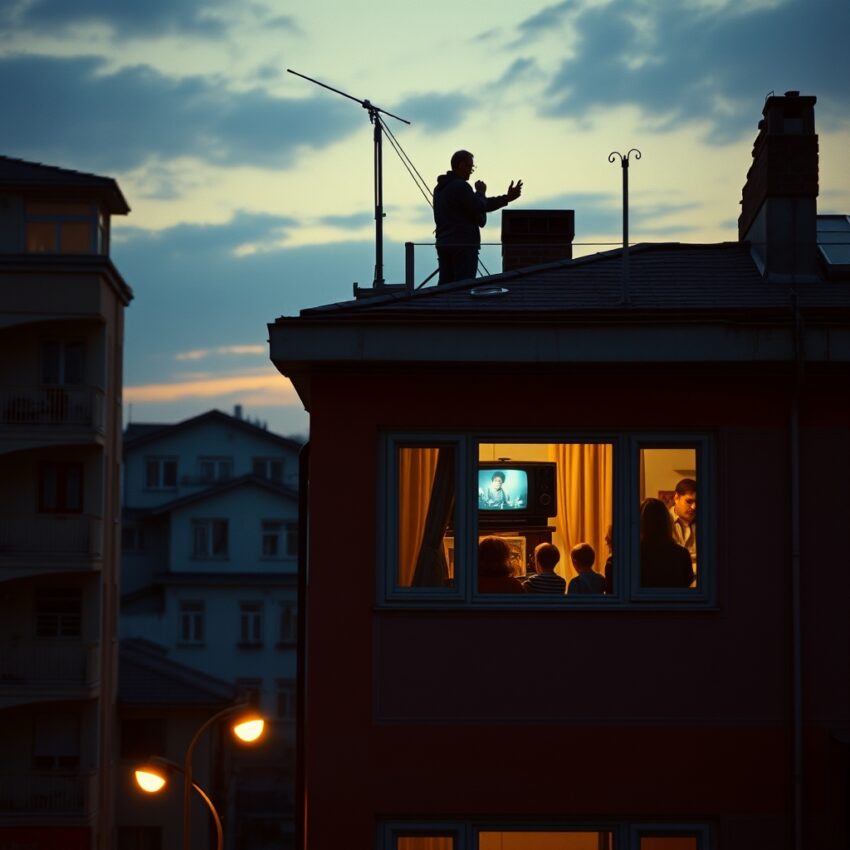
Bir zamanlar akşamın en heyecanlı anı, evin çatısına ya da balkon demirine tutturulmuş antenin bir miktar sağa ya da sola çevrilmesiyle başlardı. İçeriden gelen “biraz daha” sesi, dışarıda bekleyen elleri yönlendirir; görüntü netleştiğinde ya da radyo cızırtısı azaldığında evin içinde küçük bir zafer hissi doğardı. Daktilo günleri diye anılabilecek o dönemde teknoloji, bugünkü gibi görünmez ve kusursuz değil; aksine uğraşı isteyen, temas kurulan, sabırla ikna edilen bir şeydi. Sokak lambasının altında oyunu bitirmek üzere olan çocuk için de, içeride haber saatini bekleyen büyükler için de anten çevirmek yalnız teknik bir iş değildi. Bekleyişin, umudun ve ailece aynı ana bağlanmanın ritüeliydi.
Teknoloji Mirası açısından bu alışkanlık, analog çağın ev içi mühendisliğini en iyi anlatan sahnelerden biridir. Televizyonun ya da radyonun aldığı sinyal, bulunduğunuz sokağın yönüne, binanın yüksekliğine, havanın durumuna ve antenin açı hassasiyetine göre değişirdi. Bu yüzden teknolojiyi kullanmak, cihazın tuşlarına dokunmaktan ibaret kalmaz; ev halkının birlikte çözdüğü küçük bir meseleye dönüşürdü. Eski gazetelerde anten satışlarına, çatı tamirlerine, yayın saatlerine ve görüntü kalitesine dair haberler bulunması boşuna değildir. Çünkü yayın almak, yalnız bir içerik tüketimi değil, modern hayata dahil olmanın görünür bir pratiğiydi. Evde biri pencereden seslenir, biri salonun içinde ekrana bakar, biri de çatıya çıkıp yön değiştirirdi; teknoloji adeta aile içinde paylaşılan bir koordinasyon dili kurardı.
Bu sahnenin unutulmamasının asıl sebebi, teknik zorluktan çok duygusal yoğunluğudur. Akşam haberleri başlayacakken, mahallede herkesin aşağı yukarı benzer bir telaş içinde olması tesadüf değildi. Kimi evde maç yayını beklenir, kimi evde sevilen bir sanatçının programı, kimi evde ise uzak şehirlerden gelen sesleri dinlemek için radyo çevrilirdi. Anten netleştikçe yalnız görüntü açılmaz, aynı zamanda eve giren dünya biraz daha genişlerdi. Çocuklar için bu an, içerideki yetişkin ciddiyetini uzaktan seyretmenin meraklı sınırıydı. Sokak lambasının altında son kez seksek oynayan ya da kaldırım kenarında bekleyen çocuk, biraz sonra eve çağrılacağını bilir; ama o çağrıya kadar antenle uğraşılan dakikalar, mahalle akşamının askıda kaldığı özel bir zamandı.
Daktilo günleri ifadesi burada boşa düşmez; çünkü o yılların ruhu, tuşlu ve mekanik dünyaların ortak sabrında saklıydı. Daktiloda yazı yazmak nasıl vuruşların izini kâğıda kalıcı biçimde geçiriyorsa, anten çevirmek de havadaki dağınık sinyali evin içine anlamlı bir görüntü ya da sese dönüştürüyordu. Her ikisinde de insan eli geri çekilmez, aksine sonucu belirleyen başlıca güç olarak kalırdı. Bu yüzden analog cihazlarla kurulan ilişki daha kişisel, daha emekli ve daha hatırlanır bir bağ hâline geliyordu. Teknoloji kusursuz olmayınca insan ona daha çok yaklaşır; onunla daha fazla vakit geçirir; küçük başarılarını daha büyük sevinçler gibi yaşardı.
Bugün o anten ayarlama anlarını düşündüğümüzde hatırladığımız yalnız bozuk görüntüler ya da cızırtılı sesler değildir. Hatırlanan şey, bir evin içindeki ortak dikkat, bir yayına yetişme telaşı, dışarıdan içeri taşınan mahalle akşamı ve çocukluğun kıyısında duran o bekleyiş duygusudur. Sokak lambasının altında uzayan gölgelerle birlikte anteni çevirdikçe netleşen umut, teknolojiyle kurulan eski ilişkinin en insani yüzlerinden birini gösterir. Unutulmamasının nedeni de budur: o alışkanlık cihazdan çok, birlikte bekleyen insanları anlatır.
🇬🇧 English | Typewriter Days: Why Was a Habit That Grew With Hope Becoming Clearer as We Turned the Antenna Never Forgotten, as if Waiting at the Edge of Childhood Beneath the Street Lamp?
There was a time when the most exciting moment of evening began with turning the antenna fixed to the roof or the balcony railing slightly to the left or right. A voice from inside calling out “a little more” guided the hands outside, and when the picture sharpened or the radio static weakened, a small sense of victory rose inside the house. In those years that may well be called typewriter days, technology was not invisible and seamless as it is today. It asked for effort, demanded contact, and had to be persuaded with patience. For the child finishing a game beneath the street lamp and for the adults inside waiting for the evening news, adjusting the antenna was never just a technical task. It was a ritual of waiting, hope, and family members tying themselves to the same moment.
As a piece of technological heritage, this habit reveals one of the clearest scenes of domestic engineering in the analog age. The signal received by a radio or television changed according to the direction of the street, the height of the building, the weather, and the delicate angle of the antenna. Using technology therefore meant more than touching a set of buttons; it became a small problem solved collectively by the household. Old newspapers did not mention antenna sales, rooftop repairs, broadcast hours, and picture quality by chance. Receiving a broadcast was not merely consuming content, but a visible practice of joining modern life. One person called out from the window, one watched the screen in the sitting room, and another climbed to the roof to change the direction. Technology almost created a shared language of coordination inside the family.
The deeper reason this scene was never forgotten lies not in its technical difficulty, but in its emotional intensity. When the evening news was about to begin, it was no coincidence that many homes in the neighborhood were caught in the same mild urgency. In one house people waited for a football match, in another for the program of a beloved singer, and in another they tuned the radio to hear voices arriving from faraway cities. As the antenna made the signal clearer, it was not only the image that opened, but also the world entering the house. For children, this moment marked the curious edge from which they watched the seriousness of adults indoors. The child still playing hopscotch under the street lamp or waiting at the curb knew that the call to come home was near, yet the minutes spent dealing with the antenna suspended the whole neighborhood evening in a special kind of time.
The phrase typewriter days is not misplaced here, because the spirit of those years lived in the common patience of keyed and mechanical worlds. Just as writing on a typewriter left the trace of each strike permanently on paper, turning the antenna transformed a scattered signal in the air into a meaningful image or sound inside the home. In both, the human hand did not withdraw but remained the main force shaping the result. That is why the bond formed with analog devices became more personal, more laboring, and more memorable. When technology is imperfect, people move closer to it, spend more time with it, and experience its small successes as larger joys.
When we think today of those moments of antenna adjustment, what we remember is not only distorted pictures or crackling sound. What remains is the shared concentration inside a house, the rush to catch a broadcast, the neighborhood evening carried indoors, and the feeling of waiting at the edge of childhood. The hope that became clearer as the antenna turned, beneath the lengthening shadows of the street lamp, shows one of the most human faces of our older relationship with technology. That is why the habit was never forgotten: it told a story less about the device than about the people waiting together.
🇧🇷 Português (Brasil) | Dias de Máquina de Escrever: Por Que um Hábito que Cresceu com a Esperança Ficando Mais Nítida ao Girarmos a Antena Nunca Foi Esquecido, Como se Esperasse na Beira da Infância sob o Poste de Luz?
Houve um tempo em que o momento mais emocionante da noite começava com a antena presa ao telhado ou à grade da varanda sendo girada um pouco para a direita ou para a esquerda. A voz que vinha de dentro dizendo “mais um pouco” orientava as mãos do lado de fora, e quando a imagem ficava mais nítida ou o chiado do rádio diminuía, nascia dentro da casa uma pequena sensação de vitória. Naqueles anos que podem ser chamados de dias de máquina de escrever, a tecnologia não era invisível nem perfeita como hoje. Ela exigia esforço, pedia contato e precisava ser convencida com paciência. Para a criança que terminava a brincadeira sob o poste de luz e para os adultos que esperavam o jornal da noite lá dentro, mexer na antena nunca foi apenas uma tarefa técnica. Era um ritual de espera, esperança e encontro da família no mesmo instante.
Como herança tecnológica, esse costume revela uma das cenas mais claras da engenharia doméstica da era analógica. O sinal captado pela televisão ou pelo rádio variava conforme a direção da rua, a altura do prédio, o estado do tempo e a delicadeza do ângulo da antena. Por isso usar a tecnologia não significava apenas tocar botões, mas resolver em conjunto um pequeno problema da casa. Não é por acaso que jornais antigos traziam notícias sobre venda de antenas, consertos em telhados, horários de transmissão e qualidade de imagem. Receber uma transmissão não era apenas consumir um conteúdo, mas participar visivelmente da vida moderna. Uma pessoa gritava da janela, outra observava a tela na sala, e outra subia ao telhado para mudar a direção. A tecnologia quase criava uma linguagem compartilhada de coordenação dentro da família.
O motivo mais profundo para essa cena não ter sido esquecida está menos na dificuldade técnica e mais na sua intensidade afetiva. Quando o jornal da noite estava para começar, não era coincidência que muitas casas do bairro vivessem a mesma pequena urgência. Numa casa se esperava uma partida de futebol, noutra o programa de um cantor querido, noutra ainda o rádio era sintonizado para ouvir vozes que vinham de cidades distantes. À medida que a antena tornava o sinal mais claro, não era só a imagem que se abria, mas também o mundo que entrava na casa. Para as crianças, esse momento era a borda curiosa de onde observavam a seriedade dos adultos. A criança que ainda pulava amarelinha sob o poste ou esperava na calçada sabia que logo seria chamada para dentro, mas aqueles minutos gastos com a antena suspendiam toda a noite do bairro num tempo especial.
A expressão dias de máquina de escrever faz sentido aqui porque o espírito daqueles anos vivia na paciência comum dos mundos mecânicos e cheios de teclas. Assim como escrever numa máquina deixava no papel a marca definitiva de cada toque, girar a antena transformava um sinal disperso no ar em imagem ou som significativos dentro de casa. Em ambos os casos, a mão humana não desaparecia; ao contrário, continuava sendo a principal força do resultado. Por isso a relação com os aparelhos analógicos se tornava mais pessoal, mais trabalhosa e mais memorável. Quando a tecnologia não é perfeita, a pessoa se aproxima mais dela, passa mais tempo com ela e vive seus pequenos acertos como alegrias maiores.
Quando hoje pensamos nesses instantes de ajustar a antena, não recordamos apenas imagens defeituosas ou chiados. O que permanece é a atenção comum dentro de casa, a pressa de alcançar uma transmissão, a noite do bairro entrando pela janela e a sensação de esperar na beira da infância. A esperança que ficava mais nítida conforme a antena girava, junto com as sombras alongadas sob o poste de luz, mostra um dos rostos mais humanos da antiga relação com a tecnologia. É por isso que o hábito não foi esquecido: ele falava menos do aparelho e mais das pessoas que esperavam juntas.