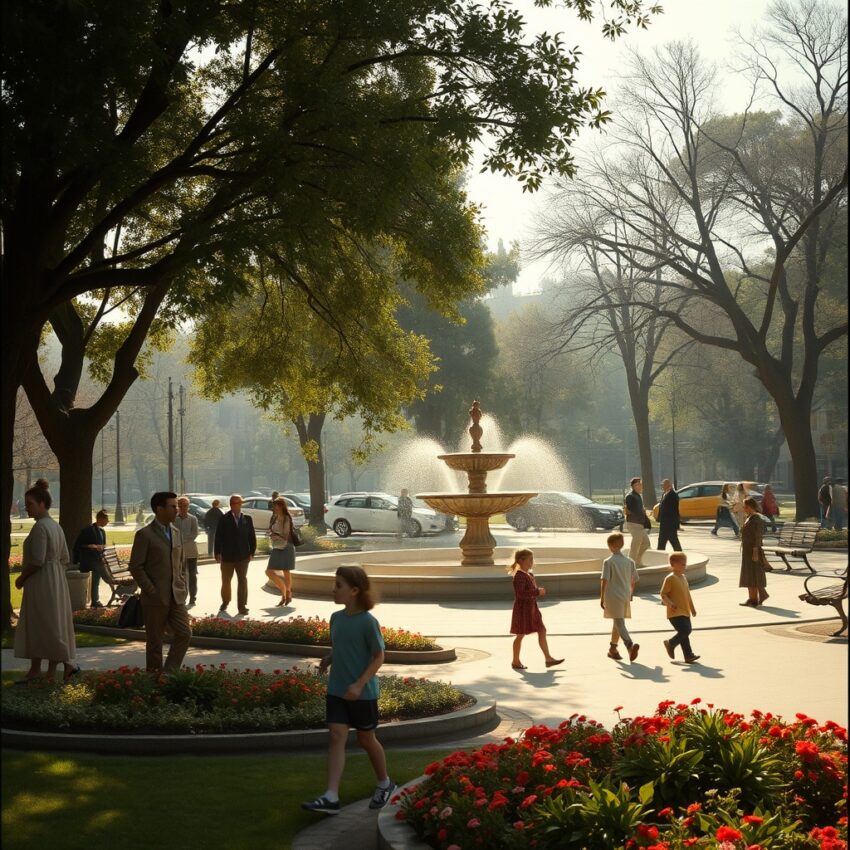
🇹🇷 Türkçe | Bir kuşağın içini ısıtan günlerde şehir parklarının aile gezisine dönüştüğü pazarlar: şehir belleğinde nasıl derin bir iz açtı cam açtıran sabahlar
Bir zamanlar pazar sabahlarının sesi başka gelirdi. Henüz mahalle tam anlamıyla uyanmadan, açık bırakılmış pencere aralıklarından içeri ıhlamurla karışık serinlik dolar, uzak bir fırından yeni çıkmış ekmek kokusu, sokakları dolaşan simitçinin sesiyle birleşirdi. O sabahların en belirgin işaretlerinden biri de evlerdeki telaşsız hazırlıktı. En temiz gömlek ütülenir, çocukların saçları acele etmeden taranır, sofrada fazla oyalanılmadan çaylar içilir ve sonra ailece parka gitme fikri sanki önceden verilmiş büyük bir karar değil de haftanın doğal akışıymış gibi kendiliğinden hayata karışırdı. Cam açtıran sabahlar yalnız havanın güzelliğini değil, dışarıda birlikte geçirilecek saatlerin verdiği iç huzurunu da haber verirdi.
Zamanın İzinde bakıldığında şehir parklarının pazar günleri aile gezisine dönüşmesi, modern şehir hayatının en yumuşak kamusal alışkanlıklarından birini anlatır. Özellikle 1950’lerden sonra büyüyen kentlerde belediye parkları, süs havuzları, gezinti yolları, banklar, çiçek tarhları ve çocuk oyun alanlarıyla yalnızca yeşil bir alan değil, aynı zamanda şehirli olmanın terbiyesini öğreten ortak bir mekân hâline gelmişti. Eski gazetelerde pazar gezilerinden, park konserlerinden, ailelerin fotoğraf çektirmek için bu alanlara gidişinden ve çocukların park içindeki küçük neşelerinden sıkça söz edilmesi boşuna değildir. Çünkü park, eve kapanmadan şehirle temas etmenin en zarif yoluydu. Bir yandan dinlenme alanıydı, bir yandan da görünmenin, selamlaşmanın, çocukları dolaştırmanın ve haftayı biraz daha hafif geçirmenin yeriydi.
Bu gezilerin hafızada derin iz bırakmasının nedeni, büyük olaylardan çok küçük ayrıntılardır. Bazen park girişindeki demir kapının sesi, bazen gazoz şişesinin kapağı açılırken çıkan metal tını, bazen de çakıl taşlı yolda yankılanan ayak sesleri bir dönemin tamamını çağırmaya yeter. Çocuklar balon satan adama bakarak yürür, anneler banklara ilişip etrafı seyreder, babalar ceketini koluna atarak havuz kenarında ağır ağır dolaşırdı. Gölgelik ağaçların altında fotoğraf çektirmek başlı başına bir pazar ritüeliydi. Parkın içinde satılan çekirdek, kâğıt helva ya da mevsimine göre limonata, gezinin yalnız bir eşlikçisi değil, hafızayı tatla mühürleyen bir ayrıntısıydı. O yüzden şehir parkı, çocukluk için bir oyun alanından fazlası; yetişkinlik için de aile olmanın görünür sahnesiydi.
Cam açtıran sabahların şehir belleğinde iz bırakması biraz da pazar gününün haftalık zaman duygusunu değiştirmesinden geliyordu. Hafta içi işin, okulun ve koşturmanın hüküm sürdüğü evlerde pazar sabahı daha geniş, daha yavaş ve daha nefesli yaşanırdı. Parka gitmek, sadece temiz hava almak değil; ev içinin tekrar eden düzeninden çıkıp kamusal hayatın dingin tarafına katılmak demekti. İnsanlar birbirinin kıyafetinden, yürüyüşünden, çocuklarına gösterdiği özenli sabırdan bir şehir adabı okurdu. Şehir parkları bu yüzden yalnız yeşil alan olarak değil, görgü, dinlenme ve ortak yaşam kültürünün taşıyıcısı olarak da önem kazandı. Bir kuşağın içini ısıtan şey, belki de tam olarak buydu: kalabalığın içinde huzurlu kalabilen aile saatleri.
Bugün o pazarları düşündüğümüzde akla ilk gelen çoğu zaman parkın kendisinden önce, evin içinden başlayıp sokağa ve sonra gölgeli yollara uzanan duygudur. Açılan camlardan giren sabah, ütü kokusu, telaşsız hazırlanış, parkta geçirilen birkaç saat ve dönüşte duyulan tatlı yorgunluk, bir dönemin şehir hayatını sıcak ve insani kılan parçalar olarak hatırlanır. Şehir parklarının hafızada böylesine derin yer etmesi, onların yalnız bir gezinti mekânı değil, kuşaklar arasında aktarılan sakin mutlulukların sahnesi olmasındandır. Cam açtıran sabahlar bugün bize, iyi şehir hayatının bazen en gösterişsiz alışkanlıklarda saklandığını hatırlatır.
🇬🇧 English | On Sundays When City Parks Turned Into Family Outings in Days That Warmed a Generation’s Heart: How Did Window-Opening Mornings Leave Such a Deep Mark on Urban Memory?
There was once a different sound to Sunday mornings. Before the neighborhood had fully awakened, cool air mixed with the scent of linden drifted through half-open windows, and the smell of newly baked bread from a distant bakery joined the call of the simit seller moving down the street. One of the clearest signs of those mornings was the unhurried preparation inside the home. The cleanest shirt was ironed, children’s hair was combed without rush, tea was finished without lingering too long at the table, and then the idea of going to the park as a family entered the day as if it were not a grand plan but the natural rhythm of the week itself. Mornings that made people open the windows announced not only fine weather, but the inner ease of hours that would be spent together outdoors.
Seen in the trail of time, the way city parks turned into family outings on Sundays describes one of the gentlest public habits of urban life. Especially in the growing cities after the 1950s, municipal parks with ornamental pools, walking paths, benches, flowerbeds, and small playgrounds became not merely green areas, but shared spaces that quietly taught people how to inhabit the city together. Old newspapers often mentioned Sunday promenades, park concerts, families visiting these places to take photographs, and the small joys children found inside them. That was no accident. The park was the most graceful way of touching city life without shutting oneself indoors. It was a place to rest, but also a place to be seen, to greet others, to walk children about, and to carry the week with a little more lightness.
What gave these outings such a deep place in memory was not any single grand event, but their small details. Sometimes the sound of the iron gate at the entrance, sometimes the metallic note of a soda bottle being opened, sometimes the footsteps echoing on gravel paths were enough to summon an entire era. Children walked with their eyes on the balloon seller, mothers settled onto benches and watched the surroundings, fathers draped a jacket over one arm and moved slowly near the fountain. Having a photograph taken beneath the shade trees was itself a Sunday ritual. The sunflower seeds, wafer sheets, or seasonal lemonade sold inside the park were not only accompaniments to the outing, but details that sealed memory through taste. That is why the city park was more than a playground for childhood; it was also a visible stage for family life in adulthood.
The reason those window-opening mornings left such a mark on urban memory was also that Sunday changed the weekly sense of time. In homes ruled during the week by work, school, and hurry, Sunday morning was lived more broadly, more slowly, and with more breath. Going to the park meant not only getting fresh air, but stepping out of the repetitive order of the house and joining the calmer side of public life. People read a city’s manners in one another’s clothes, in the way they walked, in the patient care they showed their children. For that reason, city parks mattered not only as green spaces, but as carriers of etiquette, leisure, and shared civic culture. What warmed a generation’s heart may have been exactly this: family hours that could remain peaceful even within a crowd.
When we think of those Sundays today, what first returns is often not the park itself, but the feeling that began indoors, moved into the street, and stretched onward into shaded paths. The morning entering through open windows, the scent of ironing, the unhurried dressing, the few hours spent in the park, and the sweet tiredness of returning home are remembered as the pieces that made urban life of that period warm and human. City parks hold so deep a place in memory because they were not only places for a stroll, but stages where calm happiness passed from one generation to another. Those window-opening mornings remind us today that a good city life is sometimes hidden in the most unassuming habits.
🇧🇷 Português (Brasil) | Nos Domingos em que os Parques da Cidade Viravam Passeios de Família em Dias que Aqueciam o Coração de uma Geração: Como as Manhãs que Faziam Abrir as Janelas Deixaram uma Marca Tão Profunda na Memória Urbana?
Houve um tempo em que as manhãs de domingo tinham outro som. Antes mesmo de o bairro despertar por completo, um frescor misturado ao perfume de tília entrava pelas janelas entreabertas, e o cheiro de pão recém-saído do forno distante se juntava à voz do vendedor de simit passando pela rua. Um dos sinais mais claros dessas manhãs era a preparação sem pressa dentro de casa. A camisa mais limpa era passada, o cabelo das crianças era penteado com calma, o chá era tomado sem demora excessiva à mesa, e então a ideia de ir ao parque em família se encaixava no dia como se não fosse um grande plano, mas o próprio ritmo natural da semana. As manhãs que faziam abrir as janelas anunciavam não só o bom tempo, mas também a serenidade das horas que seriam vividas juntos do lado de fora.
No rastro do tempo, o fato de os parques urbanos virarem passeios de família aos domingos revela um dos hábitos públicos mais suaves da vida nas cidades. Sobretudo nas cidades que cresceram depois dos anos 1950, os parques municipais com lagos ornamentais, caminhos de passeio, bancos, canteiros de flores e pequenos brinquedos se tornaram não apenas áreas verdes, mas espaços comuns que ensinavam, em silêncio, a arte de viver a cidade em conjunto. Jornais antigos falavam com frequência dos passeios de domingo, dos concertos no parque, das famílias que iam até ali para tirar fotografias e das pequenas alegrias das crianças entre as árvores. Isso não era por acaso. O parque era a forma mais delicada de tocar a vida urbana sem se fechar dentro de casa. Era um lugar de descanso, mas também de aparecer, cumprimentar, levar as crianças para passear e atravessar a semana com mais leveza.
O que gravou esses passeios tão fundo na memória não foram grandes acontecimentos, mas pequenos detalhes. Às vezes bastava o som do portão de ferro na entrada, o estalo metálico da garrafa de refrigerante ao ser aberta ou o eco dos passos sobre o pedrisco para que uma época inteira voltasse. As crianças caminhavam olhando para o vendedor de balões, as mães se acomodavam nos bancos observando o movimento, e os pais levavam o casaco no braço enquanto andavam devagar perto do lago ou do chafariz. Tirar uma fotografia sob a sombra das árvores era por si só um ritual dominical. As sementes, a folha de wafer ou a limonada da estação vendidas ali não eram apenas acompanhamentos do passeio, mas detalhes que selavam a lembrança pelo sabor. Por isso o parque urbano era mais do que um campo de brincadeira para a infância; era também o palco visível da vida em família.
O motivo de essas manhãs que faziam abrir as janelas terem deixado uma marca tão profunda na memória urbana também está no modo como o domingo alterava a sensação semanal do tempo. Nas casas governadas durante a semana pelo trabalho, pela escola e pela correria, a manhã de domingo era vivida de forma mais ampla, mais lenta e mais respirável. Ir ao parque significava não apenas tomar ar puro, mas sair da ordem repetitiva do interior da casa e entrar na parte mais serena da vida pública. As pessoas liam uma educação urbana nas roupas dos outros, no jeito de caminhar e na paciência cuidadosa com que tratavam as crianças. Por isso os parques não ganharam importância apenas como áreas verdes, mas como portadores de etiqueta, descanso e cultura de convivência. O que aquecia o coração de uma geração talvez fosse exatamente isso: horas em família capazes de permanecer tranquilas mesmo dentro da multidão.
Quando pensamos hoje nesses domingos, o que primeiro retorna muitas vezes não é o parque em si, mas o sentimento que começava dentro de casa, passava pela rua e seguia até os caminhos sombreados. A manhã entrando pela janela aberta, o cheiro da roupa passada, a preparação sem pressa, as poucas horas no parque e o cansaço doce na volta para casa permanecem na lembrança como peças de uma vida urbana mais quente e mais humana. Os parques da cidade ocupam um lugar tão profundo na memória porque não eram apenas lugares de passeio, mas cenários onde felicidades tranquilas passavam de uma geração a outra. Essas manhãs ainda nos lembram que uma boa vida urbana às vezes se esconde nos hábitos mais simples.