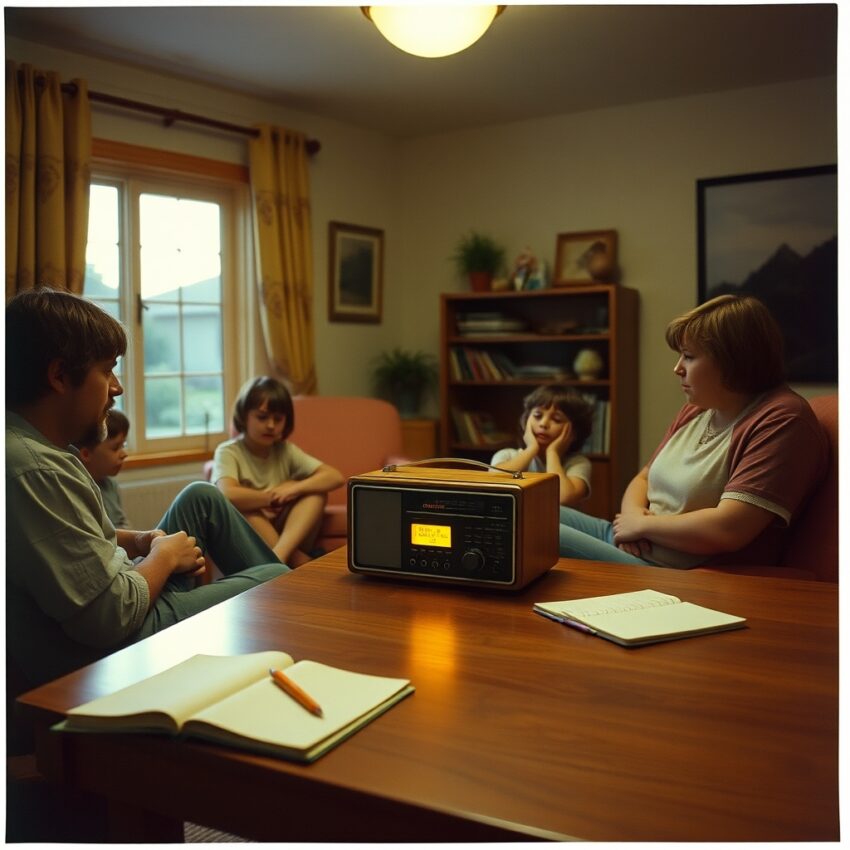
🇹🇷 Türkçe | amatör telsiz: salonda toplanan ailelerin sessiz heyecanı içinde analog çağın unutulmayan heyecanını anlatıyor mahalle seslerinin arasında unutulmuş bir fotoğraf gibi
Bir zamanlar akşam yemeği toplandıktan, çay tepsisi orta sehpaya bırakıldıktan ve perdeler yarıya kadar çekildikten sonra bazı evlerde salonun havası bir anda değişirdi. Konsolun üstünde ya da pencereye yakın küçük bir masada duran amatör telsiz cihazı, sıradan eşyalar arasında bile farklı bir ağırlık taşırdı. Düğmeleri çevrilirken çıkan hafif sürtünme sesi, ibrenin titrek hareketi, hoparlörden yükselen cızırtı ve araya karışan uzak bir ses, ev halkını görünmeyen bir dünyanın kıyısına getirirdi. Mahalle dışarıda kendi sesine devam ederdi; sokaktan top oynayan çocukların bağırışı, komşu daireden gelen tabak çanak sesi, uzak bir minibüs kornası duyulurdu. Ama salonun içinde herkes sanki aynı fotoğraf karesine girer gibi biraz susar, biraz yaklaşır, biraz merakla beklerdi.
Teknoloji Mirası açısından amatör telsiz, analog çağın yalnız bir haberleşme aracı değil, mühendislikle duygunun birbirine değdiği eşsiz eşyalardan biriydi. O yıllarda teknoloji bugünkü kadar görünmez değildi; çalıştığı anlaşılır, ayarı hissedilir, sesi emek isterdi. Frekans bulmak için sabır gerekirdi, antenin yönü önem taşırdı, havanın durumu bile bağlantının tonunu değiştirebilirdi. Bu yüzden amatör telsiz kullanan kişi, yalnız cihazı yöneten biri değil, görünmeyen mesafelerle ilişki kuran bir aracı gibiydi. Çocuklar için bu, salonun içinden şehir dışına hatta ülke dışına uzanabilen bir mucizeydi. Büyükler için ise gündelik hayatın dar çerçevesi içinde dünyaya açılan ölçülü, sessiz ve saygın bir pencereydi.
Ailelerin salonda toplanmasının nedeni sadece teknik merak değildi. Telsiz konuşmaları, ev içi zamanı başka türlü kurardı. Herkes saatlere bakar, “bu akşam bağlantı olur mu” diye bekler, bir çağrı işareti duyulduğunda yüzler aynı anda cihazın başına dönerdi. Bu heyecan yüksek sesli değildi; daha çok sesini kısmış bir evin ortak dikkatine benzerdi. Bazen konuşma net çıkar, bazen kelimeler cızırtıya karışır, bazen hiç bağlantı kurulamazdı. Ama başarısız akşamlar bile merakı eksiltmezdi. Çünkü analog çağın unutulmayan heyecanı biraz da kesinliğin az, ihtimalin yüksek olmasından doğuyordu. Her frekans taraması, bilinmeyen bir kapıyı aralamak gibiydi. Bir yabancının sesi birden salonun ortasına düşer, evin duvarları birkaç dakikalığına başka şehirlerin havasını taşırdı.
Mahalle sesleriyle telsiz sesinin birbirine karışması, bu hatırayı bugün unutulmuş bir fotoğraf gibi etkileyici kılıyor. Bir yanda gündelik hayatın tanıdık ritmi sürerdi: alt komşunun kapısı kapanır, bakkal çırağı son siparişi yetiştirir, sokak lambası yanar, anneler balkonlardan seslenirdi. Öte yanda hoparlörden gelen çatallı sesler, kodlar ve kısa selamlaşmalar bu tanıdık ritmin içine görünmeyen mesafeleri eklerdi. Böylece amatör telsiz, mahalle hayatını dağıtmadan ona yeni bir ufuk açardı. Teknoloji eve yabancı bir misafir gibi değil, ev düzenine usulca yerleşen bir komşu gibi girerdi. Cihazın yanında duran not defteri, kurşun kalem, yedek kablo ve dikkatle saklanan kullanım bilgileri de bu özenin parçalarıydı.
Bugün bu heyecanın unutulmamasının nedeni belki de teknolojinin bir zamanlar insanı aceleye değil dikkate çağırmasıydı. Amatör telsiz sabır ister, dinleme terbiyesi ister, boşluğu ve sessizliği de iletişimin parçası sayardı. O yüzden salonda toplanan ailelerin sessiz heyecanı, yalnız teknik bir merak değil, birlikte odaklanabilmenin de hatırasıdır. Unutulmuş bir fotoğraf nasıl bakıldıkça içinden yeni ayrıntılar çıkarırsa, amatör telsiz de hafızada öyle durur: cızırtının içinde parlayan bir ses, mahalle akşamına karışan uzak bir dünya ve analog çağın hâlâ kalbe yakın duran dikkatli temposu. Bu nedenle bugün bile o cihazlar yalnız nostaljik eşya değil, dinleyerek bağ kurmanın eski ama değerli biçimi olarak anılır.
🇬🇧 English | Amateur Radio: Within the Quiet Excitement of Families Gathered in the Living Room, It Tells the Unforgotten Thrill of the Analog Age Like a Forgotten Photograph Among Neighborhood Sounds
There was a time when, after dinner had been cleared away, the tray of tea had been placed on the coffee table, and the curtains had been drawn halfway, the mood in some living rooms changed all at once. The amateur radio set resting on a side table near the window or on top of the cabinet carried a different weight even among ordinary household objects. The faint friction of turning the knobs, the trembling movement of the dial, the static rising from the speaker, and a distant voice suddenly breaking through brought the family to the edge of an unseen world. Outside, the neighborhood continued in its own familiar sound: children shouting over a street game, dishes clattering in the apartment next door, a minibus horn far away. Yet inside the room everyone grew a little quieter, leaned a little closer, and waited with shared curiosity, as if entering the same old photograph.
As technological heritage, amateur radio was not merely a communication device. It was one of the rare objects of the analog age where engineering and emotion touched each other directly. Technology in those years was not as invisible as it is today. You could understand that it was working, feel its settings, and hear the effort inside its sound. Finding the right frequency required patience, the direction of the antenna mattered, and even the weather could change the tone of a connection. For that reason, the person using the radio seemed not only to operate a device, but to mediate between visible life and unseen distance. For children, this felt like a miracle that stretched from the living room to places beyond the neighborhood, sometimes beyond the country. For adults, it was a measured and dignified window opening onto the wider world from within the narrow frame of daily life.
Families gathered in the living room not only because of technical curiosity. Radio sessions arranged time inside the home differently. People checked the clock, wondered whether a contact would happen that evening, and turned together toward the set when a call sign was heard. The excitement was never loud. It was more like the collective attention of a house that had lowered its voice. Sometimes the conversation came through clearly, sometimes words dissolved into static, and sometimes no connection happened at all. Yet even unsuccessful evenings did not diminish the fascination. Part of the unforgettable thrill of the analog age came precisely from the fact that certainty was small and possibility was large. Every sweep across the frequencies felt like opening a hidden door. A stranger’s voice could suddenly fall into the middle of the room and make the walls of the house carry the air of another city for a few minutes.
The way neighborhood sounds mingled with the voice of the radio is what makes the memory feel today like a forgotten photograph. On one side, the rhythm of ordinary life continued: the downstairs neighbor shut a door, the grocer’s helper delivered the last order, the streetlamp flickered on, mothers called from balconies. On the other side, coded greetings, fractured voices, and short exchanges arriving through the speaker added invisible distance to that familiar rhythm. In that way, amateur radio widened neighborhood life without disturbing it. Technology entered the home not like a foreign guest, but like a careful neighbor quietly finding a place in the room. The notebook beside the radio, the pencil, the spare cable, and the carefully kept operating notes were all part of that same attentiveness.
Perhaps this excitement remains unforgettable because technology once invited people not into haste, but into attention. Amateur radio required patience, the courtesy of listening, and an understanding that silence and empty space were also part of communication. That is why the quiet excitement of families gathered in the living room is remembered not only as technical interest, but as the memory of being able to focus together. Just as a forgotten photograph reveals new details each time one looks at it, amateur radio remains in memory in the same way: a voice shining through static, a far-off world mixing with the evening sounds of the neighborhood, and the careful tempo of the analog age still close to the heart. For that reason, these devices are remembered today not only as nostalgic objects, but as an older and valuable form of building connection by listening.
🇧🇷 Português (Brasil) | Rádio Amador: Dentro da Expectativa Silenciosa das Famílias Reunidas na Sala, Ele Conta a Emoção Inesquecida da Era Analógica Como uma Fotografia Esquecida Entre os Sons da Vizinhança
Houve um tempo em que, depois do jantar recolhido, da bandeja de chá colocada sobre a mesa de centro e das cortinas puxadas até a metade, o clima de algumas salas mudava de repente. O aparelho de rádio amador, posto sobre um móvel ou numa pequena mesa perto da janela, tinha um peso diferente mesmo entre os objetos mais comuns da casa. O leve atrito dos botões sendo girados, o movimento trêmulo do dial, o chiado saindo do alto-falante e uma voz distante surgindo de repente levavam a família para a beira de um mundo invisível. Lá fora, a vizinhança seguia com seus sons habituais: crianças gritando por causa de uma brincadeira na rua, pratos batendo no apartamento ao lado, uma buzina de lotação mais longe. Mas dentro da sala todos ficavam um pouco mais em silêncio, se aproximavam um pouco mais e esperavam com curiosidade partilhada, como se entrassem juntos na mesma fotografia antiga.
Como legado tecnológico, o rádio amador não era apenas um aparelho de comunicação. Era um dos objetos raros da era analógica em que engenharia e emoção se tocavam de maneira direta. Naqueles anos, a tecnologia ainda não era invisível como hoje. Era possível perceber que ela funcionava, sentir seus ajustes e ouvir o esforço dentro do som. Encontrar a frequência certa exigia paciência, a direção da antena importava, e até o tempo mudava o tom da conexão. Por isso, quem operava o rádio parecia não apenas comandar um aparelho, mas fazer a mediação entre a vida visível e as distâncias invisíveis. Para as crianças, aquilo era um milagre que saía da sala e alcançava lugares além do bairro, às vezes além do país. Para os adultos, era uma janela discreta e respeitosa que abria o mundo maior dentro do enquadramento estreito da vida cotidiana.
As famílias se reuniam na sala não só por curiosidade técnica. As sessões do rádio organizavam o tempo da casa de outro modo. Todos olhavam o relógio, perguntavam se haveria contato naquela noite e voltavam o rosto para o aparelho quando ouviam um indicativo de chamada. A expectativa não era barulhenta. Parecia mais a atenção coletiva de uma casa que havia abaixado a voz. Às vezes a conversa saía nítida, às vezes as palavras se perdiam no chiado, às vezes nenhuma conexão se completava. Mesmo assim, as noites frustradas não diminuíam o fascínio. Parte da emoção inesquecida da era analógica vinha justamente do fato de a certeza ser pequena e a possibilidade, grande. Cada busca por frequência parecia abrir uma porta escondida. A voz de um desconhecido podia cair de repente no meio da sala e fazer as paredes da casa carregarem o ar de outra cidade por alguns minutos.
O encontro entre os sons da vizinhança e a voz do rádio é o que faz essa lembrança parecer hoje uma fotografia esquecida. De um lado, o ritmo da vida comum seguia: a porta da vizinha de baixo batia, o ajudante do armazém entregava o último pedido, o poste acendia, mães chamavam dos balcões. Do outro, saudações codificadas, vozes entrecortadas e trocas breves vindas do alto-falante acrescentavam distâncias invisíveis a esse ritmo conhecido. Assim, o rádio amador ampliava a vida do bairro sem desfazê-la. A tecnologia entrava em casa não como uma visita estranha, mas como um vizinho cuidadoso que encontrava seu lugar com delicadeza. O caderno ao lado do aparelho, o lápis, o cabo de reserva e as anotações guardadas com atenção também faziam parte desse mesmo zelo.
Talvez essa emoção permaneça inesquecível porque a tecnologia, naquele tempo, chamava as pessoas não para a pressa, mas para a atenção. O rádio amador exigia paciência, a educação de escutar e a compreensão de que o silêncio e os intervalos também fazem parte da comunicação. Por isso, a expectativa silenciosa das famílias reunidas na sala é lembrada não apenas como curiosidade técnica, mas como memória da capacidade de prestar atenção juntos. Assim como uma fotografia esquecida revela novos detalhes cada vez que se olha para ela, o rádio amador permanece na lembrança do mesmo modo: uma voz brilhando dentro do chiado, um mundo distante misturado aos sons da vizinhança e o ritmo cuidadoso da era analógica ainda perto do coração. Por isso, esses aparelhos são lembrados hoje não apenas como objetos nostálgicos, mas como uma antiga e valiosa forma de criar laços ouvindo.