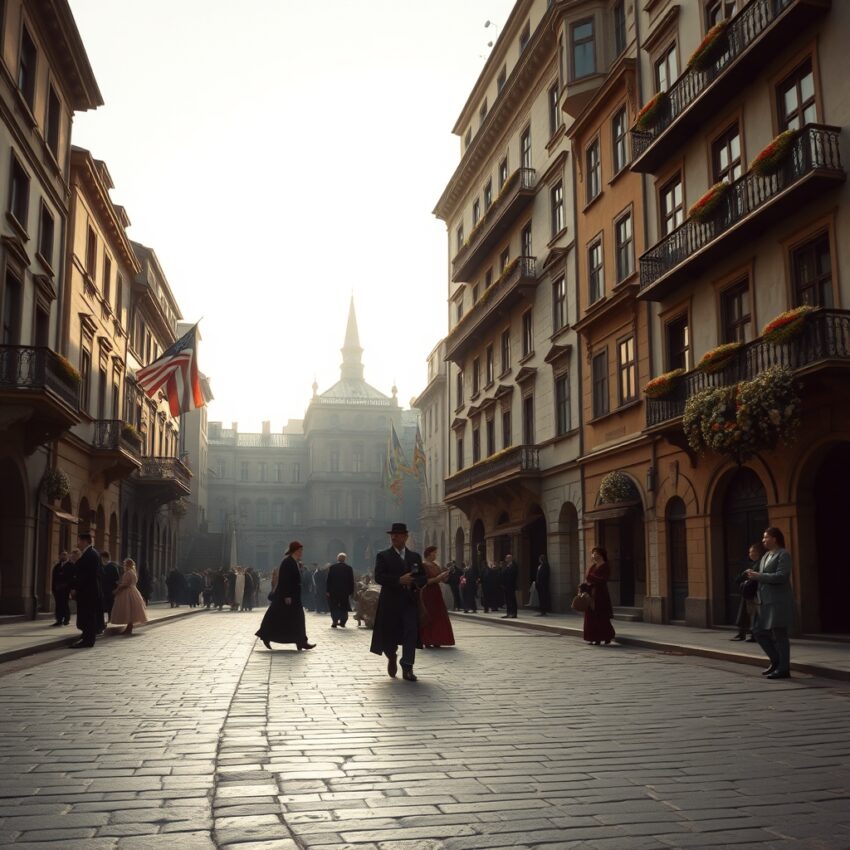
🇹🇷 Türkçe | Eski şehir hayatında şehir meydanlarında resmi törenlerin heyecan yarattığı günler: hafızada neden hâlâ bu kadar canlı cam açtıran sabahlar
Bir zamanlar bazı sabahlar sıradan başlamazdı. Gün henüz tam aydınlanmadan önce evlerin ahşap kepenkleri aralanır, ince tül perdelerin ardından meydana doğru bir hareketlilik sezilirdi. Bakır ibriğin suyu sobanın üstünde ısınırken, anneler çocukların yakalarını düzeltir, babalar ceket düğmelerini ilikler, büyükanneler “erken gidin, kalabalık olur” diye seslenirdi. Resmi tören günü demek, şehir meydanının gündelik hâlinden çıkıp daha derli toplu, daha dikkatli, daha meraklı bir görünüme bürünmesi demekti. Cam açtıran sabahlar biraz da bu yüzden hafızada kaldı; çünkü daha sokağa inmeden bile şehir, evlerin içinden duyulan heyecanla başka bir ritme geçerdi.
Zamanın İzinde açısından şehir meydanlarındaki resmi törenler yalnız devlet ciddiyetinin sergilendiği anlar değildi. Onlar, eski şehir hayatında ortak zaman duygusunu kuran kamusal sahnelerdi. Meydanlara bayraklar asılır, belediye hoparlörleri kontrol edilir, esnaf dükkânının kepengini yarım açıp önce kalabalığı seyrederdi. Gazete satıcıları o gün biraz daha erken görünür, simitçiler ve leblebiciler kalabalığın nerede yoğunlaşacağını önceden kestirmeye çalışırdı. İnsanlar töreni yalnız seyretmeye gitmezdi; aynı zamanda şehrin bir parçası olduklarını yeniden hissetmeye giderlerdi. Bu yüzden sabahın serinliğiyle karışan o hazırlık hâli, şehir hafızasında yalnız bir etkinlik olarak değil, paylaşılan bir toplumsal düzen duygusu olarak yer etti.
O sabahların ayrıntıları bugün bile zihinde kolayca canlanır. Çocuklar en ön sırayı görmek için biraz erkenden meydana götürülür, okul kıyafetleri daha özenli giyilir, saçlara su sürülür, ayakkabılar bir akşam önce boyanırdı. Meydana çıkan sokaklarda balkonlara dayanmış komşular görünür, dükkân önlerinde ayakta bekleyenler birbirine “hangi saat başlayacak” diye sorardı. Bando takımının uzaktan gelen ilk sesi, ev içindeki kahvaltıyı hızlandırır; çay bardakları masada yarım kalır, ekmek son lokmalarla acelece yenirdi. Resmi törenlerin heyecanı tam da burada büyürdü: şehir bir anda gündelik dağınıklığını toplayıp daha ölçülü, daha görünür, daha ortak bir yüz kazanırdı. Meydana gitmeyenler bile camdan izleyerek bu toplu heyecanın parçası olurdu.
Bu törenlerin hafızada canlı kalmasının bir nedeni de görsel düzen ile gündelik hayatın aynı sahnede buluşmasıydı. Üniformalar, bayrak direkleri, cilalı ayakkabılar, kaldırım taşlarına vuran sabah ışığı ve hoparlörden yankılanan anonslar, çocuk zihinlerinde güçlü bir manzara kurardı. Ancak asıl kalıcılık, bu büyük görüntünün içindeki küçük insani hareketlerdeydi. Bir annenin çocuğunun omzunu silkelemesi, yaşlı bir adamın bastonuyla gölge araması, bakkalın tören bitince dükkânına dönerken komşusuna başıyla selam vermesi, o resmiyetin içindeki sıcaklığı taşıyordu. Şehir meydanı böyle günlerde yalnız bir yönetim alanı değil, bütün sınıfları ve kuşakları aynı sabah içinde bir araya getiren ortak bir sahneye dönüşürdü. Hafızanın cam açtıran sabahları, biraz da bu yüzden hâlâ bu kadar canlıdır.
Bugün şehir meydanları başka hızlarla, başka kalabalıklarla doluyor olabilir; yine de o resmi tören sabahlarının bıraktığı etki bütünüyle silinmiş değil. İnsanların önemli günlerde daha özenli giyinmesi, çocukların kamusal alanı ilk kez ciddi bir dikkatle seyretmesi, pencere önlerinde toplanıp aşağıyı izleme alışkanlığı ve meydanın yalnız geçilen değil birlikte bakılan bir yer olduğuna dair eski duygu, o dönemlerden bugüne sızdı. Cam açtıran sabahların hafızada kalmasının sebebi yalnız törenin kendisi değil, şehirle kurulan ilişkinin bir süreliğine daha dikkatli, daha yavaş ve daha ortak hâle gelmesiydi. Eski şehir hayatında resmi törenlerin yarattığı heyecan, bugün bile geçmişi düşünürken insanın zihninde pencereyi aralayan ilk sabah rüzgârı gibi dönüp geliyor.
🇬🇧 English | The Days in Old City Life When Official Ceremonies Filled City Squares with Excitement: Why Do Those Mornings That Made Windows Open Still Remain So Vivid in Memory
There was a time when certain mornings did not begin in an ordinary way. Before daylight had fully settled, wooden shutters would be pushed open, and behind thin curtains a movement toward the square could already be sensed. While water warmed in a copper ewer on the stove, mothers straightened collars, fathers buttoned their jackets, and grandmothers called out, “Go early, it will be crowded.” A day of official ceremony meant that the city square would step out of its daily self and take on a more orderly, more attentive, more curious appearance. Those mornings that made people open the windows remained in memory for exactly that reason: even before stepping into the street, the city had already shifted into another rhythm through the excitement felt inside the houses.
Seen through the lens of time, official ceremonies in city squares were not only moments when public authority displayed its seriousness. They were public scenes that created a shared sense of time in old urban life. Flags were hung across the square, municipal loudspeakers were tested, and shopkeepers opened their shutters halfway so they could watch the crowd first. Newspaper sellers appeared a little earlier than usual, and vendors with simit or roasted chickpeas tried to guess where the gathering would be thickest. People did not go only to watch the ceremony; they also went to feel again that they belonged to the city. For that reason, the state of preparation mixed with the chill of morning stayed in urban memory not merely as an event, but as a shared sense of civic order.
The details of those mornings can still be pictured with ease. Children were taken early so they could see the front rows, school clothes were worn with extra care, hair was combed with water, and shoes had often been polished the night before. On the streets leading to the square, neighbors leaned on balconies, while those waiting in front of shops asked one another, “What time does it begin?” The first distant sound of the marching band hurried breakfast inside the home; tea glasses were left half full on the table, and bread was finished in quick last bites. The excitement of official ceremonies grew precisely there: the city gathered its ordinary untidiness and suddenly gained a face that felt more measured, more visible, more shared. Even those who never went down became part of the collective mood by watching from the window.
Part of the reason these ceremonies remain so vivid is that visual order and everyday life appeared in the same scene. Uniforms, flagpoles, polished shoes, morning light striking the paving stones, and announcements echoing through loudspeakers built a powerful image in the minds of children. Yet what truly endured was the small human movement inside that larger picture. A mother dusting her child’s shoulder, an elderly man looking for shade with his cane, a grocer nodding to a neighbor as he returned to his shop after the ceremony, all carried warmth inside the official formality. On such days the city square became not just an administrative place, but a common stage bringing together different classes and generations within the same morning. Those window-opening mornings remain vivid because of that mingling.
Today city squares may fill with different speeds and different crowds, yet the effect left by those ceremonial mornings has not fully vanished. The habit of dressing a little more carefully on important days, children looking at public space for the first time with serious attention, the custom of gathering by the window to watch below, and the old feeling that a square is not only a place one passes through but a place one looks at together all reached the present from those years. What keeps those mornings alive in memory is not only the ceremony itself, but the way the city briefly became more attentive, slower, and more collective. The excitement official ceremonies once created in old city life still returns like the first morning breeze that makes someone reach for the window latch.
🇧🇷 Português (Brasil) | Os Dias da Vida Urbana Antiga em que as Cerimônias Oficiais Enchiam as Praças de Emoção: Por que Essas Manhãs que Faziam as Janelas se Abrirem Ainda Permanecem Tão Vivas na Memória
Houve um tempo em que certas manhãs não começavam de modo comum. Antes mesmo de o dia clarear por completo, os postigos de madeira se abriam, e por trás das cortinas finas já se percebia um movimento em direção à praça. Enquanto a água aquecia no fogão dentro de um jarro de cobre, as mães ajeitavam as golas das crianças, os pais fechavam os botões do paletó, e as avós avisavam: “Vão cedo, vai encher.” Um dia de cerimônia oficial significava que a praça deixaria de ser apenas a praça de sempre para ganhar um ar mais organizado, mais atento, mais curioso. Essas manhãs que faziam abrir as janelas ficaram na memória justamente por isso: antes mesmo de descer à rua, a cidade já mudava de ritmo por causa da animação que corria dentro das casas.
Pelo olhar do tempo, as cerimônias oficiais nas praças não eram apenas ocasiões em que a autoridade pública mostrava sua seriedade. Eram cenas coletivas que criavam uma sensação comum de tempo na antiga vida urbana. Bandeiras eram penduradas, os alto-falantes da prefeitura eram testados, e os comerciantes abriam as portas só até a metade para primeiro observar a movimentação. Os vendedores de jornal apareciam mais cedo, e os ambulantes de simit ou grão-de-bico torrado tentavam adivinhar onde o fluxo seria maior. As pessoas não iam apenas assistir; iam também para sentir outra vez que pertenciam à cidade. Por isso, aquele estado de preparação misturado ao frescor da manhã permaneceu na memória urbana não só como um evento, mas como uma sensação compartilhada de ordem pública.
Os detalhes dessas manhãs ainda são fáceis de imaginar. As crianças eram levadas cedo para enxergar melhor as primeiras filas, o uniforme escolar era vestido com mais capricho, o cabelo recebia um pouco de água, e os sapatos costumavam ser engraxados na noite anterior. Nas ruas que levavam à praça, vizinhos se apoiavam nas varandas, enquanto quem esperava diante das lojas perguntava: “Que horas começa?” O primeiro som distante da banda acelerava o café da manhã em casa; os copos de chá ficavam pela metade sobre a mesa e o pão era terminado às pressas. A emoção das cerimônias crescia exatamente aí: a cidade recolhia sua desordem cotidiana e ganhava de repente um rosto mais contido, mais visível, mais comum. Mesmo quem não descia para a praça participava olhando pela janela.
Parte da razão de essas cerimônias continuarem tão vivas está no encontro entre a ordem visual e a vida diária na mesma cena. Uniformes, mastros de bandeira, sapatos bem lustrados, a luz da manhã batendo nas pedras da praça e os anúncios ecoando pelos alto-falantes criavam uma imagem forte na memória infantil. Mas o que mais permanecia eram os pequenos gestos humanos dentro desse quadro maior. Uma mãe limpando o ombro do filho, um senhor procurando sombra com a bengala, o dono da mercearia cumprimentando o vizinho com a cabeça ao voltar para a loja depois do evento, tudo isso levava calor para dentro da formalidade. Nesses dias, a praça não era apenas um espaço administrativo, mas um palco comum que reunia classes e gerações na mesma manhã. É por isso que essas manhãs de janela aberta ainda parecem tão vivas.
Hoje as praças podem se encher com outras pressas e outras multidões, mas o efeito deixado por aquelas manhãs cerimoniais não desapareceu por completo. O hábito de se vestir com um pouco mais de cuidado nos dias importantes, o primeiro olhar mais atento das crianças sobre o espaço público, a mania de se juntar na janela para observar o movimento, e a antiga sensação de que a praça não é apenas um lugar de passagem, mas um lugar de observação coletiva, vieram daqueles anos. O que mantém essas manhãs acesas na memória não é apenas a cerimônia em si, mas o fato de a cidade se tornar por algum tempo mais atenta, mais lenta e mais compartilhada. A emoção que as cerimônias oficiais criavam na antiga vida urbana ainda volta hoje como um primeiro vento da manhã que faz alguém tocar o trinco da janela.