🇹🇷 Türkçe | Halka Tatlının Aile Tariflerinde Yaşayan Sokak Hafızası
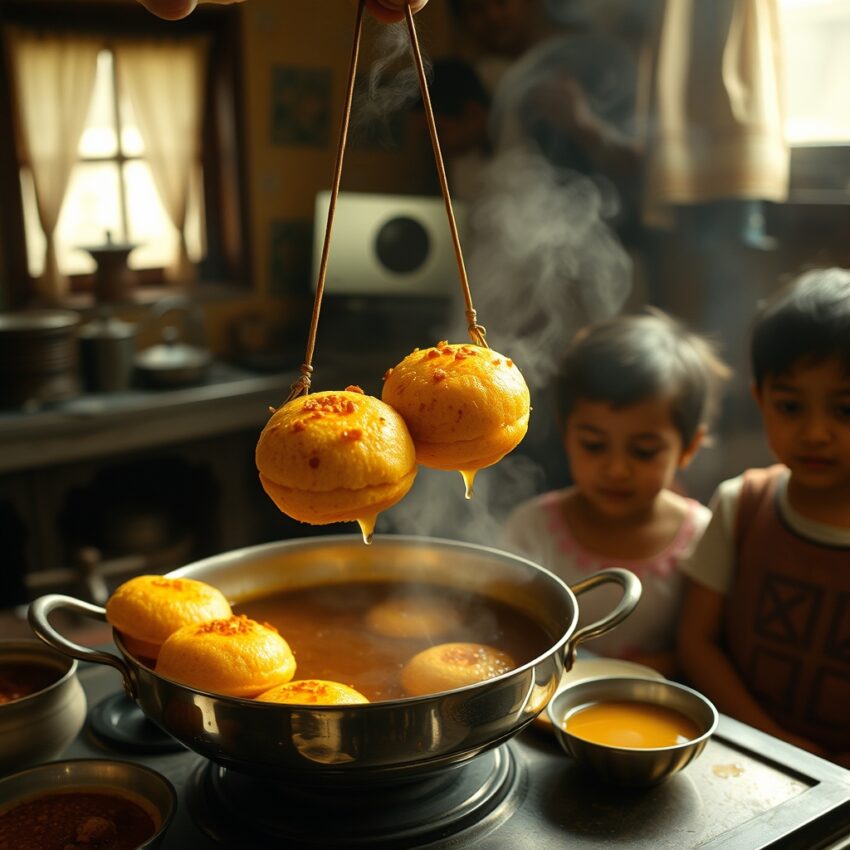
Bir zamanlar mahalle arasında yükselen kızgın yağ kokusu, çocuklara günün en tatlı haberlerinden birini verirdi. Köşe başındaki tezgâhta halka tatlı kızarıyor, altın rengine dönen halkalar büyük bir kevgirle çıkarılıp şerbete bırakılıyor, sonra tepsiye dizilerek parlak bir sabah ya da ikindi sahnesine dönüşüyordu. Sokak lezzeti olarak bilinse de halka tatlı çoğu evde yalnız dışarıdan alınan bir yiyecek olarak kalmaz, zamanla aile tariflerinin içine de yerleşirdi. Annenin ya da anneannenin ölçüsüz gibi görünen ama el alışkanlığıyla kusursuz tutan hamuru, kızgın yağın başındaki sabrı, şerbetin kıvamına gösterilen dikkat, eski mutfak kültürünün kuşaktan kuşağa aktarılmış sessiz bilgisiydi. Bu yüzden halka tatlı, sadece ağza tat bırakan bir sokak lezzeti değil; ev ile sokak arasındaki tatlı geçişin kendisiydi.
Damak Hafızası içinde halka tatlının özel yeri, tam da bu çift yönlü karakterinden gelir. Bir yandan seyyar satıcıların, mahalle panayırlarının, okul çıkışlarının ve bayram öncesi telaşların tatlısıdır; öte yandan ev mutfağına girince aile içi üretimin, paylaşmanın ve ölçü bilgisinin parçası olur. Eski mutfaklarda tarifler çoğu zaman gramla değil, “kulak memesi kıvamı”, “bir taşım kaynat”, “eli alışınca anlarsın” gibi tariflerle aktarılırdı. Halka tatlı da böyle öğrenilen lezzetlerden biriydi. Hamurun sıkma torbasından ya da bezden dikkatle dökülüşü, yağın içinde halka biçimini alışı ve ardından serin şerbete kavuşması, mutfakta hem ustalık hem sabır isteyen küçük bir törene dönüşürdü. Aile içinde bu tatlının yapılması, çocukların mutfak kapısında beklediği, ilk çıkan parçanın sıcak sıcak paylaşıldığı anıları büyütürdü. Böylece sokak tadı, evin içindeki sıcaklıkla birleşirdi.
Eski mutfak kültürünü yaşatan şey yalnız tarifin kendisi değil, o tarif etrafında oluşan davranış biçimleridir. Halka tatlı yapılacağı gün mutfakta kullanılan büyük tencere, tezgâha serilen bez, bir kenarda soğumaya bırakılan şerbet ve kızartma sırasında açılan pencere bile belli bir hatıranın parçasıdır. Aile tarifleri bu yüzden sadece lezzet değil, mutfak düzeni de taşır. Kim şerbeti hazırlar, kim hamuru karıştırır, kim ilk tepsiyi komşuya yollar; bunların hepsi yemeğin sosyal tarafını kurar. Halka tatlı, özellikle kalabalık ailelerde ve mahalle ilişkilerinin canlı olduğu dönemlerde paylaşım ekonomisinin de tatlı bir sembolüne dönüşürdü. Misafire ikram edilir, komşu tabağına konur, çocuklara okul dönüşü sürpriz olurdu. Onu özel yapan sadece dışının çıtırtısı ya da şerbetinin parlaklığı değil; birlikte yapılan ve birlikte yenilen bir lezzet olmasıdır.
Bugün halka tatlı çoğu zaman hızlı tüketilen bir atıştırmalık gibi görülse de, aile tarifleri içindeki yeri bize çok daha derin bir şeyi hatırlatır. Eski mutfak kültürü, yalnız yemek yapmayı değil, zamanı paylaşmayı, emeğe değer vermeyi ve tadı hafızaya dönüştürmeyi bilirdi. Halka tatlı bu kültürü yaşatır; çünkü sokakta başlayan lezzetini evde yeniden kurarken, iki ayrı dünyayı aynı tatta birleştirir. Bir lokmada dışarıdaki canlı hayatı, diğer lokmada evin güvenli mutfağını hissettirir. Bu yüzden birçok aile için özel bir yerde durur. Hatırlanan yalnız tatlı değildir; tavada yükselen koku, mutfakta bekleyen çocuk, şerbetin üstünde parlayan halka ve birlikte geçirilen o küçük ama kalıcı zaman parçasıdır.
🇬🇧 English | The Street Memory of Halka Tatli Preserved in Family Recipes
There was a time when the smell of hot oil rising through a neighborhood gave children one of the sweetest pieces of news in the day. At the corner stall, rings of halka tatli were frying, turning golden before being lifted with a wide skimmer into syrup, then arranged on a tray as part of a bright morning or afternoon scene. Though known as a street flavor, halka tatli did not remain in many homes as something bought only from outside. Over time it entered family recipes as well. The dough mixed by a mother or grandmother with measurements that seemed imprecise yet landed perfectly through habit, the patience shown over hot oil, and the care given to the syrup’s thickness all formed part of the quiet knowledge passed down through old kitchen culture. That is why halka tatli is more than a sweet leaving sugar on the tongue. It is the delicious passage between street and home.
Its special place within taste memory comes from precisely this double character. On one side it belongs to street vendors, neighborhood fairs, school dismissals, and the rush before holidays; on the other side, once inside the home kitchen, it becomes part of family making, sharing, and inherited knowledge of measure. In old kitchens, recipes were often taught not in grams, but through phrases like “as soft as an earlobe,” “let it boil once,” or “you will understand when your hand gets used to it.” Halka tatli was one of those flavors learned in that way. The dough being carefully piped from a cloth or pastry bag, forming rings in the oil, then meeting cool syrup afterward, turned the kitchen into a small ceremony requiring both skill and patience. When this sweet was made at home, it created memories of children waiting at the kitchen door and of the first piece being shared while still warm. In that way, the taste of the street joined the warmth of the household.
What keeps old kitchen culture alive is not only the recipe itself, but the behaviors gathered around it. On the day halka tatli was made, the large pot, the cloth spread across the counter, the syrup cooling to one side, and even the opened window during frying all became part of a recognizable memory. Family recipes therefore carry not only flavor, but also kitchen order. Who prepares the syrup, who stirs the dough, who sends the first tray to a neighbor, all of this builds the social side of food. Halka tatli, especially in large families and in years when neighborhood ties were strong, became a sweet symbol of sharing. It was offered to guests, placed on a plate for the neighbor, and turned into an after-school surprise for children. What makes it special is not only its crisp surface or shining syrup, but that it is a flavor made and eaten together.
Today, halka tatli is often seen as a quick snack, yet its place inside family recipes reminds us of something much deeper. Old kitchen culture knew not only how to cook, but how to share time, value labor, and turn taste into memory. Halka tatli keeps that culture alive because, by rebuilding a street flavor at home, it unites two worlds in the same sweetness. In one bite there is the liveliness of the street; in the next, the safety of the home kitchen. That is why it holds a special place for many families. What is remembered is not only the dessert itself, but the smell rising from the pan, the child waiting in the kitchen, the ring shining under syrup, and the small but lasting piece of time spent together.
🇧🇷 Português (Brasil) | A Memória da Rua que o Halka Tatli Mantém Viva nas Receitas de Família
Houve um tempo em que o cheiro de óleo quente subindo pela rua dava às crianças uma das notícias mais doces do dia. Na barraca da esquina, os anéis de halka tatli fritavam, douravam, eram retirados com uma escumadeira grande e mergulhados na calda antes de serem alinhados na bandeja como parte de uma manhã luminosa ou de uma tarde de bairro. Embora fosse conhecido como sabor de rua, o halka tatli não permaneceu em muitas casas apenas como algo comprado do lado de fora. Com o tempo, entrou também nas receitas de família. A massa preparada pela mãe ou pela avó com medidas que pareciam imprecisas, mas davam certo pela prática, a paciência diante do óleo quente e a atenção ao ponto da calda formavam o conhecimento silencioso transmitido pela antiga cultura da cozinha. Por isso, o halka tatli é mais do que um doce açucarado. Ele é a passagem saborosa entre a rua e a casa.
Seu lugar especial na memória gustativa vem justamente desse caráter duplo. De um lado, pertence aos vendedores ambulantes, às feiras do bairro, à saída da escola e à correria antes das festas; de outro, ao entrar na cozinha de casa, torna-se parte da produção familiar, da partilha e do saber transmitido. Nas cozinhas antigas, as receitas raramente eram ensinadas em gramas, mas em fórmulas como “no ponto da orelha”, “deixe ferver uma vez” ou “você entende quando a mão se acostuma”. O halka tatli era um desses sabores aprendidos assim. A massa saindo com cuidado do pano ou do saco de confeitar, formando anéis no óleo, e depois encontrando a calda fria transformava a cozinha numa pequena cerimônia que exigia habilidade e paciência. Fazer esse doce em casa criava lembranças de crianças esperando à porta da cozinha e do primeiro pedaço dividido ainda quente. Assim, o sabor da rua se misturava ao calor do lar.
O que mantém viva a antiga cultura da cozinha não é apenas a receita em si, mas os gestos reunidos ao redor dela. No dia de preparar halka tatli, a panela grande, o pano estendido sobre a bancada, a calda esfriando num canto e até a janela aberta durante a fritura se tornavam parte de uma lembrança reconhecível. As receitas de família, portanto, carregam não só sabor, mas também uma certa ordem doméstica. Quem faz a calda, quem mexe a massa, quem leva a primeira bandeja para o vizinho, tudo isso constrói o lado social da comida. O halka tatli, sobretudo em famílias grandes e em tempos de vínculos fortes no bairro, transformava-se num símbolo doce de partilha. Era servido a visitas, colocado num prato para a casa ao lado e virava surpresa para as crianças na volta da escola. O que o torna especial não é apenas a crocância da superfície ou o brilho da calda, mas o fato de ser um sabor preparado e comido em conjunto.
Hoje, o halka tatli muitas vezes é visto como um lanche rápido, mas seu lugar nas receitas de família nos lembra algo bem mais profundo. A antiga cultura da cozinha sabia não apenas cozinhar, mas também dividir o tempo, valorizar o trabalho e transformar o sabor em memória. O halka tatli mantém essa cultura viva porque, ao recriar em casa um gosto de rua, une dois mundos na mesma doçura. Numa mordida está a vivacidade da rua; na outra, a segurança da cozinha doméstica. É por isso que ocupa um lugar especial para tantas famílias. O que se recorda não é somente o doce, mas o cheiro que sobe da panela, a criança esperando na cozinha, o anel brilhando sob a calda e aquele pequeno, porém duradouro, pedaço de tempo vivido junto.