🇹🇷 Türkçe | Mekanik Metronomun Tamircilerde Yeniden Nabız Bulan Hikâyesi
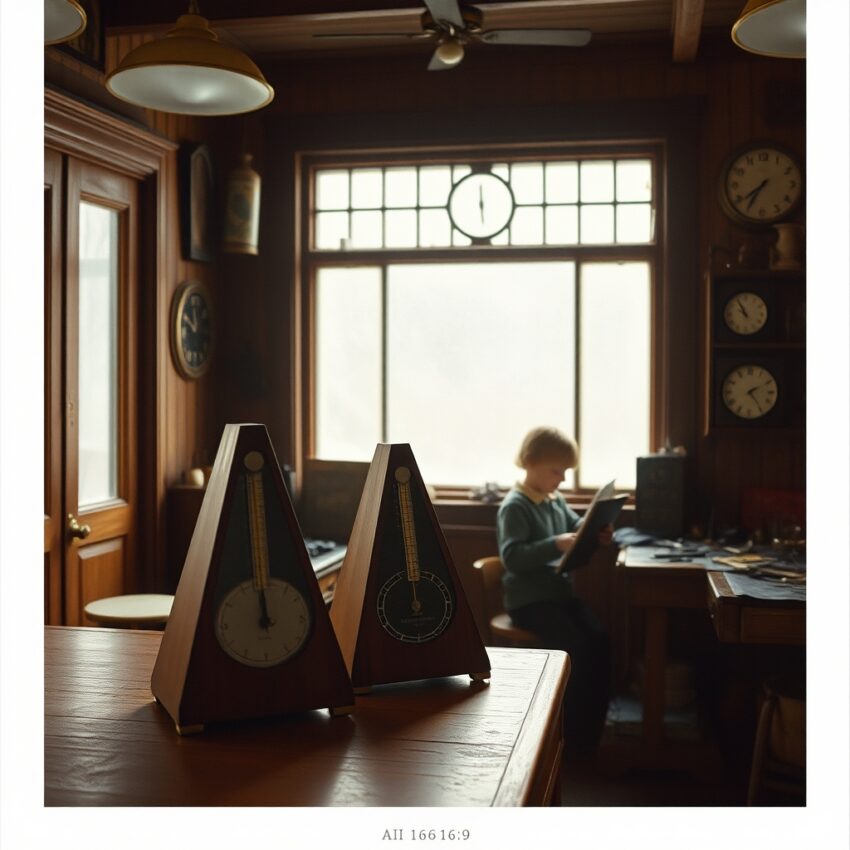
Bir zamanlar kış günlerinde bazı sesler evin içinde daha belirgin duyulurdu. Sobanın hafif uğultusu, sokaktan gelen uzak ayak sesleri, camın buğusuna parmakla çizilen şekiller ve bir masanın üstünde tik tak ederek işleyen mekanik metronomun düzenli vuruşu aynı odada buluşurdu. Müzik çalışan bir çocuğun dirseklerini masaya dayayıp o ritme ayak uydurmaya çalıştığı, yan odada birinin dikiş diktiği, komşu pencerelerine yaslanmış bakışların sokağın ağır kış ışığını seyrettiği saatlerdi bunlar. Metronom, o odalarda yalnızca tempo veren bir araç değildi; zamanı ölçen, dikkati toplayan ve ev içi sessizliği görünmez bir iskelete bağlayan küçük bir makineydi. Yıllar sonra bozulduğunda bile hemen atılmaz, çoğu zaman bir tamircinin tezgâhına götürülürdü. Çünkü o tik tak sesinde yalnız müzik değil, bir dönemin çalışma disiplini ve ev içi terbiyesi saklıydı.
Teknoloji Mirası açısından bakıldığında mekanik metronomun ikinci ömrü, analog mühendisliğin tamir kültürüyle kurduğu derin ilişkiyi anlatır. Yaylı düzenek, sarkaç ağırlığı, hassas dişliler ve sabit ritim, bu küçük nesneyi hem teknik hem de duygusal açıdan kıymetli kılıyordu. Birçok evde piyano ya da keman kadar görünür olmayan bu araç, yine de çalışma saatlerinin merkezindeydi. Bozulduğunda mesele yalnız işlev kaybı değildi; sanki evin içindeki düzenli nefes kesiliyor gibiydi. Eski tamirciler metronomu ellerine aldığında onu sıradan bir eşya gibi değil, karakteri olan bir mekanizma gibi incelerdi. Ahşap kasadaki çatlağı, sarkacın tutuşunu, içerideki yayın direncini sabırla yoklar; bazen bir vida, bazen bir denge ayarıyla ona yeniden ritim kazandırırlardı. Bu yüzden metronomun ikinci ömrü, tamircinin becerisinden çok, o dönemin eşyayla kurduğu vefalı ilişkiyi de açıklar.
Mahalle içinde bu onarım kültürü sessiz ama güçlü bir dolaşıma sahipti. Kışın buğulu camına vurup geçen çocuk, elinde kahverengi bir kılıfla tamirci dükkânına uğrayan komşuyu görebilir; dükkânın içinde saatler, lambalar, radyolar ve küçük müzik aletleri arasında metronomun da kendine bir yer bulduğunu fark edebilirdi. Tamircinin tezgâhı çoğu zaman teknolojinin yaşlandığı değil, yeniden hayata döndüğü bir eşikti. Mekanik metronom da burada sadece çalışan bir araç olarak değil, evlerdeki eğitim anlayışının, sabır duygusunun ve düzen arayışının temsilcisi olarak dururdu. Düzenli ritim, çocukların ders çalışırken edindiği ciddiyetle, müzik öğretmenlerinin titizliğiyle ve ailelerin emekle alınmış eşyaya gösterdiği özenle birleşirdi. Bu nedenle onarılan her metronom, bir objenin tamirinden fazlasını ifade eder; geçmişin ölçülü hayat ritmini biraz daha uzatırdı.
Bugün mekanik metronoma duyulan ilginin yeniden artması tesadüf değildir. Dijital uygulamalar elbette daha hızlı ve erişilebilir olabilir, ama onlar tamircinin elinde yeniden canlanan bir ağırlık duygusunu, ahşap yüzeyin sıcaklığını ve tik tak sesinin odaya yaydığı somut zamanı taşımaz. Mekanik metronomun ikinci ömrü bize, eski teknolojilerin yalnız kullanım değeriyle değil, tamir edilebilir oluşlarıyla da anlam kazandığını hatırlatır. Komşu pencerelerine yaslanarak geçen kış saatlerinde, buğulu cama vurup sokaktaki hayata bakan çocukların arkasında işleyen o ritim, bir kuşağın dikkat terbiyesini ve sabır anlayışını da şekillendirmişti. Bu yüzden metronom bugün sadece bir müzik aleti yardımcısı değil; onarılarak yaşayan analog dünyanın en zarif tanıklarından biridir.
🇬🇧 English | The Story of the Mechanical Metronome Finding Its Pulse Again in the Repair Shop
There was a time when certain sounds became sharper inside a home during winter days. The soft murmur of the stove, distant footsteps from the street, shapes drawn by fingers on fogged glass, and the steady tick-tock of a mechanical metronome on a table all gathered in the same room. These were the hours when a child studying music leaned elbows onto the desk and tried to keep up with the beat, while someone in the next room sewed, and glances resting against neighbors’ windows watched the heavy winter light outside. In those interiors, the metronome was not merely a tool for keeping tempo. It was a small machine that measured time, gathered concentration, and tied household silence to an invisible frame. Even years later, when it broke, it was rarely thrown away at once. More often it was carried to a repairer’s bench, because that ticking held not only music, but also the discipline and domestic order of an era.
From the perspective of technological heritage, the second life of the mechanical metronome tells a deeper story about the relationship between analog engineering and repair culture. Its spring mechanism, pendulum weight, fine gears, and unwavering rhythm made it valuable in both technical and emotional terms. In many homes, it was less visible than a piano or a violin, yet it still stood at the center of practice hours. When it stopped working, what was lost was not only function; it was as if a regular breath inside the house had been interrupted. Old repairers did not handle the metronome like a disposable object, but like a mechanism with character. They examined the crack in the wooden case, the balance of the pendulum, the resistance of the spring inside, and with patience restored its rhythm through a screw, a cleaning, or a small adjustment. That is why the metronome’s second life reveals not just craftsmanship, but the faithful bond an earlier generation kept with its objects.
Within the neighborhood, that culture of repair moved quietly yet powerfully. A child tapping the winter mist on a window could notice a neighbor entering the repair shop carrying a brown case, and inside that shop, among clocks, lamps, radios, and small musical tools, the metronome would find its place. The repair bench was often not where technology went to age, but where it returned to life. The mechanical metronome stood there not merely as a functioning object, but as a representative of domestic discipline, patience, and a search for order. Its steady rhythm was linked to the seriousness children learned while practicing, to the meticulousness of music teachers, and to the care families showed toward hard-earned possessions. Each repaired metronome therefore meant more than the mending of an object; it extended, a little longer, the measured rhythm of past life.
It is no accident that interest in the mechanical metronome has grown again today. Digital applications may be faster and more accessible, but they do not carry the revived weight of an object in a repairer’s hand, the warmth of a wooden surface, or the tangible time spread by a tick-tock through a room. The metronome’s second life reminds us that old technologies gain meaning not only through use, but also through their ability to be repaired. During winter hours spent leaning toward neighbors’ windows and tapping fogged glass, that rhythm sounding quietly behind children also shaped a generation’s sense of attention and patience. For that reason, the mechanical metronome is not just an aid to music practice. It is one of the most graceful witnesses of an analog world that lived by being repaired.
🇧🇷 Português (Brasil) | A História do Metrônomo Mecânico que Voltava a Pulsar nas Mãos do Consertador
Houve um tempo em que certos sons ficavam mais nítidos dentro de casa nos dias de inverno. O leve rumor do fogão, passos distantes vindos da rua, desenhos feitos com o dedo no vidro embaçado e o tique-taque regular de um metrônomo mecânico sobre a mesa se encontravam no mesmo cômodo. Eram horas em que uma criança estudando música apoiava os cotovelos e tentava acompanhar o ritmo, enquanto alguém costurava no quarto ao lado e olhares encostados nas janelas dos vizinhos observavam a luz pesada do inverno. Naquelas casas, o metrônomo não era apenas um objeto de marcação de tempo. Era uma pequena máquina que media o tempo, reunia a concentração e dava à quietude do lar uma estrutura invisível. Mesmo anos depois, quando quebrava, raramente era descartado de imediato. Em geral, seguia para a bancada de um consertador, porque naquele som não havia apenas música, mas também a disciplina e a ordem doméstica de uma época.
Do ponto de vista do legado tecnológico, a segunda vida do metrônomo mecânico revela a relação profunda entre a engenharia analógica e a cultura do conserto. A mola interna, o peso do pêndulo, as engrenagens delicadas e o ritmo constante tornavam esse pequeno objeto valioso em sentido técnico e afetivo. Em muitas casas, ele aparecia menos do que o piano ou o violino, mas ocupava o centro das horas de estudo. Quando deixava de funcionar, não era apenas a utilidade que se perdia; era como se a respiração regular da casa fosse interrompida. Os consertadores antigos não o tratavam como algo descartável, mas como um mecanismo com personalidade. Observavam a rachadura da madeira, o equilíbrio do pêndulo, a resistência da mola e, com paciência, devolviam o ritmo ao aparelho por meio de um ajuste, uma limpeza ou um pequeno parafuso. Por isso, a segunda vida do metrônomo fala não só da habilidade do ofício, mas também da lealdade que aquela geração tinha com seus objetos.
No bairro, essa cultura do reparo circulava de modo silencioso, porém forte. A criança que batia no vidro embaçado no inverno podia ver um vizinho entrando na oficina com um estojo marrom nas mãos, e ali, entre relógios, rádios, luminárias e pequenos instrumentos, o metrônomo encontrava seu lugar. A bancada do consertador muitas vezes não era o ponto onde a tecnologia envelhecia, mas o lugar onde ela voltava à vida. O metrônomo mecânico estava ali não apenas como objeto funcional, mas como sinal da disciplina doméstica, da paciência e da busca por ordem. Seu ritmo constante se ligava à seriedade das horas de estudo, ao rigor dos professores de música e ao cuidado das famílias com bens adquiridos com esforço. Cada metrônomo consertado, portanto, significava mais do que a recuperação de uma peça; prolongava por mais um tempo o compasso medido da vida antiga.
Não é por acaso que o interesse pelo metrônomo mecânico voltou a crescer hoje. Aplicativos digitais podem ser mais rápidos e acessíveis, mas não carregam o peso restaurado de um objeto na mão do consertador, o calor da madeira nem o tempo concreto espalhado pelo tique-taque no ambiente. A segunda vida do metrônomo nos lembra que as tecnologias antigas não ganham valor apenas por sua função, mas por poderem ser consertadas. Naquelas horas de inverno passadas entre janelas de vizinhos e vidros embaçados, o ritmo que soava ao fundo ajudava a moldar a atenção e a paciência de uma geração. Por isso, o metrônomo mecânico não é somente um auxiliar do estudo musical. Ele é uma das testemunhas mais elegantes de um mundo analógico que continuava vivo porque podia ser reparado.