🇹🇷 Türkçe | Kaldırıma Çizilen Oyunun Mahalleye Verdiği Sıcaklık
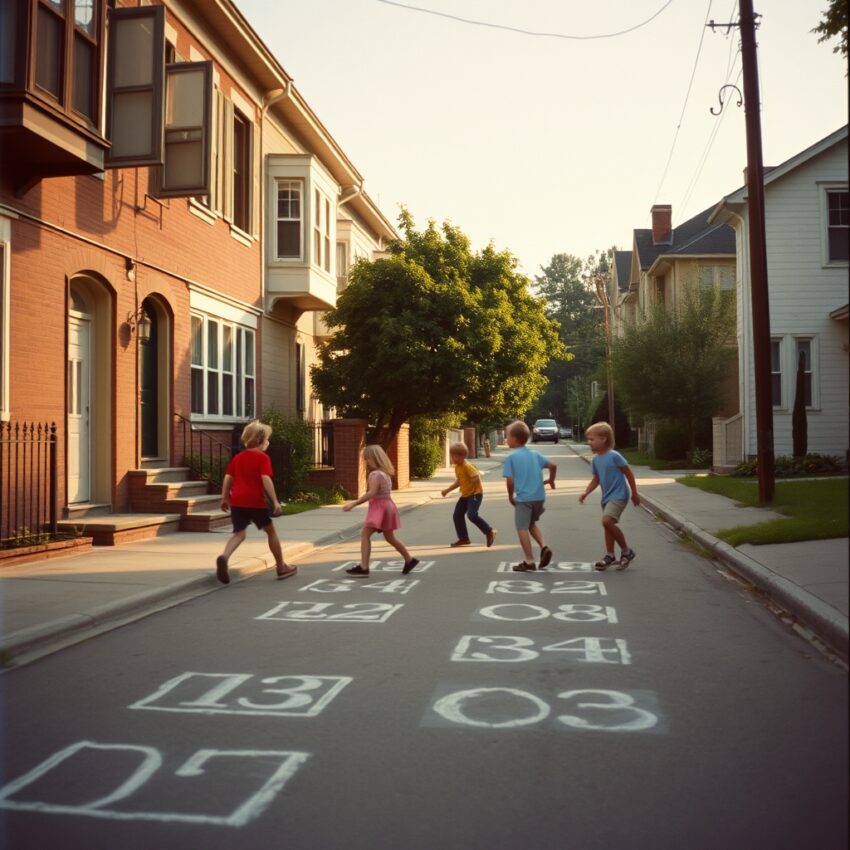
Bir zamanlar mahallenin en canlı haritası duvarlarda değil yerdeydi. Kaldırıma tebeşirle çizilmiş seksek kutuları, çocukların geçici gibi görünen ama gün boyu geçerli olan dünyasını kurardı. Güneş yükselirken beyaz çizgiler biraz soluklaşır, öğleden sonra birilerinin ayağıyla yeniden belirginleşir, akşama doğru ise mahallenin bütün sesi o birkaç kare çevresinde toplanırdı. Çocuklar sırayla taş atar, tek ayak üzerinde dengelerini korumaya çalışır, dışarıdan bakınca küçük görünen bu oyun aslında bütün sokağın ritmini belirlerdi. Pencereden seslenen anne, bakkaldan ekmekle dönen abi, kapı önünde oturan teyze, hepsi seksek çizilmiş kaldırımın çevresinde aynı gündelik sahnenin parçasına dönüşürdü. Bugünün sitelerinde bulunmayan sıcaklık biraz da bu görünür ortaklıktan eksildi.
Mahalle Kültürü açısından seksek yalnız çocuk oyunu değildir; sokağın ortak kullanıldığı, yaş farklarının birbirini dışlamadığı bir yaşam biçiminin işaretidir. Çocuklar oyunu kurar, ama oyun alanını yalnız onlar sahiplenmezdi. Geçen komşu çizgilere basmamaya dikkat eder, biri kovayla su dökecekse önce çocuklara seslenir, yaşlı biri pencere kenarından oyunu seyrederdi. Kaldırım, yalnız yürümek için değil karşılaşmak için de vardı. Oyun, sokağı güvenli ve tanıdık kılan görünmez sözleşmeler üretirdi. Kimsenin resmi olarak düzenlemediği bu alanlarda herkes birbirinin varlığını hesaba katar, çocukların oyunu mahallenin ortak zamanına dönüşürdü. Bu yüzden seksekle geçen saatler, basit bir eğlenceden çok daha fazlasını taşır: onlar komşuluğun gündelik provasını içerir.
Bugünün sitelerinde aynı sıcaklığın bulunmamasının nedeni yalnız mimari değildir. Daha çok hayatın parçalanma biçimidir. Kapalı oyun alanları, güvenlik kapıları, planlı sosyal alanlar elbette konfor sunar; ama tesadüfi karşılaşmaların, ayaküstü selamların ve kendiliğinden oluşan ortak gözetimin yerini tam olarak tutmaz. Eski sokakta çocuk oyunu ile yetişkin hayatı birbirine görünür biçimde değiyordu. Seksek oynayan bir çocuğun sesi, yukarı katta demlenen çayın kokusu, bakkal önünde konuşulan iki cümle, aynı akşamın içine karışıyordu. Oysa bugünün site hayatında mekânlar çoğu kez yaş gruplarına, işlevlere ve saatlere göre ayrılıyor. Sıcaklık ise biraz da bu ayrımların az olduğu yerde doğuyordu. Kaldırıma çizilen birkaç kare, mahallede kimsenin bütünüyle yabancı olmadığını hissettiriyordu.
Geçmişe dönüp bakınca seksek çizilmiş kaldırımların sıcak hatırlanması bu yüzden şaşırtıcı değildir. Orada oyunun kendisi kadar oyunun çevresinde kurulan hayat da kalıcıydı. Çocuk, düşerse elinden tutacak birini bilir; büyük, mahallenin sesini takip ederek günün gidişini hissederdi. Kaldırımın üstündeki tebeşir çizgileri yağmurla silinse bile ertesi gün yeniden çizilebilirdi. Asıl kalıcı olan, bu tekrarın ürettiği güven ve yakınlıktı. Bugün sitelerde eksik hissedilen şey belki de tam olarak budur: düzenli ama mesafeli alanların yerine, kusurlu ama paylaşılan bir gündelik hayatın sıcaklığı. Seksek çizilmiş kaldırımlar, eski mahallenin bize bıraktığı en basit ama en açıklayıcı işaretlerden biri olarak bu yüzden hâlâ içimizi ısıtır.
🇬🇧 English | The Warmth a Game Drawn on the Pavement Gave to the Neighborhood
There was a time when the liveliest map of the neighborhood was drawn not on walls, but on the ground. Hopscotch squares traced in chalk across the pavement created a world that seemed temporary, yet remained valid throughout the day. As the sun climbed, the white lines faded a little, by afternoon someone’s foot redrew them into clarity, and by evening the sound of the whole neighborhood gathered around those few boxes. Children tossed a stone in turn and tried to keep their balance on one foot, and though the game looked small from the outside, it actually set the rhythm of the street. A mother calling from the window, an older brother returning from the grocer with bread, a woman seated at the doorway, all became part of the same daily scene around the pavement marked for hopscotch. Part of the warmth missing in today’s residential complexes disappeared along with that visible form of togetherness.
From the perspective of neighborhood culture, hopscotch was never only a children’s game. It signaled a way of living in which the street was shared and age differences did not divide people from one another. Children set up the game, yet they were not the only ones who belonged to the space. A passing neighbor would avoid stepping on the lines, someone about to pour water would first call out to the children, and an elderly person might watch the game from a window. The pavement existed not only for walking, but for encounter. The game created unwritten agreements that made the street feel safe and familiar. In such spaces, arranged by no formal authority, everyone took the presence of others into account, and the children’s game became part of the neighborhood’s shared time. For this reason, the hours spent with hopscotch carry much more than entertainment; they contain the daily rehearsal of neighborliness.
The reason that same warmth is not found in many of today’s residential sites is not architecture alone. More often, it lies in the way life has been divided. Closed play areas, security gates, and carefully planned common spaces certainly offer comfort, but they do not fully replace accidental encounters, greetings exchanged in passing, and the spontaneous mutual watchfulness that once existed. In the old street, children’s play and adult life touched each other visibly. The sound of a child playing hopscotch, the smell of tea brewing upstairs, and two sentences spoken outside the grocer all blended into the same evening. In many modern complexes, however, spaces are separated by age group, function, and schedule. Warmth was born where those divisions were fewer. A few chalk squares drawn on the pavement gave people the sense that no one in the neighborhood was entirely a stranger.
Looking back, it is no surprise that pavements marked with hopscotch remain warm in memory. What endured there was not only the game itself, but the life formed around it. A child knew someone would offer a hand after a fall, and adults could follow the flow of the day through the sounds of the neighborhood. Even if the chalk lines on the pavement were washed away by rain, they could be drawn again the next day. What lasted was the trust and closeness produced by that repetition. Perhaps that is exactly what feels absent in many residential complexes today: in place of regular but distant spaces, there used to be an imperfect yet shared daily life. Hopscotch squares on the pavement still warm us because they remain one of the simplest and clearest signs the old neighborhood left behind.
🇧🇷 Português (Brasil) | O Calor que um Jogo Desenhado na Calçada Dava ao Bairro
Houve um tempo em que o mapa mais vivo do bairro não estava nas paredes, mas no chão. Os quadrados de amarelinha desenhados com giz na calçada criavam um mundo que parecia passageiro, mas valia pelo dia inteiro. Quando o sol subia, as linhas brancas desbotavam um pouco; à tarde, algum pé as refazia; e, ao anoitecer, o som de todo o bairro se reunia ao redor daqueles poucos quadrados. As crianças jogavam a pedrinha e tentavam se equilibrar num pé só, e, embora o jogo parecesse pequeno para quem olhava de fora, ele definia o ritmo da rua. A mãe chamando da janela, o irmão voltando da mercearia com pão e a vizinha sentada à porta passavam a fazer parte da mesma cena cotidiana em torno da calçada marcada. Parte do calor que falta nos condomínios de hoje desapareceu junto com essa forma visível de vida compartilhada.
Do ponto de vista da cultura de bairro, a amarelinha nunca foi apenas brincadeira infantil. Ela indicava um modo de viver em que a rua era usada em comum e as diferenças de idade não afastavam as pessoas. As crianças montavam o jogo, mas não eram as únicas a pertencer àquele espaço. O vizinho que passava evitava pisar nas linhas, alguém que fosse jogar água antes avisava as crianças, e uma pessoa idosa acompanhava a brincadeira da janela. A calçada não servia apenas para passar, mas também para encontrar. O jogo criava acordos invisíveis que tornavam a rua segura e conhecida. Nesses espaços sem regulação formal, todos levavam em conta a presença dos outros, e a brincadeira das crianças virava parte do tempo comum do bairro. Por isso, as horas passadas na amarelinha carregam muito mais do que diversão; contêm o ensaio cotidiano da convivência.
O motivo de essa mesma calidez não ser encontrada nos condomínios atuais não está apenas na arquitetura. Está mais na forma como a vida foi sendo fragmentada. Áreas de lazer fechadas, portarias de segurança e espaços comuns cuidadosamente planejados certamente oferecem conforto, mas não substituem por completo os encontros por acaso, os cumprimentos rápidos e a vigilância espontânea que existia antes. Na antiga rua, a brincadeira infantil e a vida adulta se tocavam de modo visível. O som da criança jogando amarelinha, o cheiro do chá sendo preparado no andar de cima e as duas frases trocadas em frente à mercearia se misturavam na mesma noite. Já em muitos condomínios de hoje, os espaços são separados por idade, função e horário. O calor nascia justamente onde essas divisões eram menores. Alguns quadrados de giz desenhados na calçada faziam sentir que ninguém no bairro era inteiramente estranho.
Por isso, não surpreende que as calçadas com amarelinha permaneçam tão acolhedoras na memória. O que ficou ali não foi apenas o jogo, mas a vida criada ao redor dele. A criança sabia que, se caísse, alguém estenderia a mão; o adulto acompanhava o andamento do dia pelos sons do bairro. Mesmo quando a chuva apagava as linhas de giz, elas podiam ser desenhadas de novo no dia seguinte. O que realmente durava era a confiança e a proximidade produzidas por essa repetição. Talvez seja exatamente isso que parece faltar em muitos condomínios atuais: no lugar de espaços organizados, porém distantes, havia antes uma vida imperfeita, mas compartilhada. Os desenhos de amarelinha na calçada continuam aquecendo a lembrança porque permanecem como um dos sinais mais simples e mais reveladores do antigo bairro.