🇹🇷 Türkçe | Cam Açtıran Sabahların Vapur Üstündeki Sıcak Hafızası
Bir zamanlar sabah, evin içinden değil sokaktan başlardı. Henüz güneş duvarların üstüne tam oturmadan, mutfaktan yükselen çay buharı pencereye vurur, uzak bir iskeleden gelen vapur düdüğü mahallenin uyanışını haber verirdi. O saatlerde sokağa çıkanların üstünde aceleden çok alışkanlık olurdu; kadınlar filelerini koluna geçirir, memurlar ceket düğmesini ilikler, öğrenciler defterlerini sıkıştırıp kaldırıma karışırdı. Fakat bütün bu sabah resmini tamamlayan şey çoğu zaman vapura kadar ulaşan simit kokusuydu. Kâğıda sarılı sıcak simitler, deniz rüzgârına karışırken şehir hayatına yalnız bir kahvaltı değil, ortak bir hafıza bırakırdı. Hafızada bugün hâlâ canlı kalan ve insanın istemeden pencere açmasına sebep olan sabahlar biraz da bu yüzden vapurla anılır.
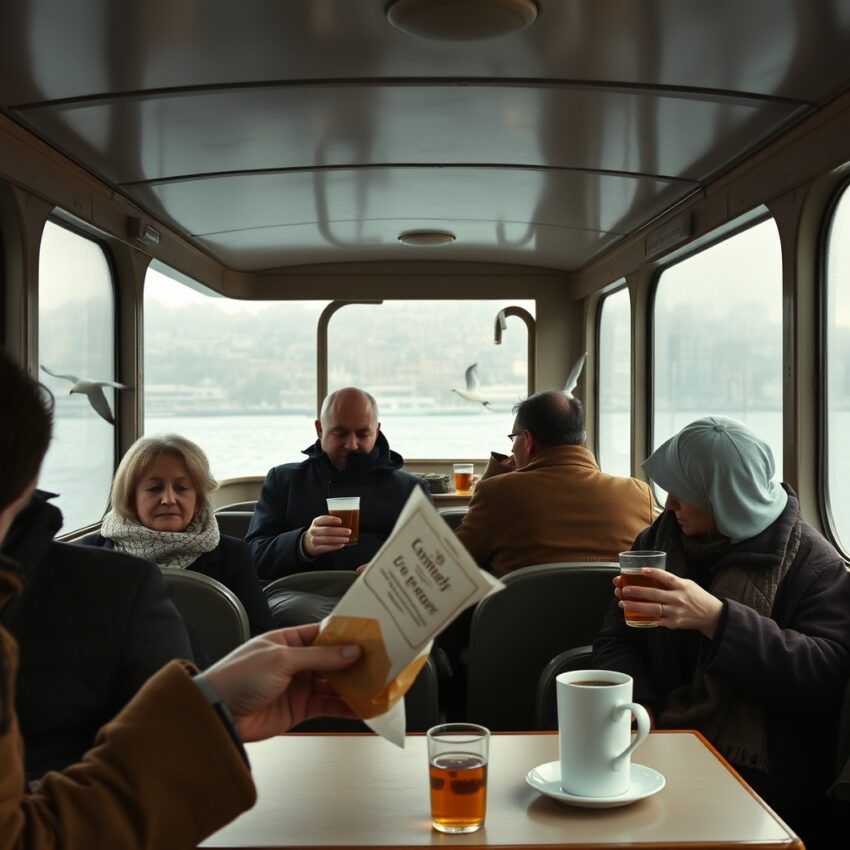
Zamanın İzinde bakıldığında vapur, eski şehir hayatının yalnız bir ulaşım aracı değil, günün ilk terbiyesini veren hareketli bir meydanı gibiydi. İskeleye inen taş merdivenlerde aynı telaşı taşıyan insanlar, vapura bindiklerinde tuhaf biçimde yavaşlar, birbirlerinin varlığını daha çok hissederdi. Simitçi çocukların sesi, çay bardaklarının ince çınlaması, ıslak tahta güverteden yükselen tuzlu koku, sabah gazetesini koltuğuna sıkıştırmış yolcuların sessizliği, hepsi birlikte şehrin ritmini kurardı. Simit kokusu bu ritmin en sıcak parçasıydı; çünkü açlığı bastırmaktan çok, birlikte geçirilen sabahın duygusunu tamamlıyordu. Birinin simidinden kopan susamların bankın altına düşmesi, başka birinin martılara küçük parçalar atması, çayın buharıyla simidin kokusunun birbirine karışması, şehir hayatının gündelik şiiri sayılırdı.
Bu sabahların hafızada kalmasının bir nedeni de vapurun iki kıyı arasında yalnız insan değil, semtlerin ruhunu da taşımasıydı. Bir kıyıdan ötekine geçerken yolcular beraberinde evlerinden çıkan kokuları, sokaklarının sesini ve mahallelerinin alışkanlıklarını götürürdü. Simit, o yolculuğun en sade ama en güçlü işaretlerinden biriydi. Mahalle fırınından alınmış bir simidin vapurda yenmesi, ekmeğin şehir içinde dolaşan bir hatıraya dönüşmesiydi. Camlar buğulandığında biri eliyle küçük bir yuvarlak açar, denize bakarken diğer eliyle simidinden bir lokma alırdı. Çocukların dikkatini martılar çeker, büyükler ise o kısa yolculukta kendi içine çekilirdi. Bugünden bakınca bizi etkileyen yalnız nesneler değil, o nesnelerin kurduğu ortak sabah hissidir.
Eski şehir hayatında simit kokusunun güne karıştığı vapur seferleri, toplumsal davranışın da sessiz öğretmeniydi. İnsanlar oturacak yeri paylaşmayı, pencereyi rüzgârı düşünerek açmayı, yüksek sesle konuşmamayı, sabahın serinliğini biraz saygıyla karşılamayı bu yolculuklarda öğrenirdi. O yüzden hafızada canlı kalan şey yalnız deniz manzarası değildir; aynı zamanda bir şehrin sabahları nasıl birlikte yaşadığıdır. Cam açtıran sabahlar dediğimizde akla gelen serinlik, belki de eski günlerin içimizde hâlâ dolaşan terbiyesidir. Vapur uzaklaştıkça iskele küçülür, simit kokusu yerini tuzlu havaya bırakırdı; ama o koku, bütün gün insanın üstünde taşınan görünmez bir mahalle izi gibi kalırdı. İşte bu yüzden, yıllar geçse de bazı sabahlar bir pencere açılır açılmaz deniz, simit ve vapur aynı anda hatırlanır.
🇬🇧 English | The Warm Memory of Ferry Mornings That Still Make Us Open the Window
There was a time when morning began not inside the house, but out in the street. Before the sun had fully settled on the walls, the steam of tea rose from the kitchen window while a ferry whistle from a distant pier announced the waking of the neighborhood. Those who stepped outside at that hour wore habit more than haste; women slipped string bags over their wrists, clerks fastened jacket buttons, students tucked their notebooks under one arm and joined the pavement. Yet the detail that completed the whole scene was often the smell of simit reaching all the way to the ferry. Warm rings of bread wrapped in paper mingled with the sea wind and left behind not merely breakfast, but a shared memory. The mornings that still feel vivid enough to make people open a window are remembered with ferries partly for this reason.
Seen through the trace of time, the ferry was not only a means of transport in old city life, but a moving square that gave the day its first lesson in manners. On the stone steps descending to the pier, people carried the same urgency, yet once aboard they slowed in an almost mysterious way and became more aware of one another. The cries of young simit sellers, the delicate clink of tea glasses, the salty scent rising from the damp wooden deck, and the quiet of passengers with folded newspapers together established the rhythm of the city. The smell of simit was the warmest part of that rhythm, because it did more than quiet hunger; it completed the emotional register of a morning lived in common. Sesame seeds falling beneath the benches, small pieces tossed to seagulls, and the steam of tea mixing with the bread’s aroma formed an everyday poetry of urban life.
Another reason these mornings remain so alive in memory is that the ferry carried not only people between two shores, but also the spirit of the districts themselves. While crossing from one side to the other, passengers transported the scents of their homes, the sounds of their streets, and the habits of their own quarters. Simit was one of the simplest yet strongest signs of that movement. Eating a ring of bread bought from the neighborhood bakery while aboard the ferry turned food into a circulating memory of the city. When the windows fogged over, someone would wipe a small round opening with the palm of a hand and, while looking at the water, take another bite. Children watched the seagulls, while adults retreated briefly into themselves. What touches us today is not only the objects of that world, but the common morning feeling those objects created.
In old urban life, those ferry rides in which the smell of simit mingled with the day also acted as quiet teachers of social conduct. People learned to share a seat, to open a window with regard for the wind and for others, to lower their voices, and to meet the chill of morning with a certain respect. For that reason, what remains vivid in memory is not only the sea view, but the way a city once lived its mornings together. The coolness we associate with mornings that make us open a window may actually be the lingering discipline of those earlier days. As the ferry moved away and the pier grew smaller, the smell of simit yielded to the salt of the air, yet it remained on a person throughout the day like an invisible mark left by the neighborhood. That is why, even after many years, some mornings call sea, simit, and ferry back to mind all at once.
🇧🇷 Português (Brasil) | A Memória Acolhedora das Manhãs no Barco que Ainda nos Fazem Abrir a Janela
Houve um tempo em que a manhã não começava dentro de casa, mas na rua. Antes de o sol se acomodar por completo sobre os muros, o vapor do chá batia na janela da cozinha, enquanto o apito de um barco vindo de um cais distante anunciava o despertar do bairro. Quem saía àquela hora carregava mais costume do que pressa; as mulheres passavam a sacola de rede pelo braço, os funcionários fechavam os botões do paletó, os estudantes prendiam os cadernos debaixo do braço e desciam para a calçada. Mas o detalhe que completava toda essa cena era, muitas vezes, o cheiro de simit chegando até o barco. Os anéis de pão ainda quentes, embrulhados em papel, misturavam-se ao vento do mar e deixavam para a cidade não apenas um café da manhã, mas uma memória compartilhada. As manhãs que ainda hoje parecem tão vivas a ponto de fazer alguém abrir a janela são lembradas junto com os barcos em parte por isso.
Quando vistas pelo rastro do tempo, as travessias de barco não eram apenas um meio de transporte na antiga vida urbana, mas uma praça em movimento que dava à manhã sua primeira lição de convivência. Nos degraus de pedra que levavam ao cais, as pessoas carregavam a mesma urgência, mas, ao embarcar, desaceleravam de um modo quase misterioso e passavam a perceber mais a presença umas das outras. O chamado dos vendedores de simit, o tilintar fino dos copos de chá, o cheiro salgado que subia do convés úmido de madeira e o silêncio dos passageiros com o jornal dobrado formavam juntos o ritmo da cidade. O cheiro de simit era a parte mais calorosa desse ritmo, porque fazia mais do que matar a fome: completava o sentimento de uma manhã vivida em comum. As sementes de gergelim caindo sob os bancos, os pedaços lançados às gaivotas e o vapor do chá se misturando ao aroma do pão compunham uma poesia cotidiana da vida urbana.
Outra razão para essas manhãs permanecerem tão vivas na memória é que o barco transportava não apenas pessoas entre duas margens, mas também o espírito dos bairros. Ao atravessar de um lado para o outro, os passageiros levavam consigo os cheiros de casa, os sons de suas ruas e os hábitos do lugar onde moravam. O simit era um dos sinais mais simples e mais fortes desse movimento. Comer no barco um pão comprado na padaria do bairro transformava o alimento em lembrança circulante da cidade. Quando os vidros embaçavam, alguém abria um pequeno círculo com a palma da mão e, olhando para a água, dava mais uma mordida. As crianças se distraíam com as gaivotas, enquanto os adultos se recolhiam por alguns instantes ao próprio silêncio. O que nos comove hoje não são apenas os objetos daquela época, mas a sensação coletiva de manhã que eles criavam.
Na antiga vida urbana, essas travessias em que o cheiro de simit se misturava ao dia também ensinavam silenciosamente certas maneiras de viver em comum. Ali se aprendia a dividir o banco, a abrir a janela pensando no vento e nos outros, a falar mais baixo e a receber o frio da manhã com algum respeito. Por isso, o que permanece vivo na lembrança não é apenas a paisagem do mar, mas a forma como uma cidade vivia suas manhãs em conjunto. O frescor que associamos às manhãs que fazem abrir a janela talvez seja justamente a disciplina afetiva deixada por aqueles dias. À medida que o barco se afastava e o cais diminuía, o cheiro de simit cedia lugar ao sal do ar, mas continuava na roupa e no corpo como uma marca invisível do bairro. É por isso que, mesmo depois de tantos anos, certas manhãs fazem o mar, o simit e o barco voltarem à memória ao mesmo tempo.