🇹🇷 Türkçe | Çocuk Seslerinin Meydana Verdiği Bayram Işığı
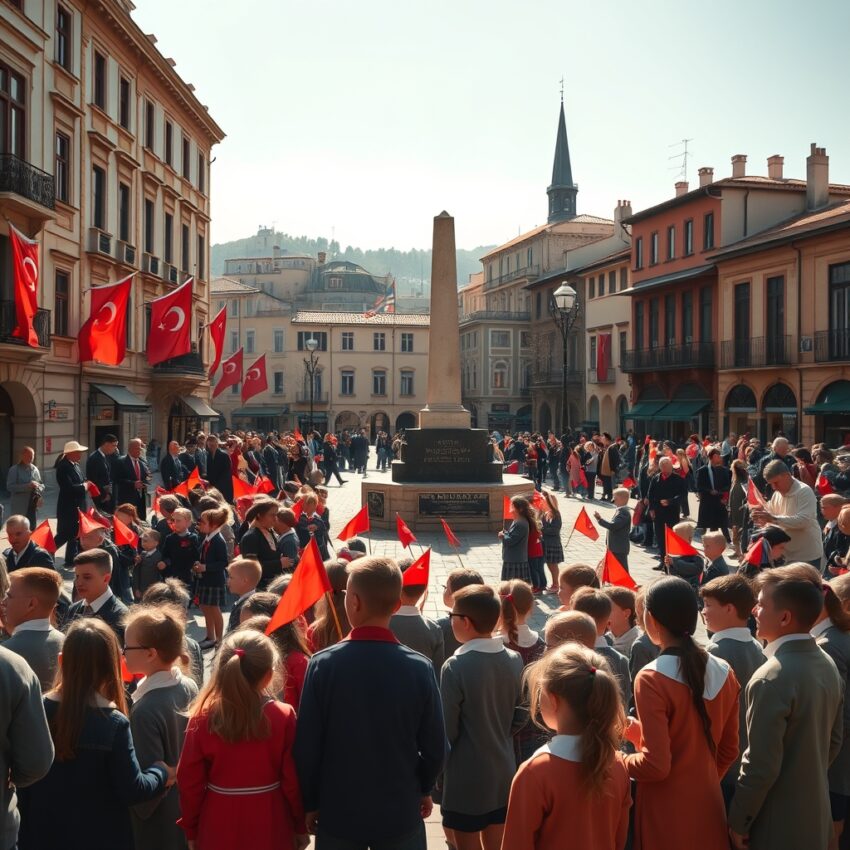
Bir zamanlar 23 Nisan sabahları şehir daha gün tam açılmadan başka türlü aydınlanırdı. Bu aydınlık yalnız havanın berraklığından değil, çocukların erkenden yıkanmış yüzlerinden, ütülü önlüklerinden, yakalara iliştirilmiş küçük rozetlerden ve meydanlara doğru taşan aceleci heyecandan gelirdi. Okul yolları her zamankinden kalabalık olur, anneler son kez saç düzeltir, babalar ceket cebine küçük bir fotoğraf makinesi ya da mendil koyar, çocuklar ise ezberledikleri şiirleri içlerinden tekrar ederdi. Şehir meydanı, resmi tören alanı olmanın ötesinde, bir neslin kendini görünür hissettiği ortak sahneye dönüşürdü. Bayrakların rüzgârla hafifçe hareket ettiği o saatlerde, çocuk sesleri binaların taş yüzlerine çarpar, dükkân kepenkleri henüz yeni açılırken bütün kente genç, temiz ve umutlu bir ses yayılırdı.
Zamanın İzinde bakıldığında Ulusal Egemenlik coşkusunun unutulmayan yüzü tam da bu çocuk kalabalığında saklıdır. Bayramın tarihsel anlamı elbette meclisin açılışı, halk iradesi ve cumhuriyet fikrinin kamusal hafızadaki yeridir; ama gündelik hayatta bu büyük fikirler çoğu zaman çocukların taşıdığı sevinçle ete kemiğe bürünürdü. Eski gazetelerin 23 Nisan sayılarında sık sık okul törenlerine, meydanlardaki kutlamalara ve çocukların hazırladığı gösterilere geniş yer verilmesi boşuna değildi. Çünkü bu gün, devletin resmî takviminden çıkıp mahallelerin, okul bahçelerinin ve aile albümlerinin içine yerleşiyordu. Öğretmenler günler öncesinden prova yaptırır, sınıf panoları hazırlanır, kartondan taçlar, kurdeleler, fenerler ve küçük dekorlar büyük bir ciddiyetle tamamlanırdı. Bayramın coşkusu yalnız törende değil, o törene hazırlanma sürecinde büyürdü.
Meydanların çocuk sesleriyle aydınlanması, eski şehir hayatında kamusal alanın nasıl paylaşıldığını da gösterirdi. Küçük şehirlerde hükümet konağının önü, büyük kentlerde ise okul ile anıt arasındaki geniş boşluklar bir anda renkli bir akışa dönüşürdü. Bando takımının çaldığı marşlarla, sıraya girmiş öğrencilerin ayak sesleri birbirine karışırken kenarda bekleyen simitçiler, fotoğrafçılar ve esnaf da bu günün ritmine uyum sağlardı. Balkonlardan bakan yaşlılar alkışlar, dükkân sahipleri kapı önüne çıkar, kimi anneler çocuklarını kalabalıkta kaybetmemek için gözünü bir an olsun ayırmazdı. Bir çocuğun mikrofona yaklaşırken duyduğu kısa tereddüt, ardından gelen toplu alkış ve şiirin en bilinen dizesinde yükselen ses, meydandaki herkes için ortak bir duygunun işareti olurdu. O gün çocuklar yalnız izleyen değil, kentin hafızasını o an için kuran kişilerdi.
Bu coşkunun unutulmamasının bir nedeni de ev ile meydan arasındaki bağdır. Tören bitince bayram hemen sona ermezdi; çocuklar ellerindeki küçük bayraklarla eve döner, boyunlarına takılan kartları çıkarmadan komşuya uğrar, radyoda günün haberleri dinlenir, öğleden sonra yapılan okul şenlikleri yeniden anlatılırdı. Evlerde özel bir yemek hazırlanmasa bile günün havası sofraya sinerdi. Büyükler kendi çocukluklarındaki 23 Nisan’ı hatırlar, “bizim zamanımızda tahta kürsü vardı”, “biz teneke borudan yapılmış mikrofonla okurduk” gibi cümleler kurardı. Böylece bayram, tek bir neslin değil, kuşakların birbirine aktardığı bir hafıza zinciri hâline gelirdi. Meydandaki ses evde yankı bulur, çocukların heyecanı ailelerin geçmişiyle birleşirdi.
Bugün geriye dönüp bakıldığında, çocuk sesleriyle aydınlanan meydanlar yalnız bir tören görüntüsü gibi kalmaz. Onlar aynı zamanda bir toplumun geleceği çocuklarda gördüğü yılların sıcak bir özeti olarak hatırlanır. Ulusal Egemenlik coşkusunun unutulmayan yüzü biraz da budur: resmî cümlelerin çocuk neşesiyle yumuşaması, taş meydanların kısa süreliğine oyun alanı kadar canlı görünmesi ve bayramın devlet söyleminden çıkıp gündelik sevince karışması. O sesler şimdi pek çok kişinin hafızasında mikrofon cızırtısı, ütü kokusu, sabah serinliği ve kırmızı beyaz bayrakların gölgesiyle birlikte yaşamayı sürdürüyor. Geçmişi parlak gösteren şey de belki tam olarak bu; bir meydanın, çocukların sesiyle bir günlüğüne bütün ülkenin kalbi gibi atması.
🇬🇧 English | The Holiday Light Children’s Voices Gave to the Square
There was a time when the mornings of April 23 seemed to brighten before the day had fully opened. That brightness did not come only from the clarity of the air, but from freshly washed faces, carefully ironed school uniforms, tiny badges pinned to collars, and the hurried excitement flowing toward the squares. School roads were more crowded than usual, mothers adjusted hair one last time, fathers slipped a small camera or a handkerchief into a jacket pocket, and children repeated their memorized poems under their breath. The city square became more than an official ceremonial ground; it turned into a shared stage where a generation felt visible. In those hours when the flags moved gently in the wind, children’s voices struck the stone facades of buildings, and while shop shutters were only beginning to rise, a young, clear, hopeful sound spread through the city.
Seen through the trace of time, the unforgotten face of the joy of National Sovereignty is hidden precisely in that crowd of children. The historical meaning of the holiday is, of course, linked to the opening of parliament, the idea of popular will, and the public memory of the republic; yet in everyday life those large ideas took on flesh through the happiness carried by children. It was no coincidence that old newspapers devoted broad space in their April 23 issues to school ceremonies, celebrations in the squares, and performances prepared by students. The day stepped out of the official calendar and settled into neighborhoods, schoolyards, and family albums. Teachers held rehearsals for days, classroom boards were decorated, and crowns of cardboard, ribbons, lanterns, and small stage pieces were completed with great seriousness. The joy of the holiday grew not only in the ceremony itself, but in the long preparation that led to it.
The fact that the squares were lit by children’s voices also showed how public space was shared in older urban life. In small towns, the front of the government building, and in large cities the wide open ground between a school and a monument, would suddenly turn into a colorful current. As marching-band music mingled with the footfall of students standing in order, street vendors, photographers, and shopkeepers at the edge adapted themselves to the day’s rhythm. Elderly people watching from balconies applauded, shop owners stepped outside, and some mothers kept their eyes on their children every second so as not to lose them in the crowd. A child’s brief hesitation while approaching the microphone, the applause that followed, and the rising voice on the best-known line of a poem became signs of a feeling shared by everyone in the square. On that day children were not merely being watched; for those moments they were the ones building the city’s memory.
Another reason this joy has remained unforgettable lies in the link between the home and the square. Once the ceremony ended, the holiday did not end immediately. Children returned home carrying small flags, stopped by a neighbor’s house before removing the cards hanging around their necks, and listened on the radio to the day’s reports while retelling the school festivities of the afternoon. Even if no special meal was prepared, the air of the day settled over the table. Adults recalled the April 23 celebrations of their own childhood and said things like, “in our time there was a wooden podium,” or “we recited into microphones made from tin pipes.” In that way the holiday became not the memory of one generation alone, but a chain of recollection passed from one generation to the next. The sound from the square found its echo at home, and children’s excitement joined with the past of their families.
Looking back today, squares illuminated by children’s voices remain more than scenes from a ceremony. They are remembered as a warm summary of years in which a society saw its future in children. That is part of the unforgotten face of the joy of National Sovereignty: official language softening in the presence of children’s happiness, stone squares appearing as lively as playgrounds for a few hours, and the holiday leaving the realm of state discourse to blend into everyday joy. Those voices still live in memory together with microphone static, the smell of ironing, the chill of early morning, and the shadow of red-and-white flags. Perhaps what makes the past appear brighter is exactly this: for one day, a square beating like the heart of the whole country through the voices of children.
🇧🇷 Português (Brasil) | A Luz de Festa que as Vozes das Crianças Davam à Praça
Houve um tempo em que as manhãs de 23 de abril pareciam clarear antes mesmo de o dia se abrir por completo. Essa claridade não vinha apenas da nitidez do ar, mas dos rostos recém-lavados, dos uniformes passados com cuidado, dos pequenos broches presos à gola e da pressa emocionada que corria em direção às praças. Os caminhos até a escola ficavam mais cheios do que de costume, as mães arrumavam o cabelo pela última vez, os pais colocavam uma pequena câmera ou um lenço no bolso do casaco, e as crianças repetiam em silêncio os poemas decorados. A praça da cidade deixava de ser apenas um lugar de cerimônia oficial e se transformava num palco comum onde uma geração se sentia visível. Naquelas horas em que as bandeiras se moviam devagar com o vento, as vozes das crianças batiam nas fachadas de pedra, e enquanto as portas do comércio ainda começavam a subir, um som jovem, limpo e esperançoso se espalhava pela cidade.
No rastro do tempo, a face inesquecível da alegria da Soberania Nacional está escondida justamente nessa multidão infantil. O significado histórico da data, claro, está ligado à abertura do parlamento, à vontade popular e ao lugar da república na memória pública; mas, no cotidiano, essas grandes ideias ganhavam corpo por meio da alegria carregada pelas crianças. Não era por acaso que os jornais antigos dedicavam amplo espaço, em suas edições de 23 de abril, às cerimônias escolares, às comemorações nas praças e às apresentações preparadas pelos estudantes. O dia saía do calendário oficial e entrava nos bairros, nos pátios das escolas e nos álbuns de família. Os professores ensaiavam durante dias, os murais eram preparados, e coroas de papelão, fitas, lanternas e pequenos cenários eram concluídos com grande seriedade. A alegria da festa crescia não apenas na cerimônia, mas no próprio processo de preparação.
O fato de as praças se iluminarem com vozes de crianças também mostrava como o espaço público era partilhado na vida urbana de antes. Nas cidades pequenas, a frente do prédio do governo; nas maiores, o espaço aberto entre a escola e o monumento; tudo isso se transformava de repente num fluxo colorido. Enquanto a banda tocava marchas e os passos dos alunos enfileirados marcavam o chão, vendedores de rua, fotógrafos e comerciantes ao redor também entravam no ritmo do dia. Idosos observando das sacadas aplaudiam, donos de lojas saíam para a porta, e algumas mães não tiravam os olhos dos filhos para não perdê-los no meio da multidão. A breve hesitação de uma criança diante do microfone, o aplauso que vinha em seguida e a voz que crescia no verso mais conhecido do poema se tornavam sinais de um sentimento comum a todos na praça. Naquele dia, as crianças não eram apenas observadas; eram elas que construíam a memória da cidade.
Outra razão para essa alegria não ser esquecida está na ligação entre a casa e a praça. Quando a cerimônia acabava, a festa não terminava de imediato. As crianças voltavam para casa com pequenas bandeiras nas mãos, passavam na casa da vizinha antes mesmo de tirar o cartão pendurado no pescoço e ouviam no rádio as notícias do dia enquanto contavam de novo as apresentações da escola. Mesmo quando não havia uma refeição especial, o clima do dia se acomodava à mesa. Os adultos lembravam seu próprio 23 de abril e diziam frases como “no nosso tempo havia um púlpito de madeira” ou “recitávamos num microfone feito de tubo de lata”. Assim, a festa deixava de ser memória de uma só geração e se tornava uma corrente de lembranças transmitidas entre idades diferentes. O som da praça encontrava eco dentro de casa, e a emoção das crianças se juntava ao passado da família.
Hoje, quando se olha para trás, as praças iluminadas por vozes infantis não permanecem apenas como imagens de uma cerimônia. Elas são lembradas como um resumo caloroso de anos em que a sociedade via seu futuro nas crianças. Essa é uma parte da face inesquecível da alegria da Soberania Nacional: a linguagem oficial suavizada pela felicidade infantil, as praças de pedra parecendo tão vivas quanto um pátio de brincadeira por algumas horas, e a festa saindo do discurso do Estado para se misturar à alegria cotidiana. Essas vozes continuam vivas na memória junto com o chiado do microfone, o cheiro de roupa passada, o frio da manhã e a sombra das bandeiras vermelhas e brancas. Talvez seja exatamente isso que faz o passado parecer mais luminoso: por um dia, uma praça batendo como o coração do país inteiro por causa das vozes das crianças.