🇹🇷 Türkçe | kalabalık aile sofralarının unutulmayan tadı ile hatırlanan ev usulü domates çorbası: unutulan mutfak alışkanlıklarını nasıl geri çağırıyor
Bazı çorbalar açlığı gidermekten çok, evi bir araya getirme gücüyle hatırlanır. Ev usulü domates çorbası da kalabalık aile sofralarında tam böyle bir yere sahipti. Akşam üzeri mutfaktan yükselen tereyağı kokusu, kavrulan unun hafif sıcaklığı ve domatesin tencereye değdiği anda yayılan o tanıdık koku, daha ilk dakikadan sofranın kurulacağını haber verirdi. Çorba ağır ağır koyulaşırken, bir yandan ekmek dilimlenir, bir yandan masa örtüsü serilir, kaşıklar dizilir, çocuklara “eller yıkandı mı” diye seslenilirdi. O sırada çorbanın kendisi yalnız bir başlangıç yemeği değil, bütün aileyi aynı saate ve aynı masaya çağıran bir işaret olurdu. Bu yüzden onun tadı, çoğu insanın hafızasında yalnız damakta değil, sofranın çevresinde duran yüzlerle birlikte yaşar.
Damak Hafızası açısından ev usulü domates çorbası, eski mutfak alışkanlıklarının en görünür taşıyıcılarından biridir. Hazır paketlerin hayatı hızlandırmadığı dönemlerde çorba çoğu evde domatesin rendelenmesiyle, salçanın kavrulmasıyla, tencerede sabırla karıştırılmasıyla başlardı. Kimi evlerde içine tel şehriye eklenir, kimilerinde süzgeçten geçirilerek daha pürüzsüz bir kıvam elde edilirdi. Üzerine karabiber, biraz kaşar ya da kızarmış ekmek parçaları konulması ise evin zevkine göre değişirdi. Ama değişmeyen bir şey vardı: çorbanın emek isteyen ve ortak sofra fikrini güçlendiren bir hazırlık olması. Domates çorbası, gündelikliğin içinde saklı bir özenin temsilcisiydi.
Bu çorbanın unutulan mutfak alışkanlıklarını geri çağırmasının nedeni, yalnız tadının tanıdıklığı değildir. Onunla birlikte hatırlanan şeyler çoğu zaman mutfakta yapılan küçük ama düzenli hareketlerdir. Domatesin kabuğunu ayırmak için kaynar suya tutulması, tahta kaşıkla dip tutmaması için sabırla karıştırılması, yanına kızarmış ekmek hazırlanması, sofraya gelmeden önce büyük tencereden herkese eşit pay düşecek şekilde kepçelenmesi… Bunların her biri, eski evlerde yemeğin yalnız karın doyurmak için değil, birlikte yaşama düzenini sürdürmek için de yapıldığını gösterir. Çocuk, çorbanın kokusuyla akşamın geldiğini anlar; büyükler o kokuda kendi çocukluk sofralarını duyar; misafir varsa çorba, evi daha sıcak ve daha cömert gösterirdi.
Kalabalık aile sofralarıyla domates çorbası arasındaki bağ biraz da sadeliğin güven vermesinden gelir. Sofrada çok çeşitli yemekler olmasa bile, iyi yapılmış sıcak bir çorba evin eksik olmadığını hissettirirdi. Özellikle kış akşamlarında ya da okul dönüşü serinleyen havalarda bu çorba, içi ısıtan ilk karşılamaydı. Tencerenin kapağı açıldığında buharın gözlüğü buğulandırması, ekmeğin kaba batırılması, kaşığın tabakta çıkardığı ses, eski mutfak kültürünün ince ama kalıcı ayrıntılarıydı. Bugün çoğu mutfak daha hızlı çalışıyor olabilir; ama hız arttıkça bazı küçük ritüellerin sesi de azalıyor. Ev usulü domates çorbası işte bu yüzden geçmişi geri çağırıyor: çünkü onun içinde zaman, el emeği ve sofraya birlikte oturma disiplini saklı.
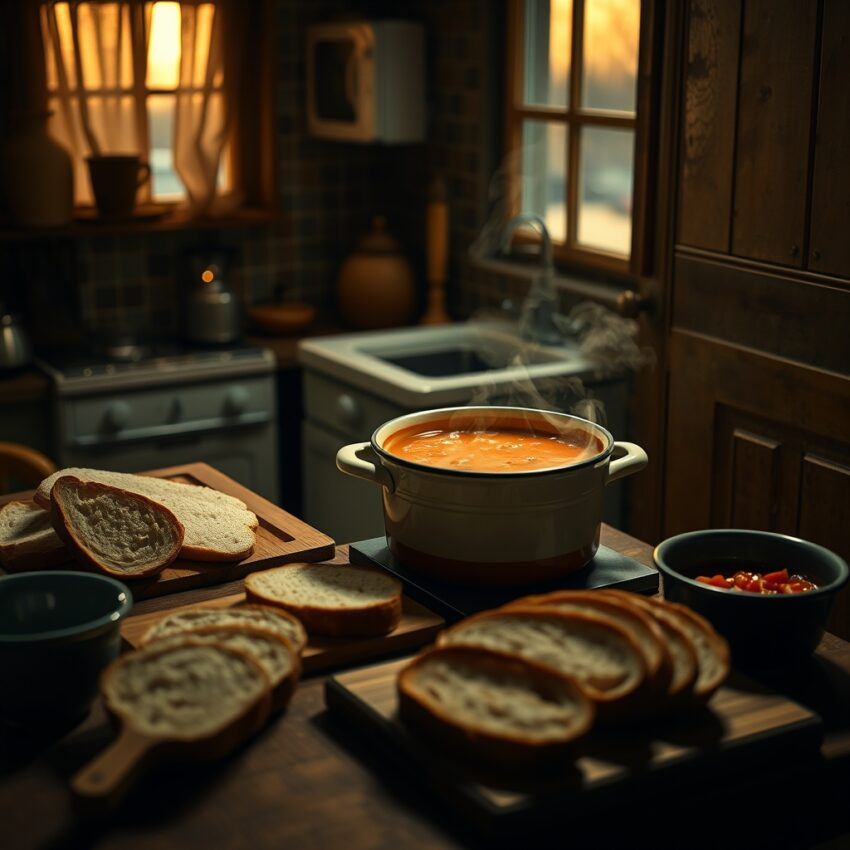
Bugünden bakıldığında bu çorbanın neden hâlâ bu kadar sevgiyle hatırlandığı açık. O, yalnız bir tarif değil; mutfakta geçirilen vaktin, aynı masada toplanmanın ve basit malzemelerle kurulan cömertliğin hafızasıdır. Bir kaşık domates çorbası bazen insanı yıllar önceki mutfaklara, emaye tencerelere, buğulu camlara ve kalabalık akşam sofralarına geri götürür. Çünkü bazı yemekler ağızda bitmez; aile hayatının içindeki düzeni ve yakınlığı da taşır. Ev usulü domates çorbasının unutulan mutfak alışkanlıklarını geri çağırması biraz da bundandır. O çorba, tadıyla birlikte bir yaşama biçimini de hatırlatır.
🇬🇧 English | Homemade Tomato Soup Remembered with the Unforgotten Taste of Crowded Family Tables: How Does It Call Back Forgotten Kitchen Habits?
Some soups are remembered less for satisfying hunger than for their power to gather a household together. Homemade tomato soup held exactly that place on crowded family tables. The smell of butter rising from the kitchen in the late afternoon, the warmth of flour gently toasting, and the familiar scent released the moment tomatoes touched the pot all announced that the table would soon be laid. As the soup thickened slowly, bread was sliced, the tablecloth spread, spoons arranged, and children were called to wash their hands. In those moments the soup was not simply a first course. It was a signal calling the family to the same hour and the same table. That is why its taste survives in memory not only on the tongue, but beside the faces once gathered around it.
As taste memory, homemade tomato soup is one of the clearest carriers of older kitchen habits. Before packaged shortcuts accelerated domestic life, soup in many homes began with tomatoes being grated, paste being sautéed, and the contents stirred patiently in the pot. Some houses added vermicelli, others passed the mixture through a sieve for a smoother texture. Pepper, a little cheese, or cubes of toasted bread varied according to preference. Yet one thing did not change: the soup demanded effort, and in doing so it strengthened the idea of a common table. Tomato soup represented a form of care hidden inside everyday simplicity.
The reason it calls back forgotten kitchen habits lies not only in the familiarity of its taste. What returns with it are often the small and regular gestures once performed in the kitchen. Tomatoes dipped in hot water so their skins could be loosened, the wooden spoon turning slowly so nothing would catch, bread toasted on the side, the large pot ladled carefully so each person would receive an equal serving. Each of these actions shows that food in older homes was not prepared only to fill stomachs, but also to sustain the order of living together. A child understood from the smell that evening had arrived. Adults heard in that same aroma the tables of their own childhoods. If there were guests, the soup made the house seem warmer and more generous.
Part of the bond between crowded family tables and tomato soup comes from the reassurance of simplicity. Even if the meal was not abundant, a well-made hot soup could make a house feel complete. On winter evenings, or in the coolness after school, it was often the first warm welcome. The steam fogging a pair of glasses when the lid was lifted, the bread dipped into the bowl, the sound of the spoon touching ceramic: these were the subtle yet enduring details of an older kitchen culture. Today’s kitchens may work faster, but as speed increases, the sound of certain rituals grows fainter. Homemade tomato soup recalls the past precisely because within it are hidden time, handwork, and the discipline of sitting down together.
From the present, it becomes easy to see why this soup is still remembered with such tenderness. It is not merely a recipe. It is the memory of time spent in the kitchen, of gathering at one table, of generosity built from simple ingredients. A single spoonful can carry a person back to enamel pots, fogged windows, and crowded evening meals. Some foods do not end in the mouth. They carry the order and intimacy of family life along with them. That is why homemade tomato soup can still summon forgotten kitchen habits. Together with its taste, it recalls an entire way of living.
🇧🇷 Português (Brasil) | A Sopa Caseira de Tomate Lembrada com o Sabor Inesquecível das Mesas de Família Cheias: Como Ela Faz Voltar Hábitos de Cozinha Esquecidos?
Algumas sopas são lembradas menos por matar a fome do que pela capacidade de reunir a casa inteira. A sopa caseira de tomate ocupava exatamente esse lugar nas mesas cheias de família. O cheiro de manteiga vindo da cozinha no fim da tarde, o calor da farinha dourando de leve e o aroma conhecido que surgia quando o tomate tocava a panela já anunciavam que a mesa seria posta. Enquanto a sopa engrossava devagar, o pão era fatiado, a toalha estendida, as colheres alinhadas e as crianças eram chamadas para lavar as mãos. Nesses momentos, a sopa não era apenas a primeira etapa da refeição. Era um sinal chamando todos para a mesma hora e para a mesma mesa. Por isso seu sabor continua vivo na memória não só na boca, mas ao lado dos rostos que se reuniam ao redor dela.
Como memória de sabor, a sopa caseira de tomate é uma das portadoras mais nítidas dos antigos hábitos de cozinha. Antes que os produtos prontos acelerassem a vida doméstica, a sopa começava em muitas casas com tomates ralados, extrato refogado e uma panela mexida com paciência. Algumas famílias colocavam macarrão bem fino, outras passavam a mistura pela peneira para deixá-la mais lisa. Pimenta, um pouco de queijo ou cubos de pão torrado variavam conforme o gosto. Mas uma coisa não mudava: a sopa pedia trabalho e, justamente por isso, reforçava a ideia da mesa em comum. Ela representava um cuidado escondido dentro da simplicidade cotidiana.
O motivo de essa sopa fazer voltar hábitos de cozinha esquecidos não está apenas no gosto familiar. O que reaparece com ela são também os pequenos gestos repetidos que antes enchiam a cozinha. O tomate mergulhado em água quente para soltar a pele, a colher de pau mexendo lentamente para não grudar no fundo, o pão tostado ao lado, a panela grande servida com atenção para que todos recebessem a mesma porção. Cada um desses movimentos mostra que a comida, nas casas antigas, não era feita apenas para alimentar, mas também para sustentar a ordem de viver junto. A criança entendia pelo cheiro que a noite estava chegando. Os adultos ouviam nesse mesmo aroma as mesas da própria infância. E, se havia visitas, a sopa tornava a casa mais acolhedora e mais generosa.
Parte da ligação entre a sopa de tomate e as mesas grandes de família vem da segurança trazida pela simplicidade. Mesmo quando não havia muitos pratos, uma sopa quente e bem feita fazia a casa parecer completa. Em noites frias ou no frescor depois da escola, ela costumava ser o primeiro acolhimento. O vapor embaçando os óculos quando a tampa era levantada, o pão mergulhado na tigela, o som da colher tocando o prato: esses eram detalhes discretos, mas duradouros, da antiga cultura de cozinha. As cozinhas de hoje talvez funcionem mais rápido, mas, quanto maior a velocidade, mais baixo fica o som de certos rituais. A sopa caseira de tomate chama o passado exatamente por isso: dentro dela se escondem tempo, trabalho manual e a disciplina de sentar juntos à mesa.
Olhando a partir de hoje, fica fácil entender por que essa sopa continua sendo lembrada com tanto afeto. Ela não é apenas uma receita. É a memória do tempo passado na cozinha, do encontro em volta de uma mesa e da generosidade construída com ingredientes simples. Uma única colher pode levar alguém de volta às panelas esmaltadas, às janelas embaçadas e aos jantares cheios da noite. Há comidas que não terminam na boca. Elas carregam junto a ordem e a intimidade da vida familiar. É por isso que a sopa caseira de tomate ainda consegue fazer voltar hábitos de cozinha esquecidos. Junto com o sabor, ela faz ressurgir um modo inteiro de viver.