🇹🇷 Türkçe | ferforje askılık ve çeyiz odasında büyüyen bekleyişi: ustalık ve sabrın izini neden hâlâ taşıyor
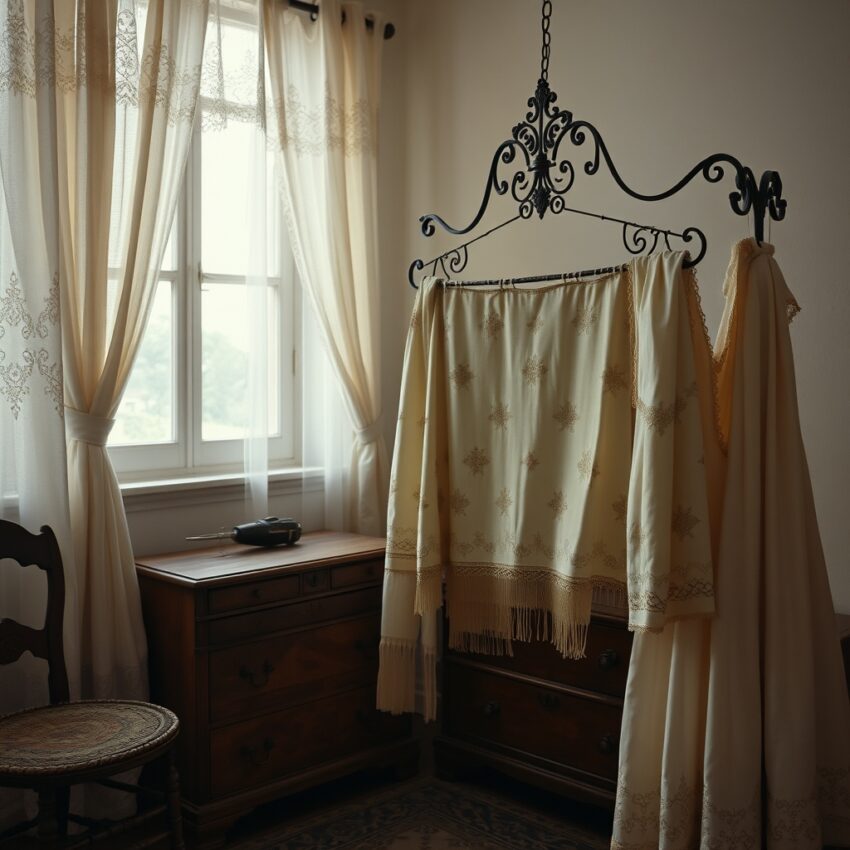
Bazı eşyalar evin içinde yalnız yer kaplamaz; zaman tutar, sessizlik biriktirir ve henüz yaşanmamış günlerin hayalini üstünde taşır. Ferforje askılık da eski evlerde böyle bir eşyaydı. Özellikle çeyiz odalarında, dantel örtülerin, işlemeli bohçaların ve naftalin kokusuna karışan sabırlı bir bekleyişin arasında dimdik dururdu. Üstüne kimi zaman gelinliğin provası için hazırlanmış bir kumaş asılır, kimi zaman ütülenmiş gecelikler, kimi zaman da yalnızca boşluğu gösteren bir örtü bırakılırdı. Ama o boşluk bile anlamsız değildi. Askılığın kıvrımlı demirinde, bir gün kurulacak evin hayali sessizce beklerdi. Odanın penceresinden süzülen ışık ferforjenin gölgesini zemine düşürdüğünde, obje yalnız metal olmaktan çıkar, sabırla örülmüş bir aile hikâyesine dönüşürdü.
Obje Hikayeleri açısından ferforje askılık, gündelik kullanımın ötesinde bir estetik ve toplumsal anlam taşır. Demirin ateşte ısıtılıp dövülerek kıvrım kazanması, ustanın eliyle şekillenmesi ve sonunda bir evin en mahrem köşelerinden birine yerleşmesi, onu sıradan mobilyadan ayırır. Bu askılıklarda çoğu zaman çiçek, yaprak ya da zarif helezon motifleri görülür; demir sert olsa da biçimi yumuşak görünür. Tam da bu karşıtlık, çeyiz odasının ruhuna uyardı. Çünkü orası da hem somut hem hayali bir alandı: hazır duran örtüler, sandıklara yerleştirilmiş havlular, yıllarca bekletilen danteller ve henüz yaşanmamış bir hayatın işaretleri aynı yerde buluşurdu. Ferforje askılık, bu bekleyişin görünür omurgası gibiydi.
Bu objenin hâlâ ustalık ve sabrın izini taşımasının sebebi yalnız üretim tekniğinde değil, kullanıldığı kültürel bağlamda saklıdır. Çeyiz odası biriktirmenin ve hazırlığın mekânıydı; her eşya zaman içinde çoğalır, özenle korunur, yeri bilinir ve anlam kazanırdı. Askılığa asılan her parça, bir el emeğini temsil ederdi: kenarı oyalı bir havlu, elde dikilmiş bir entari, ütüsü bozulmasın diye özenle örtülmüş kumaşlar… Genç kız için bu oda geleceğin belirsiz ama umutlu kapısıydı; anne için emekle kurulan bir düzenin tamamlanma arzusuydu; büyükanne içinse kendi zamanından devredilen bir terbiyenin sürmesiydi. Böylece ferforje askılık, üç kuşağın sabrını aynı sessiz çizgide toplardı.
Bugün bu tür eşyalar dekoratif bir nostalji nesnesi gibi görülebiliyor; ancak geçmişte taşıdığı anlam daha derindi. Askılığın üstünde duran kıyafetin ağırlığından çok, beklenen günlerin ağırlığı hissedilirdi. Odanın sessizliği, sandık kapağının açılıp kapanışı, naftalinle karışan sabun kokusu, pencere önündeki tülün hafif hareketi, hepsi askılığın etrafında bir ritim kurardı. Ustalık burada yalnız demiri şekillendiren elde değil, odayı düzenleyen, eşyayı koruyan, yılları sabırla taşıyan kadın emeğinde de saklıydı. Bu yüzden ferforje askılığa bugün bakıldığında görülen şey yalnız güzel bir form değil; bir yaşam terbiyesi, bir hazırlık kültürü ve sessiz bir bekleyişin ciddiyetidir.
Geçmişten bugüne kaldığında ferforje askılık neden hâlâ bu kadar dokunaklı görünür sorusunun cevabı işte burada bulunur. Çünkü o eşya, zamana direnmenin gösterişsiz yollarından birini temsil eder. Hızlı tüketimin ve çabuk değişen eşyanın çağında onun kıvrımları, elde yapılan işin kalıcılığını; çeyiz odasındaki varlığı ise beklemenin bir eksiklik değil, bir anlam üretme biçimi olduğunu hatırlatır. Bir askılık, bir odanın köşesinde durarak ustalık, sabır ve aile hafızası hakkında bu kadar çok şey söyleyebiliyorsa, geçmişin objeleri gerçekten de yalnız eşya değildir. Onlar, sessizce konuşan kültürel belgelerdir.
🇬🇧 English | The Wrought-Iron Hanger and the Waiting That Grew in the Dowry Room: Why Does It Still Carry the Trace of Craftsmanship and Patience?
Some objects do not merely occupy space in a home. They hold time, gather silence, and carry the dream of days not yet lived. The wrought-iron hanger was one of those objects in older houses. Especially in dowry rooms, among lace covers, embroidered bundles, and the patient expectation mingling with the scent of mothballs, it stood upright with a quiet dignity. At times a fabric prepared for a bridal fitting was hung upon it, at times pressed nightgowns, at times only a cloth revealing its own emptiness. Yet even that emptiness had meaning. In the curved iron of the hanger, the outline of a future home waited silently. When light entering through the room’s window cast the shadow of the wrought iron onto the floor, the object ceased to be only metal and became part of a family story woven through patience.
As an object story, the wrought-iron hanger carries an aesthetic and social meaning beyond simple use. Iron heated in fire, hammered into curves by a craftsman’s hand, and eventually placed in one of the most intimate corners of a home becomes something more than furniture. Such hangers often bore flower, leaf, or spiral motifs; the iron itself was hard, yet its shape appeared gentle. That contrast suited the spirit of the dowry room perfectly. The room itself was both tangible and imagined, holding folded linens, boxed towels, lace preserved for years, and signs of a life still to come. The wrought-iron hanger stood as the visible spine of that waiting.
The reason it still carries the trace of craftsmanship and patience lies not only in the way it was made, but in the cultural world in which it was used. The dowry room was a place of accumulation and preparation. Each object grew in meaning over time, was carefully protected, and held its known position. Every item hanging from the stand represented hand labor: a towel edged with needlework, a dress sewn at home, fabrics covered so their pressing would remain smooth. For a young woman, the room marked the uncertain but hopeful threshold of the future. For a mother, it meant the wish to complete an order built through effort. For a grandmother, it continued a discipline inherited from her own time. In that way, the wrought-iron hanger gathered the patience of three generations along the same quiet line.
Today such pieces are sometimes treated as decorative nostalgia, but the meaning they once held was deeper. More than the weight of garments, the hanger seemed to carry the weight of awaited days. The silence of the room, the opening and closing of the chest lid, the smell of soap mixed with mothballs, the slight movement of the curtain by the window all created a rhythm around it. Craftsmanship was present not only in the hand that shaped the iron, but also in the women’s labor that ordered the room, preserved the objects, and carried years with care. That is why the wrought-iron hanger appears now not simply as an elegant form, but as a sign of domestic discipline, preparation, and the seriousness of quiet waiting.
The answer to why the hanger still feels so moving today lies exactly there. It represents one of the modest ways human beings once resisted time. In an age of fast consumption and quickly changing objects, its curves remind us of the endurance of things made by hand, while its place in the dowry room recalls that waiting was not always a lack. It was a form of making meaning. If a hanger standing in the corner of a room can still speak so much about craftsmanship, patience, and family memory, then the objects of the past were never merely objects. They were cultural documents that learned to speak softly.
🇧🇷 Português (Brasil) | O Cabide de Ferro Forjado e a Espera que Crescia no Quarto do Enxoval: por que Ainda Carrega o Rastro do Ofício e da Paciência?
Alguns objetos não ocupam apenas espaço dentro de casa. Eles guardam tempo, acumulam silêncio e carregam o sonho de dias que ainda não chegaram. O cabide de ferro forjado era um desses objetos nas casas antigas. Principalmente nos quartos de enxoval, entre toalhas rendadas, trouxas bordadas e uma espera paciente misturada ao cheiro de naftalina, ele permanecia ereto com uma dignidade silenciosa. Às vezes sustentava um tecido preparado para a prova do vestido de noiva, às vezes camisolas passadas, às vezes apenas um pano que deixava evidente o próprio vazio. Mas até esse vazio tinha sentido. Nas curvas do ferro ficava aguardando, em silêncio, o contorno de uma casa futura. Quando a luz que entrava pela janela lançava a sombra do ferro no chão, o objeto deixava de ser apenas metal e passava a integrar uma história familiar tecida com paciência.
Como história de objeto, o cabide de ferro forjado carrega um significado estético e social que vai além do uso simples. O ferro aquecido no fogo, moldado em curvas pela mão do artesão e depois colocado num dos cantos mais íntimos da casa, torna-se algo maior do que um móvel. Esses cabides costumavam trazer motivos de flores, folhas ou espirais; o material era duro, mas a forma parecia delicada. Esse contraste combinava perfeitamente com o espírito do quarto do enxoval. O próprio quarto era um espaço ao mesmo tempo concreto e imaginado, reunindo roupas dobradas, toalhas guardadas em caixas, rendas preservadas durante anos e sinais de uma vida que ainda iria começar. O cabide de ferro surgia como a espinha visível dessa espera.
O motivo de ele ainda carregar o rastro do ofício e da paciência não está apenas na técnica de fabricação, mas também no contexto cultural em que era usado. O quarto do enxoval era um lugar de acumulação e preparo. Cada peça ganhava sentido com o passar do tempo, era protegida com zelo e mantinha seu lugar conhecido. Tudo o que pendia do cabide representava trabalho manual: uma toalha com renda feita à mão, um vestido costurado em casa, tecidos cobertos para que o vinco permanecesse perfeito. Para a jovem, esse quarto era a porta incerta, mas esperançosa, do futuro. Para a mãe, era o desejo de completar uma ordem construída com esforço. Para a avó, era a continuidade de uma disciplina herdada do próprio passado. Assim, o cabide reunia a paciência de três gerações na mesma linha silenciosa.
Hoje peças assim às vezes são vistas apenas como nostalgia decorativa, mas o significado que possuíam era mais profundo. Mais do que o peso da roupa, o cabide parecia sustentar o peso dos dias esperados. O silêncio do quarto, o abrir e fechar da arca, o cheiro de sabão misturado à naftalina, o leve movimento da cortina junto à janela, tudo formava um ritmo ao redor dele. O ofício estava presente não só na mão que modelava o ferro, mas também no trabalho feminino que organizava o quarto, preservava os objetos e levava os anos com cuidado. É por isso que o cabide de ferro aparece hoje não apenas como uma forma bonita, mas como sinal de disciplina doméstica, preparação e da seriedade de uma espera silenciosa.
A resposta para o motivo de ele ainda parecer tão tocante está exatamente aí. Ele representa uma das formas discretas pelas quais as pessoas resistiam ao tempo. Numa era de consumo veloz e objetos que mudam depressa, suas curvas lembram a permanência do trabalho feito à mão, e sua presença no quarto do enxoval recorda que esperar nem sempre significava falta. Muitas vezes significava produzir sentido. Se um cabide parado no canto de um quarto ainda consegue dizer tanto sobre ofício, paciência e memória familiar, então os objetos do passado nunca foram apenas objetos. Eram documentos culturais que aprenderam a falar baixo.