🇹🇷 Türkçe | Raflarda Parlayan Sessiz Düzen
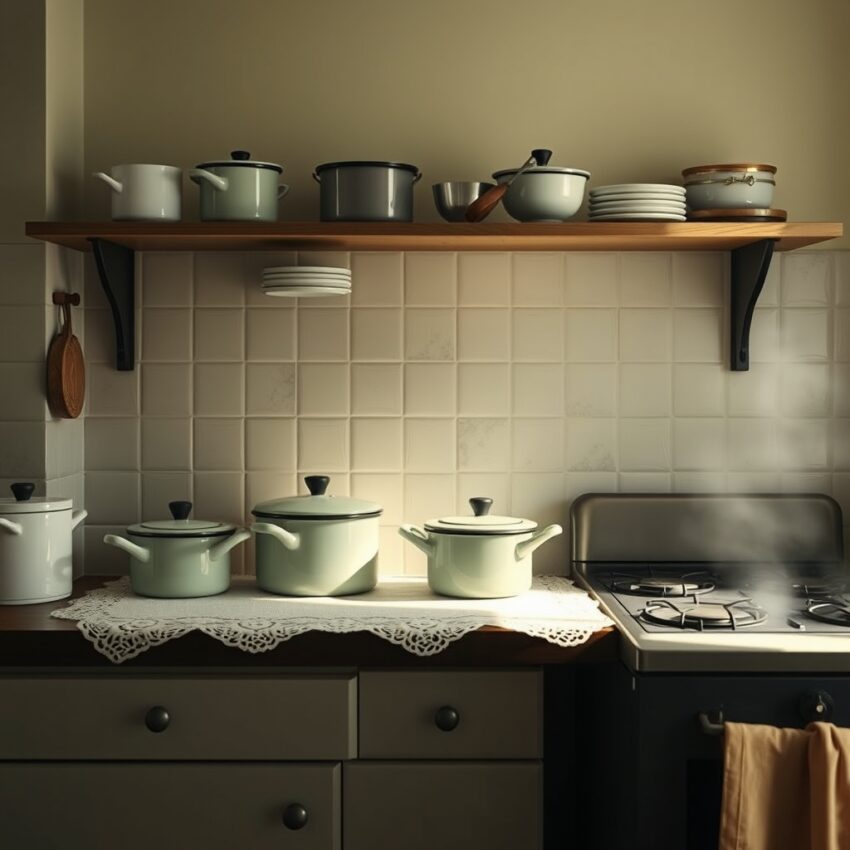
Bir zamanlar mutfak, yalnız yemek pişirilen bir yer değil; evin sesini, kokusunu ve düzenini saklayan bir hafıza odasıydı. O hafızanın en görünür parçalarından biri de emaye tencerelerdi. Krem üstüne mavi çizgili, beyaz zemin üstüne kırmızı çiçekli ya da sade ama parlak yüzeyli bu kaplar, mutfak raflarında dizili dururken bile evin karakterini belli ederdi. Sabahın ilk ışığında pencere perdesinden süzülen aydınlık emayenin üstüne vurur, rafların düzeni bir tür sessiz ihtişama dönüşürdü. Onlara bakınca yalnız bir mutfak eşyası değil, tekrar eden bir hayat ritmi görülürdü.
Obje Hikayeleri açısından emaye tencere, işlev ile estetiğin eski evlerde nasıl iç içe geçtiğini anlatan en güçlü örneklerden biridir. Hafif parlak yüzeyi, kolay temizlenen yapısı, renkli kenar süsleri ve yıllara rağmen kolayca vazgeçilmeyen dayanıklılığı sayesinde yalnız pişirme aracı olarak değil, gündelik yaşamın güven veren objesi olarak yer ederdi. Her evde ona eşlik eden başka ayrıntılar da bulunurdu: raf örtüleri, dantelli kavanoz kapakları, duvara asılan tahta kaşıklar, ocağın yanında bekleyen çaydanlık. Ama emaye tencere, bütün bu sahnenin tam merkezinde dururdu. Çünkü o, mutfakta kurulan düzenin ve tekrar eden ritüellerin taşıyıcısıydı.
Ev hayatının ritüellerini şekillendiren şey yalnız pişen yemekler değil, o yemeklere eşlik eden hazırlık düzeniydi. Mercimek ayıklanırken tencerenin kapağı tezgâha bırakılır, sabah çorbası kaynarken buhar camı hafifçe buğulandırır, öğle yemeği için dolaplardan tabaklar çıkarılır, akşama doğru artanlar yine aynı emaye kabın içine alınırdı. Bazen komşuya bir tabak yemek bu kaplarda gider, bazen bayram öncesi hazırlıklar günlerce onların içinde sürerdi. Tencerenin sesi, kepçenin kenara hafif çarpışı, kapağın kapanırken çıkardığı tok tını, mutfağın gündelik müziğinin parçasıydı. Böylece obje, yalnız kullanım değil, tekrar yoluyla duygusal bir yakınlık da üretirdi.
Bu sessiz ihtişamın unutulmamasının bir nedeni de emayenin gösterişsiz zarafetidir. Paslanmaz çelik kadar parlak değil, bakır kadar iddialı değildir; ama tam da bu yüzden ev hayatının alçakgönüllü estetiğini taşır. Çatlamış bir kenar, hafif solmuş bir desen ya da yılların bıraktığı küçük izler, eşyayı eskimiş değil, yaşanmış kılardı. Mutfak rafında duran bir emaye tencere, çoğu zaman annenin ya da büyükannenin düzen anlayışını da temsil ederdi: temiz, ölçülü, işe yarayan ama göze de hitap eden bir düzen. Evin ritüelleri bu nesnelerle görünür olur, her tekrar mutfağın hafızasına yeni bir kat eklerdi.
Bugün geriye dönüp baktığımızda emaye tencerenin taşıdığı anlam, nostaljiden daha fazlasıdır. O, bir evin ritmini yavaş ama sağlam hareketlerle kuran gündelik kültürün parçasıdır. Raflarda saklı kalan sessiz ihtişam, modern hayatın hızında kolayca gözden kaçan bir dikkati temsil eder: her şeyin yerli yerinde olması, emeğin görünmeden evi ayakta tutması, mutfağın yalnız doyuran değil bir araya getiren bir alan olması. Bu yüzden emaye tencere hâlâ hatırlanır. Çünkü onun yüzeyinde yalnız yemek değil; bir dönemin sabrı, zevki ve ev içi ritüelleri de parlamaktadır.
🇬🇧 English | The Quiet Order Shining on the Shelves
There was a time when the kitchen was not merely a place where food was cooked, but a chamber of memory holding the sound, scent, and order of the home. One of the most visible parts of that memory was the enamel pot. Cream-colored with blue lines, white with small red flowers, or plain with a modest shine, these vessels revealed the character of a household even while standing in rows on the shelves. In the first light of morning, the brightness slipping through the curtain touched the enamel surface, and the order of the shelves turned into a kind of quiet splendor. Looking at them, one saw not simply kitchenware, but the rhythm of a life repeated day after day.
From the perspective of object stories, the enamel pot is one of the strongest examples of how function and aesthetics intertwined in older homes. With its gently shining surface, easy-to-clean body, colorful rim decoration, and durability that kept it in use for years, it settled into life not only as a cooking tool but as an object of reassurance in daily routine. Around it there were always other details: shelf cloths, jar lids trimmed with lace, wooden spoons hanging on the wall, a kettle waiting beside the stove. Yet the enamel pot stood at the center of that entire scene. It carried the order established in the kitchen and the rituals repeated there.
What shaped the rituals of home life was not only the food prepared, but the pattern of preparation that accompanied it. While lentils were sorted, the lid was set on the counter; while morning soup simmered, steam lightly clouded the glass; at noon plates were taken down from cupboards; by evening leftovers were placed back into the same enamel vessel. At times a plate of food was sent to a neighbor in one of these pots; at other times holiday preparations continued inside them for days. The sound of the pot, the light strike of the ladle on its side, the full note of the lid closing, all formed part of the kitchen’s daily music. In that way the object produced not only use, but emotional closeness through repetition.
One reason this quiet splendor remains unforgettable lies in the unpretentious elegance of enamel. It is not as shining as stainless steel, nor as assertive as copper, yet precisely for that reason it carries the humble aesthetic of domestic life. A chipped edge, a slightly faded pattern, or the small traces left by time do not make the object seem worn out, but lived in. An enamel pot standing on a kitchen shelf often represented the sense of order of a mother or grandmother: clean, measured, useful, yet pleasing to the eye. The rituals of the household became visible through such objects, and each repetition added another layer to the memory of the kitchen.
Looking back now, the meaning carried by the enamel pot is more than nostalgia. It belongs to an everyday culture that built the rhythm of home with slow but steady gestures. The quiet splendor hidden on the shelves represents a kind of attention easily missed in the speed of modern life: everything in its place, labor sustaining the house without demanding to be seen, and the kitchen serving not only to feed but to gather. That is why the enamel pot is still remembered. On its surface there still shines not only food, but also the patience, taste, and domestic rituals of an entire era.
🇧🇷 Português (Brasil) | A Ordem Silenciosa que Brilhava nas Prateleiras
Houve um tempo em que a cozinha não era apenas o lugar onde se preparava a comida, mas um cômodo de memória que guardava o som, o cheiro e a ordem da casa. Uma das partes mais visíveis dessa memória eram as panelas de esmalte. Em tom creme com filetes azuis, brancas com pequenas flores vermelhas ou simples, porém brilhantes, essas peças revelavam o caráter de uma casa mesmo quando estavam apenas enfileiradas nas prateleiras. Na primeira luz da manhã, o clarão que passava pela cortina tocava a superfície esmaltada, e a organização das prateleiras se transformava em uma espécie de esplendor silencioso. Ao olhar para elas, via-se não apenas um utensílio, mas o ritmo de uma vida repetida dia após dia.
Do ponto de vista das histórias dos objetos, a panela de esmalte é um dos exemplos mais fortes de como função e estética se entrelaçavam nas casas antigas. Com sua superfície levemente brilhante, sua estrutura fácil de limpar, suas bordas coloridas e uma durabilidade que a mantinha em uso por muitos anos, ela se fixava no cotidiano não só como ferramenta de cozinha, mas como objeto de confiança. Ao redor dela havia sempre outros detalhes: paninhos nas prateleiras, tampas de pote com renda, colheres de madeira na parede, a chaleira esperando ao lado do fogão. Ainda assim, a panela de esmalte ocupava o centro de toda essa cena. Ela carregava a ordem criada na cozinha e os rituais repetidos ali.
O que moldava os rituais da vida doméstica não eram apenas os pratos preparados, mas também o desenho da preparação que os acompanhava. Enquanto as lentilhas eram separadas, a tampa ficava sobre a bancada; enquanto a sopa da manhã fervia, o vapor embaçava levemente o vidro; ao meio-dia os pratos eram tirados do armário; no fim da tarde, o que sobrava voltava para a mesma panela esmaltada. Às vezes uma porção de comida era levada ao vizinho nessas peças; em outras, os preparativos de festa seguiam por dias dentro delas. O som da panela, a concha batendo de leve na borda, o tom firme da tampa ao fechar, tudo fazia parte da música diária da cozinha. Assim, o objeto criava não só uso, mas também proximidade afetiva por meio da repetição.
Uma razão para esse esplendor silencioso permanecer inesquecível está na elegância discreta do esmalte. Não é tão brilhante quanto o aço inoxidável nem tão imponente quanto o cobre, mas justamente por isso carrega a estética humilde da vida doméstica. Uma borda lascada, um desenho um pouco apagado ou as pequenas marcas deixadas pelo tempo não fazem o objeto parecer velho, e sim vivido. Uma panela de esmalte na prateleira muitas vezes representava também a noção de ordem da mãe ou da avó: limpa, medida, útil, mas também agradável aos olhos. Os rituais da casa se tornavam visíveis por meio desses objetos, e cada repetição acrescentava mais uma camada à memória da cozinha.
Quando olhamos para trás hoje, o sentido carregado pela panela de esmalte vai além da nostalgia. Ela pertence a uma cultura cotidiana que construía o ritmo da casa com movimentos lentos, porém firmes. O esplendor silencioso guardado nas prateleiras representa uma atenção que facilmente se perde na velocidade da vida moderna: cada coisa em seu lugar, o trabalho sustentando a casa sem pedir destaque, e a cozinha funcionando não apenas para alimentar, mas também para reunir. É por isso que a panela de esmalte ainda é lembrada. Em sua superfície continuam brilhando não só os alimentos, mas também a paciência, o gosto e os rituais domésticos de uma época inteira.