🇹🇷 Türkçe | Ihlamur Kokusu İçinde Uzayan Yaz Akşamlarının Hafızası
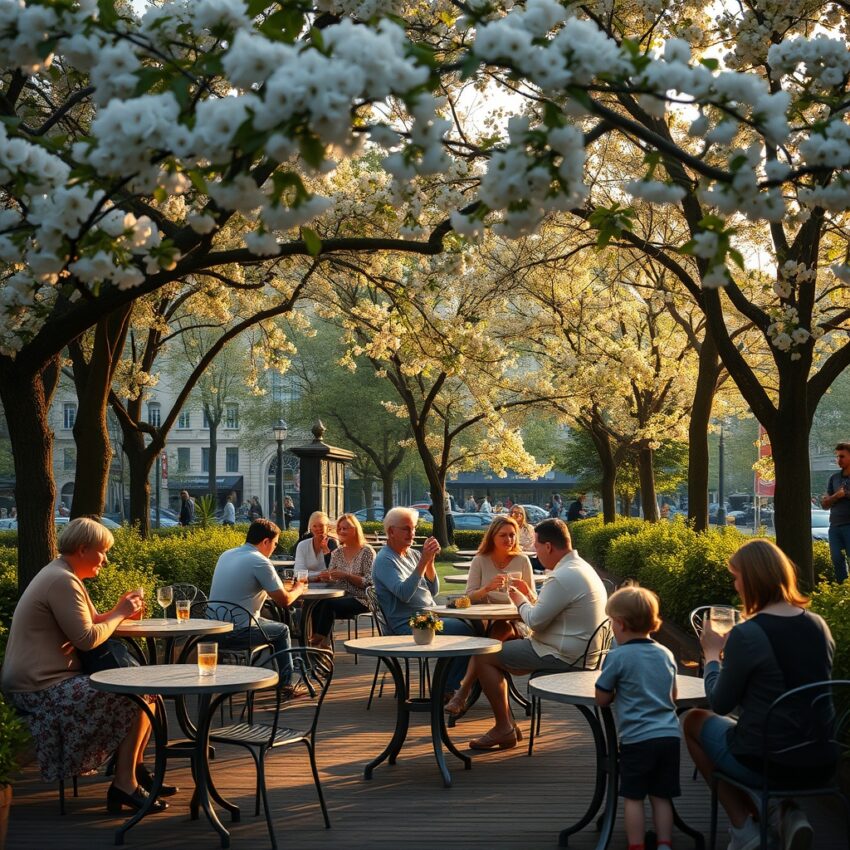
Bir zamanlar yaz akşamüstleri, güneşin yorulup gölgelerin uzamaya başladığı saatlerde bambaşka bir dile bürünürdü. Şehrin telaşı biraz gevşer, cadde kenarındaki çay bahçelerinde metal sandalyeler serinleyen toprağın üzerine hafifçe sürtünür, ince belli bardakların şıngırtısı konuşmaların arasına karışırdı. İnsanı en çok etkileyen ise bütün bu seslerin üstünde dolaşan ıhlamur kokusuydu. O koku, yalnız ağaçlardan değil; yazın ağır ağır akmasından, dostların bir masanın etrafında yeniden birbirini bulmasından, akşamüstünün acele etmeyen huyundan gelirdi. Bu yüzden geçmişe bakınca o bahçeler yalnız güzel değil, sanki daha parlak görünür.
Zamanın İzinde düşünüldüğünde çay bahçeleri, sıradan bir dinlenme mekânından fazlasıydı. Eski gazetelerde yaz eğlenceleri, aile gezintileri, kıyı kasabalarının mesireleri ya da kent parklarının yeni düzenlemeleri anlatılırken, satır aralarında hep ortak bir akşamüstü terbiyesi hissedilirdi. Çay bahçesi, yüksek sesle öne çıkmayan ama herkesin birbirini gördüğü bir kamusal alandı. Memur mesaiden sonra oraya uğrar, aileler çocuklarıyla birkaç masa ötede oturur, nişan konuşmaları bile bazen bu gölgeli masalarda olgunlaşırdı. Dostluk biriktiren şey, yalnız çok görüşmek değil; aynı saatlerin, aynı bardakların buharı ve aynı ağaç gölgesinin altında tekrar tekrar buluşmaktı.
Gündelik hayatın küçük ayrıntıları, bu akşamüstlerini neden unutulmaz kıldığını gösterir. Garsonun alüminyum tepside taşıdığı tavşankanı çaylar, limonatadaki buzların yavaş çözülüşü, masaya bırakılan kâğıt peçetelerin rüzgârla hafifçe kalkması, çocukların biraz ötede salıncağa koşması, yaşlıların iskambil ya da tavla arasında eski günlerden söz açması, bütün manzarayı katman katman derinleştirirdi. Çay bahçelerinde dostluk, büyük cümlelerle değil; “bir çay daha söyleyelim”, “güneş biraz daha düşsün öyle kalkarız” gibi sakin tekliflerle kurulurdu. İnsanlar birbirini dinlerken araya giren sessizlik bile rahatsız edici değil, serinlik gibi iyi gelirdi.
Bu bahçelerin dönemin ruhunu ele veren tarafı biraz da toplumsal ölçüyü taşımasındaydı. Ne tam ev içi mahremiyet vardı ne de bugünkü kalabalık işletmelerin gürültülü yabancılığı. Masa örtüsü olmayabilirdi ama bardak altlıkları muntazamdı; sandalye sade olabilirdi ama oturuşlar uzun solukluydu. Gençler büyüklerin yanında sesini ayarlamayı, çocuklar akşam serinliğinin geldiğini annelerin bakışından anlamayı, sevgisini açık etmeyen kuşaklar ise yakınlığı küçük jestlerle sürdürmeyi oralarda öğrenirdi. Çay bahçesi bu yüzden sadece dinlenilen yer değil, şehirli olmanın yumuşak adabının da sahnesiydi.
Bugün geçmişe bakınca o ıhlamur kokusuna dönen bahçelerin daha parlak görünmesi, yalnız hafızanın kusurlarından kaynaklanmaz. O parlaklık, insanların zamana biraz daha geniş oturduğu, akşamüstünü tüketilecek bir ara boşluk değil paylaşılacak bir eşik saydığı günlerden kalır. İnce belli bardakta soğumadan içilen çay, masalar arasında gezinen tanıdık selamlar, yaz boyu biriken küçük sohbetler ve havanın içindeki ağaç kokusu, kültürel bir miras gibi hafızada ışıldar. Belki de bugün o bahçeleri özleten şey, sadece geçmişin estetiği değil; dostluğun acele etmeden kurulduğu o sakin, terbiyeli akşamüstü dünyasıdır.
🇬🇧 English | The Memory of Summer Afternoons Lengthening Inside the Scent of Linden
There was a time when summer afternoons took on a language of their own just as the sun grew tired and the shadows began to stretch. The rush of the city loosened a little, metal chairs in roadside tea gardens brushed softly against the cooling ground, and the chime of slender tea glasses mixed with conversation. What touched people most was the scent of linden drifting above all those sounds. It seemed to rise not only from the trees, but from the slow pace of summer itself, from friends finding one another again around the same table, from the unhurried temperament of late afternoon. That is why, when we look back, those gardens seem not merely beautiful, but somehow brighter.
Seen in the context of lived history, tea gardens were more than simple places of rest. Old newspapers spoke of summer outings, family strolls, seaside promenades, and municipal parks, yet between the lines one could always feel a shared discipline of the afternoon hour. The tea garden was a public space that never demanded attention loudly, yet allowed everyone to see one another. Clerks stopped by after work, families sat a few tables apart with their children, and even conversations about engagements sometimes matured beneath those shaded trees. What stored up friendship was not only frequent meetings, but the repeated gathering under the same hour of day, the same rising steam of tea, and the same canopy of leaves.
The small details of ordinary life explain why those afternoons remain unforgettable. Glasses of strong tea carried on aluminum trays, ice slowly dissolving in lemonade, paper napkins lifting slightly in the breeze, children running toward the swings nearby, and older men opening old stories between rounds of cards or backgammon all deepened the scene layer by layer. Friendship in tea gardens was not built through grand declarations, but through calm offers such as “let’s order one more tea” or “let’s wait until the sun drops a little more before we leave.” Even silence between people felt comforting there. It did not disturb the table; it arrived like evening coolness and settled among them.
What made those gardens so revealing of their era was the social measure they carried. They were neither the privacy of home nor the loud estrangement of today’s crowded venues. There might be no tablecloth, yet the coasters were neatly placed; the chairs might be simple, yet people sat in them for long stretches without impatience. Young people learned how to lower their voices in the presence of elders, children understood from their mothers’ glances that the evening chill had begun, and generations that did not speak their affection openly maintained closeness through modest gestures. For that reason, the tea garden was not only a place to rest, but also a stage on which the gentle manners of urban life were rehearsed and preserved.
The reason those linden-scented gardens look brighter in memory today does not come only from the distortions of nostalgia. Their brightness belongs to a time when people sat more broadly within time itself and regarded the late afternoon not as an empty interval to consume, but as a threshold to share. Tea drunk before it cooled, familiar greetings moving between tables, little conversations accumulating all summer, and the scent of trees resting in the air continue to shine like a form of cultural inheritance. Perhaps what makes those gardens feel so precious now is not merely the beauty of the past, but the calm and courteous world in which friendship once had time to form.
🇧🇷 Português (Brasil) | A Memória das Tardes de Verão que se Alongavam no Perfume da Tília
Houve um tempo em que as tardes de verão ganhavam uma linguagem própria justamente quando o sol começava a se cansar e as sombras se alongavam. A correria da cidade afrouxava um pouco, as cadeiras metálicas dos jardins de chá raspavam de leve sobre o chão que já esfriava, e o tilintar dos copos estreitos de chá se misturava às conversas. O que mais tocava as pessoas era o perfume de tília que pairava acima de todos esses sons. Parecia vir não apenas das árvores, mas da própria lentidão do verão, dos amigos que se reencontravam em torno da mesma mesa, do temperamento sem pressa do fim da tarde. Por isso, quando olhamos para trás, aqueles jardins parecem não só bonitos, mas mais luminosos.
Pensando neles no rastro do tempo, os jardins de chá eram mais do que simples lugares de descanso. Os jornais antigos falavam de passeios de verão, caminhadas em família, áreas de lazer à beira-mar e parques urbanos, mas nas entrelinhas sempre havia uma mesma disciplina compartilhada do fim da tarde. O jardim de chá era um espaço público que não se impunha com barulho, embora permitisse que todos se vissem. Funcionários passavam ali depois do expediente, famílias se sentavam a algumas mesas de distância com os filhos, e até conversas de noivado às vezes amadureciam sob aquela sombra. O que acumulava amizade não era apenas o fato de se encontrarem muito, mas de voltarem sempre à mesma hora, ao vapor do mesmo chá e ao abrigo das mesmas árvores.
Os pequenos detalhes da vida comum explicam por que essas tardes ficaram tão inesquecíveis. Copos de chá forte carregados em bandejas de alumínio, o gelo derretendo devagar na limonada, guardanapos de papel levantando discretamente com o vento, crianças correndo para o balanço logo adiante e os mais velhos retomando lembranças entre uma partida e outra de cartas ou gamão davam profundidade à cena. A amizade nos jardins de chá não se construía com grandes declarações, mas com convites tranquilos como “vamos pedir mais um chá” ou “vamos levantar só quando o sol baixar um pouco mais”. Até o silêncio entre as pessoas era reconfortante. Não pesava sobre a mesa; chegava como o frescor da tarde e se acomodava entre todos.
O que fazia desses jardins um retrato tão fiel da época era a medida social que carregavam. Eles não eram nem a intimidade doméstica da casa, nem a estranheza ruidosa dos espaços lotados de hoje. Talvez não houvesse toalhas de mesa, mas os porta-copos estavam no lugar certo; talvez as cadeiras fossem simples, mas as pessoas permaneciam nelas por longos períodos sem inquietação. Os jovens aprendiam a baixar o tom diante dos mais velhos, as crianças entendiam pelo olhar das mães que o sereno da noite começava, e gerações que não demonstravam afeto de forma explícita sustentavam a proximidade por pequenos gestos. Por isso, o jardim de chá não era apenas um lugar de descanso, mas também um palco das maneiras suaves da vida urbana.
O motivo de aqueles jardins perfumados de tília parecerem hoje mais luminosos na lembrança não vem apenas dos caprichos da nostalgia. Essa luminosidade pertence a um tempo em que as pessoas ocupavam o próprio tempo com mais amplitude e viam o fim da tarde não como um intervalo a ser consumido, mas como um limiar a ser compartilhado. O chá bebido antes de esfriar, os cumprimentos conhecidos circulando entre as mesas, as pequenas conversas acumuladas ao longo do verão e o perfume das árvores suspenso no ar continuam brilhando como uma herança cultural. Talvez o que mais faça falta nesses jardins não seja apenas a beleza do passado, mas o mundo calmo e cortês em que a amizade tinha tempo para se formar.