🇹🇷 Türkçe | yazlık sinema dönüşü sokaklar günleri: sokağı nasıl ortak bir eve dönüştürdü
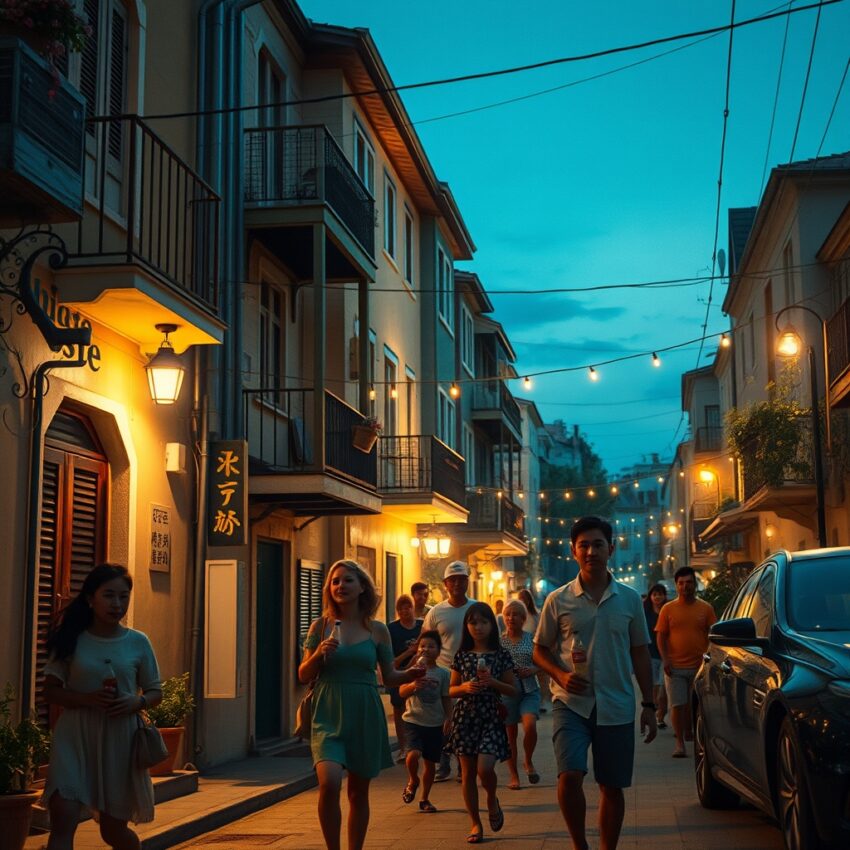
Yazlık sinema çıkışlarının en unutulmaz yanı perdede kalan sahneler kadar, eve dönüşte sokağın aldığı biçimdi. Film bittikten sonra tahta sandalyeler gıcırdayarak boşalır, çocuklar ellerinde gazoz şişeleri ya da çekirdek kâğıtlarıyla kapıya yönelir, büyükler filmin en can alıcı yerini daha kapıdan çıkar çıkmaz konuşmaya başlardı. Mahalleye dönülen o kısa yürüyüşte gece serinliği yeni basmış olur, pencereler hâlâ açıktır, balkonlardan ışık sızar ve sokağın her köşesi aynı filmi seyretmiş insanların yankısıyla dolardı. Yazlık sinema dönüşü sokaklar bu yüzden yalnız bir geçiş hattı değildi. O saatlerde sokak, mahallenin ortak salonuna dönüşür; herkes biraz daha tanıdık, biraz daha konuşkan, biraz daha aynı hikâyenin içinde hissederdi kendini.
Mahalle Kültürü açısından yazlık sinema, sadece eğlence alanı değil, kolektif duygunun kurulduğu yaz akşamı sahnesiydi. Eski gazetelerde mahalle sinemalarının yaz programları, yıldızlı gök altında film seyretmenin ailece gidilen bir etkinlik oluşu ve sinema çıkışlarında sokakların geç saatlere kadar canlı kalması sıkça anılır. Çünkü film perdesi kapanınca hikâye bitmezdi; sokakta devam ederdi. Kimi oyuncunun nasıl ağladığı, hangi sahnede herkesin güldüğü, filmin sonunun beklenmedik olup olmadığı, yol boyunca küçük kümeler hâlinde yeniden anlatılırdı. Böylece sinema, izlenen bir şey olmaktan çıkıp paylaşılan bir mahalle dili hâline gelirdi. Aynı akşamı yaşayan komşular, ertesi gün bakkal önünde de aynı filmi konuşmaya devam ederdi.
Sokağı ortak bir eve dönüştüren şey, tam da bu uzayan beraberlikti. Eve varmak için acele edilmeyen gecelerde kapı önlerinde kısa duraklamalar olur, çocuklar son bir kez koşar, anneler “yarın konuşuruz” diyerek komşuya gülümser, babalar sandalye taşıyan görevliyi ya da sinema sahibini tanıyorsa iki çift laf ederdi. Balkonlardan “film nasıldı” diye soranlar çıkar, aşağıdan cevabı hemen yükselirdi. Kimi mahallede yol kenarındaki yasemin kokusu bu konuşmalara eşlik eder, kimi yerde dondurmacının gecikmiş sesi duyulurdu. Bu küçük temaslar, sokağı bir ulaşım alanı olmaktan çıkarıp ortak bir oturma odasına çevirirdi. Herkes kendi evine dönerken aslında mahallece biraz daha birlikte kalınmış olurdu.
Yazlık sinema dönüşü günlerinin kalıcı olmasının bir nedeni de çocukluk belleğinde geceye dair güven duygusu yaratmasıdır. Sokak karanlık değil, tanıdık seslerle dolu görünürdü. Aynı yöne yürüyen komşular, el ele tutuşan kardeşler, terlik sesleri, yaz elbiselerinin hafif hışırtısı, yol boyu süren film tartışmaları çocukların zihninde geceyi korkulacak değil paylaşılacak bir zamana dönüştürürdü. Evlerin kapıları hemen kapanmaz, kimi zaman tabureler dışarı çıkarılır, serinlikte birkaç dakika daha oturulurdu. Böylece sinema çıkışı, filmden sonra da süren ikinci bir mahalle sahnesi yaratırdı. Ortak ev duygusu biraz da bu uzatılmış akşamlarda kurulurdu.
Bugün kapalı salonlar, hızlı dönüşler ve bireyselleşmiş akşam alışkanlıkları arasında yazlık sinema dönüşü sokakların bıraktığı iz daha iyi anlaşılıyor. O günlerde sokak yalnız geçilen değil paylaşılan bir yerdi. Film, komşulukla tamamlanır; gece yürüyüşü, mahallenin birbirini yeniden tanıdığı bir törene dönüşürdü. Belki de sokağın ortak eve dönüşmesi tam burada gerçekleşiyordu. Herkes kendi kapısına varıyordu ama varana kadar hep birlikte aynı yaz gecesinin içinde kalıyordu.
🇬🇧 English | The Days of Streets After Returning from the Summer Cinema: How Did They Turn the Street into a Shared Home?
What made summer cinema evenings unforgettable was not only the scenes left behind on the screen, but the shape the street took on the way home. Once the film ended, wooden chairs emptied with a creak, children moved toward the gate holding soda bottles or paper cones of sunflower seeds, and adults began discussing the most striking scene before they had even left the grounds. During that short walk back into the neighborhood, the night cool had just begun to settle, windows were still open, balcony lights were spilling outward, and every corner of the street seemed filled with the echo of people who had watched the same story. That is why the streets after the summer cinema were never only a route of return. At that hour, the street became the neighborhood’s shared sitting room. Everyone felt a little more familiar, a little more talkative, and a little more inside the same story.
As neighborhood culture, the summer cinema was not merely entertainment. It was a summer-evening stage on which collective feeling took shape. Old newspapers often mentioned the programs of neighborhood open-air cinemas, the custom of attending under the stars as a family, and the fact that streets remained lively long after screenings had ended. That is because the story did not end when the screen went dark. It continued in the street. How an actor cried, which scene made everyone laugh, whether the ending had surprised people, all of it was retold in small clusters while walking home. Cinema thus ceased to be something merely watched and became a shared neighborhood language. The next day, people would continue discussing the same film outside the grocer’s shop.
What turned the street into a shared home was precisely this extended togetherness. On nights when there was no rush to arrive, small pauses formed before doorways, children ran one last time, mothers smiled at neighbors and said they would talk tomorrow, and fathers exchanged a few words if they knew the cinema owner or the worker stacking chairs. Voices rose from balconies asking how the film had been, and answers came immediately from below. In some streets the scent of jasmine accompanied those exchanges, while elsewhere the delayed cry of the ice cream seller still drifted through the air. Such small encounters transformed the street from a passageway into a common living room. Even while everyone returned to separate houses, the neighborhood remained together a little longer.
Another reason those nights stayed so deeply in memory is that they gave childhood a feeling of safety within the dark. The street no longer seemed frightening. It seemed full of known voices. Neighbors walking in the same direction, siblings holding hands, the sound of slippers on stone, the light rustle of summer dresses, and the discussion of the film continuing all along the road transformed night into something to be shared rather than feared. Doors did not close immediately. Sometimes stools were carried outside and people sat a few minutes longer in the cool air. In that way, the cinema exit created a second neighborhood scene after the film itself. The feeling of a shared home was built in those extended evenings.
Today, among enclosed halls, fast returns, and more individualized evening routines, the trace left by those summer-cinema streets becomes easier to understand. In those days, the street was not merely crossed. It was shared. The film was completed by neighborliness, and the walk home became a ritual through which the neighborhood recognized itself again. Perhaps that is exactly where the street turned into a shared home. Everyone arrived at a separate door, yet until that moment they remained together inside the same summer night.
🇧🇷 Português (Brasil) | Os Dias das Ruas na Volta do Cinema de Verão: Como Transformaram a Rua numa Casa Compartilhada?
O que tornava inesquecíveis as noites do cinema de verão não eram apenas as cenas que ficavam na tela, mas a forma que a rua assumia na volta para casa. Quando o filme acabava, as cadeiras de madeira esvaziavam com um rangido, as crianças iam para a saída com garrafas de refrigerante ou saquinhos de sementes na mão, e os adultos começavam a comentar a cena mais marcante antes mesmo de deixar o pátio. Naquela curta caminhada de volta ao bairro, o frescor da noite tinha acabado de chegar, as janelas ainda estavam abertas, luzes vazavam das varandas e cada esquina parecia cheia do eco de pessoas que tinham visto a mesma história. Por isso as ruas na volta do cinema de verão nunca foram apenas um caminho de retorno. Naquela hora, a rua se transformava na sala compartilhada do bairro. Todos se sentiam um pouco mais próximos, um pouco mais falantes e um pouco mais dentro da mesma narrativa.
Como cultura de bairro, o cinema de verão não era apenas entretenimento. Era um palco de noite quente onde o sentimento coletivo ganhava forma. Os jornais antigos falavam com frequência da programação dos cinemas de rua, do costume de ir em família ver filmes sob as estrelas e do fato de as ruas continuarem vivas até tarde depois da sessão. Isso acontecia porque a história não terminava quando a tela se apagava. Ela continuava na rua. Como o ator chorou, em que cena todos riram, se o final surpreendeu, tudo isso era recontado em pequenos grupos durante o caminho. Assim, o cinema deixava de ser algo apenas assistido e se tornava uma linguagem compartilhada do bairro. No dia seguinte, a mesma conversa seguia em frente à mercearia.
O que transformava a rua numa casa compartilhada era justamente essa convivência prolongada. Nas noites em que ninguém tinha pressa de chegar, havia pequenas paradas diante dos portões, as crianças corriam mais uma vez, as mães sorriam para as vizinhas dizendo que continuariam a conversa no dia seguinte, e os pais trocavam algumas palavras se conheciam o dono do cinema ou o funcionário que recolhia as cadeiras. Das varandas surgiam vozes perguntando se o filme tinha sido bom, e a resposta vinha logo da calçada. Em algumas ruas, o cheiro de jasmim acompanhava esse bate-papo; em outras, ainda se ouvia ao longe a voz tardia do sorveteiro. Esses contatos miúdos transformavam a rua de passagem em sala de estar coletiva. Mesmo quando cada família voltava para a sua casa, o bairro ficava junto por mais alguns minutos.
Outra razão para essas noites permanecerem tão fortes na memória é que elas davam às crianças uma sensação de segurança dentro da própria escuridão. A rua deixava de parecer ameaçadora. Parecia cheia de vozes conhecidas. Vizinhos andando na mesma direção, irmãos de mãos dadas, o som dos chinelos no chão, o leve farfalhar das roupas de verão e a conversa sobre o filme seguindo durante todo o trajeto transformavam a noite em algo a ser compartilhado, não temido. As portas não se fechavam imediatamente. Às vezes os banquinhos eram colocados para fora e todos ficavam mais alguns minutos no fresco. Assim, a saída do cinema criava uma segunda cena de bairro depois da própria sessão. O sentimento de casa compartilhada nascia nessas noites alongadas.
Hoje, entre salas fechadas, voltas rápidas e hábitos noturnos mais individualizados, fica mais fácil entender o rastro deixado por aquelas ruas depois do cinema de verão. Naqueles tempos, a rua não era apenas atravessada. Era compartilhada. O filme se completava com a convivência, e a caminhada de volta virava um ritual em que o bairro se reconhecia outra vez. Talvez seja exatamente aí que a rua se transformava numa casa comum. Cada um chegava à sua própria porta, mas até esse momento todos permaneciam juntos dentro da mesma noite de verão.