🇹🇷 Türkçe | Sokak lambalarının altında büyüyen anılarda tramvayların şehre tempo verdiği yıllar: unutulan ayrıntılarıyla bize ne söylüyor çiçek kokulu sokaklar
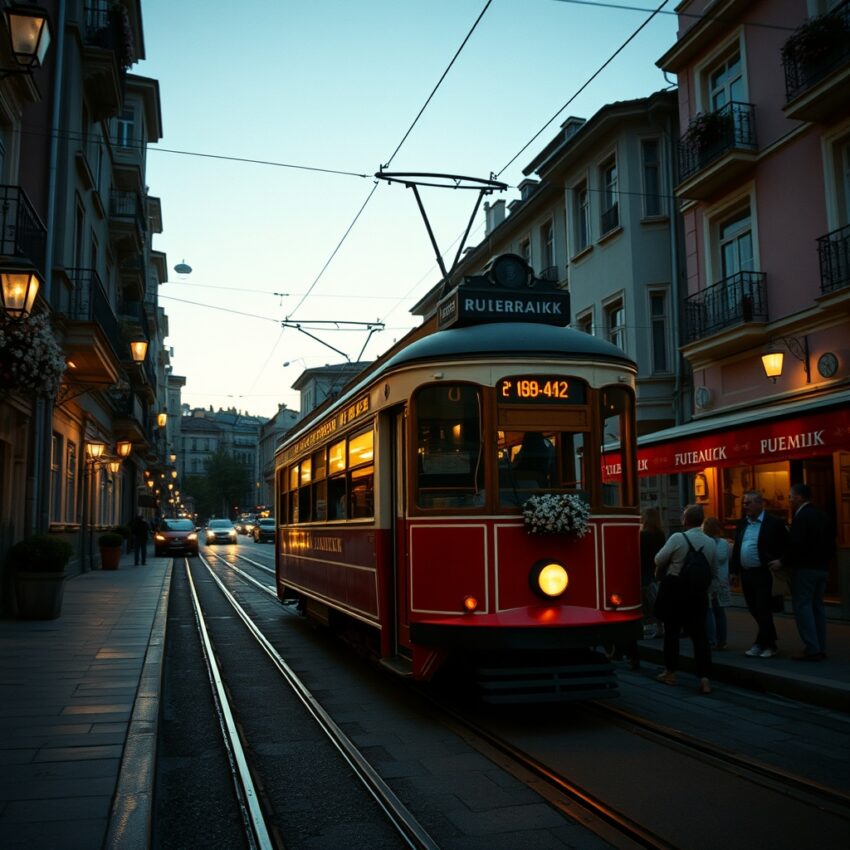
Bazı şehirler gündüz kalabalığıyla değil, akşam çökerken yavaş yavaş görünür hale gelen ayrıntılarıyla hafızada yer eder. Tramvayların şehre tempo verdiği yıllar da biraz böyle hatırlanır. Sokak lambaları henüz yanmış, kaldırımlar günün tozunu üzerinde taşıyor, pencere önlerindeki saksılardan yükselen yasemin ve hanımeli kokusu serinliğe karışmış olurdu. Tramvay raylarının üstünde beliren o metalik titreşim, daha araç görünmeden önce duyulurdu. Sonra köşeyi dönen vagon, yalnız yolcu taşımaz; akşamın ritmini, mahallenin zaman duygusunu ve sokakta yürüyenlerin adımını da belirlerdi. Çiçek kokulu sokaklar bu yüzden yalnız güzel değil, düzen kuran yerlerdi. İnsan o sokaklarda yürürken hangi saatte olduğunu saate bakmadan da anlardı.
Zamanın İzinde bakıldığında tramvay, şehir hayatının yalnız ulaşım aracı değildi. O, gündelik yaşamı parçalara ayıran ve bir araya getiren görünür bir çizgiydi. Sabah işe gidiş, öğle telaşı, okul çıkışı ve akşam dönüşü, çoğu zaman rayların üstünden geçen o sesle birbirine bağlanırdı. Eski gazetelerde tramvay hatlarının genişlemesi modernleşmenin işareti olarak anlatılırken, mahalle sakinleri için asıl mesele daha somuttu: hangi durakta simitçi bekler, hangi köşe akşamları daha aydınlık olur, hangi hattın geçtiği sokaklarda çiçek kokusu daha yoğun hissedilirdi. Şehrin büyük dönüşümü küçük ayrıntılar içinde yaşanırdı. Bir çocuğun tramvay geçerken annesinin elini biraz daha sıkı tutması, bir memurun vagon gelmeden önce cebinden saatini çıkarıp ray sesini onunla karşılaştırması, gençlerin durak önünde birbirini beklemesi, bütün bunlar şehir ritminin sessiz parçalarıydı.
Unutulan ayrıntılar dediğimiz şey de tam burada başlar. Çünkü bugün geçmişe bakınca çoğu zaman yalnız tramvayın kendisini hatırlarız; oysa asıl hafıza onun çevresinde biriken küçük sahnelerde yaşar. Sokak lambasının altında parlayan raylar, akşam serinliğinde cadde kenarına sandalyelerini çıkarmış komşular, çiçek tarhlarının arasından gelen hafif toprak kokusu, kondüktörün kısa ve kararlı sesi, durakta bekleyenlerin birbirini tanıyan bakışları… Bunlar büyük tarih anlatılarının içine girmeyen ama dönemin ruhunu en iyi anlatan ayrıntılardır. Çiçek kokulu sokaklar, şehrin yalnız fiziksel güzelliğini değil, ritminin insani ölçüsünü de gösterir. Tramvayın gelişi acele yaratmaz, bekleyişi boşa çıkarmazdı; gündelik hayatı taşıyan bir tekrar duygusu üretirdi.
Ev içi yaşam bile bu tempodan bağımsız değildi. Akşam yemeğinin saati, babanın hangi tramvayla döneceğine göre ayarlanır; çocuklar pencereden geçen ışığa bakarak dışarının hareketini izlerdi. Yaz aylarında balkon kapısı açık olur, tramvay sesi içeriye girince sanki sokak bir anlığına salona uğramış gibi hissedilirdi. Bazı anneler alışveriş dönüşünü tramvay hattına göre planlar, bazı dedeler torunlarına “az sonra geçer” diyerek şehrin zamanını kulaktan öğretirdi. Bu yüzden tramvay hafızası teknik bir geçmiş değil, aile düzeninin de parçasıdır. Sokak lambalarının altında büyüyen anılar, çocukluğun güven duygusunu biraz da bu öngörülebilir şehir ritminden alır. Her şey değişse bile raylardan gelen o tanıdık sesin geleceğini bilmek, insana görünmez bir dayanak verirdi.
Bugün çiçek kokulu sokaklar bize ne söylüyor diye sorduğumuzda, cevap yalnız nostaljide saklı değildir. Onlar bize bir şehrin hızdan önce ritimle kurulduğunu hatırlatır. Tramvaylı yılların cazibesi, eski olmasında değil; insanın yürüyüşü, bekleyişi ve karşılaşması için yer bırakmasındadır. Sokak lambaları altında büyüyen anılar bu yüzden hâlâ canlıdır. Çünkü o yıllarda şehir, akşamı yalnız aydınlatmıyor; ses, koku ve tekrar yoluyla insanın içine işliyordu. Çiçek kokulu sokakların unutulmayan tarafı, rayların üstünden geçen aracın değil, onun çevresinde kurulan ortak hayatın hafızada kalmasıdır. Tramvaylar şehre tempo verirken, insanlar da birbirlerinin zamanına daha yakından değebiliyordu.
🇬🇧 English | In the Memories Growing Beneath Street Lamps, the Years When Trams Gave the City Its Tempo: What Do Flower-Scented Streets Tell Us with Their Forgotten Details?
Some cities remain in memory not because of their daytime crowds, but because of the details that slowly become visible as evening falls. The years when trams gave the city its tempo are remembered in just that way. The street lamps had only just come on, the pavements still carried the dust of the day, and the scent rising from jasmine and honeysuckle in window boxes mixed with the evening coolness. The metallic vibration over the rails could be heard before the tram itself appeared. Then the carriage turning the corner carried more than passengers. It set the rhythm of the evening, the neighborhood’s sense of time, and even the pace of those walking along the street. Flower-scented streets were therefore not only beautiful places. They were places that established order. One could understand what hour it was there without looking at a clock.
Seen along the path of time, the tram was never merely a means of transportation. It was a visible line that both divided daily life into parts and held those parts together. The morning commute, the noon rush, the release of school, and the return home in the evening were often linked by that sound moving over the rails. Old newspapers described the expansion of tram lines as a sign of modernization, yet for neighborhood residents the meaning was more concrete: at which stop the simit seller waited, on which corner the light felt stronger at dusk, along which line the scent of flowers was most intense. The great transformation of the city was lived through small details. A child gripping a mother’s hand more tightly as the tram approached, an office worker taking a watch from his pocket and comparing it with the sound on the rails, young people waiting for one another near the stop, all these were silent pieces of the city’s rhythm.
This is exactly where what we call forgotten details begins. Looking back today, we often remember only the tram itself. Yet the true memory lives in the little scenes gathered around it. Rails shining beneath the street lamp, neighbors carrying chairs out to the pavement in the cool of the evening, the faint smell of soil rising from flower beds, the conductor’s brief and steady voice, the familiar glances exchanged by those waiting at the stop. These are the details that do not usually enter grand histories, yet explain the spirit of the period better than anything else. Flower-scented streets reveal not only the physical beauty of the city, but the human scale of its rhythm. The arrival of the tram did not create panic, nor did waiting around it feel wasted. It produced a sense of repetition that could carry daily life.
Even domestic life was not separate from that tempo. The hour of dinner might be arranged according to which tram the father would take home, while children watched the movement outside by following the light passing the window. In summer the balcony door stayed open, and when the tram sound entered the room it felt as though the street had paid a short visit to the sitting room. Some mothers planned the return from shopping around the tram line, and some grandfathers taught the city clock by ear to their grandchildren by saying, “it will pass in a moment.” For that reason, tram memory is not only a technical past. It is also part of family order. The memories growing beneath street lamps drew some of childhood’s sense of safety from this predictable urban rhythm. Even when many things changed, knowing that the familiar sound on the rails would come gave people an invisible support.
When we ask what flower-scented streets tell us today, the answer does not lie in nostalgia alone. They remind us that a city was once built through rhythm before speed. The appeal of the tram years lies not simply in their age, but in the way they left room for walking, waiting, and encounter. That is why the memories that grew beneath street lamps remain alive. In those years the city did not merely illuminate the evening. It entered people through sound, scent, and repetition. What remains unforgettable about flower-scented streets is not only the vehicle moving along the rails, but the shared life organized around it. While trams gave the city its tempo, people were able to touch one another’s time more closely as well.
🇧🇷 Português (Brasil) | Nas Memórias que Cresceram sob os Postes de Rua, os Anos em que os Bondes Davam Ritmo à Cidade: O Que nos Dizem as Ruas com Cheiro de Flores com Seus Detalhes Esquecidos?
Algumas cidades ficam na memória não por causa da agitação do dia, mas por causa dos detalhes que vão aparecendo devagar quando a noite começa a cair. Os anos em que os bondes davam ritmo à cidade são lembrados assim. Os postes de rua acabavam de acender, as calçadas ainda guardavam a poeira do dia, e o perfume de jasmim e madressilva que vinha dos vasos nas janelas se misturava ao frescor da tarde. A vibração metálica sobre os trilhos era ouvida antes mesmo de o bonde surgir. Quando o vagão dobrava a esquina, ele não levava apenas passageiros. Levava também o compasso da noite, a sensação de tempo do bairro e até o passo de quem caminhava pela rua. Por isso as ruas com cheiro de flores não eram apenas bonitas. Eram ruas que criavam ordem. Nelas, a pessoa sabia a hora do dia sem precisar olhar o relógio.
Visto no rastro do tempo, o bonde nunca foi só um meio de transporte. Era uma linha visível que dividia a vida cotidiana em partes e ao mesmo tempo unia essas partes. A ida ao trabalho pela manhã, a pressa do meio-dia, a saída da escola e a volta para casa ao entardecer eram muitas vezes ligadas por aquele som que corria sobre os trilhos. Os jornais antigos falavam da expansão das linhas de bonde como um sinal de modernização, mas, para os moradores do bairro, o sentido era mais concreto: em qual ponto o vendedor de simit esperava, em qual esquina a iluminação parecia mais forte ao anoitecer, em qual trecho o cheiro das flores se fazia sentir com mais intensidade. A grande transformação da cidade era vivida em detalhes pequenos. A criança apertando mais forte a mão da mãe quando o bonde se aproximava, o funcionário tirando o relógio do bolso e comparando o horário com o som dos trilhos, os jovens esperando uns pelos outros perto da parada, tudo isso eram peças silenciosas do ritmo urbano.
É exatamente aí que começam os chamados detalhes esquecidos. Hoje, ao olhar para trás, muita gente se lembra apenas do bonde em si. Mas a verdadeira memória mora nas pequenas cenas reunidas ao redor dele. Os trilhos brilhando sob a luz do poste, os vizinhos colocando cadeiras na calçada ao cair da tarde, o cheiro leve de terra vindo dos canteiros, a voz curta e firme do condutor, os olhares de reconhecimento entre as pessoas na parada. Esses detalhes quase nunca entram nas grandes narrativas históricas, mas explicam melhor do que qualquer outra coisa o espírito daquele tempo. As ruas com cheiro de flores mostram não só a beleza física da cidade, mas também a escala humana do seu ritmo. A chegada do bonde não criava pânico, nem a espera parecia tempo perdido. Ela produzia uma repetição capaz de sustentar a vida cotidiana.
Até a vida dentro de casa dependia desse compasso. O horário do jantar podia ser ajustado conforme o bonde que o pai pegaria para voltar, enquanto as crianças observavam o movimento lá fora acompanhando a luz que passava pela janela. No verão, a porta da varanda ficava aberta e, quando o som do bonde entrava na sala, parecia que a rua tinha feito uma visita rápida ao interior da casa. Algumas mães organizavam a volta das compras de acordo com a linha do bonde, e alguns avôs ensinavam aos netos o relógio da cidade pelo ouvido, dizendo: “já vai passar.” Por isso a memória do bonde não é apenas um passado técnico. Ela também faz parte da ordem familiar. As memórias que cresceram sob os postes de rua tiravam parte da sensação de segurança da infância desse ritmo urbano previsível. Mesmo quando muita coisa mudava, saber que o som conhecido dos trilhos viria trazia um apoio invisível.
Quando perguntamos o que as ruas com cheiro de flores nos dizem hoje, a resposta não está apenas na nostalgia. Elas nos lembram que uma cidade já foi construída pelo ritmo antes de ser construída pela velocidade. O encanto dos anos dos bondes não está só em serem antigos, mas em terem deixado espaço para caminhar, esperar e se encontrar. É por isso que as memórias nascidas sob os postes continuam vivas. Naquele tempo a cidade não iluminava apenas a noite. Ela penetrava nas pessoas por meio do som, do perfume e da repetição. O que permanece inesquecível nas ruas perfumadas de flores não é apenas o veículo que passava pelos trilhos, mas a vida compartilhada que se organizava ao redor dele. Enquanto os bondes davam ritmo à cidade, as pessoas também conseguiam tocar o tempo umas das outras com mais proximidade.