🇹🇷 Türkçe | okul servisi yerine birlikte yürüyen çocuklar ile geçen saatler bugünün sitelerinde neden aynı sıcaklık bulunmuyor
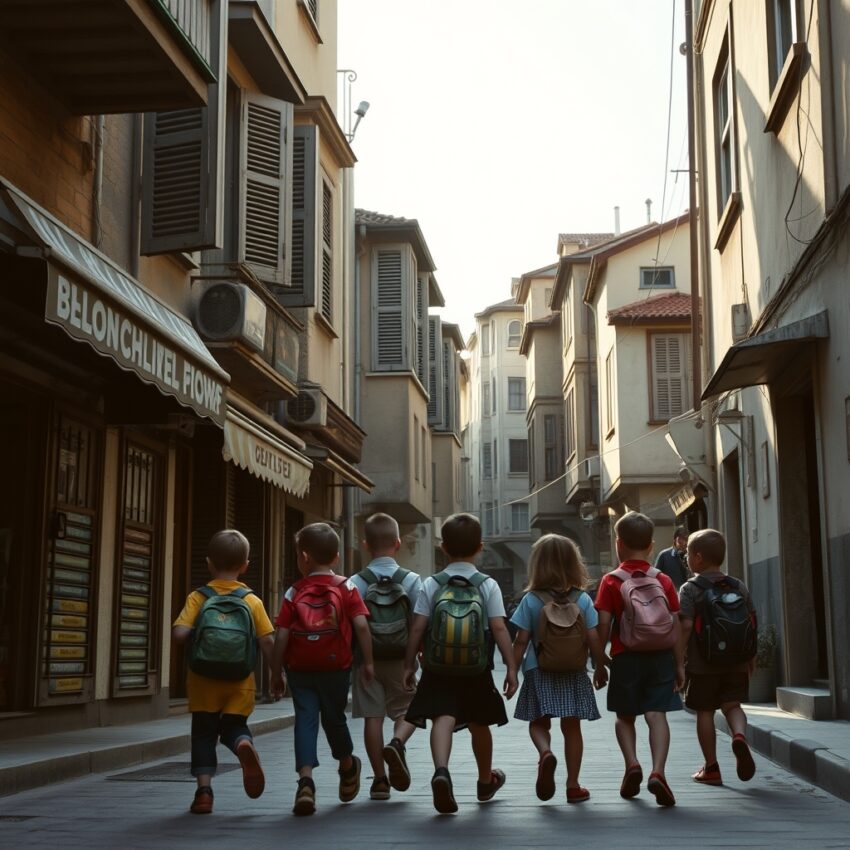
Bir zamanlar okul yolu, yalnız iki nokta arasındaki mesafe değildi; mahallenin çocuklara her sabah yeniden açtığı küçük bir dünyaydı. Servis bekleme düzeni henüz hayatın merkezine yerleşmemişken çocuklar gruplar halinde sokaktan çıkar, bir apartmanın önünden bir arkadaş daha katılır, bakkal köşesinde bir başkası yetişir, yol uzadıkça kalabalık büyürdü. Çantaların omuzda kayması, ayakkabıların kaldırım taşlarına aynı ritimde vurması, elde bazen simit bazen henüz bitmemiş bir poğaça olması, sabahı sadece bir telaş değil ortak bir başlangıç haline getirirdi. O yürüyüş saatleri okuldan önce başlayan bir sosyallikti; günün ilk şakası, ilk sır paylaşımı, ilk küçük küslüğü ve ilk barışı çoğu zaman yolda yaşanırdı.
Mahalle Kültürü bakımından birlikte yürüyen çocuklar, yalnız bir ulaşım biçimini değil, sokağın terbiyesiyle büyüyen toplumsal yakınlığı temsil ederdi. Çocuklar yol boyunca hangi kapının önünde yavaş geçileceğini, hangi komşunun sabah erkenden cam sildiğini, hangi esnafın selam verdiğini öğrenirdi. Bu yürüyüşler aynı zamanda görünmez bir mahalle gözetimi taşırdı. Balkonlardan bakan teyzeler, dükkân kepengini kaldıran amcalar, okul yönüne doğru ilerleyen kalabalığı tanır, göz ucuyla takip ederdi. Bu yüzden çocuklar sokakta yalnız değildi; mahalle onları eksik cümlelerle, kısa bakışlarla ve alışılmış selamlarla korurdu. Bugünün sitelerinde çoğu zaman eksik hissedilen sıcaklığın bir kısmı da burada aranmalıdır. Çünkü fiziksel güvenlik arttıkça, gündelik tanışıklığın doğal akışı çoğu kez zayıfladı.
Birlikte yürümenin taşıdığı sıcaklık, paylaşılmış zamanın yavaşlığından geliyordu. Servis aracı çocukları kapıdan alıp kurallı bir düzen içinde taşıyabilir; ama yolun kendisini yaşanmış bir mekân haline getiremez. Oysa eski mahallelerde okul yolu, çocukların kendi ölçülerinde keşif yaptığı bir sosyal koridordu. Sonbaharda kaldırıma düşen yapraklar tekmelenir, yağmurlu günde hangi saçaktan kaç saniye korunulacağı hesaplanır, sokak köpeğine uzaktan isim takılır, yol üstündeki dut ağacı olgunlaştığında küçük bir oyalanma yaşanırdı. Bu ayrıntılar çocuk hafızasında önemli bir olay gibi görünmeyebilir; ama yıllar sonra geriye dönüp bakıldığında asıl sıcaklık tam bu sıradanlıkların içinden belirir. İnsan, birlikte yürüdüğü arkadaşının yüzünü hatırladığı kadar, sabah güneşinin hangi duvara önce vurduğunu da hatırlar.
Ev içi hayat da bu yürüyüş düzeninden etkilenirdi. Anneler kapıdan son bir kez seslenir, “üşüme”, “koşma”, “çıkışta kardeşini bekle” gibi cümleler sokakta yankılanırdı. Çocuk eve döndüğünde yol boyunca yaşananlar okul kadar konuşulurdu. Kimin yeni kalem aldığı, hangi köşede misket bulunduğu, hangi arkadaşın geç kaldığı, kimin annesinin pencereden el salladığı, hepsi ev sohbetinin parçasıydı. Böylece okul yolu yalnız çocuklar arasında değil, ailelerin gündelik bilgisinde de yer ederdi. Bugünün sitelerinde çocukların çok daha kontrollü, zaman çizelgesine bağlı ve kapalı bir dolaşım içinde olması, belki güvenli ve pratik bir düzen yaratıyor; ama sokakla kurulan o gevşek ama sıcak ilişkiyi aynı ölçüde üretmiyor. Sıcaklık biraz da plansız temaslardan, küçük rastlantılardan ve tanıdık yüzlerin tekrarından doğuyordu.
Bugün neden aynı sıcaklığın bulunmadığı sorusunun tek cevabı nostalji değildir. Değişen şehir yapısı, hızlanan hayat, trafik ve güvenlik kaygıları çocukların yürüyerek kurduğu ortak zamanı azaltmış olabilir. Yine de hafızada kalan şey çok açıktır: birlikte yürüyen çocuklar sokağı yalnız kullanmıyor, ona canlılık veriyordu. Mahalle o saatlerde kendini biraz daha fazla hissettiriyor, çocuklar da birbirlerinin gününe daha okul kapısına varmadan dahil oluyordu. Bu yüzden eski yürüyüşlerin sıcaklığı bugünün sitelerinde kolayca bulunmuyor. Çünkü mesele sadece yolun uzunluğu değil; yolun üzerinde biriken ilişkiydi. O eski saatler, çocukların birbirine ayak uydurarak büyüdüğü, mahallenin de bu büyümeye sessizce eşlik ettiği zamanlardı. Isı dediğimiz şey bazen tam da böyle kurulur: beraber atılan adımların sıradan ama unutulmaz ritminden.
🇬🇧 English | Why Is the Same Warmth Not Found in Today’s Residential Complexes in the Hours Once Passed with Children Walking Together Instead of Taking a School Shuttle?
There was a time when the road to school was not simply a distance between two points. It was a small world that the neighborhood reopened to children every morning. Before the order of school shuttles became central to daily life, children stepped into the street in groups, another friend joined in front of one apartment, another caught up near the grocer’s corner, and the crowd grew as the road lengthened. Schoolbags slipped on shoulders, shoes struck the paving stones in a shared rhythm, and there might be a simit or half-finished pastry still in hand. Morning became not only a rush, but a common beginning. Those walking hours created a form of social life before school had even begun. The day’s first joke, first seat arrangement, first little quarrel, and first reconciliation often happened on the way.
Seen through the lens of neighborhood culture, children walking together represented not only a way of getting somewhere, but a social closeness shaped by the manners of the street. Along the route they learned in front of which house to slow down, which neighbor cleaned windows early in the morning, and which shopkeeper always offered a greeting. These walks also carried an invisible neighborhood watch. Aunts looking from balconies and men raising shop shutters recognized the group moving toward school and followed them from the corner of an eye. For that reason, children were never entirely alone in the street. The neighborhood protected them through unfinished sentences, brief glances, and familiar greetings. Part of the warmth missing in many of today’s residential compounds can be searched for there. As physical security increased, the natural flow of everyday familiarity often weakened.
The warmth of walking together came from the slowness of shared time. A shuttle bus can pick children up at the door and carry them through an orderly routine, but it cannot turn the road itself into a lived place. In older neighborhoods, by contrast, the way to school was a social corridor where children made discoveries at their own scale. Autumn leaves were kicked across the pavement, the number of seconds one could hide beneath an awning during rain was tested, a name was invented for a street dog, and when the mulberry tree along the route ripened, there was always a brief delay. These details may not seem like major events in childhood memory, yet when people look back years later, the true warmth rises precisely from such ordinary things. One remembers not only the face of the friend who walked beside them, but also which wall first caught the morning sun.
Domestic life was shaped by that walking order as well. Mothers called out one last warning at the door, phrases such as “don’t get cold,” “don’t run,” or “wait for your sibling after school” echoing into the street. When the child returned home, what happened along the way was discussed almost as much as what happened in the classroom. Who had a new pencil, where marbles had been found, which friend was late, whose mother waved from the window all became part of household conversation. In that way the school road entered not only the lives of children, but also the daily knowledge of families. Today’s residential compounds may offer a more controlled, more scheduled, and more enclosed circulation for children. That can create a safer and more practical order, but it does not produce the same loose yet warm relation with the street. Warmth often grows out of unplanned contact, minor accidents, and the repetition of familiar faces.
The answer to why the same warmth is not found today is therefore not nostalgia alone. The changing structure of the city, the speeding up of life, traffic, and safety concerns may all have reduced the shared time children once built by walking. Yet what remains in memory is very clear: children who walked together did not merely use the street, they gave it life. At those hours the neighborhood felt itself more strongly, and children entered one another’s day before they had even reached the school gate. That is why the warmth of those old walks is not easily found in today’s compounds. The issue is not simply the length of the road, but the relationships that accumulated along it. Those old hours were times when children grew by matching their steps to one another, while the neighborhood quietly kept pace with that growth. What we call warmth is often formed exactly that way, from the ordinary yet unforgettable rhythm of walking side by side.
🇧🇷 Português (Brasil) | Por Que o Mesmo Calor Não É Encontrado nos Condomínios de Hoje nas Horas Vividas com Crianças que Iam Juntas a Pé em Vez de Pegarem o Transporte Escolar?
Houve um tempo em que o caminho para a escola não era apenas a distância entre dois pontos. Era um pequeno mundo que o bairro reabria para as crianças todas as manhãs. Antes de a lógica do transporte escolar se tornar central na vida cotidiana, os grupos saíam juntos para a rua, mais um amigo se juntava diante de um prédio, outro alcançava a turma na esquina da mercearia, e o grupo crescia à medida que o trajeto avançava. As mochilas escorregavam nos ombros, os sapatos batiam nas pedras da calçada no mesmo ritmo, e às vezes ainda havia um simit ou um pãozinho pela metade na mão. A manhã deixava de ser apenas correria e virava um começo compartilhado. Aquelas horas de caminhada criavam uma vida social antes mesmo do início das aulas. A primeira piada do dia, a primeira combinação de lugares, a primeira pequena briga e a primeira reconciliação muitas vezes aconteciam no caminho.
Do ponto de vista da cultura de bairro, as crianças que caminhavam juntas representavam não apenas um modo de chegar à escola, mas uma proximidade social moldada pelos costumes da rua. Durante o trajeto, aprendiam diante de qual portão era melhor diminuir o passo, qual vizinha limpava as janelas logo cedo e qual comerciante sempre dava bom-dia. Essas caminhadas também carregavam uma vigilância invisível do bairro. As tias olhando das sacadas e os homens levantando as portas das lojas reconheciam o grupo que seguia rumo à escola e o acompanhavam com o canto dos olhos. Por isso as crianças nunca estavam totalmente sozinhas na rua. O bairro as protegia com frases incompletas, olhares breves e cumprimentos repetidos. Parte do calor que hoje parece faltar em muitos condomínios pode ser procurada aí. À medida que a segurança física aumentou, o fluxo natural do reconhecimento cotidiano muitas vezes enfraqueceu.
O calor de caminhar junto vinha da lentidão do tempo compartilhado. Um transporte escolar pode buscar a criança na porta e levá-la dentro de uma rotina organizada, mas não transforma o caminho em lugar vivido. Nos bairros antigos, ao contrário, a ida para a escola era um corredor social em que as crianças faziam descobertas na medida do próprio corpo. As folhas de outono eram chutadas pela calçada, calculava-se quantos segundos dava para se abrigar sob um toldo em dia de chuva, inventava-se um nome para o cachorro da rua e, quando a amoreira do caminho amadurecia, sempre havia uma pequena demora. Esses detalhes podem não parecer grandes acontecimentos na memória infantil, mas, anos depois, é justamente desse tipo de banalidade que o verdadeiro calor retorna. A pessoa recorda não só o rosto do amigo que andava ao lado, mas também em qual parede o sol da manhã batia primeiro.
A vida dentro de casa também era moldada por essa rotina de caminhada. As mães faziam um último chamado na porta, e frases como “não passa frio”, “não corre” ou “espera seu irmão na volta” ecoavam pela rua. Quando a criança voltava para casa, o que tinha acontecido no trajeto era comentado quase tanto quanto o que tinha acontecido na escola. Quem estava com um lápis novo, em qual esquina apareceram bolinhas de gude, qual amigo se atrasou, de qual janela uma mãe acenou: tudo isso virava assunto doméstico. Dessa forma, o caminho da escola entrava não só na vida das crianças, mas também no conhecimento cotidiano das famílias. Os condomínios de hoje talvez ofereçam uma circulação mais controlada, mais ligada a horários e mais fechada. Isso pode criar uma ordem mais segura e prática, mas não produz com a mesma força aquela relação frouxa, porém calorosa, com a rua. Muitas vezes o calor nasce de contatos imprevistos, pequenos acasos e da repetição de rostos conhecidos.
Por isso a resposta para a falta dessa mesma sensação hoje não está apenas na nostalgia. A transformação da cidade, o ritmo acelerado da vida, o trânsito e as preocupações com segurança podem ter diminuído o tempo comum que as crianças antes construíam ao caminhar. Ainda assim, o que ficou na memória é muito claro: as crianças que iam juntas a pé não apenas usavam a rua, elas davam vida a ela. Naquelas horas, o bairro se fazia sentir com mais intensidade, e as crianças já participavam do dia umas das outras antes mesmo de chegar ao portão da escola. É por isso que o calor daquelas velhas caminhadas não aparece com facilidade nos condomínios de hoje. A questão não é apenas o tamanho do percurso, mas as relações acumuladas ao longo dele. Aquelas horas antigas eram o tempo em que as crianças cresciam ajustando o passo umas às outras, enquanto o bairro acompanhava esse crescimento em silêncio. O que chamamos de calor muitas vezes nasce exatamente assim: do ritmo comum, banal e inesquecível, de caminhar lado a lado.