🇹🇷 Türkçe | iz bırakmış domates salçası günleri: aile tarifleri içinde neden özel bir yere sahip
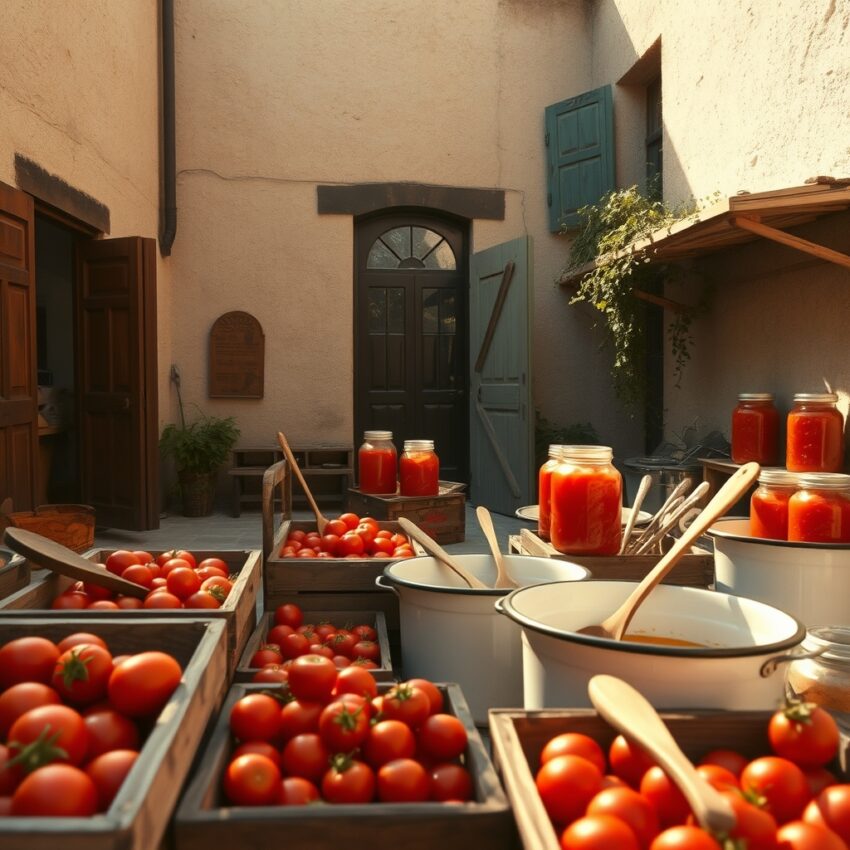
Yazın sonuna doğru avlularda, balkonlarda ve damlarda başka bir telaş başlardı. Kasalarla gelen domatesler yıkanır, doğranır, büyük leğenlere alınır; evin içinde ekşi tatlı bir koku yavaş yavaş yayılırdı. Güneş henüz sertken kadınlar tülbentleri, tahta kaşıkları ve cam kavanozları hazır eder, çocuklar da bazen domates saplarını ayıklayarak bazen boş kavanozları taşıyarak bu kırmızı hazırlığın çevresinde dolanırdı. Domates salçası yapmak yalnız kışlık yiyecek hazırlamak değildi. Ailenin mevsimle kurduğu anlaşmayı yenilemek, yazın bereketini kış sofralarına taşıyacak ortak bir hafıza oluşturmak demekti.
Damak Hafızası açısından domates salçası, aile tariflerinin görünmeyen omurgalarından biridir. Bir tencere kuru fasulyenin, bulgur pilavının, sebze yemeğinin ya da çorbanın tadı çoğu zaman kaşığın ucundaki salçayla derinleşirdi. Fakat o lezzetin arkasında yalnız domates yoktu; güneşte beklemiş saatler, karıştırırken kola yapışan kırmızılık, tuz oranını bilen büyüklerin deneyimi ve kavanoz kapağını sıkıca kapatmanın ciddiyeti vardı. Her evin salçası biraz farklı olurdu. Kimi daha koyu, kimi daha tuzlu, kimi daha güneş kokulu… Bu farklar tarif defterine yazılmayan ama kuşaktan kuşağa sezgiyle aktarılan aile imzalarıydı.
Salça günlerinin özel yeri, işi tek kişinin değil bütün evin meselesi hâline getirmesinden gelirdi. Komşudan büyük leğen ödünç alınır, gölgeye serilen bezlerin üzerinden kimse geçmesin diye çocuklar uyarılır, kavanozların temizliği defalarca kontrol edilirdi. Bazı evlerde domatesler süzgeçten geçirilir, bazılarında et makinesinden çekilir, bazı yerlerde güneşte koyulaştırılır, bazı yerlerde ağır ateşte pişirilirdi. Yöntem değişse de aynı duygu kalırdı: Kış geldiğinde sofraya konacak her kaşıkta bugünün emeği hatırlanacaktı. Salçanın rengi, yazın elden kaçmadan saklanmış hâli gibiydi.
Bu günler aynı zamanda mutfak bilgisinin sözsüz aktarıldığı zamanlardı. Büyükler “tuzu az olmasın”, “üstüne yağ koy”, “kavanoz kuru olsun” derken yalnız teknik bilgi vermez, evin devamlılığını da öğretirdi. Çocuklar bazen sıkılır, bazen güneşte kuruyan salçanın üstünde oluşan ince kabuğu merakla izler, bazen kırmızıya boyanan ellerine bakıp gülerdi. O görüntüler yıllar sonra bir yemeğin kokusunda geri dönerdi. Salça kavanozu açıldığında duyulan keskin koku, yalnız iştah değil, yaz avlusunu, aile seslerini ve mevsimlik hazırlıkların telaşını da çağırırdı. Bu yüzden salça, damakla hafıza arasında güçlü bir köprü kurardı.
Bugün hazır ürünler mutfak raflarını doldursa da ev salçasının aile tariflerindeki özel yeri kolay kolay silinmez. Çünkü onun içinde ölçüden fazla deneyim, malzemeden fazla emek ve lezzetten fazla hatıra vardır. İz bırakmış domates salçası günleri bize mutfağın yalnız yemek pişirilen bir yer olmadığını, mevsimlerin, kuşakların ve komşulukların birbirine bağlandığı bir hafıza alanı olduğunu gösterir. Bir kaşık salça yemeğe karıştığında, yaz güneşi kış tenceresine sessizce dokunur. Aile tariflerinin derinliği de biraz buradan gelir: Her tat, onu hazırlayan ellerin zamanını ve sabrını yanında taşır.
🇬🇧 English | Tomato Paste Days That Left a Mark: Why They Hold a Special Place in Family Recipes
Toward the end of summer, a different kind of bustle began in courtyards, on balconies, and across flat rooftops. Tomatoes arriving in crates were washed, chopped, and placed in large basins, while a sweet-sour scent slowly spread through the house. While the sun was still strong, women prepared cheesecloths, wooden spoons, and glass jars, and children moved around this red preparation, sometimes removing tomato stems and sometimes carrying empty jars. Making tomato paste was not merely preparing food for winter. It meant renewing the family’s agreement with the season and creating a shared memory that would carry the abundance of summer to winter tables.
From the perspective of taste memory, tomato paste is one of the invisible backbones of family recipes. The flavor of a pot of beans, bulgur pilaf, vegetable stew, or soup often deepened with the paste at the tip of a spoon. Yet behind that flavor there was not only tomato. There were hours spent under the sun, redness clinging to the arm while stirring, the experience of elders who knew the right amount of salt, and the seriousness of sealing jar lids tightly. Each household’s paste was a little different. Some was darker, some saltier, some more fragrant with sun. These differences were family signatures not written in recipe notebooks, but passed from generation to generation through intuition.
The special place of paste-making days came from the way the task became a matter for the whole household rather than one person. A large basin might be borrowed from a neighbor, children were warned not to step over cloths spread in the shade, and the cleanliness of jars was checked again and again. In some homes tomatoes were pressed through a sieve, in others they were run through a meat grinder, in some places thickened under the sun, in others cooked slowly over low heat. The method changed, but the feeling remained the same: when winter arrived, every spoonful placed on the table would remember today’s labor. The color of the paste was like summer preserved before it slipped away.
These days were also times when kitchen knowledge was transmitted without formal instruction. When elders said, “Do not let the salt be too little,” “pour oil on top,” or “the jar must be dry,” they were not only giving technical advice; they were teaching the continuity of the household. Children sometimes grew bored, sometimes watched with curiosity the thin skin forming on paste drying in the sun, and sometimes laughed at their hands stained red. Those images returned years later in the scent of a dish. When a jar of paste was opened, its sharp smell summoned not only appetite, but the summer courtyard, family voices, and the bustle of seasonal preparation. That is why tomato paste built a powerful bridge between taste and memory.
Even though ready-made products fill kitchen shelves today, the special place of homemade paste in family recipes does not easily disappear. It contains more experience than measurement, more labor than ingredient, and more memory than flavor alone. Tomato paste days that left a mark show us that the kitchen was not only a place where meals were cooked, but a field of memory where seasons, generations, and neighborly relations were tied together. When a spoonful of paste enters a dish, the summer sun quietly touches the winter pot. The depth of family recipes comes partly from this: every taste carries with it the time and patience of the hands that prepared it.
🇧🇷 Português (Brasil) | Dias Marcantes de Extrato de Tomate: Por que Ocupam um Lugar Especial nas Receitas de Família
Perto do fim do verão, começava outro tipo de movimento nos pátios, nas varandas e nos terraços. Os tomates que chegavam em caixas eram lavados, cortados e colocados em grandes bacias, enquanto um cheiro agridoce se espalhava devagar pela casa. Quando o sol ainda estava forte, as mulheres preparavam panos finos, colheres de pau e potes de vidro, e as crianças circulavam em torno daquela preparação vermelha, às vezes tirando os cabinhos dos tomates, às vezes carregando potes vazios. Fazer extrato de tomate não era apenas preparar comida para o inverno. Era renovar o acordo da família com a estação e criar uma memória comum que levaria a fartura do verão às mesas frias.
Do ponto de vista da memória gustativa, o extrato de tomate é uma das bases invisíveis das receitas de família. O sabor de uma panela de feijão, de um pilaf de trigo, de um cozido de legumes ou de uma sopa muitas vezes ganhava profundidade com a pasta na ponta da colher. Mas por trás desse sabor não havia apenas tomate. Havia horas sob o sol, o vermelho grudado no braço durante a mistura, a experiência dos mais velhos que sabiam a quantidade certa de sal e a seriedade de fechar bem as tampas dos potes. O extrato de cada casa era um pouco diferente. Alguns mais escuros, outros mais salgados, outros mais cheios de cheiro de sol. Essas diferenças eram assinaturas familiares que não ficavam escritas no caderno de receitas, mas passavam de geração em geração pela intuição.
O lugar especial dos dias de fazer extrato vinha do fato de a tarefa se tornar assunto da casa inteira, não de uma pessoa só. Uma bacia grande era emprestada pela vizinha, as crianças eram avisadas para não pisar nos panos estendidos à sombra, e a limpeza dos potes era conferida muitas vezes. Em algumas casas, os tomates passavam pela peneira; em outras, pela máquina de moer carne; em alguns lugares engrossavam ao sol, em outros cozinhavam lentamente em fogo baixo. O método mudava, mas o sentimento era o mesmo: quando o inverno chegasse, cada colher servida à mesa lembraria o trabalho daquele dia. A cor do extrato parecia o verão guardado antes que escapasse.
Esses dias também eram momentos em que o conhecimento da cozinha era transmitido sem aula formal. Quando os mais velhos diziam “não deixe faltar sal”, “coloque óleo por cima” ou “o pote precisa estar seco”, não davam apenas informação técnica; ensinavam a continuidade da casa. As crianças às vezes se entediavam, às vezes observavam com curiosidade a película fina que se formava sobre o extrato secando ao sol, e às vezes riam das mãos tingidas de vermelho. Essas imagens voltavam anos depois no cheiro de uma comida. Quando um pote de extrato era aberto, seu aroma forte chamava não só o apetite, mas também o pátio de verão, as vozes da família e a correria das preparações da estação. Por isso, o extrato de tomate criava uma ponte poderosa entre sabor e memória.
Mesmo que hoje os produtos prontos preencham as prateleiras da cozinha, o lugar especial do extrato caseiro nas receitas de família não desaparece facilmente. Dentro dele há mais experiência do que medida, mais trabalho do que ingrediente e mais lembrança do que sabor isolado. Os dias marcantes de extrato de tomate mostram que a cozinha não era apenas um lugar onde se cozinhava, mas um campo de memória onde estações, gerações e vizinhanças se ligavam. Quando uma colher de extrato entra na comida, o sol do verão toca em silêncio a panela do inverno. A profundidade das receitas de família vem um pouco daí: cada sabor leva consigo o tempo e a paciência das mãos que o prepararam.