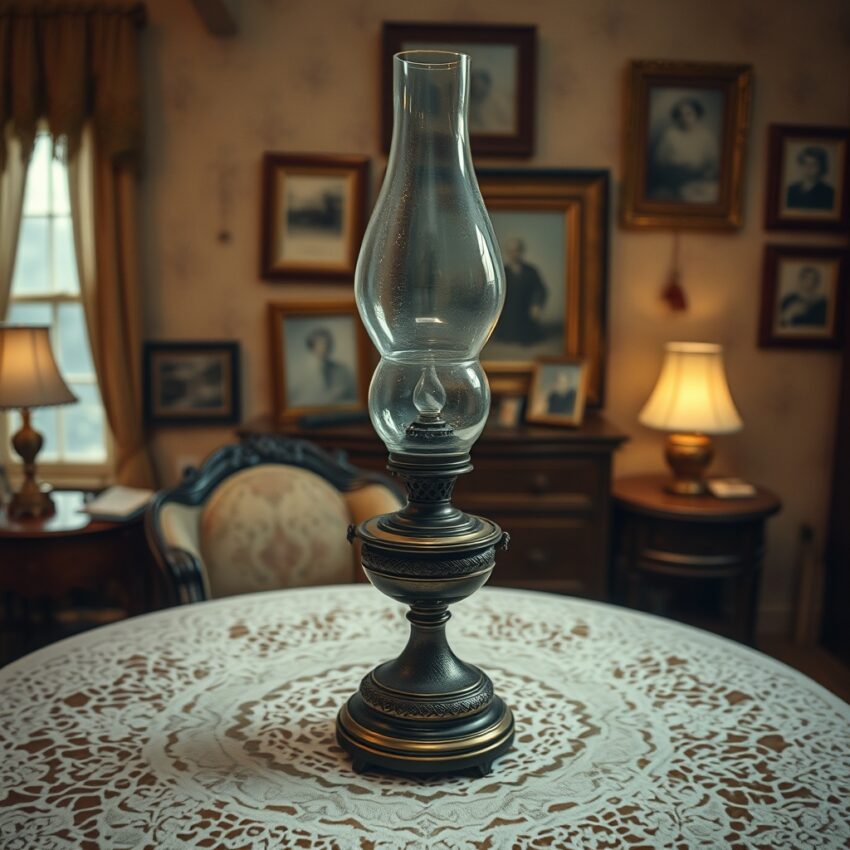
🇹🇷 Türkçe | gaz lambası ve elden ele geçen aile yadigârı oluşu: ustalık ve sabrın izini neden hâlâ taşıyor
Bazı eşyalar bir evde kullanılmaktan çok, bir evden ötekine taşınırken anlam kazanır. Gaz lambası da onlardan biridir. Camı dikkatle silinen, fitili sabırla kısılıp açılan, akşam çökünce masanın ortasına getirilen bu nesne, yalnız karanlığı dağıtan bir araç olarak kalmazdı. Onun etrafında anlatılan hikâyeler, paylaşılan sofralar ve sessizce tamamlanan işler zamanla lambanın metal gövdesine sinerdi. Sonra bir gün, artık kullanılmasa bile sandıktan çıkarılır, “annenanneden kalma” ya da “babanın baba evinden gelmiş” denilerek bir başka kuşağa verilirdi. Elden ele geçtikçe gaz lambası, ışık kaynağından çok aile hafızasının görünür bir parçasına dönüşürdü.
Obje Hikayeleri açısından bakıldığında gaz lambası, hem tasarım hem de kullanım terbiyesi taşıyan güçlü bir nesnedir. Metal haznesi, cam fanusu, ince ayar mekanizması ve fitilin doğru boyda tutulmasını gerektiren yapısıyla yalnız üretim becerisi değil, kullanım bilgisi de isterdi. Işığın iyi yanması için yağ eksik olmayacak, cam is yapmayacak, alev ne fazla yükselip camı karartacak ne de fazla kısılıp karanlık bırakacaktı. Bu denge, geçmiş kuşakların gündelik eşya ile kurduğu dikkatli ilişkinin küçük ama etkili örneklerinden biriydi. Gaz lambasını kullananlar, nesneyi zorlamadan işletmenin, onu temiz tutmanın ve her parçasına hak ettiği özeni göstermenin önemini bilirdi.
Bir aile yadigârı olarak değer kazanmasının sebebi de tam burada başlar. Çünkü gaz lambası yalnız görünen biçimini değil, onunla geçirilen zamanın terbiyesini de devreder. Bir büyükanne torununa lambanın nasıl yakılacağını anlatırken aslında sabırlı olmayı, acele etmemenin kıymetini ve küçük işlerin de özen istediğini öğretmiş olur. Bir baba, çocukken elektrik kesildiğinde bu lambanın altında ders çalıştığını anlatırken yalnız geçmişi aktarmıyor; aynı zamanda yoklukla düzen arasındaki eski dengeyi de görünür kılıyordur. Böylece nesne, kendi malzemesinden daha geniş bir anlam alanı edinir. Camı kırılgan, metal kısmı ağır, kokusu hafifçe eski zamanları çağıran bu lamba, aile içinde deneyim taşıyan bir dile dönüşür.
Ustalık ve sabrın izini bugün hâlâ taşımasının bir nedeni de elle kurulmuş bir dünyayı temsil etmesidir. Gaz lambası, düğmeye basınca kendiliğinden çalışan modern aletler gibi görünmez. Onu kullanmak için hazırlık gerekir. Yağ konur, fitil ayarlanır, kibrit çakılır, cam dikkatle yerleştirilir. Her adım, kullanıcıyı nesnenin işleyişine ortak eder. Bu yüzden lamba yalnız bir araç değil, bir ritim kurucudur. Eski evlerde akşamın başladığı, dikişin sürdüğü, çocukların ödev yaptığı ve büyüklerin sessiz konuşmalarını alçalttığı saatleri o belirlerdi. Işık kadar düzen de üretirdi. Belki bu yüzden bugün vitrinde ya da sandıkta dursa bile, bakan kişinin zihninde hemen bir ev içi sahne canlanır.
Gaz lambasının elden ele geçen bir yadigâr olarak yaşaması, kültürel mirasın sadece büyük anlatılarda değil küçük ev eşyalarında da taşındığını hatırlatır. Bu nesne bize, bir dönemin elektrikten önceki karanlıkla kurduğu ilişkiyi, emeğe dayanan ev düzenini ve aile içinde ustalığın nasıl sessizce aktarıldığını anlatır. Onun hâlâ sabrın ve becerinin izini taşıması, eski kuşakların nesnelerle hızlı tüketim üzerinden değil bakım ve devamlılık üzerinden ilişki kurmasındandır. Bu yüzden gaz lambası, geçmişe ait zarif bir dekor olmaktan daha fazlasıdır. O, kullanıldıkça öğrenilen, saklandıkça anlam kazanan ve aktarıldıkça aileyi birbirine bağlayan bir hafıza objesidir.
🇬🇧 English | The Oil Lamp and Its Life as a Family Heirloom Passed from Hand to Hand: Why Does It Still Carry the Trace of Craft and Patience?
Some objects gain their meaning less by being used in one house than by being carried from one house to another. The oil lamp is one of them. Its glass was wiped carefully, its wick raised and lowered with patience, and when evening came it was placed at the center of the table. In that way, it remained more than a tool for pushing back darkness. The stories told around it, the meals shared beside it, and the quiet tasks completed under its light gradually settled into its metal body. Then one day, even when it was no longer needed for use, it would be taken from a chest and handed to another generation with words such as “this came from your grandmother” or “it belonged to your father’s family home.” Passed from hand to hand, the oil lamp turned from a light source into a visible part of family memory.
From the viewpoint of object stories, the oil lamp is a powerful article carrying both design and the discipline of use. With its metal reservoir, glass chimney, delicate adjustment mechanism, and structure requiring the wick to remain at the correct height, it demanded not only the skill of manufacture, but also the knowledge of careful handling. For the light to burn well, the oil could not run low, the glass had to remain free of soot, and the flame could neither rise so high that it blackened the chimney nor sink so low that the room was left dim. That balance was one of the small yet effective examples of the attentive relationship earlier generations formed with ordinary things. Those who used an oil lamp knew the value of operating an object without forcing it, keeping it clean, and giving every part the care it deserved.
Its worth as a family heirloom begins precisely there. The lamp passes down not only its visible form, but the discipline of time once spent with it. When a grandmother shows a grandchild how to light it, she is also teaching patience, the importance of not rushing, and the fact that even small tasks require care. When a father says he once studied beneath that lamp during a power cut, he is not merely sharing a memory, but revealing an older balance between scarcity and order. The object thus acquires a field of meaning wider than its material. Fragile in its glass, heavy in its metal, and lightly scented with old time, the lamp becomes a language through which experience is carried within a family.
One reason it still bears the trace of craft and patience is that it represents a world assembled by hand. An oil lamp does not function invisibly the way modern appliances do with the press of a button. To use it, preparation is required. Oil must be poured, the wick adjusted, the match struck, and the chimney set carefully in place. Each step draws the user into the working logic of the object. For that reason, the lamp becomes not only a tool, but a maker of rhythm. In old homes, it marked the hour when evening began, when sewing continued, when children did homework, and when the voices of adults softened. It produced order as much as illumination. That may be why, even when standing now in a cabinet or storage chest, it immediately calls up a domestic scene in the mind of anyone looking at it.
The survival of the oil lamp as an heirloom passed from hand to hand reminds us that cultural inheritance is carried not only by grand narratives, but by small household objects. It tells us how an earlier era lived with darkness before electric certainty, how home order depended on labor, and how craftsmanship moved quietly inside families. The fact that it still bears the marks of patience and skill comes from the way earlier generations related to objects not through rapid consumption, but through maintenance and continuity. For that reason, the oil lamp is more than a delicate decoration from the past. It is an object of memory that teaches through use, gathers meaning through keeping, and binds a family together through transmission.
🇧🇷 Português (Brasil) | O Lampião a Querosene e Seu Destino de Relíquia de Família Passada de Mão em Mão: Por que Ainda Carrega os Rastros da Habilidade e da Paciência?
Alguns objetos ganham significado menos por serem usados numa única casa e mais por passarem de uma casa para outra. O lampião a querosene é um deles. Seu vidro era limpo com cuidado, o pavio era ajustado com paciência e, quando a noite caía, ele era levado para o centro da mesa. Assim, deixava de ser apenas um instrumento para afastar a escuridão. As histórias contadas ao redor dele, as refeições compartilhadas em sua companhia e os trabalhos silenciosos concluídos sob sua luz acabavam se depositando em sua estrutura metálica. Depois, um dia, mesmo já sem uso, ele era tirado do baú e entregue à geração seguinte com frases como “era da sua avó” ou “veio da casa do pai do seu pai”. Passando de mão em mão, o lampião deixava de ser uma simples fonte de luz para se tornar parte visível da memória da família.
Do ponto de vista das histórias dos objetos, o lampião é uma peça forte, carregando tanto desenho quanto disciplina de uso. Com seu reservatório de metal, a chaminé de vidro, o mecanismo delicado de ajuste e a necessidade de manter o pavio na altura certa, ele exigia não apenas habilidade de fabricação, mas também conhecimento de manejo cuidadoso. Para que a luz fosse boa, o querosene não podia faltar, o vidro não podia ficar coberto de fuligem e a chama não deveria subir demais a ponto de escurecer a chaminé, nem descer demais a ponto de deixar o ambiente apagado. Esse equilíbrio era um dos pequenos e eficazes exemplos da relação atenta que as gerações antigas mantinham com os objetos cotidianos. Quem usava um lampião sabia a importância de não forçar a peça, de mantê-la limpa e de dar a cada parte o cuidado merecido.
O valor como relíquia de família começa exatamente aí. O lampião transmite não apenas sua forma visível, mas também a disciplina do tempo vivida com ele. Quando uma avó mostra ao neto como acendê-lo, ela também ensina paciência, o valor de não agir com pressa e a ideia de que até as tarefas pequenas pedem atenção. Quando um pai conta que estudou à luz daquele lampião durante um corte de energia, ele não está apenas contando uma lembrança; está tornando visível um antigo equilíbrio entre escassez e ordem. O objeto, assim, ganha um campo de sentido maior do que sua matéria. Frágil no vidro, pesado no metal e levemente perfumado de tempos antigos, o lampião vira uma linguagem pela qual a experiência circula dentro da família.
Uma das razões pelas quais ele ainda carrega o rastro da habilidade e da paciência é representar um mundo montado à mão. O lampião não funciona de forma invisível como os aparelhos modernos que obedecem a um simples botão. Para usá-lo, é preciso preparação. Coloca-se o querosene, ajusta-se o pavio, risca-se o fósforo e posiciona-se o vidro com atenção. Cada etapa faz o usuário participar do funcionamento do objeto. Por isso, o lampião não é apenas ferramenta, mas organizador de ritmo. Nas casas antigas, era ele quem marcava a hora em que a noite começava, em que a costura seguia, as crianças faziam a lição e as conversas dos adultos baixavam de tom. Produzia luz, mas também ordem. Talvez seja por isso que, mesmo guardado hoje numa estante ou num baú, ele faz nascer imediatamente uma cena doméstica na imaginação.
A permanência do lampião como herança passada de mão em mão lembra que o patrimônio cultural não vive apenas em grandes narrativas, mas também em pequenos objetos da casa. Ele conta como uma época lidava com a escuridão antes da certeza elétrica, como a organização do lar dependia de trabalho e como a habilidade era transmitida em silêncio dentro das famílias. O fato de ainda carregar marcas de paciência e competência vem da relação que as gerações antigas mantinham com os objetos por meio da manutenção e da continuidade, e não do consumo apressado. Por isso, o lampião é mais do que uma decoração delicada do passado. É um objeto de memória que ensina pelo uso, ganha sentido pelo cuidado e aproxima a família pelo ato de transmitir.