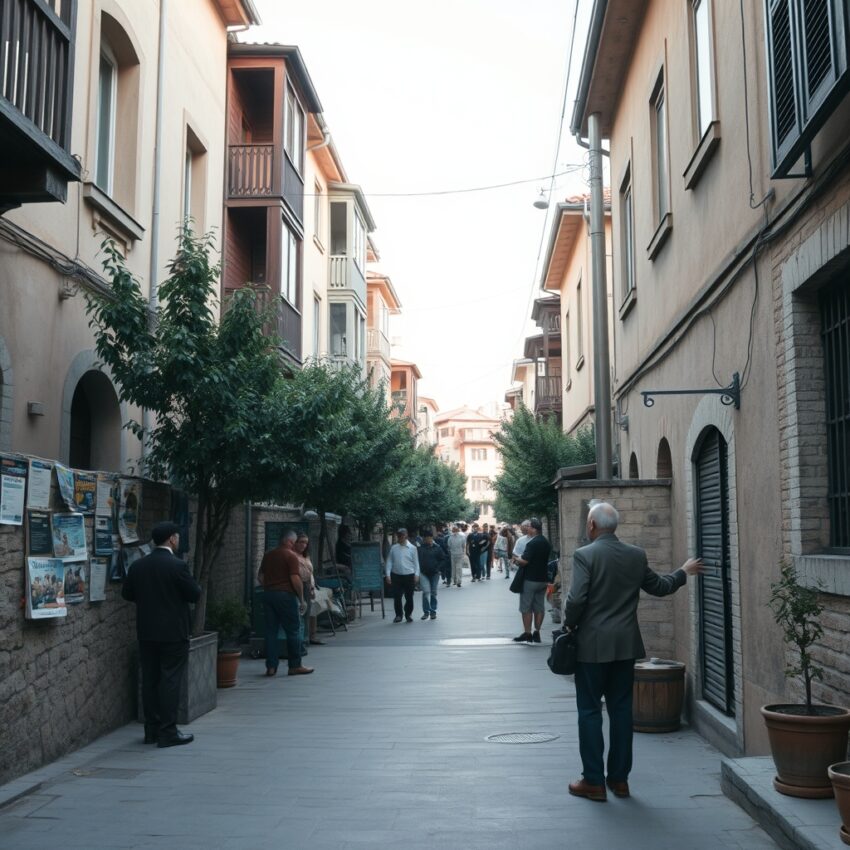
🇹🇷 Türkçe | Dönemin ruhunu ele veren o eski saatlerde el ilanlarının şehri renkli haberlerle doldurduğu dönem: geçmişe bakınca neden daha parlak görünüyor ıhlamur kokusuna dönen bahçeler
Bazı dönemleri takvim yapraklarından değil, elde tutulan ince kâğıtların hışırtısından hatırlarız. Eski şehirlerde sabahın ilk saatleri, daha dükkân kepenkleri tam açılmadan, el ilanlarını koltuğunun altında taşıyan gençlerin ve matbaadan yeni çıkmış mürekkep kokusunun sokağa yayılmasıyla başlardı. O saatlerde mahalle henüz tam uyanmamış olsa da şehir kendi haberini çoktan üretmiş olurdu. Bir düğün salonunun programı, yeni açılan manifaturacının indirimi, akşamki sinema gösterisi, dernek toplantısı ya da yazlık gazinonun hafta sonu eğlencesi, hepsi renkli el ilanlarının üzerine basılır ve kaldırım taşlarının arasında dolaşan gündelik hayata karışırdı. Bahçelerde ıhlamur kokusu ağırlaştıkça, bu kâğıt haberlerin dünyası da daha canlı görünürdü; sanki şehir yalnız okunmaz, elle tutulur, koklanır ve ceplerde taşınır bir hale gelirdi.
Zamanın İzinde bakıldığında el ilanları yalnızca duyuru aracı değildi. Onlar, basılı gündelik hayatın en hareketli parçalarından biriydi. Özellikle 1950’lerden 80’lere uzanan yıllarda yerel matbaalar şehir kültürünün görünmez kalbini oluştururdu. Büyük gazetelerin ulaştığı haber başka, mahallenin duvarına yapışan ya da kapı altından bırakılan el ilanının verdiği his bambaşkaydı. Çünkü bu küçük kâğıtlar resmî bir mesafeyle değil, tanıdık bir ses tonuyla konuşurdu. “Bu akşam kaçırmayın”, “yalnız bu hafta”, “ailece bekleriz” gibi ifadeler, ilanı okuyan kişiyle doğrudan temas kurardı. Kentin sosyal ritmi de böyle kurulurdu; kahvehane önünde biri ilanı sesli okur, terzi çırağı vitrindeki kâğıda göz atar, ev hanımı pazardan dönerken apartman girişine bırakılmış broşürü katlayıp mutfak masasına koyardı.
Bu dönemin hafızada daha parlak kalmasının nedeni biraz da haberin renkle birlikte dolaşmasıydı. Bugünün ekranları çok daha hızlı olabilir, ama eski el ilanlarının taşıdığı beklenti daha yavaştı ve bu yüzden daha yoğundu. Renkli baskı her zaman kusursuz olmazdı; bazen kırmızı hafif taşar, mavi bir köşede silik kalır, başlık eğri basılırdı. Fakat tam da bu kusurlar onları şehir kadar canlı yapardı. Bir yaz akşamı düzenlenecek açık hava konserinin ilanı, ıhlamur ağaçlarının altında dağıtıldığında yalnız bilgi vermez, insanın içinde bir akşam serinliği de uyandırırdı. Bahçelerin ıhlamur kokusuna dönmesi ifadesi bu yüzden boşuna değildir; koku, kâğıt ve haber birlikte çalışırdı. İnsan bazen haberi değil, o haberi okuduğu anın havasını saklardı.
Ev içi yaşam da el ilanlarının etrafında şekillenen küçük ritüeller taşırdı. Babalar ceket cebinden buruşturulmadan korunmuş bir broşür çıkarır, anneler mutfak masasının üzerinde onu düzeltip yüksek sesle okur, çocuklar renkli başlıklardan yalnızca en eğlenceli olanları seçerdi. Kimi zaman bir tiyatro oyununun duyurusu ailede küçük bir plan değişikliğine yol açar, kimi zaman yeni açılan pastanenin el ilanı pazar yürüyüşünün yönünü belirlerdi. Bu kâğıtların çoğu akşam olunca soba yanında unutulabilir, çekmecelere kaldırılabilir ya da kitap aralarında yıllarca kalabilirdi. İşte sonra, yıllar geçip de bir eski defterin arasından yeniden çıktıklarında, insan yalnız yazıyı değil, o dönemin ışığını da hatırlardı. Bahçeden gelen ıhlamur kokusu, sokağın hafif tozu, bakkalın önündeki konuşmalar ve mahalleye yeni asılan afişlerin heyecanı yeniden belirirdi.
Geçmişe bakınca bütün bunların daha parlak görünmesi yalnız nostaljinin oyunu değildir. El ilanları şehir hayatını elle tutulur parçalara ayırıyor, insanlara gündelik hayatın kültürel akışına küçük ama sıcak kapılar açıyordu. Haber bugünkü gibi sonsuz akış içinde kaybolmuyor; katlanıyor, cebinize giriyor, komşuya uzatılıyor, kapı önünde konuşuluyordu. Bu yüzden eski saatler, dönemin ruhunu ele veren daha yoğun zaman parçaları gibi kalıyor akılda. Ihlamur kokusuna dönen bahçeler, yalnız mevsimin güzelliğini değil, haberin ve hayatın aynı anda yavaşça yayıldığı bir şehir düzenini hatırlatıyor. O şehirlerde renkli bir el ilanı, bazen bir yaz akşamının en erken habercisi, bazen de kültürel belleğin en dayanıklı tanığıydı. Hafızada parlak kalmasının nedeni de tam burada saklıdır: şehir bir zamanlar kendi haberini kâğıtla, kokuyla ve insan sesiyle birlikte taşımayı biliyordu.
🇬🇧 English | In Those Old Hours That Revealed the Spirit of the Era, When Flyers Filled the City with Colorful News: Why Do Gardens Turning into the Scent of Linden Appear Brighter in Memory?
Some periods are remembered not through calendar pages, but through the rustle of thin paper held in the hand. In older cities, the first hours of morning began before shutters had fully opened, when young men carrying stacks of flyers under their arms and the smell of fresh ink from the print shop spread into the street. Even if the neighborhood had not fully awakened yet, the city had already begun producing its own news. A wedding hall program, a sale at a newly opened fabric store, the evening cinema screening, an association meeting, or the weekend entertainment at a summer casino all found their place on colorful handbills and drifted into ordinary life among the paving stones. As the scent of linden deepened in the gardens, the world of those paper announcements seemed to grow more vivid; it was as if the city became something not only read, but touched, smelled, and carried in pockets.
Seen along the trail of time, flyers were never merely tools of announcement. They were among the liveliest pieces of printed daily life. Especially from the 1950s through the 1980s, local print shops formed an invisible heart of urban culture. The news brought by a major newspaper was one thing; the feeling given by a flyer pasted to a wall or slipped beneath a door was something else entirely. These small sheets did not speak with official distance, but in a familiar voice. Phrases such as “do not miss tonight,” “this week only,” or “the whole family is welcome” created direct contact with the reader. The social rhythm of the city was shaped this way. Someone read a leaflet aloud outside the coffeehouse, a tailor’s apprentice glanced at the one in a shop window, and a homemaker returning from the market folded a brochure left by the apartment entrance and placed it on the kitchen table.
Part of the reason this era remains brighter in memory is that news itself once traveled together with color. Today’s screens may be much faster, yet the expectation carried by old flyers moved more slowly and therefore more deeply. Color printing was not always perfect. Sometimes the red would bleed slightly, the blue would fade in a corner, or the headline would sit a little crooked. Yet those flaws made the paper feel as alive as the city itself. When a leaflet for an open-air summer concert was handed out beneath linden trees, it did more than inform. It awakened the feeling of an evening breeze still to come. That is why the image of gardens turning into the scent of linden matters so much. Smell, paper, and news worked together. Often what people kept was not the announcement itself, but the air in which they first read it.
Domestic life also carried small rituals shaped around these flyers. Fathers removed a carefully preserved brochure from the inside pocket of a jacket, mothers flattened it on the kitchen table and read it aloud, and children noticed only the brightest headings that promised the most pleasure. Sometimes the leaflet for a theater play would slightly alter the family’s evening plans. Sometimes the handbill of a newly opened pastry shop would determine the direction of a Sunday walk. Many of these papers would later be forgotten beside the stove, tucked into drawers, or left inside books for years. Then, when one resurfaced from between old notebook pages, it brought back not only the text but the light of an entire period. The scent of linden from the garden, the mild dust of the street, the conversations outside the grocer, and the excitement of new posters appearing in the neighborhood all returned at once.
When the past seems brighter, it is not only because nostalgia softens memory. Flyers divided city life into tangible pieces and opened warm, modest doors into the cultural flow of everyday living. News did not disappear into an endless stream as it often does today. It was folded, placed in a pocket, handed to a neighbor, discussed at the doorway. That is why those old hours remain in the mind as dense fragments of time capable of revealing the spirit of an era. Gardens turning into the scent of linden remind us not only of seasonal beauty, but of an urban order in which news and life spread together slowly. In such cities, a colorful flyer could be the earliest messenger of a summer evening or the most durable witness of cultural memory. It stays bright in recollection because the city once knew how to carry its news with paper, fragrance, and human voice at the same time.
🇧🇷 Português (Brasil) | Naqueles Velhos Horários que Revelavam o Espírito da Época, Quando os Panfletos Enchiam a Cidade de Notícias Coloridas: Por Que os Jardins que se Tornavam Cheiro de Tília Parecem Mais Brilhantes na Memória?
Alguns períodos são lembrados não pelas folhas do calendário, mas pelo farfalhar de um papel fino segurado na mão. Nas cidades antigas, as primeiras horas da manhã começavam antes mesmo de as portas de ferro se abrirem por completo, quando rapazes carregando pilhas de panfletos debaixo do braço e o cheiro de tinta fresca da gráfica se espalhavam pela rua. Mesmo que o bairro ainda não tivesse despertado por inteiro, a cidade já produzia a sua própria notícia. A programação do salão de festas, a promoção da nova loja de tecidos, a sessão de cinema da noite, a reunião da associação ou a diversão de fim de semana no cassino de verão, tudo aparecia naqueles impressos coloridos e se misturava à vida cotidiana entre as pedras da calçada. À medida que o perfume de tília ficava mais forte nos jardins, aquele mundo de notícias em papel parecia ganhar mais brilho; era como se a cidade deixasse de ser algo apenas lido e passasse a ser tocado, cheirado e levado no bolso.
Vistos no rastro do tempo, os panfletos nunca foram apenas instrumentos de anúncio. Eram uma das partes mais vivas da vida impressa do dia a dia. Sobretudo entre as décadas de 1950 e 1980, as gráficas locais formavam um coração invisível da cultura urbana. A notícia trazida por um grande jornal era uma coisa; a sensação provocada por um panfleto colado na parede ou deixado debaixo da porta era outra bem diferente. Essas folhas pequenas não falavam com distância oficial, mas com um tom familiar. Expressões como “não perca esta noite”, “somente nesta semana” ou “esperamos toda a família” criavam contato direto com quem lia. O ritmo social da cidade se organizava assim. Alguém lia o folheto em voz alta diante do café, o aprendiz de alfaiate espiava o anúncio na vitrine, e a dona de casa voltando da feira dobrava o impresso deixado na entrada do prédio e o colocava sobre a mesa da cozinha.
Parte da razão de essa época permanecer mais brilhante na memória está no fato de que a notícia viajava junto com a cor. As telas de hoje podem ser muito mais rápidas, mas a expectativa carregada pelos velhos panfletos se movia devagar e, por isso mesmo, deixava marca mais funda. A impressão colorida nem sempre saía perfeita. Às vezes o vermelho vazava um pouco, o azul ficava apagado num canto ou o título saía ligeiramente torto. Mas eram justamente essas imperfeições que faziam o papel parecer tão vivo quanto a própria cidade. Quando um panfleto anunciando um concerto ao ar livre era distribuído sob as tílias, ele não apenas informava. Despertava também a sensação de uma brisa de fim de tarde ainda por vir. É por isso que a imagem dos jardins se transformando em cheiro de tília importa tanto. O cheiro, o papel e a notícia trabalhavam juntos. Muitas vezes, o que a pessoa guardava não era a informação em si, mas o ar daquele instante em que a tinha lido.
A vida dentro de casa também era atravessada por pequenos rituais moldados por esses panfletos. Os pais tiravam do bolso interno do casaco um folheto preservado com cuidado, as mães o alisavam sobre a mesa da cozinha e o liam em voz alta, e as crianças prestavam atenção apenas aos títulos mais coloridos, que prometiam mais diversão. Às vezes o anúncio de uma peça de teatro mudava discretamente o plano da família para a noite. Em outras, o impresso da confeitaria recém-inaugurada determinava o rumo do passeio de domingo. Muitos desses papéis acabavam esquecidos ao lado do fogão, guardados em gavetas ou deixados durante anos entre as páginas de um livro. Depois, quando um deles reaparecia no meio de um caderno antigo, trazia de volta não só o texto, mas a luz de toda uma época. O perfume da tília vindo do jardim, a poeira leve da rua, as conversas diante da mercearia e a excitação dos novos cartazes surgindo no bairro voltavam de uma só vez.
Se o passado parece mais brilhante, isso não acontece apenas porque a nostalgia suaviza a memória. Os panfletos dividiam a vida urbana em pedaços palpáveis e abriam pequenas portas calorosas para o fluxo cultural do cotidiano. A notícia não se perdia num fluxo infinito como tantas vezes acontece hoje. Ela era dobrada, colocada no bolso, passada ao vizinho, comentada na porta de casa. Por isso aqueles velhos horários continuam na cabeça como fragmentos densos de tempo capazes de revelar o espírito de uma era. Os jardins transformados em cheiro de tília lembram não apenas a beleza da estação, mas uma ordem urbana em que notícia e vida se espalhavam devagar, juntas. Nessas cidades, um panfleto colorido podia ser o primeiro mensageiro de uma noite de verão ou a testemunha mais resistente da memória cultural. Ele permanece brilhante na lembrança porque a cidade um dia soube levar suas notícias ao mesmo tempo com papel, perfume e voz humana.