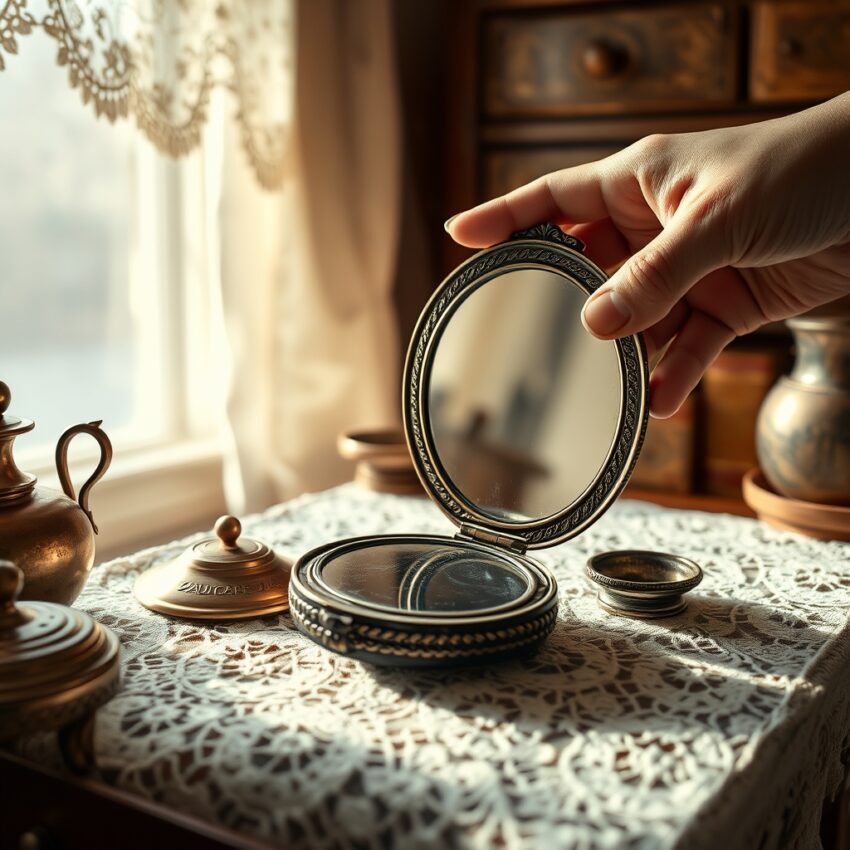
🇹🇷 Türkçe | cep aynası ve bayram temizliğinde yeniden parlayan yüzü: nasıl bir aile mirasına dönüştü
Bazı eşyalar gündelik kullanımdan çekildikten sonra bile evin içinde dolaşmayı sürdürür. Cep aynası tam da böyle bir nesnedir. Bir zamanlar çantanın iç cebinde, dikiş kutusunun yanında ya da yatak odasındaki çekmecede sessizce duran bu küçük ayna, bayram temizliği günlerinde yeniden el yüzü görürdü. Dolap kapakları açılır, çekmeceler havalandırılır, ince örtüler silkelenirken bir kutunun içinden çıkan aynanın yüzü de bezle silinip parlatılırdı. O an yalnız metal bir kenar ya da cam bir yüzey temizlenmezdi; geçmiş kuşakların kendine bakma biçimi de yeniden görünür olurdu. Aynanın hafif çizikleri, kapak kısmındaki ince işçilik, bazen arkasına sıkışmış eski bir fotoğraf ya da kurumuş bir çiçek yaprağı, bir aile hikâyesinin sessiz kayıtları gibi çalışırdı.
Obje Hikayeleri açısından cep aynası, kullanım değeri ile duygusal değerin en zarif biçimde birleştiği nesnelerden biridir. Büyükannelerin ya da annelerin genç kızlık yıllarından kalmış bu aynalar, yalnız makyaj tazelemek ya da başörtüsünü düzeltmek için kullanılmazdı; evden çıkmadan önce kendine son kez bakmanın küçük adabını taşırdı. Bu yüzden cep aynası bir nesne olmanın ötesinde, gündelik özene dair kültürel bir işaretti. Bayram temizliği ise o işaretin tekrar görünür kılındığı zamandı. Bayramdan önce yapılan dip bucak temizlik, yalnız tozu almak için değil, evin hatıra düzenini de tazelemek için yapılırdı. İşte cep aynası bu tören içinde yeniden ışık alır, sandığın ya da çekmecenin karanlığından çıkıp birkaç dakika için ailenin ortak hafızasına geri dönerdi.
Bu küçük aynanın aile mirasına dönüşmesinde en önemli pay, kuşaklar arasında elle devredilen yakınlıktır. Bir kız çocuğu, annesinin ya da anneannesinin aynayı nasıl tuttuğunu, saçını nasıl düzelttiğini, dudağının kenarına nasıl baktığını sessizce izler. Sonra yıllar sonra aynı aynayı kendi avucunda tutunca, yalnız nesneyi değil o hareketin terbiyesini de devralmış olur. Eski evlerde ayna, gösterişsiz ama anlamlı bir refakatçiydi. Çantaya atılır, bayram ziyaretine giderken elde taşınır, nişan bohçasında yer alır ya da dikiş kutusuna yakın tutulurdu. Onu değerli kılan pahalı oluşu değil, sahibinin gündelik ritmine eşlik etmesiydi. Bu yüzden çizilmiş bir cep aynası bile yenisiyle kolayca değiştirilemez; çünkü yüzeyindeki küçük kusurlar, yılların temasını taşır.
Bayram temizliği sırasında cep aynasının parlatılması, geçmiş ev içi yaşamın sembolik bir sahnesi gibidir. Pencereler silinirken içeri giren ışık, bakır sahanlarda, fincan takımlarında ve bu küçük aynada ayrı ayrı çoğalırdı. Çocuklar belki bu nesnelerin neden bu kadar özenle tutulduğunu o anda tam anlamazdı; ama yetişkinlerin dokunuşundaki ciddiyet, eşyaya duyulan saygıyı öğretirdi. Ayna birdenbire yalnız bakılan değil, hatırlatan bir yüzeye dönüşürdü. “Bu anneannenin gençliğinden kalma” ya da “bunu düğününde kullanmıştı” gibi cümleler, nesnenin etrafında bir soy ağacı oluştururdu. Böylece cep aynası, kullanılmayan bir eski eşya olmaktan çıkar; aile içinde dolaşan anlatının somut taşıyıcısına dönüşürdü.
Modern hayatın hızlı tüketim alışkanlıkları içinde böylesi küçük nesnelerin uzun ömürlü duygusal ağırlığını kavramak zorlaşmış olabilir. Bugün insanlar çoğu zaman aynaya telefondan, parlak asansör yüzeyinden ya da mağaza camından bakıyor. Fakat cep aynasının verdiği duygu başka bir şeydi. O, kendine bakmanın taşınabilir bir nezaketini temsil ediyordu. Aynayı cebinden ya da çantasından çıkaran kişi, dünyaya karışmadan önce kendine küçük bir dikkat anı ayırıyordu. Bayram temizliğinde yeniden parlayan yüzü bu yüzden yalnız camın parlaması değildir; aile belleğinin kısa süreliğine yeniden ışık tutmasıdır. Aynanın içindeki yansıma değişse de aynayı tutan hareket kuşaklar boyunca benzer kalır.
Cep aynasının aile mirasına dönüşmesi tam da bu tekrar eden ama hiç sıradanlaşmayan hareketler sayesindedir. Nesne, zaman içinde sahip değiştirir ama anlamını tamamen kaybetmez. Her yeni elde biraz başka bir hikâye birikir; yine de eski sahibinin sesi, kokusu, sabah hazırlığı, bayram telaşı onun üzerinde görünmez biçimde durmaya devam eder. Kültürel miras bazen büyük mobilyalarda ya da ağır sandıklarda değil, avuç içine sığan böyle zarif eşyalarda yaşar. Cep aynası, aile içindeki bakım, özen ve hatırlama kültürünü sessizce bir arada tutar. Belki de bu yüzden bayram temizliğinde parlatılan o küçük yüz, bir evin bütün geçmişine kısacık da olsa aynı anda ışık düşürür.
🇬🇧 English | The Pocket Mirror and the Face That Shone Again During Holiday Cleaning: How Did It Turn into a Family Heirloom?
Some objects continue moving through a home even after they have withdrawn from daily use. The pocket mirror is exactly such an object. Once kept quietly in the inner pocket of a handbag, beside the sewing box, or inside a bedroom drawer, this small mirror would show its face again during pre-holiday cleaning days. Cupboards were opened, drawers aired, thin covers shaken out, and then the mirror taken from a small box would be wiped and polished. In that moment, it was not only a metal rim or glass surface being cleaned. The way older generations had once looked at themselves became visible again. Light scratches, delicate work around the lid, sometimes an old photograph or dried flower petal tucked behind it all worked like silent records of a family story.
Seen as an object story, the pocket mirror is one of the most elegant examples of use value and emotional value meeting in the same form. Mirrors kept from the girlhood years of mothers or grandmothers were not used only to retouch makeup or straighten a scarf. They carried the small etiquette of giving oneself one last glance before stepping outside. That made the pocket mirror more than an object. It was a cultural sign of everyday care. Holiday cleaning was the moment when that sign became visible again. The deep cleaning done before a holiday was never only about removing dust. It refreshed the house’s arrangement of memory. In that ceremony, the pocket mirror caught light once more, emerging from the darkness of a trunk or drawer and returning for a few minutes to the family’s shared memory.
What helps turn this small mirror into a family heirloom is the intimacy passed by hand from one generation to another. A little girl watches her mother or grandmother hold the mirror, adjust her hair, or examine the edge of her lips. Years later, when the same mirror rests in her own palm, she inherits not only the object, but the discipline of that gesture. In older homes, a mirror was a modest yet meaningful companion. It was tucked into a bag, carried on holiday visits, included in a bridal bundle, or kept near the sewing box. What made it valuable was not expense, but the fact that it accompanied someone’s daily rhythm. For that reason, even a scratched pocket mirror could not easily be replaced with a new one. The small flaws on its surface held the touch of years.
The polishing of the mirror during holiday cleaning feels like a symbolic scene from domestic life of the past. As windows were washed and light entered the room, it multiplied differently on copper trays, porcelain sets, and the little mirror. Children might not understand at the time why these things were handled with such care, yet the seriousness in adult hands taught respect for objects. Suddenly the mirror ceased to be only something looked into and became a surface that prompted memory. Phrases such as “this belonged to your grandmother when she was young” or “she used this on her wedding day” formed a small family tree around the object. In this way the pocket mirror stopped being an unused old item and became a tangible carrier of the narrative moving through the family.
In a modern life shaped by fast consumption, it may be harder to understand the long emotional weight of such small objects. Today people often look at themselves in a phone screen, an elevator panel, or a shop window. Yet the feeling given by a pocket mirror was something else. It represented a portable courtesy of self-regard. The person who took it from a pocket or bag reserved a brief moment of attention for themselves before joining the world. That is why the face that shone again during holiday cleaning was never only the glass itself. It was the family memory catching light for a short while. The reflection inside the mirror changed, but the gesture of holding it remained strikingly similar across generations.
The pocket mirror becomes a family heirloom precisely through these repeating but never ordinary gestures. The object changes hands over time, yet never fully loses its meaning. Each new owner adds another story, while the voice, scent, morning routine, and holiday hurry of the earlier owner remain invisibly present upon it. Cultural heritage sometimes survives not in large furniture or heavy trunks, but in such delicate items that fit into a palm. The pocket mirror quietly keeps together the family’s culture of care, attention, and remembrance. Perhaps that is why the small surface polished before the holiday can cast light, if only for a moment, across the whole past of a household.
🇧🇷 Português (Brasil) | O Espelho de Bolsa e o Rosto que Voltava a Brilhar na Limpeza de Festa: Como se Transformou numa Herança de Família?
Alguns objetos continuam circulando dentro da casa mesmo depois de deixarem o uso cotidiano. O espelho de bolsa é exatamente assim. Durante muito tempo ele ficou quieto no bolso interno da bolsa, ao lado da caixa de costura ou dentro de uma gaveta do quarto. Nos dias de limpeza antes das festas, porém, voltava a aparecer. Armários eram abertos, gavetas tomavam ar, paninhos eram sacudidos, e então o espelho tirado de uma caixinha recebia pano e brilho outra vez. Nesse instante não se limpava apenas uma borda de metal ou uma superfície de vidro. Tornava-se visível novamente a maneira como as gerações anteriores costumavam olhar para si mesmas. Riscos finos, o trabalho delicado da tampa, às vezes uma fotografia antiga ou uma pétala seca guardada atrás dele funcionavam como registros silenciosos de uma história familiar.
Como história de objeto, o espelho de bolsa é um dos exemplos mais elegantes do encontro entre valor de uso e valor afetivo. Os espelhos guardados desde a juventude de mães e avós não serviam apenas para retocar a maquiagem ou ajeitar o lenço. Carregavam a pequena etiqueta de lançar um último olhar sobre si mesma antes de sair de casa. Por isso o espelho era mais do que um objeto. Era um sinal cultural de cuidado cotidiano. A limpeza de festa era o momento em que esse sinal voltava a ficar visível. A faxina profunda feita antes das celebrações não servia apenas para tirar o pó. Renovava também a ordem da memória dentro do lar. Nesse ritual, o espelho recebia luz outra vez, saindo da escuridão da arca ou da gaveta para regressar por alguns minutos à memória compartilhada da família.
O que ajuda a transformar esse pequeno espelho numa herança de família é a intimidade passada de mão em mão entre gerações. Uma menina observa em silêncio a mãe ou a avó segurando o espelho, arrumando o cabelo, olhando o contorno dos lábios. Anos depois, quando o mesmo espelho repousa na sua palma, ela herda não só o objeto, mas a disciplina daquele gesto. Nas casas antigas, o espelho era um acompanhante discreto e significativo. Ia na bolsa, seguia nas visitas de festa, aparecia no enxoval do noivado ou ficava perto da caixa de costura. O que o tornava precioso não era o preço, mas o fato de acompanhar o ritmo diário de alguém. Por isso, mesmo um espelho arranhado não podia ser trocado facilmente por outro novo. As pequenas marcas da superfície guardavam o toque dos anos.
Polir o espelho durante a limpeza de festa é como assistir a uma cena simbólica da antiga vida doméstica. Enquanto as janelas eram lavadas e a luz entrava em casa, ela se multiplicava de modos diferentes nas bandejas de cobre, nos jogos de xícara e nesse pequeno espelho. As crianças talvez não entendessem naquele momento por que esses objetos eram tratados com tanto cuidado, mas a seriedade nas mãos dos adultos ensinava respeito pelas coisas. De repente o espelho deixava de ser apenas algo em que se olha e se transformava numa superfície que faz lembrar. Frases como “isso é da juventude da sua avó” ou “ela usou isso no dia do casamento” desenhavam uma pequena árvore genealógica ao redor do objeto. Assim, o espelho de bolsa deixava de ser uma peça antiga sem uso e se tornava um portador concreto da narrativa que circulava pela família.
Numa vida moderna marcada pelo consumo rápido, pode ser mais difícil perceber o peso emocional duradouro de objetos tão pequenos. Hoje muita gente se olha na tela do celular, no espelho do elevador ou na vitrine da loja. Mas o sentimento dado por um espelho de bolsa era outro. Ele representava uma gentileza portátil de atenção a si mesma. Quem o tirava do bolso ou da bolsa reservava um instante de cuidado antes de se misturar ao mundo. Por isso o rosto que voltava a brilhar na limpeza de festa nunca era apenas o vidro. Era a memória da família recebendo luz por alguns instantes. O reflexo dentro do espelho mudava, mas o gesto de segurá-lo permanecia surpreendentemente parecido entre as gerações.
O espelho de bolsa se transforma em herança familiar justamente por causa desses gestos repetidos, mas nunca banais. O objeto muda de mãos com o tempo, mas não perde totalmente o sentido. Cada nova dona acrescenta uma história, enquanto a voz, o perfume, a rotina da manhã e a pressa dos dias de festa da dona anterior continuam invisivelmente presentes sobre ele. O patrimônio cultural às vezes sobrevive não em móveis grandes ou baús pesados, mas em peças delicadas que cabem na mão. O espelho de bolsa mantém reunida, em silêncio, a cultura familiar do cuidado, da atenção e da lembrança. Talvez por isso aquela pequena superfície polida antes da festa consiga lançar luz, ainda que por um breve momento, sobre todo o passado de uma casa.