🇹🇷 Türkçe | Teyp Başında Toplanan Ev: Sessiz Heyecanla Kurulan Analog Bir Aile Töreni
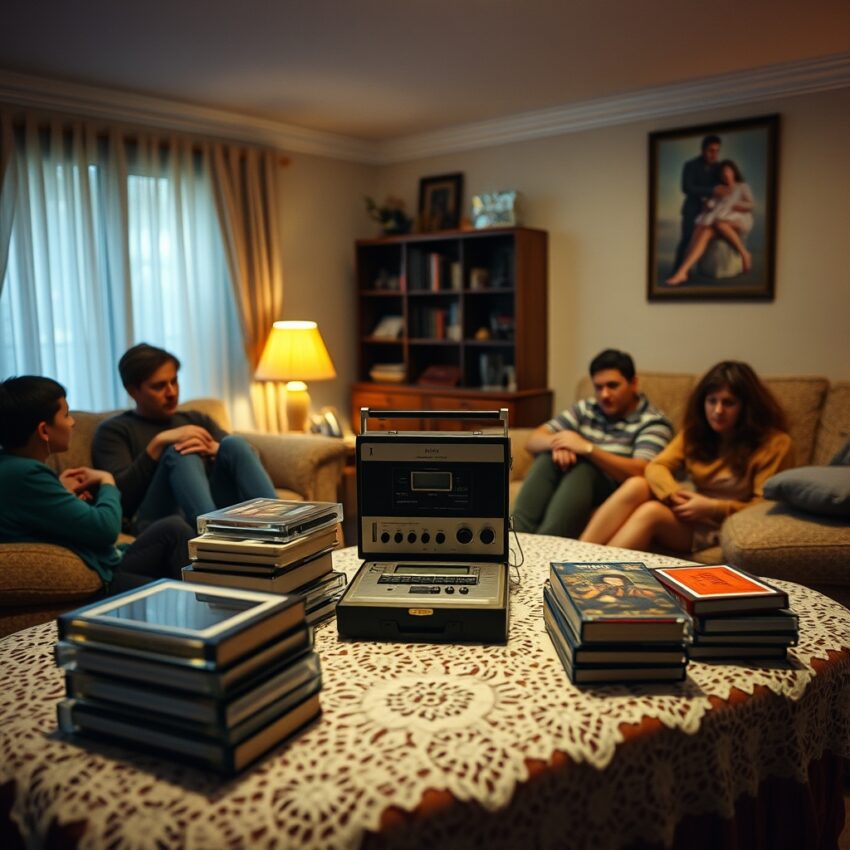
Akşam yemeği toplandıktan sonra salonda küçük bir hazırlık başlardı. Sehpanın üstüne kaset kutuları dizilir, kimin hangi kaydı dinlemek istediği konuşulur, teyp dikkatle ortadaki en görünür yere alınırdı. “Sarma kalemi hazır mı?” sorusu bile başlı başına bir dönem cümlesiydi. Çünkü teyp kullanmak, yalnız bir tuşa basmak değildi; sesin değerli olduğu, müziğin emekle saklandığı bir ritüelin parçasıydı.
1970’lerden 1990’lara uzanan yıllarda teyp, ev içi teknolojinin en canlı karakterlerinden biriydi. Radyo ve plakla kurulan ses kültürü, kasetin taşınabilirliğiyle daha kişisel bir hâl aldı. İnsanlar sevdiği şarkıları karışık kasetlere dizer, boş kasetin üzerine düzenli el yazısıyla tarih atar, hatta kapağın içine küçük notlar koyardı. Böylece her kaset, yalnız bir kayıt aracı değil, bir dönemin duygusal arşivi olurdu. Bir şarkının başındaki hışırtı bile hatıra sayılırdı.
Salonda toplanan ailelerin sessiz heyecanı, bu teknolojinin ortak kullanım biçiminden doğuyordu. Herkes aynı anda dinler, bir parça biter bitmez yorumlar başlardı. Baba sesin kalitesine, anne sözlerin duygusuna, çocuklar ritme dikkat kesilirdi. Kaset değişimi sırasında kısa bir sessizlik olur; ardından “bu şarkı düğünde çalmıştı” gibi cümlelerle aile hafızası açılırdı. Teyp, sesi yalnız çoğaltmıyor; kuşaklar arası köprü de kuruyordu.
Bu ritüelin teknik tarafı da törenseldi. Play, stop, rewind düğmeleri bir düzen içinde kullanılır; bant sıkışırsa acele edilmez, kapağı nazikçe açıp düzeltmek gerekirdi. Pil zayıfladığında sesin incelmesi herkesin fark ettiği bir işaretti. Mahallede teypten anlayan bir tamirci varsa adres belliydi; cihaz götürülür, birkaç gün sonra “kafa temizliği yapıldı” denerek geri alınırdı. Analog dünyada cihazla kurulan bu bakım ilişkisi, tüketimden çok devam ettirmeyi öğretirdi.
Özel günlerde teyp neredeyse evin ikinci ev sahibine dönüşürdü. Bayram sabahında neşeli türküler, nişan hazırlığında hareketli parçalar, uzun kış akşamında daha sakin ezgiler çalınırdı. Komşu ziyaretlerinde “şu kaseti de dinletelim” denir, müzik üzerinden sohbet koyulaşırdı. Bir kaseti baştan sona dinlemek, bugün nadir rastlanan bir odaklanma biçimiydi. Araya bildirim girmeyen, parçayı yarıda bırakmayan, sesi gerçekten duyan bir dinleme kültürü vardı.
Bugün müzik sınırsız erişimle cebimizde. Kalite yüksek, seçenek sonsuz, arşiv kaygısı az. Yine de teyp dönemine duyulan özlem, yalnız nostaljik bir eşya sevgisi değil. Asıl özlenen, müziğin etrafında birlikte geçirilen yavaş zamandır. O salonlarda insanlar şarkıları tüketmiyor, şarkılarla birbirini hatırlıyordu. Bir parçayı dinlerken aynı anda aynı hikâyeye dönüyorlardı.
Teyp kullanmanın törensel oluşu tam da bu yüzden anlamlıydı: teknoloji evde başköşeye konuyor ama hükmeden değil, birleştiren bir araç oluyordu. Düğmelerin mekanik sesi, bantın dönüşü, kaset kapağının tıkırtısı bugün bile pek çok kişide aynı duyguyu uyandırır. Geçmişten kalan bu analog ritim, bize sesi değil zamanı nasıl paylaştığımızı hatırlatır. Salonda toplanan ailelerin sessiz heyecanı, modern hız içinde kaybolan ortak dinleme alışkanlığının en güçlü hatıralarından biridir.
🇬🇧 English | Family Gathered Around the Tape Recorder: Why Using It Felt Like a Ceremony
After dinner was cleared, a small preparation began in the living room. Cassette boxes were lined up on the table, choices were discussed, and the tape recorder was placed carefully in the most visible spot. Even the question “Is the rewinding pencil ready?” belonged to an era. Using a tape recorder was never just pressing a button; it was part of a ritual where sound had value and music was preserved through care.
From the 1970s to the 1990s, the tape recorder became one of the strongest characters of home technology. Audio culture shaped by radio and vinyl turned more personal through portable cassettes. People organized favorite songs into mixtapes, wrote dates neatly on blank tapes, and sometimes slipped handwritten notes inside the case. Each cassette became more than storage; it became an emotional archive of a period. Even the hiss before a song could carry memory.
The quiet excitement of families gathered in the living room came from shared listening. Everyone listened at the same time, and comments began as soon as a track ended. Fathers focused on sound quality, mothers on lyrical mood, children on rhythm and tempo. During cassette changes, a brief silence formed, then memory opened through lines like “this played at that wedding.” The recorder did not only amplify sound; it built bridges across generations.
Its technical side was ceremonial too. Play, stop, and rewind were used in sequence. If tape jammed, no one rushed; the cover was opened gently, the ribbon was fixed with patience. When batteries weakened, everyone heard the pitch shift. If there was a neighborhood repairman, everyone knew the address. The device went in for head cleaning and returned days later. In that analog world, maintenance culture taught continuation rather than disposal.
On special days, the tape recorder almost became a second host of the house. Holiday mornings had lively folk songs, engagement evenings had upbeat tracks, long winter nights had calmer melodies. Visiting neighbors often meant “let’s play that cassette too,” and conversation deepened through music. Listening to a cassette from beginning to end was a focus mode now increasingly rare: no notifications, no skipping, no fragmented attention.
Today, music is instantly available in our pockets. Quality is high, choice is endless, archiving anxiety is low. Yet longing for the cassette era is not only object nostalgia. What is truly missed is the slow shared time built around music. In those rooms, people did not consume songs; songs helped people remember one another. They returned to the same story at the same moment.
That is why using a tape recorder felt ceremonial: technology occupied the center of the room, yet served connection, not domination. The click of buttons, the motion of spools, the small snap of a cassette case still trigger memory. This analog rhythm reminds us not just how we listened, but how we shared time. The quiet excitement of families around a tape recorder remains one of the clearest memories of collective listening in a fast digital age.
🇧🇷 Português (Brasil) | A Família Reunida ao Redor do Toca-fitas: Por Que Seu Uso Virava um Ritual
Depois que a mesa do jantar era retirada, começava uma pequena preparação na sala. Caixas de fita cassete eram alinhadas na mesa, cada um sugeria uma gravação, e o toca-fitas era colocado com cuidado no lugar central. Até a pergunta “cadê o lápis para rebobinar?” marcava uma época. Usar o aparelho não era só apertar botão; era participar de um ritual em que o som tinha valor e a música era guardada com zelo.
Entre as décadas de 1970 e 1990, o toca-fitas virou um dos protagonistas da tecnologia doméstica. A cultura sonora do rádio e do vinil ganhou dimensão mais pessoal com a fita portátil. As pessoas montavam coletâneas, escreviam datas com letra caprichada, e às vezes colocavam bilhetes dentro da caixinha. Cada fita deixava de ser apenas suporte técnico e passava a ser arquivo afetivo. Até o chiado antes da música carregava memória.
A excitação silenciosa das famílias reunidas vinha da escuta compartilhada. Todos ouviam ao mesmo tempo e, ao fim de cada faixa, surgiam comentários. Pais observavam a qualidade do áudio, mães notavam a emoção da letra, crianças seguiam o ritmo. Na troca de fita, havia um breve silêncio; em seguida, frases como “tocou no noivado da sua tia” abriam lembranças coletivas. O aparelho não só reproduzia som: conectava gerações.
A parte técnica também tinha algo de cerimonial. Play, stop e rewind eram usados em ordem. Quando a fita prendia, ninguém forçava; abria-se a tampa com calma, ajeitava-se a fita com paciência. Pilha fraca alterava o tom da voz e todos percebiam. Se havia técnico no bairro, o endereço era conhecido. O aparelho ia para limpeza de cabeçote e voltava dias depois. Nesse universo analógico, cuidar era mais comum do que descartar.
Em datas especiais, o toca-fitas quase virava anfitrião da casa. Manhã de feriado com canções animadas, preparação de noivado com músicas mais vivas, noite de inverno com repertório sereno. Na visita de vizinhos, sempre aparecia um “vamos ouvir aquela fita também”, e o papo se alongava. Ouvir uma fita inteira, do começo ao fim, era uma forma de atenção hoje rara: sem notificações, sem pular faixa, sem fragmentação.
Hoje a música cabe no bolso com acesso imediato e catálogo infinito. A qualidade técnica subiu, a escolha ficou ampla, o medo de perder acervo diminuiu. Mesmo assim, a saudade da era da fita não é só apego ao objeto. O que faz falta é o tempo lento e compartilhado ao redor da música. Naquelas salas, as pessoas não consumiam faixas; as faixas ajudavam a lembrar umas das outras.
Por isso o uso do toca-fitas parecia um ritual: a tecnologia ficava no centro, mas a serviço do encontro. O clique dos botões, o giro dos carretéis, o estalo da caixinha ainda despertam lembranças imediatas. Esse ritmo analógico recorda não apenas como escutávamos, mas como dividíamos o tempo. A excitação silenciosa da família reunida permanece como uma das imagens mais fortes da escuta coletiva.