🇹🇷 Türkçe | Joystick ve Anten Arasında Büyüyen Sabır: Tamir Tezgâhında İkinci Ömür
Televizyonun üstündeki tavşan kulak anten biraz sola, biraz sağa çevrilirken salonda aynı cümle duyulurdu: “Bir dakika, şimdi netleşti.” O anlarda çocukların avucunda plastik joystick, ekranda titrek ama büyülü bir oyun dünyası vardı. Piksel karakterler tam seçilmese de heyecan seçilirdi. Kabloların düğümlendiği, kanal ayarının ince işçilik istediği o dönem, oyunun kendisi kadar oyuna hazırlanma ritüeliyle hatırlanır.
Joystick yalnızca bir kontrol aracı değildi; ev içindeki teknolojiyle kurulan ilişkinin elle tutulur sembolüydü. Tuşların sertliği, kolun yay direnci, kablonun belirli bir açıyla uzanması çocukların beden hafızasına kazınırdı. Her basış, gecikmeli de olsa ekranda bir karşılık bulur; bu küçük gecikme bile sabrı ve ritmi öğretirdi. Bugünün kablosuz hızına kıyasla o yavaşlık, kusur değil dönemin karakteriydi.
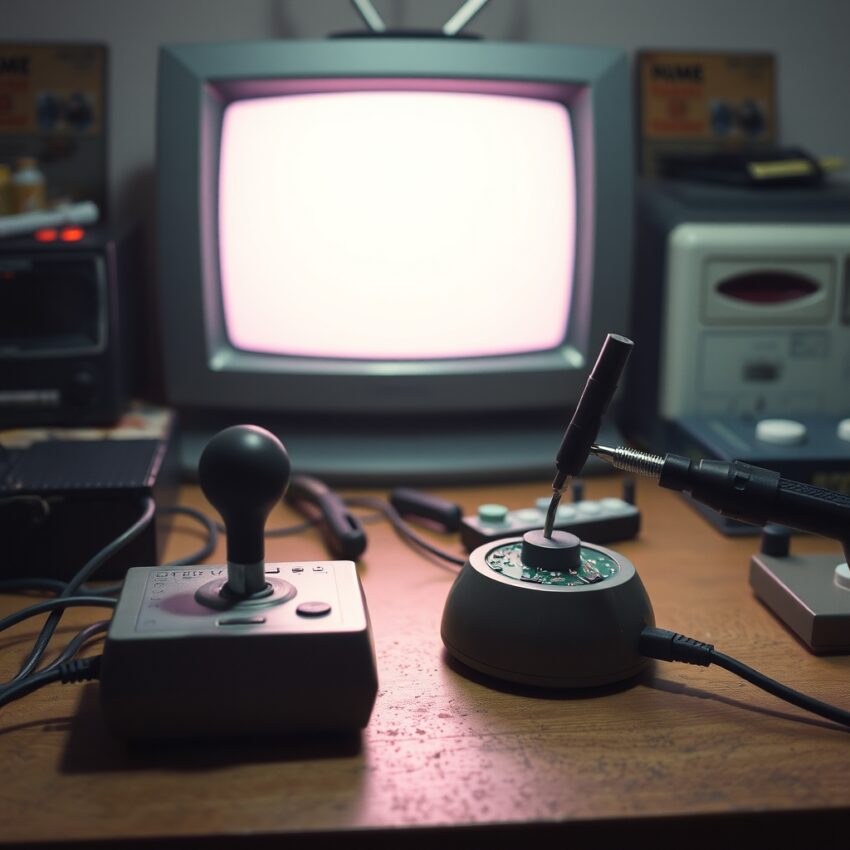
Ancak bu karakterin asıl kalıcılığı tamircilerin rolünde görünür hale geldi. Joystick bozulduğunda çoğu evde ilk refleks yenisini almak değildi; mahalle elektronikçisine gitmekti. Cam vitrinde lehim teli, direnç kutusu, tornavida seti dizili olur; tezgâhın arkasında ustanın büyüteçli bakışı her arızayı bir bilmece gibi çözerdi. Kırık bağlantı lehimlenir, gevşeyen yay değiştirilir, kablo ucu yeniden sabitlenirdi. Böylece cihaz, çöpe gitmek yerine ikinci bir ömür kazanırdı.
Bu alışkanlığın tarihsel zemini ekonomikti ama aynı zamanda kültüreldi. İthal ürünlerin pahalı olduğu, parça bulmanın zorlaştığı yıllarda tamir etmek bir zorunluluktu; zamanla bir değer sistemine dönüştü. “Atma, tamir olur” cümlesi evlerin teknik sloganıydı. Tamirciler de sadece arıza gideren kişiler değil, teknoloji bilgisini mahalleye çeviren aracılardı. Çocuğa, “kolu sert çekme, içindeki yay hassas” diyen usta, aslında kullanım etiği öğretiyordu.
Antenle joystick arasındaki ilişki de o dönemin özgün bir sahnesiydi. Görüntü bozulduğunda biri anteni tutar, diğeri kumanda eder, üçüncü kişi ekrana bakıp “dur, orada kalsın” diye bağırırdı. Oyun tek kişilik görünse de kurgu kolektifti. Kardeşler, kuzenler, komşu çocukları aynı cihaz etrafında sıraya girer; tamirden yeni gelen joystickin ilk denemesi adeta küçük bir törene dönüşürdü.
Bugün retro oyun pazarının büyümesiyle eski joystickler koleksiyon nesnesi olarak yeniden değer görüyor. Ama onları gerçekten anlamlı kılan sadece nostaljik tasarım değil, tamir kültürüyle kurdukları bağdır. Her lehim izi, her değişen vida, cihazın yaşadığı hayatın kaydıdır. Bu yüzden tamir edilmiş bir joystick, fabrikadan yeni çıkmış bir üründen daha kişisel hissedilir; çünkü üzerinde kullanıcıların hatası, ustanın dokunuşu ve evin sabrı birlikte yaşar.
Anteni çevirdikçe netleşen umut ifadesi tam da bunu anlatır. O yıllarda teknoloji kusursuz değildi ama insanla birlikte çalışıyordu. Bozulduğunda dışlanmıyor, anlaşılmaya ve onarılmaya çağrılıyordu. Tamircilerin elinde ikinci ömür bulan joystick, bir dönemin teknik yetersizliğini değil, dayanışmacı yaratıcılığını temsil ediyor. Bu nedenle hafızada kalan sadece oyunlar değil; oyunları tekrar mümkün kılan o küçük atölye mucizeleri.
Mahallede “usta kolu toparladıysa bir daha kolay bozulmaz” sözü boşuna yayılmamıştı. Cihazın geri gelişi, çocuklar için oyundan önce güvenin geri gelişi demekti.
🇬🇧 English | Patience Between Joystick and Antenna: A Second Life on the Repair Bench
As the rabbit-ear antenna on top of the TV turned left, then right, one sentence echoed in many living rooms: “Wait, now it’s clear.” In those moments, a plastic joystick sat in a child’s hands while a shaky but magical game world flickered on screen. Pixels were imperfect, but excitement was sharp. In that era of tangled cables and delicate tuning, the preparation ritual became as memorable as the game itself.
The joystick was more than a control device; it was a physical symbol of how households interacted with technology. The firmness of buttons, the spring resistance of the stick, the exact angle of the cable became body memory. Every press found an answer on screen, even with slight delay, and that delay taught rhythm and patience. Compared with today’s wireless speed, that slowness was not a flaw but part of the period’s identity.
Its long memory, however, was shaped most by repair technicians. When a joystick broke, most families did not buy a replacement first; they went to the neighborhood electronics shop. In glass cases sat solder wire, resistors, and screwdriver sets, while the technician studied each fault like a puzzle. A cracked joint was resoldered, a weak spring replaced, a loose cable fixed. Instead of becoming waste, the device gained a second life.
The historical basis of this habit was economic, but also cultural. In years when imported goods were expensive and parts were hard to find, repair began as necessity and evolved into value. “Don’t throw it away, it can be fixed” became a household motto. Technicians were not only problem solvers; they translated technical knowledge into neighborhood practice. When a master said, “Don’t pull too hard, the spring inside is delicate,” he was teaching a usage ethic.
The antenna-joystick relationship created one of the era’s most distinctive scenes. When the picture blurred, one person held the antenna, another handled controls, and a third watched the screen shouting, “Stop, keep it there.” The game looked single-player, but the setup was collective. Siblings, cousins, and neighbor kids lined up around one device, and the first test of a freshly repaired joystick felt like a small ceremony.
Today, as retro gaming markets grow, old joysticks are valued as collectible objects again. Yet what truly makes them meaningful is their link to repair culture, not only nostalgic design. Every solder mark and replaced screw records a lived history. That is why a repaired joystick can feel more personal than a factory-new one: it carries user mistakes, technician care, and household patience together.
“Hope getting clearer as the antenna turns” captures this exactly. Technology then was not perfect, but it worked with people. When it failed, it was not abandoned; it was understood and restored. A joystick revived in a repair shop represents not technical insufficiency but cooperative creativity. What remains in memory is not just the games, but the small workshop miracles that made playing possible again.
🇧🇷 Português (Brasil) | Paciência Entre Joystick e Antena: A Segunda Vida na Bancada do Técnico
Enquanto a antena tipo “orelhas de coelho” sobre a TV era girada para um lado e para o outro, uma frase se repetia na sala: “Espera, agora ficou nítido.” Nesses minutos, havia um joystick de plástico nas mãos da criança e um universo de jogo tremido, mas encantador, na tela. Os pixels não eram perfeitos, porém a empolgação era. Naquele tempo de cabos enrolados e sintonia delicada, preparar o jogo virou memória tão forte quanto jogar.
O joystick era mais que um controle: era símbolo tátil da relação da casa com a tecnologia. A rigidez dos botões, a resistência da alavanca, o ângulo certo do fio viravam memória corporal. Cada comando respondia na tela com pequeno atraso, e esse atraso ensinava ritmo e paciência. Comparado à velocidade sem fio de hoje, aquela lentidão não era defeito; era parte da personalidade da época.
Mas a permanência desse objeto passa, sobretudo, pelos técnicos de bairro. Quando o joystick quebrava, quase ninguém corria para comprar outro de imediato; o caminho era a oficina eletrônica da vizinhança. No balcão, solda, resistores e chaves; atrás dele, o olhar atento do técnico tratando cada falha como enigma. Reforçava-se uma solda, trocava-se uma mola, prendia-se novamente a ponta do cabo. Em vez de lixo, o aparelho ganhava uma segunda vida.
A base histórica desse hábito era econômica e também cultural. Em anos de produto importado caro e peça difícil, consertar começou como necessidade e virou valor. “Não joga fora, dá pra arrumar” era quase um lema doméstico. Os técnicos não apenas reparavam; traduziam saber técnico para o cotidiano. Quando o mestre dizia “não puxa com força, a mola interna é sensível”, ele ensinava também um modo de cuidado.
A relação entre antena e joystick criou uma cena clássica do período. Quando a imagem falhava, uma pessoa segurava a antena, outra comandava o controle, outra gritava da poltrona: “Aí, para!” O jogo parecia individual, mas a operação era coletiva. Irmãos, primos e vizinhos faziam fila, e o primeiro teste do joystick recém-consertado parecia um ritual doméstico.
Hoje, com o crescimento do mercado retrô, joysticks antigos voltam como peças de coleção. Ainda assim, o que os torna realmente especiais é o vínculo com a cultura do reparo, não apenas o desenho nostálgico. Cada marca de solda e cada parafuso trocado contam uma biografia de uso. Por isso, um joystick reparado pode ser mais afetivo do que um novo: ele carrega erro do usuário, gesto do técnico e paciência da família.
A ideia de “esperança que fica nítida ao girar a antena” resume esse espírito. A tecnologia de então não era perfeita, mas dialogava com as pessoas. Quando quebrava, não era descartada; era compreendida e recuperada. O joystick que renasce na oficina representa menos limitação técnica e mais criatividade comunitária. O que fica na memória não são só os jogos, e sim os pequenos milagres de bancada que permitiam jogar de novo.