🇹🇷 Türkçe | Telefon Hatlarından Akan Mürekkep: Faksın Sessiz Devrimi
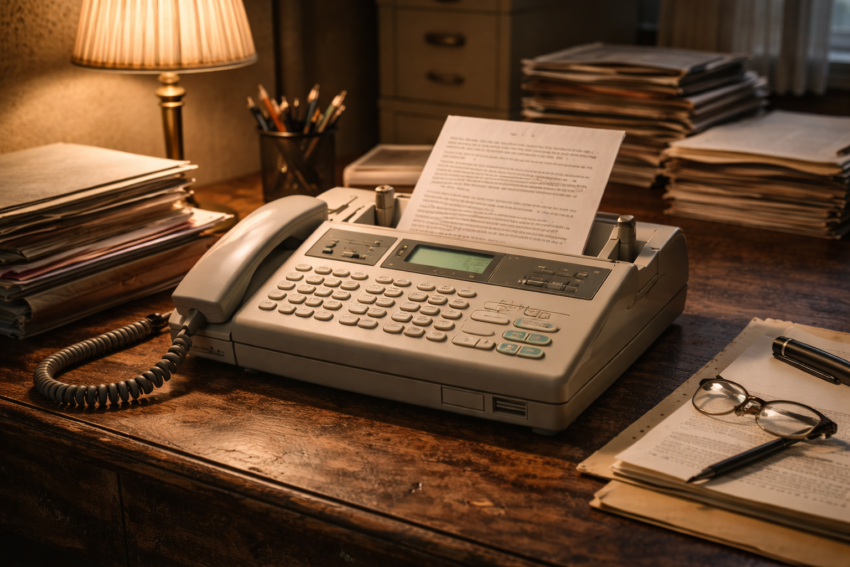
1980’lerin ve 1990’ların ofis koridorlarında yankılanan o karakteristik ses hâlâ birçok kişinin hafızasında canlıdır: ince bir elektronik uğultu, ardından telefon hattı üzerinden kurulan bağlantının tiz sesi ve sonunda yavaşça ilerleyen bir kâğıt. Faks makinesi çalışıyordur. O dönemde bu ses, yalnızca bir cihazın çalıştığını değil, aynı zamanda mesafelerin kısaldığını ve bilginin yeni bir hız kazandığını da haber verirdi.
Faks makineleri, analog teknolojinin en etkileyici mucizelerinden biriydi. Bugünün anlık mesajlaşma ve e-posta çağından önce, bir belgenin kilometrelerce uzağa birkaç dakika içinde ulaşabilmesi neredeyse büyü gibi görünürdü. Bir sözleşme, bir çizim, bir dilekçe ya da bir sipariş formu… Hepsi telefon hatları üzerinden başka bir şehirdeki ya da başka bir ülkedeki makinede yeniden doğardı.
Bir Belgenin Yolculuğu: Analog Mühendisliğin Zarafeti
Faks makinesinin çalışma prensibi aslında oldukça zarif bir mühendislik çözümüne dayanıyordu. Gönderilen belge tarayıcıdan geçirilir, satır satır analiz edilir ve siyah-beyaz tonları elektrik sinyallerine dönüştürülürdü. Bu sinyaller telefon hattı üzerinden karşı tarafa gönderilir, alıcı cihaz ise bu sinyalleri yeniden kâğıda basardı.
Bugün basit gibi görünen bu süreç, o dönem için oldukça etkileyici bir teknolojiydi. Özellikle şirketler için zaman büyük önem taşıyordu. Bir sözleşmenin posta yoluyla ulaşması günler alabilirken, faks sayesinde dakikalar içinde iletilmesi mümkün hale gelmişti.
Bu nedenle faks makineleri kısa sürede bankalarda, hukuk bürolarında, gazetelerde ve devlet dairelerinde vazgeçilmez bir araç haline geldi.
Ofis Hayatının Yeni Ritmi
Faks makinesi yalnızca bir iletişim aracı değildi; aynı zamanda ofis kültürünün bir parçasıydı. Birçok ofiste cihazın bulunduğu köşe küçük bir iletişim merkezi gibi çalışırdı. Gelen fakslar heyecanla beklenir, cihazdan çıkan sıcak kâğıtlar hızla alınırdı.
Sekreterler sabah mesaisine başladığında ilk işlerinden biri faks makinesini kontrol etmek olurdu. Gece boyunca gelen belgeler bazen önemli bir anlaşmanın ilk adımı, bazen de uzak bir şehirden gönderilen bir davetiyenin habercisi olurdu.
Faksın çıktığı kâğıtların çoğu termal kâğıttı. Zamanla solan bu yazılar, bugün eski dosyaların arasında nostaljik bir iz bırakır. Bir zamanlar acil ve önemli olan belgeler, yıllar sonra geçmiş bir dönemin hatırasına dönüşür.
Analog Bir Teknolojinin Kültürel Mirası
Faks makineleri yalnızca ofislerde değil, gündelik yaşamda da etkisini göstermişti. Küçük işletmeler sipariş almak için faks kullanır, gazeteler haber metinlerini bu cihazlarla iletir, hatta bazı aileler uzaktaki akrabalarına mektuplarını faks yoluyla gönderirdi.
Bugün dijital iletişim araçları bu teknolojiyi büyük ölçüde geride bırakmış olsa da, faks makinesi analog çağın önemli sembollerinden biri olarak hatırlanır. O dönemde insanlar, kâğıdın telefon hattı üzerinden yolculuk etmesini neredeyse sihir gibi görürdü.
Belki de bu yüzden eski bir ofiste köşede duran bir faks makinesine bakmak, yalnızca bir cihazı hatırlamak değildir. Aynı zamanda iletişimin daha yavaş ama daha somut olduğu bir döneme kısa bir yolculuk yapmak gibidir.
🇬🇧 English | Ink Traveling Through Telephone Lines: The Quiet Revolution of Fax Machines
In the corridors of offices during the 1980s and 1990s, a distinctive sound echoed through the air: a thin electronic hum followed by the sharp tone of a telephone connection and the slow movement of a sheet of paper emerging from a machine. The fax machine was at work. For many people, this sound symbolized more than a device operating—it represented the shrinking of distances and the acceleration of communication.
Fax machines were among the most fascinating inventions of the analog technology era. Before emails and instant messaging became everyday tools, the idea that a document could travel hundreds or thousands of kilometers in just a few minutes seemed almost magical. Contracts, sketches, official forms, or purchase orders could be sent through telephone lines and appear moments later on a machine in another city or even another country.
The Journey of a Document: Elegance of Analog Engineering
The technology behind fax machines relied on an elegant engineering concept. A document was scanned line by line, and the black and white patterns were converted into electrical signals. These signals traveled through telephone lines to the receiving machine, which reconstructed the information and printed it on paper.
Although this process may seem simple today, it was remarkably innovative at the time. For businesses, time was critical. A contract sent by traditional mail could take days to arrive, but with fax machines, the same document could be delivered within minutes.
For this reason, fax machines quickly became essential tools in banks, law firms, newspapers, and government offices.
A New Rhythm in Office Life
Fax machines were not just communication tools—they were part of office culture. In many workplaces, the corner where the fax machine stood functioned like a small communication hub. Incoming faxes were anticipated with curiosity, and freshly printed pages were quickly collected.
For office assistants and secretaries, checking the fax machine was often one of the first tasks of the morning. Documents received overnight could contain anything from the first step of a business agreement to an invitation sent from another city.
Many of these messages were printed on thermal paper, which faded over time. Today, these fading documents often remain tucked inside old folders, silent reminders of urgent messages from another era.
A Cultural Legacy of Analog Communication
Fax machines were not limited to offices; they also found a place in everyday life. Small businesses used them to receive orders, journalists transmitted articles through them, and sometimes families even sent handwritten letters to relatives using fax machines.
Although digital communication technologies have largely replaced them, fax machines remain an iconic symbol of the analog communication era. At the time, watching a piece of paper travel across telephone lines felt almost like witnessing a small technological miracle.
Perhaps that is why encountering an old fax machine today evokes more than nostalgia for a device. It recalls a time when communication moved slower, yet carried a tangible sense of connection.
🇧🇷 Português (Brasil) | Tinta Correndo Pelos Fios: A Revolução Silenciosa do Fax
Nos corredores dos escritórios das décadas de 1980 e 1990, um som característico era facilmente reconhecido: um leve zumbido eletrônico seguido pelo tom agudo da conexão telefônica e, por fim, uma folha de papel saindo lentamente da máquina. O fax estava funcionando. Para muitas pessoas, esse som simbolizava algo maior do que apenas um aparelho em operação — representava a redução das distâncias e a aceleração da comunicação.
As máquinas de fax foram uma das invenções mais marcantes da era da tecnologia analógica. Antes do e-mail e das mensagens instantâneas, a ideia de enviar um documento para outra cidade ou país em poucos minutos parecia quase mágica. Contratos, desenhos, formulários e pedidos comerciais podiam ser transmitidos pelas linhas telefônicas e reaparecer quase imediatamente em outra máquina.
A Jornada de um Documento: A Elegância da Engenharia Analógica
O funcionamento do fax baseava-se em um princípio de engenharia bastante elegante. O documento era escaneado linha por linha e os padrões em preto e branco eram convertidos em sinais elétricos. Esses sinais viajavam pelas linhas telefônicas até o aparelho receptor, que reconstruía a informação e a imprimia novamente em papel.
Hoje esse processo pode parecer simples, mas na época era extremamente inovador. Para empresas e instituições, o fator tempo era essencial. Um contrato enviado pelo correio poderia levar dias para chegar, enquanto o fax permitia que o mesmo documento fosse entregue em poucos minutos.
Por esse motivo, as máquinas de fax rapidamente se tornaram indispensáveis em bancos, escritórios de advocacia, redações de jornais e repartições públicas.
Um Novo Ritmo na Vida dos Escritórios
Mais do que um equipamento de comunicação, o fax tornou-se parte da cultura dos escritórios. Em muitos locais de trabalho, o espaço onde o aparelho ficava era quase um pequeno centro de comunicação. As pessoas aguardavam com expectativa a chegada de novos documentos.
Para secretárias e assistentes, verificar a máquina de fax era uma das primeiras tarefas do dia. Os documentos recebidos durante a noite podiam trazer desde o início de um acordo comercial até um convite vindo de outra cidade.
Grande parte dessas mensagens era impressa em papel térmico, que com o tempo desbotava. Hoje, essas folhas guardadas em pastas antigas são lembranças silenciosas de uma época em que cada fax parecia urgente e importante.
O Legado Cultural de uma Tecnologia Analógica
As máquinas de fax não estavam presentes apenas nos escritórios. Pequenos negócios utilizavam o fax para receber pedidos, jornalistas enviavam matérias por meio dele e algumas famílias até enviavam cartas para parentes distantes utilizando essa tecnologia.
Embora os meios digitais tenham substituído grande parte dessa prática, o fax permanece como um símbolo marcante da era analógica. Naquela época, ver um documento atravessar uma linha telefônica parecia quase um pequeno milagre tecnológico.
Talvez por isso encontrar uma máquina de fax antiga hoje não seja apenas lembrar de um equipamento. É recordar uma época em que a comunicação era um pouco mais lenta, mas também mais tangível.