🇹🇷 Türkçe | Açık Hava Perdesinde Mahallenin Birlikte Attığı Kalp
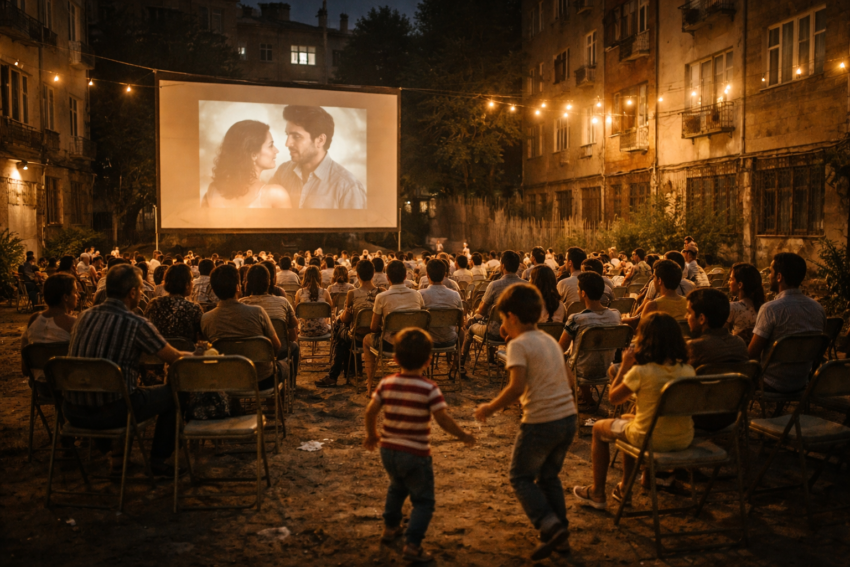
Yaz akşamları yavaş yavaş serinlemeye başladığında, mahallede tatlı bir hareketlilik başlardı. Sokak lambaları yeni yeni yanarken çocuklar evlerine koşar, annelerden izin koparmaya çalışırdı. Çünkü birazdan mahalledeki yazlık sinema başlayacaktı. Açık bir arsanın ortasında kurulan beyaz perde, birkaç sıra metal sandalye ve arkada duran eski bir projeksiyon makinesi… İşte mahalle halkı için o akşamın en büyük eğlencesi buydu.
1970 ile 1990 yılları arasında Türkiye’nin birçok şehrinde yazlık sinemalar mahalle hayatının en canlı parçalarından biriydi. Televizyonun henüz her eve girmediği yıllarda insanlar, sinema izlemek için yalnızca bir salonun karanlığına değil, gökyüzünün altındaki bu açık alanlara da giderdi. Bu sinemalar yalnızca film gösterilen yerler değildi; aynı zamanda komşuların bir araya geldiği, çocukların koşturduğu ve yaz gecelerinin paylaşılmış bir hatıraya dönüştüğü sosyal alanlardı.
Mahallede Bir Akşam Ritüeli
Yazlık sinema akşamları küçük bir hazırlıkla başlardı. Bazı aileler evlerinden minder getirir, bazıları çekirdek ya da gazoz alırdı. Sinemanın girişinde çoğu zaman küçük bir büfe bulunurdu. Gazoz şişelerinin açılırken çıkardığı ses, patlamış mısır kokusu ve çekirdek çıtırtıları yaz akşamlarının fon müziği gibiydi.
Çocuklar film başlamadan önce sandalyelerin arasında saklambaç oynar, gençler en arka sırada sohbet ederdi. Büyükler ise tanıdık komşularla selamlaşıp yan yana otururdu. Bir film izlemek aslında bir mahalle buluşmasına dönüşürdü.
Projeksiyon makinesi çalışmaya başladığında, perdeye düşen ilk görüntüyle birlikte kalabalık bir anda sessizleşirdi. Ama bu sessizlik uzun sürmezdi; çünkü o dönemin sinema seyircisi filme aktif bir şekilde tepki verirdi. Kahraman alkışlanır, kötü karakter yuhalanır, komik sahnelerde kahkahalar mahalleye yayılırdı.
Yeşilçam Geceleri
Yazlık sinemaların vazgeçilmez filmleri çoğunlukla Yeşilçam yapımlarıydı. Türkan Şoray, Kemal Sunal, Cüneyt Arkın ya da Kadir İnanır’ın oynadığı filmler mahalle sinemalarının en çok izlenen yapımlarıydı.
Özellikle Kemal Sunal’ın komedi filmlerinde kahkaha dalgaları sandalyeler arasında yayılırdı. Dram sahnelerinde ise birçok kişinin gözleri dolardı. Sinema, insanların aynı hikâyede ortak duygular yaşayabildiği güçlü bir deneyimdi.
Birçok çocuk için yazlık sinema aynı zamanda sinema kültürüyle tanışmanın ilk adımıydı.
Bir Dönemin Paylaşılan Hatırası
1990’lı yıllardan sonra televizyon kanallarının çoğalması, video kasetlerin yaygınlaşması ve şehirlerin değişen yapısı yazlık sinemaların sayısını giderek azalttı. Birçok mahallede kurulan o beyaz perdeler söküldü, boş arsalar apartmanlara dönüştü.
Ancak yazlık sinemalar, Türkiye’de mahalle kültürünün en sıcak hatıralarından biri olarak hafızalarda yaşamaya devam ediyor. Çünkü o sinemalar yalnızca film izlenen yerler değildi; aynı zamanda insanların birlikte gülüp birlikte duygulandığı sosyal alanlardı.
Bugün eski bir fotoğrafta açık hava sineması görmek, birçok insan için yalnızca bir film gecesini değil; paylaşılmış yaz akşamlarını, komşuluk ilişkilerini ve çocukluk hatıralarını hatırlatır.
🇬🇧 English | When the Neighborhood Gathered Beneath the Open-Air Screen
On warm summer evenings, as the air slowly cooled and streetlights flickered on, a quiet excitement would spread through the neighborhood. Children rushed home to ask their parents for permission to go out again. Something special was about to happen: the neighborhood’s open-air cinema night.
In a vacant lot, a large white screen stood waiting. Rows of metal chairs faced the screen, and behind them an old film projector hummed quietly. For many neighborhoods across Turkey between 1970 and 1990, these summer cinemas became one of the most cherished social traditions.
At a time when television had not yet reached every household, cinema was not just something experienced inside formal theaters. Instead, people gathered outdoors under the night sky. Open-air cinemas became more than places to watch films—they became community spaces where neighbors met, children played, and summer nights turned into shared memories.
An Evening Ritual of the Neighborhood
Preparing for an open-air cinema evening was part of the experience. Some families brought cushions from home, while others arrived carrying bags of sunflower seeds or bottles of soda. Near the entrance, there was usually a small kiosk selling snacks.
The sound of soda bottles opening, the smell of popcorn, and the constant cracking of sunflower seeds created the soundtrack of those evenings.
Before the film began, children ran between the rows of chairs playing games, while teenagers gathered in the back rows chatting quietly. Adults greeted familiar neighbors and sat side by side.
Watching a movie was not just entertainment—it was a neighborhood gathering.
When the projector finally started and the first images appeared on the screen, the crowd briefly fell silent. But that silence rarely lasted long. Audiences reacted openly to the films. Heroes were applauded, villains were booed, and laughter echoed through the summer night during comedic scenes.
The Magic of Yeşilçam Films
The films shown in these open-air cinemas were mostly productions from Yeşilçam, Turkey’s golden age of cinema. Movies starring Türkan Şoray, Kemal Sunal, Cüneyt Arkın, or Kadir İnanır were among the most beloved.
During Kemal Sunal comedies, waves of laughter spread through the audience. During emotional scenes, many viewers quietly wiped away tears. Cinema created a powerful shared emotional experience.
For many children, open-air cinemas were also their first introduction to the world of film.
A Shared Cultural Memory
By the 1990s, however, the rise of television channels, the popularity of VHS tapes, and the transformation of urban landscapes gradually led to the disappearance of many open-air cinemas.
The white screens that once stood in neighborhood lots were dismantled, and the empty spaces were replaced by apartment buildings.
Yet the memory of these summer cinemas continues to live on in Turkey’s cultural imagination. They were not just places where films were shown—they were spaces where communities laughed together, shared emotions, and created lasting memories.
Today, seeing an old photograph of an open-air cinema often reminds people not only of movies but also of warm summer nights, neighborhood friendships, and childhood memories.
🇧🇷 Português (Brasil) | Quando o Bairro se Reunia Sob o Céu do Cinema
Nas noites de verão, quando o ar começava a esfriar lentamente e as luzes da rua se acendiam, uma pequena agitação surgia no bairro. As crianças corriam para casa para pedir permissão aos pais. Logo começaria a sessão de cinema ao ar livre do bairro.
Em um terreno vazio, uma grande tela branca era montada. Fileiras de cadeiras metálicas eram organizadas diante dela, enquanto um antigo projetor aguardava para começar a funcionar. Entre 1970 e 1990, esses cinemas de verão tornaram-se uma das tradições mais queridas em muitos bairros da Turquia.
Na época em que a televisão ainda não estava presente em todas as casas, o cinema não era apenas uma experiência dentro de salas fechadas. As pessoas se reuniam ao ar livre, sob o céu noturno. Esses cinemas se transformavam em espaços sociais onde vizinhos se encontravam, crianças brincavam e as noites de verão se transformavam em memórias compartilhadas.
Um Ritual de Verão no Bairro
Ir ao cinema de verão também envolvia uma pequena preparação. Algumas famílias levavam almofadas de casa, enquanto outras traziam sementes de girassol ou garrafas de refrigerante. Na entrada geralmente havia um pequeno quiosque vendendo lanches.
O som das garrafas sendo abertas, o cheiro de pipoca e o barulho constante das sementes sendo quebradas formavam a trilha sonora dessas noites.
Antes do início do filme, crianças brincavam entre as cadeiras, jovens conversavam nas fileiras de trás e os adultos cumprimentavam vizinhos conhecidos.
Assistir ao filme era apenas parte da experiência — o encontro comunitário era igualmente importante.
Quando o projetor começava e as primeiras imagens apareciam na tela, o público ficava em silêncio por alguns instantes. Logo depois, porém, as reações surgiam naturalmente: aplausos para os heróis, vaias para os vilões e risadas ecoando pela noite.
A Magia do Cinema Yeşilçam
A maioria dos filmes exibidos nesses cinemas eram produções de Yeşilçam, a era de ouro do cinema turco. Filmes estrelados por Türkan Şoray, Kemal Sunal, Cüneyt Arkın ou Kadir İnanır eram extremamente populares.
Nas comédias de Kemal Sunal, gargalhadas se espalhavam entre o público. Em cenas dramáticas, muitas pessoas se emocionavam.
Para muitas crianças, o cinema de verão foi o primeiro contato com o mundo do cinema.
Uma Memória Cultural Compartilhada
A partir da década de 1990, o aumento dos canais de televisão, a popularização das fitas VHS e as mudanças urbanas fizeram com que muitos desses cinemas desaparecessem.
As telas brancas foram desmontadas e os terrenos vazios deram lugar a prédios.
Mesmo assim, os cinemas de verão continuam vivos na memória cultural da Turquia. Eles representam uma época em que as pessoas compartilhavam risadas, emoções e momentos simples de convivência.
Hoje, ver uma fotografia antiga de um cinema ao ar livre é lembrar não apenas de um filme, mas também de noites de verão, amizades de bairro e memórias de infância.