🇹🇷 Türkçe | Kapı Önünde Kurulan Mahalle Dünyası
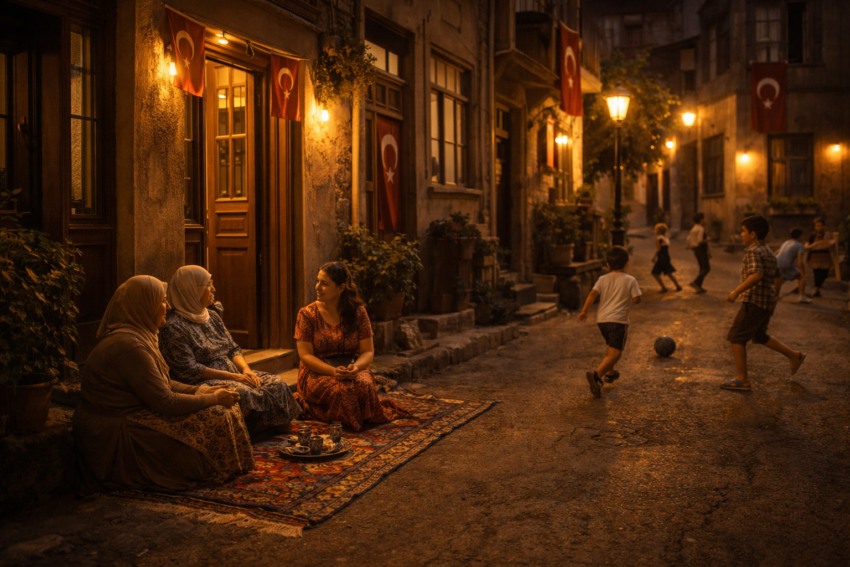
Yaz akşamlarının serinliğinin yavaş yavaş hissedildiği bir mahalleyi hayal edin. Güneş batmış, sokak lambaları yeni yeni yanmıştır. Gün boyunca ev işlerini bitiren komşular, kapıların önüne küçük tabureler veya sandalyeler çıkarır. Bazı evlerin önünde ise yere serilmiş renkli kilimler görülür. İşte mahalle hayatının en canlı sahnelerinden biri başlamak üzeredir: kapı önü sohbetleri.
Türkiye’de özellikle 1960’lardan 1990’lara kadar kapı önü sohbetleri mahalle kültürünün en doğal parçalarından biriydi. Gün boyunca evde geçirilen zamanın ardından insanlar akşam serinliğinde dışarı çıkar, komşularla bir araya gelirdi. Bu küçük buluşmalar yalnızca sohbet etmek için değil, aynı zamanda mahalle hayatının ritmini paylaşmak için önemliydi.
Sokaklar o saatlerde adeta açık hava oturma odalarına dönüşürdü. Kadınlar kilimlerin üzerine oturur, çay bardakları elden ele dolaşırdı. Bazen bir tabak çekirdek veya evde yapılmış kurabiyeler sohbetin ortasına bırakılırdı. Sohbetler günlük hayattan başlayıp bazen geçmiş anılara kadar uzanırdı.
Çocuklar ise bu sohbetlerin etrafında kendi dünyalarını kurardı. Sokakta seksek oynayanlar, ip atlayanlar veya top koşturan çocuklar mahalle akşamlarının vazgeçilmez görüntüleriydi. Büyüklerin sohbeti sürerken çocukların kahkahaları sokak boyunca yankılanırdı.
Mahalle kilimleri bu sahnenin önemli parçalarından biriydi. Evlerden çıkarılan küçük kilimler veya hasırlar hem oturmak hem de komşularla birlikte vakit geçirmek için kullanılırdı. Bu kilimler bazen yıllardır kullanılan aile eşyaları olurdu ve mahalle sohbetlerinin sessiz tanıklarıydı.
Kapı önü sohbetleri aynı zamanda mahalledeki dayanışmayı da güçlendirirdi. Komşular birbirinin halini hatırını sorar, küçük sorunlara birlikte çözüm bulurdu. Birinin çocuğu hasta olduğunda herkes haberdar olur, bir düğün ya da bayram yaklaştığında hazırlıklar birlikte konuşulurdu.
Mahalle esnafı da bu atmosferin parçasıydı. Akşam saatlerinde sokaktan geçen simitçi, dondurmacı veya seyyar satıcı çocukların ilgisini çekerdi. Bazen sohbet eden komşular da bu satıcılardan alışveriş yapar, sohbet kısa süreliğine hareketlenirdi.
Zamanla şehir hayatı değişti. Apartman yaşamı, yoğun iş temposu ve dijital iletişim insanların sokakta geçirdiği zamanı azalttı. Kapı önü sohbetleri eskisi kadar yaygın görünmese de, birçok kişinin hafızasında hâlâ canlıdır.
Bugün geçmişe dönüp bakıldığında kapı önü sohbetleri yalnızca bir alışkanlık değil, aynı zamanda güçlü bir toplumsal bağın sembolü olarak hatırlanır. Çünkü o sohbetlerde insanlar yalnızca konuşmazdı; aynı zamanda mahalle hayatını birlikte kurarlardı.
🇬🇧 English | The Social Life of Front Door Conversations
Imagine a quiet neighborhood on a warm summer evening. The sun has set, and streetlights begin to glow softly. After finishing the day’s chores, neighbors bring small stools or chairs outside their homes. In front of some houses, colorful rugs are spread on the ground. Soon the street transforms into a lively gathering place as one of the most beloved traditions of neighborhood life begins: front door conversations.
From the 1960s through the 1990s in many parts of Turkey, these gatherings were a natural part of everyday life. After spending much of the day indoors, residents stepped outside to enjoy the evening air and connect with neighbors. These informal meetings were more than simple conversations—they were a way of sharing the rhythm of neighborhood life.
During these hours, the street almost felt like an open-air living room. Women often sat on rugs or small chairs, while glasses of tea were passed from hand to hand. A bowl of sunflower seeds or homemade pastries might appear in the middle of the group. Conversations often began with daily events but sometimes drifted toward memories of the past.
Children built their own world around these gatherings. Some played hopscotch, others skipped rope or chased a ball across the street. Their laughter echoed between the houses while the adults continued their conversations.
Neighborhood rugs were an important part of these scenes. Families would bring small rugs or woven mats from their homes to create a comfortable place to sit. Many of these rugs had been part of the household for years and quietly witnessed countless conversations and shared moments.
Front door conversations also strengthened the sense of community. Neighbors checked on each other’s well-being and offered support when needed. News about weddings, illnesses, or celebrations quickly spread through these gatherings, creating a strong network of care.
Local street vendors also contributed to the atmosphere. In the evening, sellers of simit, ice cream, or snacks might pass through the neighborhood. Children eagerly gathered around them, and sometimes the adults joined in as well, adding a brief moment of excitement to the evening.
Over time, urban life began to change. Apartment living, busy schedules, and digital communication reduced the amount of time people spent together outdoors. Although front door conversations became less common, they remain vivid memories for many.
Looking back today, these gatherings represent more than a simple habit. They symbolize a form of community life where relationships were built face to face and where the pulse of the neighborhood could truly be felt.
🇧🇷 Português (Brasil) | As Conversas de Porta e a Vida de Bairro
Imagine um bairro tranquilo em uma noite de verão. O sol já se pôs e as luzes da rua começam a iluminar suavemente as casas. Após terminar as tarefas do dia, os moradores colocam pequenos bancos ou cadeiras em frente às portas. Em algumas casas, tapetes coloridos são estendidos no chão. Aos poucos, a rua se transforma em um espaço de convivência onde começa uma tradição muito especial: as conversas de porta.
Entre as décadas de 1960 e 1990, esse costume era comum em muitos bairros da Turquia. Depois de um dia inteiro dentro de casa, as pessoas saíam para aproveitar o ar fresco da noite e conversar com os vizinhos. Esses encontros simples eram uma parte essencial da vida comunitária.
Durante essas horas, a rua parecia uma sala de estar ao ar livre. Mulheres sentavam-se sobre tapetes ou cadeiras enquanto copos de chá passavam de mão em mão. Às vezes, um prato de sementes de girassol ou doces caseiros era colocado no centro do grupo. As conversas começavam com assuntos do cotidiano e muitas vezes se transformavam em histórias do passado.
Enquanto os adultos conversavam, as crianças criavam seu próprio universo ao redor. Algumas brincavam de amarelinha, outras pulavam corda ou corriam atrás de uma bola pela rua. As risadas ecoavam entre as casas e davam vida ao bairro.
Os tapetes de bairro também tinham um papel especial nesses encontros. Muitas famílias traziam pequenos tapetes de casa para sentar confortavelmente no chão. Esses tapetes frequentemente acompanhavam as famílias por muitos anos e testemunhavam inúmeras conversas.
As conversas de porta fortaleciam os laços entre vizinhos. As pessoas perguntavam sobre a saúde umas das outras, compartilhavam notícias e ajudavam-se quando necessário. Casamentos, festas e acontecimentos importantes eram discutidos nesses encontros.
Vendedores ambulantes também faziam parte desse cenário. À noite, vendedores de simit, sorvete ou doces passavam pelas ruas. As crianças se aproximavam curiosas, e às vezes os adultos também aproveitavam para comprar algo.
Com o tempo, a vida urbana mudou. Apartamentos, rotinas mais ocupadas e a comunicação digital reduziram os encontros nas ruas. Mesmo assim, essas conversas continuam sendo lembradas com carinho.
Hoje, quando se fala sobre esses encontros, percebe-se que eles representavam algo maior: o verdadeiro espírito da vida de bairro.