🇹🇷 Türkçe | Okyanusun Yüzen Sarayları
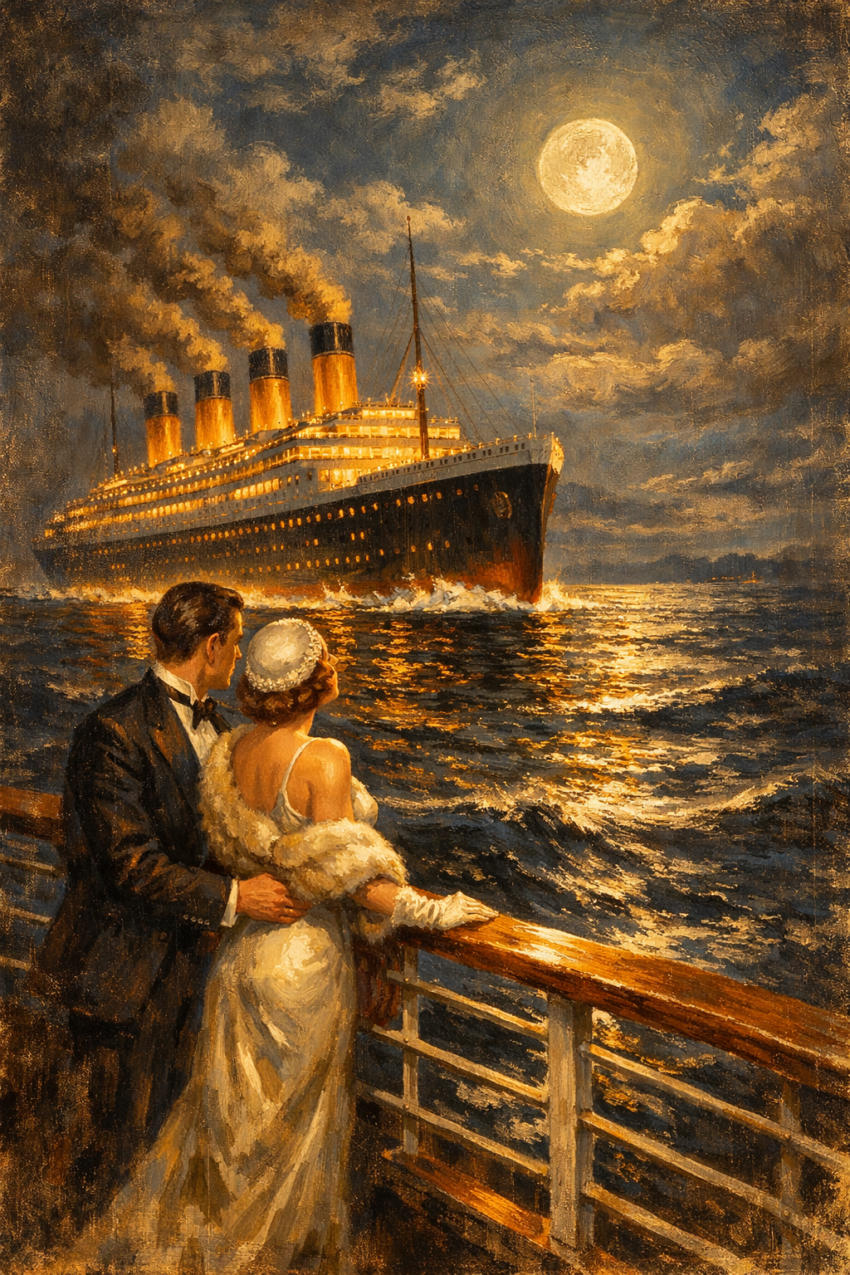
- yüzyılın başlarında bir limanı hayal edin. Sabahın erken saatlerinde sisin içinden devasa bir geminin silueti yavaşça belirir. Liman rıhtımında toplanan insanlar bu görkemli gemiye hayranlıkla bakar. Parlak metal bacalar, uzun güverteler ve yüzlerce pencere… Bu gemiler yalnızca bir ulaşım aracı değil, aynı zamanda okyanusun üzerinde yüzen saraylar gibidir.
Klasik transatlantik dönemi, yaklaşık olarak 1900’lerin başından 1960’lara kadar uzanan bir zaman dilimini kapsar. Bu yıllarda Avrupa ile Amerika arasında seyahat eden dev yolcu gemileri, modern ulaşımın en prestijli simgelerinden biri haline gelmişti. Titanic, Queen Mary ve Normandie gibi gemiler yalnızca teknik başarılarıyla değil, aynı zamanda sundukları lüks yaşamla da dikkat çekiyordu.
Bu gemilerde seyahat etmek birçok insan için unutulmaz bir deneyimdi. Yolcular gemiye adım attıkları anda adeta küçük bir şehre girmiş gibi hissederdi. Büyük merdivenler, geniş salonlar, restoranlar ve dans salonları geminin içindeki sosyal yaşamın merkezini oluştururdu.
Birinci sınıf yolcular için tasarlanan bölümler adeta bir otelin ihtişamını taşıyordu. Kristal avizelerle aydınlatılmış salonlar, zarif yemek masaları ve piyano eşliğinde yapılan akşam yemekleri… Okyanusun ortasında böylesine bir konfor sunulması dönemin teknolojik ve tasarım başarısının bir göstergesiydi.
Gündüzleri yolcular güvertelerde yürüyüş yapar, okyanusun sonsuz ufkunu izlerdi. Bazıları kitap okur, bazıları ise güverte sandalyelerinde oturup deniz havasının tadını çıkarırdı. Okyanus yolculuğu hızlı bir ulaşım değil, aynı zamanda sosyal bir deneyimdi.
Gemilerdeki yaşam farklı sınıflara göre ayrılmıştı. Birinci sınıf yolcular lüks salonlarda vakit geçirirken, alt güvertelerde daha mütevazı yolcular bulunurdu. Ancak herkes için ortak olan şey, yeni bir dünyaya doğru yapılan uzun bir yolculuğun heyecanıydı.
Transatlantik gemiler yalnızca yolcu taşımakla kalmıyordu. Aynı zamanda kültürel ve ekonomik bir köprü oluşturuyordu. Avrupa’dan Amerika’ya göç eden binlerce insan için bu gemiler yeni bir hayatın başlangıcıydı.
1950’li yıllardan sonra jet uçaklarının ortaya çıkmasıyla birlikte transatlantik yolculuklar yavaş yavaş önemini kaybetmeye başladı. Uçaklar günler süren deniz yolculuklarını birkaç saate indiriyordu. Böylece okyanus gemilerinin altın çağı sona erdi.
Ancak bu dönemin büyüsü hiçbir zaman tamamen kaybolmadı. Bugün bile klasik transatlantik gemileri, denizcilik tarihinin en romantik ve etkileyici dönemlerinden birini temsil eder.
Çünkü o gemiler yalnızca okyanusu geçmiyordu; aynı zamanda insanların hayallerini, umutlarını ve yeni başlangıçlarını da taşıyordu.
🇬🇧 English | Floating Palaces of the Ocean
Imagine a harbor in the early twentieth century. In the morning mist, the silhouette of a massive ship slowly appears. People gathered along the pier watch with admiration as the vessel approaches. Shiny funnels, long decks, and hundreds of windows stretch across the ship’s body. These ships are not merely transportation vehicles—they are floating palaces upon the ocean.
The classic transatlantic era roughly spans the early 1900s to the 1960s. During these decades, enormous passenger liners traveling between Europe and America became some of the most prestigious symbols of modern transportation. Ships such as the Titanic, Queen Mary, and Normandie were admired not only for their engineering achievements but also for the luxurious lifestyles they offered.
Traveling on these ships was an unforgettable experience for many passengers. The moment people stepped aboard, they felt as if they had entered a small city. Grand staircases, elegant lounges, restaurants, and ballrooms formed the social heart of life on board.
The first-class sections resembled the elegance of luxury hotels. Crystal chandeliers illuminated spacious halls, beautifully set dining tables hosted elaborate dinners, and music from pianos filled the evening air. Experiencing such comfort in the middle of the ocean represented the technological and artistic ambition of the era.
During the day, passengers strolled along the decks, watching the endless horizon of the Atlantic Ocean. Some read books while others relaxed in deck chairs, enjoying the fresh sea breeze. Ocean travel was not merely about reaching a destination—it was a social and cultural journey.
Life aboard these ships was divided into different classes. First-class passengers enjoyed grand lounges and luxurious facilities, while travelers in lower decks experienced simpler accommodations. Yet everyone shared the excitement of crossing the vast ocean toward a new land.
Transatlantic liners also served as bridges between continents. Thousands of migrants traveling from Europe to America boarded these ships in search of a better future. For them, the journey represented the beginning of a new life.
After the 1950s, the introduction of jet aircraft gradually transformed long-distance travel. Flights that took only hours replaced ocean voyages that lasted several days. As a result, the golden age of transatlantic liners slowly faded.
Nevertheless, the fascination with these ships has never disappeared. Today they remain powerful symbols of maritime history and one of the most romantic eras of travel.
Those ships carried more than passengers across the ocean—they carried dreams, hopes, and the promise of new beginnings.
🇧🇷 Português (Brasil) | Os Palácios Flutuantes do Oceano
Imagine um porto no início do século XX. Na neblina da manhã surge lentamente a silhueta de um enorme navio. As pessoas reunidas no cais observam com admiração enquanto a embarcação se aproxima. Chaminés brilhantes, longos conveses e centenas de janelas compõem sua estrutura majestosa. Esses navios não eram apenas meios de transporte; eram verdadeiros palácios flutuantes sobre o oceano.
A era clássica dos transatlânticos estende-se aproximadamente do início dos anos 1900 até a década de 1960. Nesse período, gigantescos navios de passageiros que viajavam entre a Europa e a América tornaram-se símbolos prestigiados do transporte moderno. Navios como Titanic, Queen Mary e Normandie impressionavam tanto por seus avanços tecnológicos quanto pelo luxo que ofereciam.
Viajar nesses navios era uma experiência inesquecível. Ao embarcar, os passageiros sentiam como se estivessem entrando em uma pequena cidade. Grandes escadarias, salões elegantes, restaurantes e salões de baile formavam o centro da vida social a bordo.
As áreas de primeira classe lembravam hotéis luxuosos. Lustres de cristal iluminavam grandes salões, mesas refinadas eram preparadas para jantares sofisticados e o som de pianos preenchia as noites. Desfrutar de tanto conforto no meio do oceano era uma demonstração do avanço tecnológico e do refinamento cultural da época.
Durante o dia, os passageiros caminhavam pelos conveses observando o horizonte infinito do Atlântico. Alguns liam livros, enquanto outros descansavam em cadeiras reclináveis aproveitando a brisa do mar. A viagem marítima era tanto uma experiência social quanto um deslocamento.
A vida a bordo era dividida por classes. Passageiros da primeira classe desfrutavam de espaços luxuosos, enquanto outros viajavam em acomodações mais simples. Mesmo assim, todos compartilhavam a emoção de cruzar o oceano rumo a um novo destino.
Os transatlânticos também funcionavam como pontes culturais entre continentes. Milhares de migrantes viajavam da Europa para a América em busca de novas oportunidades. Para muitos, essa jornada representava o início de uma nova vida.
A partir da década de 1950, com o surgimento dos aviões a jato, as longas viagens marítimas começaram a perder importância. O que antes levava dias passou a ser feito em poucas horas. Assim, a era de ouro dos grandes navios transatlânticos chegou gradualmente ao fim.
Ainda assim, o fascínio por esses navios permanece vivo. Eles continuam sendo símbolos de uma das épocas mais elegantes e românticas da história das viagens.
Porque esses navios não transportavam apenas passageiros — transportavam sonhos, esperanças e novos começos.