🇹🇷 Türkçe | Masmavi Bir Yolculuk: Klasik Şehir Hatları Vapurları
İskelede bekleyenlerin gözleri çoğu zaman ufka çevrilidir. Uzakta beliren o beyaz silüet, denizin üzerinde ağır ağır ilerlerken suyun yüzeyinde devasa köpükler bırakır. Yaklaştıkça motorun derin uğultusu duyulur ve ardından vapurun o tanıdık düdüğü şehrin semalarına yayılır. Bu ses, bir kentin ritmini belirleyen en karakteristik çağrılardan biridir. Çünkü vapur yalnızca bir ulaşım aracı değil, denizle yaşayan şehirlerin günlük hayatına eşlik eden bir ritüeldir.
İstanbul’un sularında uzun yıllardır hizmet veren vapurlar, özellikle Şehir Hatları geleneğiyle özdeşleşmiştir. Ancak bu tür şehir vapurları yalnızca İstanbul’a özgü değildir. Lizbon’un Tejo Nehri kıyılarında, Venedik’in kanallarında veya Rio de Janeiro’nun geniş koylarında da benzer beyaz gövdeli gemiler kent yaşamının ayrılmaz bir parçasıdır. Hepsinin ortak noktası, denizi yalnızca aşılacak bir engel değil, şehrin merkezindeki canlı bir buluşma alanı olarak görmeleridir.
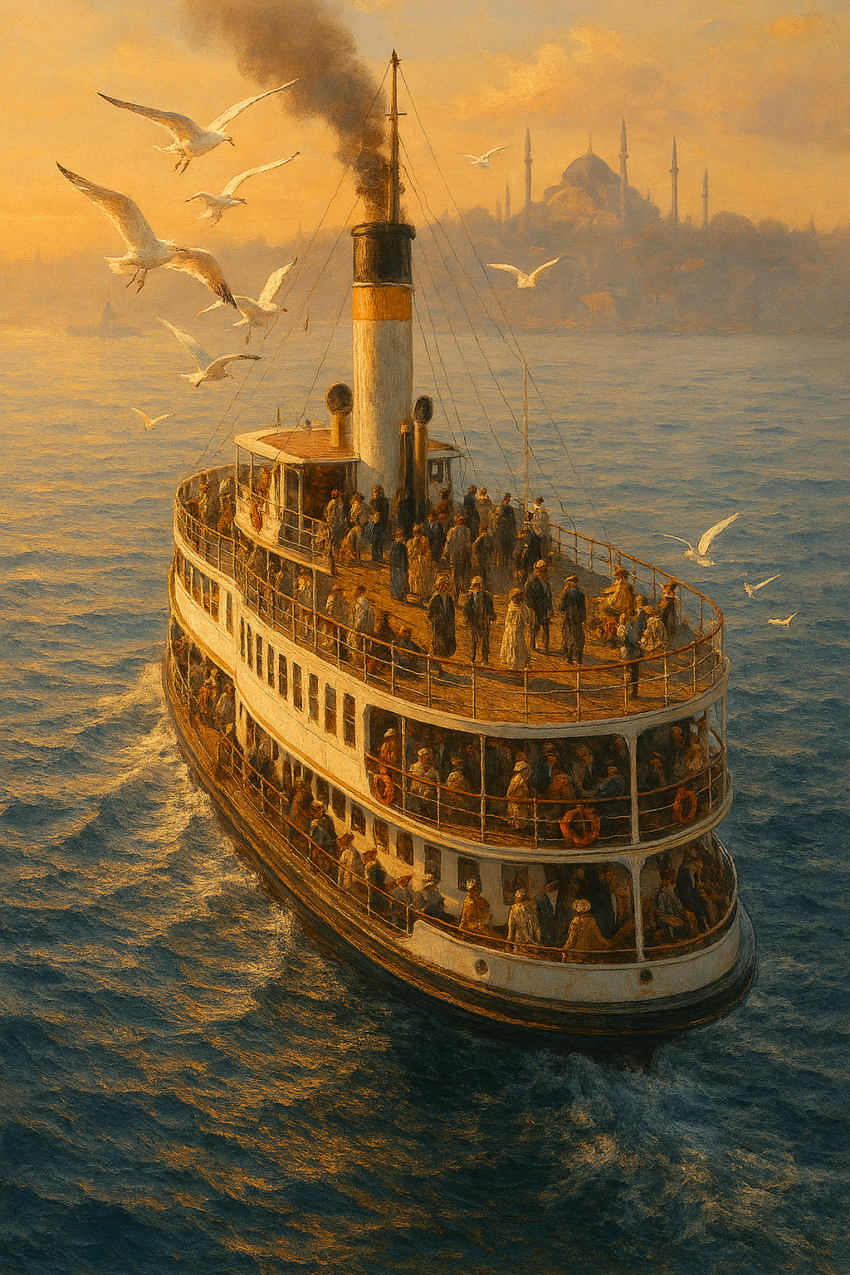
Bu klasik vapurların mimarisi kendine özgü bir zarafet taşır. İçeri adım atıldığında ilk hissedilen şey ahşap koltukların sıcak dokusudur. Yılların kullanımına rağmen parlayan cilalı yüzeyler, deniz yolculuklarının hafızasını taşır. Merdivenlerdeki pirinç korkuluklar ışığı yumuşak bir parıltıyla yansıtırken, geniş pencereler yolculara sürekli değişen bir deniz manzarası sunar. Bacadan yükselen hafif siyah duman ise eski deniz taşımacılığının nostaljik bir imzası gibidir. Bu vapurlar yalnızca bir araç değil; adeta suyun üzerinde hareket eden küçük meydanlar, yani şehrin “yüzen kamusal alanlarıdır”.
Vapur yolculuğunun en unutulmaz yönlerinden biri de yolcuların yarattığı o sakin ve şiirsel atmosferdir. Dış güverteye çıkan biri, rüzgârın yüzüne çarpmasını hissederken elindeki ince belli bardaktan yükselen çayın buharını izler. Gökyüzünde dönen martılar vapurun arkasından süzülür ve yolculardan atılan simit parçalarını kapmak için ustaca dalışlar yapar. Bu sırada bazı yolcular gazetelerini açar, bazıları denizi izleyerek düşüncelere dalar. Bir vapur yolculuğu, kalabalık şehirlerin ortasında nadir bulunan bir duraklama anı sunar.
İskeleye yanaşırken halatların atılması, merdivenlerin açılması ve vapurun yavaşça durması, her gün tekrar eden ama hiçbir zaman sıradanlaşmayan bir sahnedir. Yolcular inerken ve yenileri binerken vapur kısa bir süreliğine bir buluşma noktasına dönüşür. İşe gidenler, eve dönenler, turistler ve yaşlı yolcular aynı güvertede kısa bir yolculuğu paylaşır.
Bugün modern deniz otobüsleri hız ve verimlilik sunabilir. Ancak vapur yolculuğu başka bir şeydir. O, zamanı kısaltmaya çalışmaz; aksine yolcularına küçük bir zaman armağan eder. Dalga sesleri, martı çığlıkları ve vapur düdüğünün yankısı eşliğinde geçen bu yolculuk, şehir hayatının içinde saklı kalan en zarif mola anlarından biridir.
🇬🇧 English | A Journey in Deep Blue: Classic City Ferryboats
People waiting at a pier often keep their eyes fixed on the horizon. In the distance, a white silhouette appears and slowly advances across the water, leaving broad trails of foam behind it. As the vessel approaches, the deep hum of its engines grows louder, followed by the unmistakable echo of its horn across the city. This sound has long been one of the most recognizable voices of maritime cities. A ferry is not merely a vehicle; it is a daily ritual that accompanies life in places shaped by the sea.
In Istanbul, ferry culture is closely associated with Şehir Hatları, whose vessels have served the city’s waterways for generations. Yet such ferries are not unique to Istanbul. Similar white ships connect neighborhoods across Lisbon’s Tagus River, glide through the canals of Venice, and cross the wide bays of Rio de Janeiro. In each of these cities, ferries transform the sea from an obstacle into a vibrant public corridor.
The architecture of classic city ferries carries a quiet elegance. Stepping inside, passengers often notice the warmth of polished wooden seats. Their smooth surfaces hold the memory of countless journeys across the water. Brass railings along staircases reflect light with a gentle glow, while wide windows frame ever-changing views of the sea. Above, the chimney releases faint plumes of dark smoke, a nostalgic signature of older maritime travel. These ferries are more than transport; they are floating public squares where the rhythm of the city continues over the water.
One of the most memorable aspects of ferry travel is the peaceful atmosphere created by its passengers. On the outer deck, the wind brushes against faces as travelers hold steaming glasses of tea. Seagulls circle above the vessel, diving gracefully to catch pieces of bread tossed into the air. Some passengers unfold newspapers, while others simply watch the horizon drift by. For a brief moment, the ferry creates a pause within the fast tempo of urban life.
As the ferry approaches the pier, ropes are cast and gangways lowered. The vessel slows gently, repeating a scene that happens countless times each day yet never loses its charm. Passengers disembark while new ones step aboard, and the ferry becomes a meeting point for people from different walks of life—workers, students, visitors, and longtime residents sharing the same deck for a short voyage.
Today, modern fast boats may promise speed and efficiency. Yet the classic ferry offers something entirely different. It does not try to steal time from its passengers; instead, it quietly gives time back to them. Accompanied by the sounds of waves, seagulls, and the distant echo of the ferry horn, this journey remains one of the most graceful pauses hidden within city life.
🇧🇷 Português (Brasil) | Uma Jornada em Azul Profundo: Os Clássicos Barcos a Vapor da Cidade
Quem espera em um cais costuma olhar para o horizonte. Ao longe surge uma silhueta branca que avança lentamente sobre o mar, deixando largos rastros de espuma. À medida que o barco se aproxima, o som profundo dos motores cresce, seguido pelo eco inconfundível de sua buzina atravessando a cidade. Esse som se tornou uma das vozes mais características das cidades marítimas. O ferry não é apenas um meio de transporte; é um ritual cotidiano que acompanha a vida nas cidades moldadas pelo mar.
Em Istambul, a tradição dos ferries está intimamente ligada à Şehir Hatları, cujas embarcações cruzam as águas da cidade há gerações. Mas esses barcos clássicos não pertencem apenas a Istambul. Em Lisboa, eles cruzam o rio Tejo; em Veneza, deslizam entre canais históricos; e no Rio de Janeiro, atravessam amplas baías. Em todos esses lugares, o ferry transforma o mar de obstáculo em um espaço vivo de encontro urbano.
A arquitetura desses barcos revela uma elegância discreta. Ao entrar, os passageiros sentem imediatamente o calor dos assentos de madeira polida. Suas superfícies lisas carregam a memória de inúmeras viagens. Corrimãos de latão refletem a luz com um brilho suave, enquanto grandes janelas oferecem vistas sempre mutáveis do mar. No alto, a chaminé libera leves plumas de fumaça escura, um sinal nostálgico da navegação clássica. Esses barcos são mais do que transporte: são praças flutuantes onde a vida da cidade continua sobre as águas.
Uma das partes mais marcantes da viagem é a atmosfera tranquila criada pelos passageiros. No convés externo, o vento toca o rosto enquanto alguém segura um copo de chá fumegante. Gaivotas voam ao redor do barco, mergulhando para pegar pedaços de pão lançados no ar. Alguns passageiros abrem seus jornais, enquanto outros apenas observam o horizonte. Por alguns instantes, o ferry oferece uma pausa dentro do ritmo acelerado da vida urbana.
Quando o barco se aproxima do cais, cordas são lançadas e passarelas são abertas. O ferry desacelera suavemente, repetindo uma cena diária que nunca perde seu encanto. Passageiros descem, novos sobem, e o barco se transforma em um ponto de encontro entre diferentes histórias de vida.
Hoje, embarcações rápidas podem oferecer velocidade e eficiência. Mas o ferry clássico oferece algo diferente. Ele não tenta roubar tempo dos passageiros; pelo contrário, devolve um pouco dele. Entre o som das ondas, o grito das gaivotas e o eco distante da buzina, essa viagem continua sendo uma das pausas mais elegantes escondidas na vida das cidades marítimas.