🇹🇷 Türkçe | Sabahın İlk Müjdecisi: Sıcak Somun ve Taş Fırınlar
Mahalle henüz uykudayken, günün ilk sesi çoğu zaman taş fırının arka tarafında yakılan odun ateşinin çıtırtısı olurdu. Bacadan yükselen ince duman, sabah serinliğine karışır; boş sokaklara yayılan taze ekmek kokusu, uykunun son kırıntılarını da silip süpürürdü. Bu koku, yalnızca açlığı değil, güne başlamanın huzurunu da müjdelerdi. Taş fırın, gün doğmadan önce çalışan, mahallenin görünmez saatçisi gibiydi; zamanı ekmekle ölçerdi.
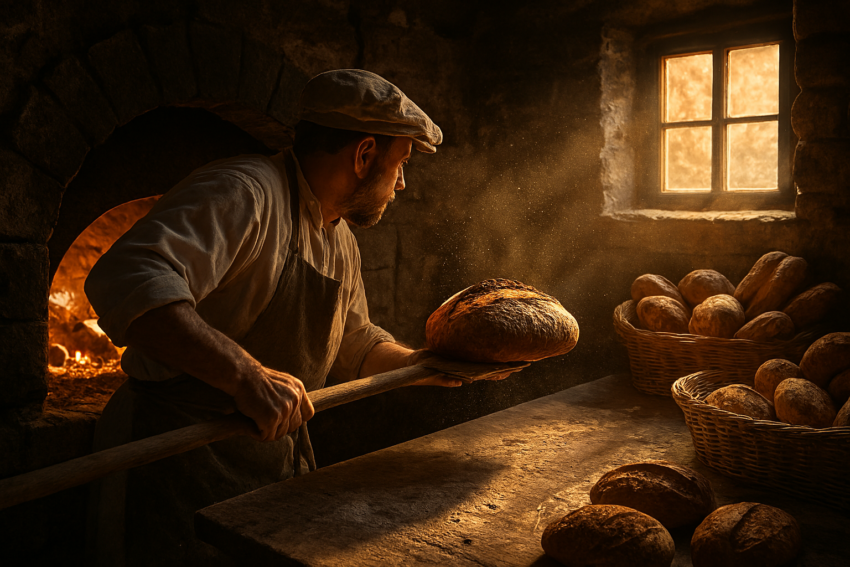
Taş fırınların mimarisi, yüzyıllar boyunca denenerek mükemmelleşmiş bir bilgelik taşır. Kalın taş duvarlar, ısıyı içine hapseder; ateş doğrudan ekmeğe değmeden, fırının tabanında biriken sıcaklıkla pişirme sağlanırdı. Bu yöntem, ekmeğin dışının çıtır çıtır kabuk bağlamasını, içinin ise pamuksu bir yumuşaklıkta kalmasını mümkün kılardı. Odun ateşinin verdiği o hafif isli aroma, ekmeğe başka hiçbir yöntemle elde edilemeyecek bir derinlik kazandırırdı. Fırıncının elindeki uzun ahşap kürek, fırın ağzında ritmik bir dans yapar; her itiş ve çekiş, ustalığın sessiz bir göstergesi olurdu.
Sabahın erken saatlerinde fırın önünde oluşan kuyruklar, yalnızca ekmek almak için değildi. Bu bekleyiş, mahallelinin günün ilk selamını verdiği, kısa ama sıcak sohbetlerin edildiği bir buluşmaydı. Kim yeni uyanmış, kim işe yetişme telaşında; tüm bu hâller, sıcak somunun buğusu içinde paylaşılırdı. Fırın önünde konuşulan küçük haberler, günün nabzını tutar; taş fırın, adeta mahallenin sözlü gazetesi olurdu.
Taş fırınların rolü sadece ekmekle sınırlı değildi. Özellikle hafta sonları ve pazar sabahları, evlerden tepsilerle taşınan yemekler fırının yolunu tutardı. Lahmacunlar, güveçler, börekler; hepsi fırının dengeli sıcaklığında pişer, evlere taşınırken kokusuyla bile iştah açardı. Bu ortak kullanım, taş fırını bireysel mutfakların ötesine taşıyarak mahallenin kolektif sofrasına dönüştürürdü.
Bugün market raflarında dizilen paketli ekmekler, açlığı giderebilir; ancak taş fırından yeni çıkmış, dumanı üzerinde tüten bir somunun yerini tutamaz. Çünkü o ekmek yalnızca un ve sudan ibaret değildir. İçinde sabahın serinliği, odun ateşinin emeği ve fırın önündeki sohbetlerin sıcaklığı vardır. Taş fırın ekmeği, damak hafızasında sadece bir tat değil, bir sabah duygusu bırakır.
🇬🇧 English | The First Messenger of Morning: Hot Loaves and Stone Ovens
While the neighborhood is still asleep, the first sound of the day often comes from the crackling wood fire lit behind a stone oven. Thin smoke rises from the chimney and blends into the cool morning air, while the irresistible scent of fresh bread spreads through empty streets. This aroma announces not only hunger, but also the calm beginning of a new day. The stone oven works before sunrise, like an invisible timekeeper of the neighborhood, measuring time in loaves of bread.
The architecture of stone ovens reflects centuries of accumulated wisdom. Thick stone walls trap and store heat, allowing bread to bake through radiant warmth rather than direct flames. This method creates a crust that is crisp and golden, while the inside remains soft and airy. The subtle smoky flavor imparted by the wood fire adds a depth that no modern technique can replicate. The baker’s long wooden peel moves rhythmically at the oven’s mouth, each motion a quiet demonstration of skill passed down through generations.
Early morning lines in front of the bakery are not formed solely to buy bread. They are moments of connection, brief yet warm exchanges that mark the start of the day. Some people are freshly awake, others rushing to work, but all share a common pause filled with steam rising from hot loaves. News travels quickly in these moments, turning the stone oven into the neighborhood’s informal bulletin board.
Stone ovens have always served purposes beyond baking bread. On weekends, especially Sunday mornings, residents arrive carrying trays of homemade dishes to be baked. Flatbreads, casseroles, and stews cook evenly in the oven’s steady heat, returning home infused with rich aromas. This shared use transforms the oven from a workplace into a communal kitchen, reinforcing bonds within the neighborhood.
Today, packaged bread lines supermarket shelves and fulfills basic needs, but it cannot replace a loaf fresh from a stone oven, still warm and fragrant. That bread is more than flour and water; it contains the coolness of dawn, the labor of wood fire, and the warmth of shared conversation. Stone oven bread leaves behind not just a taste, but a memory of morning itself.
🇧🇷 Português (Brasil) | O Primeiro Mensageiro da Manhã: Pães Quentes e Fornos de Pedra
Enquanto o bairro ainda dorme, o primeiro som do dia costuma ser o estalo da lenha acesa no fundo de um forno de pedra. A fumaça leve sobe pela chaminé e se mistura ao ar fresco da manhã, enquanto o aroma irresistível de pão recém-assado se espalha pelas ruas vazias. Esse cheiro anuncia não apenas a fome, mas também o início tranquilo de um novo dia. O forno de pedra trabalha antes do nascer do sol, como um guardião silencioso do tempo, marcando as horas em pães quentes.
A estrutura dos fornos de pedra carrega séculos de conhecimento acumulado. As paredes grossas de pedra retêm o calor, permitindo que o pão asse pelo calor do piso e do ambiente interno, sem contato direto com o fogo. Esse processo cria uma crosta crocante e dourada, enquanto o interior permanece macio e leve. O sabor levemente defumado da lenha acrescenta uma profundidade impossível de reproduzir em métodos industriais. A pá longa de madeira, manuseada com precisão pelo padeiro, se move em um ritmo quase cerimonial diante da boca do forno.
As filas formadas ao amanhecer em frente à padaria não existem apenas para comprar pão. São encontros rápidos, porém calorosos, em que vizinhos se cumprimentam e trocam as primeiras palavras do dia. Entre o vapor dos pães quentes, circulam pequenas notícias e gestos de proximidade. O forno de pedra torna-se, assim, um ponto de encontro e comunicação, um verdadeiro coração social do bairro.
Além do pão, os fornos de pedra sempre tiveram um papel coletivo. Aos fins de semana, especialmente aos domingos, moradores chegam com assadeiras cheias de pratos caseiros. Pães achatados, ensopados e assados cozinham lentamente no calor uniforme, voltando para casa carregados de aroma e sabor. Esse uso compartilhado transforma o forno em uma extensão das cozinhas domésticas, fortalecendo laços comunitários.
Hoje, os pães embalados ocupam as prateleiras dos mercados e atendem às necessidades básicas, mas não substituem um pão recém-saído do forno de pedra, ainda quente e perfumado. Esse pão vai além de ingredientes simples; ele carrega o frescor da manhã, o esforço do fogo a lenha e o calor das conversas compartilhadas. O pão do forno de pedra deixa na memória gustativa não apenas um sabor, mas a sensação completa de um amanhecer.