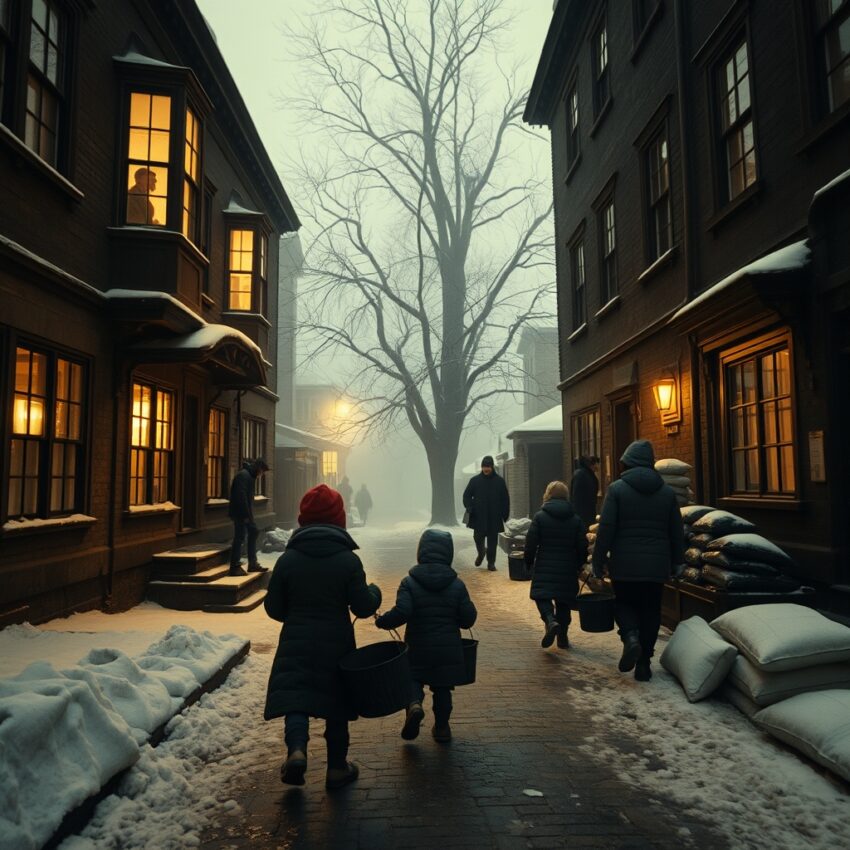
🇹🇷 Türkçe | kışın soba kömürü taşıyan çocuklar neden eski şehir hayatının kalbinde yer etti cam buğusunun ardından bir çınar gölgesine sığınarak
Kış sabahlarında cam buğusunun arkasından sokağa bakıldığında, eski şehir hayatının en tanıdık görüntülerinden biri kömür taşıyan çocuklardı. Elleri biraz üşümüş, montlarının kolları is lekesiyle koyulaşmış, kimi zaman küçük bir kovayı kimi zaman bez torbayı dikkatle tutarak apartman girişinden bodruma ya da avludan mutfağa yürürlerdi. Soba henüz tam tutuşmamışsa evin içinde ince bir soğuk dolaşır, büyüklerden biri “az daha kömür getir” diye seslenirdi. Bu görev çocuklara yalnız yük değil, evin sıcaklığına katılma duygusu da verirdi. Mahalle kültüründe kömür taşımak, küçük yaşta ortak hayatın sorumluluğunu öğrenmenin en görünür hallerinden biriydi.
Mahalle Kültürü açısından soba kömürü, kışın yalnız yakacak değil, bütün sokağın ritmini belirleyen bir unsurdu. Kömürcü arabasının sesi duyulduğunda kapılar açılır, bodrum kapakları kaldırılır, apartman önleri kısa süreli bir çalışma alanına dönüşürdü. Esnaf dükkânının önündeki karı kürekler, komşu yaşlı birine çuval taşımakta yardım eder, çocuklar da bu hareketliliğin küçük ama vazgeçilmez parçası olurdu. Eski şehirlerde ısınmak bireysel bir rahatlık değil, çoğu zaman toplu bir hazırlığın sonucuydu. Kömürün depoya indirilmesi, kovaların doldurulması, sobanın yakılması ve külün çıkarılması aynı kış terbiyesinin birbirine bağlı adımlarıydı.
Çocukların bu işin içinde yer alması bugün sert görünebilir; fakat o dönem için bu, mahallenin gündelik eğitimlerinden biriydi. Elbette yorucu, kirli ve bazen ağırdı; ama çocuk bu yolla evin görünmeyen düzenini fark ederdi. Sıcak odanın kendiliğinden oluşmadığını, çayın kaynaması için sobanın yanması gerektiğini, annenin kuruttuğu çamaşırın, babanın okuduğu gazetenin ve kardeşin ısınan ellerinin küçük emeklerle mümkün olduğunu anlardı. Kömür kovasını dökmeden taşımak, merdivende komşuya yol vermek, soba kapağı açıldığında geride durmak ve kül kovasının nereye bırakılacağını bilmek, mahallenin sessiz kuralları arasındaydı.
Bu sahneleri kalıcı kılan şey, kömürün etrafında kurulan ortak ses ve kokuydu. Islak sokakta tekerlek izleri, bodrumdan gelen tozlu hava, soba borusunun hafif çıtırtısı, kovaya düşen kömür parçalarının tok sesi ve odun çırasının ilk alevi kış hafızasının ayrılmaz parçalarıydı. Çocuklar bazen çınar gölgesinde soluklanır, ellerini ceplerine sokup nefeslerini buhar gibi izler, sonra yeniden eve doğru yürürlerdi. Mahallede herkes kimin evinde sobanın geç yandığını, kimin kömürünün azaldığını, kimin yardıma ihtiyaç duyduğunu sezebilirdi. Böylece ısınma, yalnız teknik bir ihtiyaç olmaktan çıkar, komşuluk ilişkilerinin sınandığı ve güçlendiği bir alana dönüşürdü.
Bugün soba kömürü taşıyan çocukları hatırlamak, geçmişi zahmetsiz göstermek anlamına gelmez. Aksine, eski şehir hayatının sıcaklığının ne kadar emekle kurulduğunu görmemizi sağlar. O çocuklar, kışın merkezinde yalnız kömür değil, evin devamlılığını ve mahallenin ortak dayanışmasını taşırlardı. Cam buğusunun ardındaki soba ışığı, çaydanlığın sesi ve elde kalan is lekesi, bir dönemin gündelik gerçekliğini anlatır. Eski şehir hayatının kalbinde yer etmelerinin nedeni de budur: Küçük bedenleriyle büyük bir ortak düzenin parçası olmuş, sıcaklığın yalnız tüketilen değil, birlikte kurulan bir şey olduğunu göstermişlerdir.
🇬🇧 English | Why Children Carrying Stove Coal in Winter Took a Place at the Heart of Old City Life by Taking Shelter in a Plane Tree’s Shade After Window Fog
When people looked at the street through fogged glass on winter mornings, one of the most familiar images of old city life was children carrying coal. Their hands were a little cold, the sleeves of their coats darkened by soot, and they walked carefully from an apartment entrance to the basement or from a courtyard to the kitchen, holding a small bucket or cloth bag. If the stove had not yet fully caught fire, a thin coldness moved through the house, and an elder would call out, “Bring a little more coal.” For children, this task was not only a burden; it also gave them the feeling of contributing to the warmth of the home. In neighborhood culture, carrying coal was one of the clearest ways of learning responsibility for shared life at an early age.
From the perspective of neighborhood culture, stove coal was not merely fuel in winter, but an element that shaped the rhythm of the entire street. When the coal seller’s cart was heard, doors opened, basement covers were lifted, and the fronts of apartment buildings briefly turned into working spaces. Shopkeepers shoveled snow before their stores, neighbors helped an elderly person carry a sack, and children became small but essential parts of this movement. In old cities, keeping warm was not only a private comfort; it was often the result of collective preparation. Lowering coal into storage, filling buckets, lighting the stove, and removing ash were connected steps in the same winter discipline.
The presence of children in this work may seem harsh today, yet at the time it was one of the daily lessons of the neighborhood. Of course it was tiring, dirty, and sometimes heavy, but through it a child noticed the hidden order of the home. The warm room did not appear by itself. The stove had to burn for tea to boil, for the laundry hung by the mother to dry, for the father to read his newspaper, and for the younger sibling’s hands to warm. Carrying the coal bucket without spilling it, giving way to a neighbor on the stairs, standing back when the stove door opened, and knowing where to place the ash bucket were all among the quiet rules of neighborhood life.
What made these scenes lasting was the shared sound and smell surrounding coal. Wheel tracks on wet streets, dusty air rising from the basement, the slight crackle of the stove pipe, the solid sound of coal pieces falling into the bucket, and the first flame of kindling were inseparable parts of winter memory. Children sometimes rested under the shade of a plane tree, pushed their hands into their pockets, watched their breath turn to vapor, and then walked back home. In the neighborhood, everyone could sense whose stove was late to catch, whose coal was running low, and who needed help. Heating thus ceased to be merely a technical need and became a field where neighborly relations were tested and strengthened.
Remembering children who carried stove coal today does not mean presenting the past as effortless. On the contrary, it allows us to see how much labor stood behind the warmth of old city life. Those children carried not only coal at the center of winter, but also the continuity of the home and the shared solidarity of the neighborhood. The stove light behind fogged glass, the sound of the teapot, and the soot left on hands describe the daily reality of an era. This is why they took a place at the heart of old city life: with their small bodies, they became part of a larger common order and showed that warmth was not only consumed, but built together.
🇧🇷 Português (Brasil) | Por que as Crianças que Carregavam Carvão para o Fogão no Inverno Ocuparam o Coração da Antiga Vida Urbana ao se Abrigar à Sombra de um Plátano Depois do Vidro Embaçado
Quando se olhava a rua por trás do vidro embaçado nas manhãs de inverno, uma das imagens mais conhecidas da antiga vida urbana era a das crianças carregando carvão. Com as mãos um pouco frias, as mangas do casaco escurecidas pela fuligem, elas caminhavam com cuidado da entrada do prédio ao porão ou do pátio à cozinha, segurando um balde pequeno ou um saco de pano. Se o fogão ainda não tinha pegado bem, um frio fino circulava pela casa, e algum adulto chamava: “traga mais um pouco de carvão”. Para as crianças, essa tarefa não era apenas peso; dava também a sensação de participar do calor da casa. Na cultura do bairro, carregar carvão era uma das formas mais visíveis de aprender cedo a responsabilidade pela vida comum.
Do ponto de vista da cultura de bairro, o carvão do fogão não era apenas combustível no inverno, mas um elemento que determinava o ritmo da rua inteira. Quando se ouvia a carroça do vendedor de carvão, as portas se abriam, as tampas dos porões eram levantadas e a frente dos prédios se transformava por um momento em área de trabalho. O comerciante retirava a neve diante da loja, um vizinho ajudava uma pessoa idosa a carregar o saco, e as crianças se tornavam partes pequenas, mas indispensáveis, desse movimento. Nas cidades antigas, aquecer-se não era só conforto individual; muitas vezes era resultado de uma preparação coletiva. Descer o carvão ao depósito, encher os baldes, acender o fogão e retirar as cinzas eram etapas ligadas da mesma disciplina de inverno.
A participação das crianças nesse trabalho pode parecer dura hoje, mas naquele tempo era uma das educações diárias do bairro. Claro que era cansativo, sujo e às vezes pesado, porém por esse caminho a criança percebia a ordem invisível da casa. O quarto quente não surgia sozinho. O fogão precisava estar aceso para o chá ferver, para a roupa estendida pela mãe secar, para o pai ler o jornal e para as mãos do irmão menor se aquecerem. Carregar o balde sem derrubar carvão, dar passagem ao vizinho na escada, ficar para trás quando a porta do fogão se abria e saber onde deixar o balde de cinzas eram regras silenciosas da vida de bairro.
O que tornava essas cenas permanentes era o som e o cheiro comum em torno do carvão. Marcas de rodas na rua molhada, o ar empoeirado vindo do porão, o estalo leve do cano do fogão, o som pesado dos pedaços de carvão caindo no balde e a primeira chama da lenha faziam parte da memória de inverno. As crianças às vezes descansavam à sombra de um plátano, colocavam as mãos nos bolsos, viam a respiração virar vapor e depois caminhavam de volta para casa. No bairro, todos percebiam em que casa o fogão demorava a acender, onde o carvão estava acabando e quem precisava de ajuda. Assim, aquecer a casa deixava de ser apenas uma necessidade técnica e se transformava num campo onde as relações de vizinhança eram testadas e fortalecidas.
Lembrar hoje das crianças que carregavam carvão para o fogão não significa mostrar o passado como se fosse fácil. Pelo contrário, permite ver quanto trabalho sustentava o calor da antiga vida urbana. Aquelas crianças carregavam, no centro do inverno, não apenas carvão, mas a continuidade da casa e a solidariedade comum do bairro. A luz do fogão atrás do vidro embaçado, o som da chaleira e a fuligem que ficava nas mãos contam a realidade cotidiana de uma época. É por isso que ocuparam o coração da antiga vida urbana: com corpos pequenos, fizeram parte de uma grande ordem comum e mostraram que o calor não era apenas consumido, mas construído em conjunto.