🇹🇷 Türkçe | sokak lambası altında uzayan oyunlar günleri: bir neslin güven duygusunu nasıl besledi
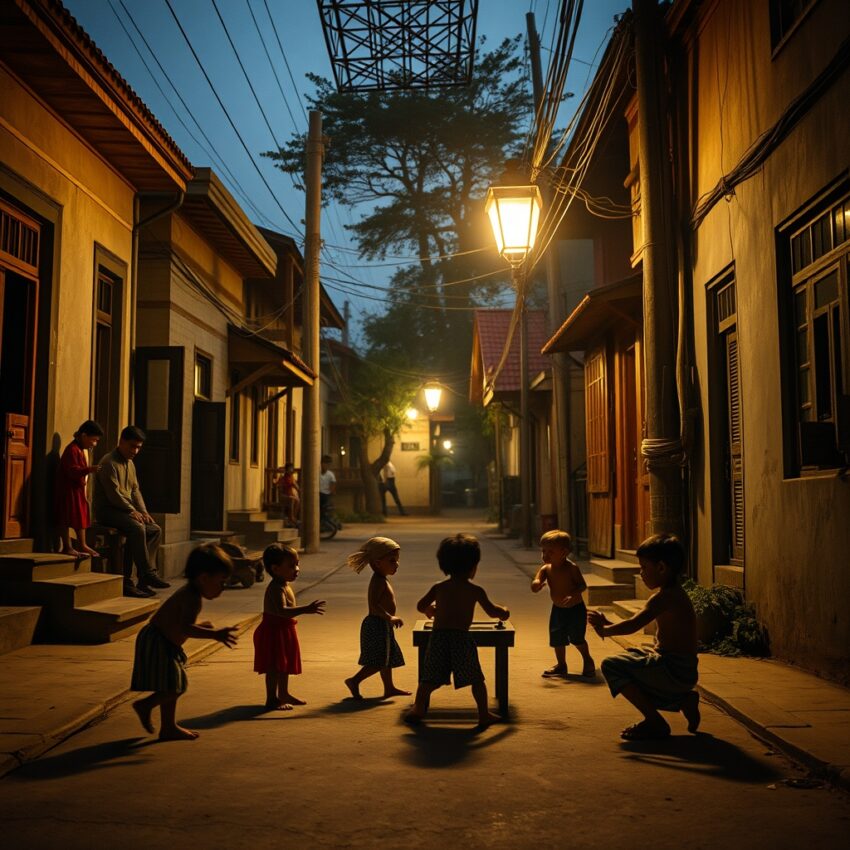
Mahallede akşamın geldiği, çoğu zaman gökyüzünün renginden önce sokak lambasının yanışından anlaşılırdı. Işık birden değil, hafif bir titremeyle devreye girer; çocukların oyunu da tam o sırada yeni bir tura kavuşurdu. Gün boyu seksek, misket, yakan top ya da saklambaç oynayan çocuklar, eve çağrılacaklarını bilseler bile son birkaç dakikayı uzatmanın yolunu bulurdu. Çünkü sokak lambasının altı, oyunun bitişi ile gecenin başlangıcı arasında kurulmuş güvenli bir eşikti. Orada hem mahalle görünür olurdu hem de büyüklerin gözü çocukların üstünde kalırdı. Bu yüzden uzayan oyun saatleri yalnız eğlence değil, bir neslin dünyaya karşı kurduğu temel güven duygusunun sessiz eğitimiydi.
Mahalle Kültürü açısından bakıldığında bu oyun saatleri, komşuluk düzeninin en canlı görünümlerinden birini sunar. Eski sokaklarda çocuk yalnız kendi ailesi tarafından değil, bütün çevre tarafından tanınırdı. Bakkal amca, kapı önünde oturan teyze, camdan dışarı bakan bir dede ya da yazlık iskemlesinde örgü ören bir komşu, mahallenin görünmeyen gözetim halkasını oluştururdu. Bu gözetim baskıcı olmaktan çok koruyucuydu. Çocukların ses çıkarması, koşması, düşüp kalkması hayatın doğal akışı sayılır; gerektiğinde bir uyarı, gerektiğinde bir bardak su ya da küçük bir teselli hemen bulunurdu. Sokak lambası da bu ortak korumanın sembolü gibiydi. Işığıyla yalnız yolu değil, birbirine emanet edilen çocukluğu da aydınlatırdı.
Bu güven duygusunu besleyen şey yalnız fiziksel yakınlık değildi; tekrar eden gündelik ritimdi. Herkes kimin hangi saatte sokağa çıktığını, hangi oyunun hangi köşede kurulduğunu, hava kararınca kimin pencereden sesleneceğini aşağı yukarı bilirdi. Tahmin edilebilirlik, çocuk için görünmez bir dayanak oluştururdu. Sınırlar sert duvarlarla değil alışkanlıklarla çizilmişti. “Lambalar yanınca toparlanın” cümlesi, saatten daha etkili bir toplumsal işaretti. Çocuk o sınır içinde özgürce koşar, bağırır, yarışır, saklanırdı. Çünkü dönüş yolunun, tanıdık yüzlerin ve eve götüren sesin yerini bilirdi. Eski mahallede güven, büyük sözlerle değil böyle küçük tekrarlarla inşa edilirdi.
Oyunların sokak lambası altında uzaması, çocukluğun yalnız bireysel değil kolektif yaşandığını da gösterir. Aynı yaş grubundan birkaç çocuk, farklı evlerden çıkan tabak kokuları, uzaktan gelen radyo sesi ve annelerin aralıklı çağrıları arasında ortak bir dünya kurardı. Kaybeden ertesi gün yeniden dener, küsen biraz sonra barışır, küçüğe çoğu zaman tolerans tanınırdı. Oyun alanı bir bakıma sosyal hayata giriş dersliği işlevi görürdü. Sıra beklemek, kurala uymak, itiraz etmeyi öğrenmek, arkadaşını kollamak ve gerektiğinde oyunu bölüp eve dönmek; bütün bunlar ileride kurulacak toplumsal ilişkinin erken alıştırmalarıydı. Güven duygusu da tam burada yalnız korunmaktan değil, bir topluluğun parçası olmaktan beslenirdi.
Bugün o günleri hatırladığımızda özlediğimiz şey sadece oyunun kendisi değil, oyunu mümkün kılan çevresel güvendir. Sokak lambasının altında uzayan dakikalar, bir çocuğun dünyayı keşfederken tamamen yalnız olmadığını hissettiren sosyal bir çerçeve sunuyordu. Mahalle, görünmez ama sağlam bir ağ gibi çocuğu taşır; özgürlük ile sınır arasındaki dengeyi gündelik hayatın içinden öğretirdi. Bu yüzden o günler bir neslin hafızasında parlak kalıyor. Çünkü güven, kapısı açık evler, adı bilinen komşular, sesine karşılık gelen çocuklar ve ışığı altında oyunun birkaç dakika daha uzatılabildiği sokaklar sayesinde somut bir tecrübeye dönüşüyordu.
🇬🇧 English | The Days When Games Stretched Under the Street Lamp: How They Nourished a Generation’s Sense of Safety
In the neighborhood, evening was often understood less from the color of the sky than from the lighting of the street lamp. The light did not arrive all at once, but with a slight flicker, and at precisely that moment the children’s game seemed to enter one more round. Even if they knew they would soon be called home, the children who had spent the day playing hopscotch, marbles, dodgeball, or hide-and-seek always found a way to stretch the last few minutes. The space beneath the street lamp was a safe threshold between the end of play and the beginning of night. There the neighborhood remained visible, and the eyes of adults still rested on the children. For that reason, those extended game hours were not only entertainment, but the quiet education through which a generation formed its fundamental sense of trust in the world.
From the perspective of neighborhood culture, those hours of play offer one of the liveliest images of communal life. In old streets, a child was known not only by family, but by the whole environment. The grocer at the corner, the woman seated at her doorstep, the grandfather watching from the window, or the neighbor knitting on a summer chair together formed an invisible circle of supervision. That watchfulness was protective rather than oppressive. Children’s noise, running, falling, and rising again were accepted as part of the natural order of life; when needed, a warning, a glass of water, or a small consolation could be found at once. The street lamp seemed to symbolize that shared protection. With its light, it illuminated not only the road, but childhood entrusted to many hands.
What nourished the feeling of safety was not only physical closeness, but the rhythm of repeated daily life. Everyone knew more or less who would come outside at what hour, in which corner a certain game would be set up, and whose voice would call from the window when darkness thickened. Predictability formed an invisible support for the child. Boundaries were drawn not by rigid walls, but by habit. The sentence “Come in when the lamps are lit” was a social sign more effective than a clock. Within that frame, a child could run, shout, race, and hide with ease because the way back, the familiar faces, and the voice leading home were all known. In the old neighborhood, security was built not through grand declarations, but through such small repetitions.
The fact that games stretched under the street lamp also shows that childhood was lived collectively, not only individually. Children of the same age group created a common world amid the smell of dishes leaving different houses, the radio heard from afar, and the occasional calls of mothers. The loser tried again the next day, a quarrel softened after a short while, and the younger child was usually granted some tolerance. In many ways, the play space served as an introductory classroom to social life. Waiting for one’s turn, following rules, learning how to object, looking after a friend, and stopping a game when it was time to go home were all early rehearsals for later human relations. The sense of safety was therefore nourished not only by being protected, but by belonging to a community.
When we remember those days now, what we miss is not only the game itself, but the surrounding trust that made play possible. The minutes prolonged beneath the street lamp offered a social frame within which a child could explore the world without feeling entirely alone. The neighborhood held the child like an invisible yet solid net, teaching through everyday life how freedom and limit could coexist. That is why those days remain bright in memory for a whole generation. Safety became a concrete experience through houses with open doors, neighbors known by name, children whose voices were answered, and streets where play could last a few minutes longer under the light.
🇧🇷 Português (Brasil) | Os Dias em que as Brincadeiras se Alongavam Sob o Poste de Luz: Como Alimentaram o Sentimento de Segurança de uma Geração
No bairro, a chegada da noite muitas vezes era percebida menos pela cor do céu do que pelo momento em que o poste se acendia. A luz não surgia de uma vez só, mas com um leve tremor, e exatamente então a brincadeira das crianças parecia ganhar mais uma rodada. Mesmo sabendo que logo seriam chamadas para casa, aquelas crianças que tinham passado o dia jogando amarelinha, bolinha de gude, queimado ou esconde-esconde sempre encontravam um jeito de prolongar os últimos minutos. O espaço debaixo do poste era um limiar seguro entre o fim da brincadeira e o começo da noite. Ali o bairro ainda permanecia visível, e os olhos dos adultos continuavam sobre os pequenos. Por isso, aquelas horas esticadas de jogo eram mais do que diversão; eram a educação silenciosa por meio da qual uma geração construía sua confiança básica no mundo.
Do ponto de vista da cultura de bairro, essas horas de brincadeira oferecem uma das imagens mais vivas da vida comunitária. Nas ruas antigas, a criança não era conhecida apenas pela própria família, mas por todo o entorno. O merceeiro da esquina, a vizinha sentada na porta, o avô olhando pela janela ou a senhora que fazia tricô na cadeira de verão compunham juntos um círculo invisível de vigilância. Essa observação era protetora, não opressiva. O barulho das crianças, suas corridas, tombos e recomeços eram vistos como parte natural da vida; quando necessário, surgia logo um aviso, um copo d’água ou um pequeno consolo. O poste de luz parecia simbolizar essa proteção compartilhada. Com sua claridade, iluminava não só a rua, mas a infância confiada a muitas mãos.
O que alimentava essa sensação de segurança não era apenas a proximidade física, mas o ritmo repetido do cotidiano. Todos sabiam mais ou menos quem saía em tal horário, em qual canto certa brincadeira se organizava e de qual janela viria a voz chamando quando escurecesse. Essa previsibilidade funcionava como apoio invisível para a criança. Os limites não eram traçados por muros rígidos, mas pelos hábitos. A frase “entrem quando os postes acenderem” era um sinal social mais forte do que o relógio. Dentro desse quadro, a criança corria, gritava, disputava e se escondia com liberdade porque conhecia o caminho de volta, os rostos familiares e a voz que a levaria para casa. No velho bairro, a segurança não era construída com grandes discursos, mas com essas pequenas repetições.
O fato de as brincadeiras se alongarem sob o poste mostra também que a infância era vivida de forma coletiva, e não apenas individual. Crianças da mesma faixa etária criavam um mundo comum entre o cheiro dos pratos saindo de casas diferentes, o rádio tocando ao longe e os chamados intermitentes das mães. Quem perdia tentava de novo no dia seguinte, quem emburrava logo fazia as pazes, e o menor quase sempre recebia alguma tolerância. O espaço de brincar funcionava, de certo modo, como uma sala de aula de entrada para a vida social. Esperar a vez, cumprir a regra, aprender a contestar, proteger o amigo e interromper a brincadeira na hora de voltar eram exercícios iniciais das relações humanas que viriam depois. Assim, o sentimento de segurança era alimentado não só por ser protegido, mas por pertencer a uma comunidade.
Quando hoje lembramos desses dias, o que faz falta não é apenas a brincadeira em si, mas a confiança do ambiente que a tornava possível. Os minutos prolongados sob o poste de luz ofereciam um quadro social em que a criança podia explorar o mundo sem se sentir totalmente sozinha. O bairro a sustentava como uma rede invisível, porém firme, ensinando pela vida cotidiana como liberdade e limite podiam existir juntas. É por isso que esses dias seguem luminosos na memória de toda uma geração. A segurança virava experiência concreta por meio de casas de portas abertas, vizinhos conhecidos pelo nome, crianças cujas vozes encontravam resposta e ruas onde a brincadeira podia durar alguns minutos a mais debaixo da luz.