🇹🇷 Türkçe | Sokak lambalarının altında büyüyen anılarda mektup beklemenin sabrı öğrettiği günler: unutulan ayrıntılarıyla bize ne söylüyor yaz akşamları
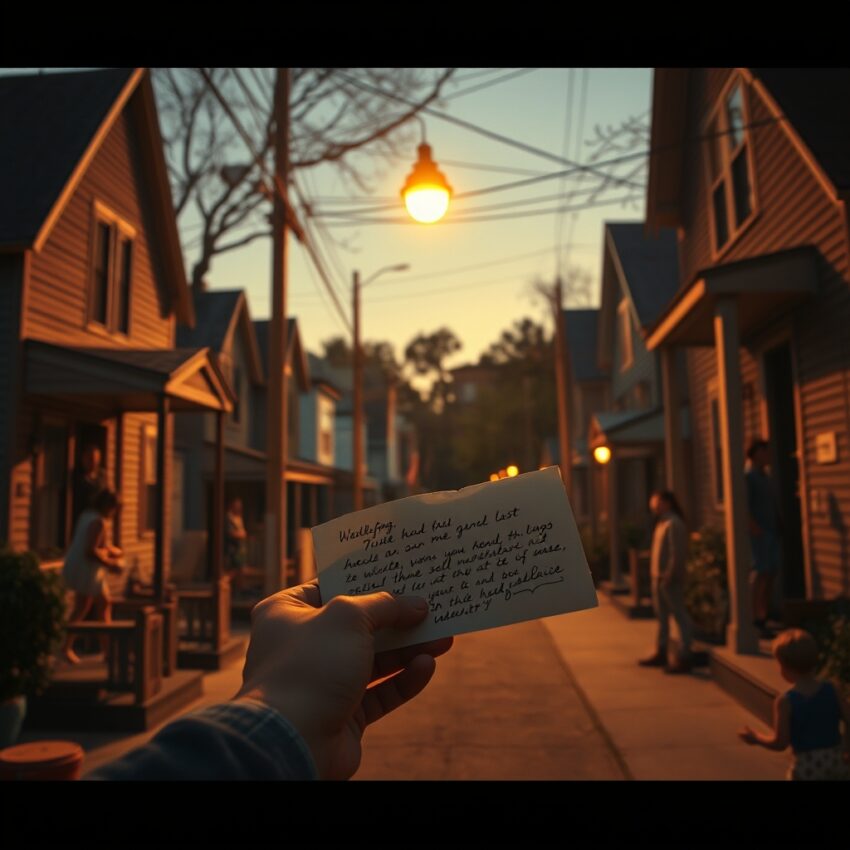
Yaz akşamlarının vakti eskiden saatle değil, ışığın sokak boyunca nasıl çekildiğiyle anlaşılırdı. Güneş evlerin kiremitlerinden yavaşça inerken mahalleye önce ince bir serinlik, ardından da bekleyiş duygusu yayılırdı. Sokağın başındaki direğe asılı lambanın henüz yanmadığı o kısa aralıkta, çocuklar son oyunun peşinde koşar, anneler pencereden isim seslenir, büyükler kapı önlerine tabure çıkarırdı. Tam bu saatte postacının gündüz uğrayıp uğramadığını konuşan birileri mutlaka olurdu. Çünkü mektup beklemek, o dönemin gündelik hayatında yalnız haber beklemek değil; duyguyu beklemeyi öğrenmekti. Bir yaz akşamının uzunluğu biraz da zarfın kapıdan içeri girip girmeyeceğiyle ölçülürdü.
Zamanın İzinde bakıldığında mektup, eski şehir yaşamının en sade ama en derin taşıyıcılarından biriydi. Gazeteler büyük olayları yazsa da evlerin asıl nabzı çoğu zaman zarf kâğıdının hışırtısında atardı. Askerden haber, gurbette çalışan bir babanın selamı, nişanlı bir çiftin ölçülü cümleleri ya da memlekette kalan akrabanın yaz sıcaklarından söz eden satırları; hepsi aynı bekleyiş kültürünün parçasıydı. Sokak lambaları bu kültürde tesadüfi bir dekor değildi. Günün işleri bittikten, akşam yemeğinin buharı dağıldıktan ve mahallenin sesi biraz alçaldıktan sonra, insanın içine dönmesine imkân veren bir ışık kurarlardı. Mektuplar çoğu zaman o ışığın altında yeniden okunur, kat izleri parmakla düzeltilir, bazı cümleler sessizce tekrar edilirdi.
Bu sabır bugünün hızlı haberleşme alışkanlıklarından bütünüyle farklıydı. O dönemde cevap yazmak kadar cevap beklemek de bir terbiyeydi. İnsanlar her duygunun hemen açıklığa kavuşmadığını, bazı haberlerin günlerce yolda kaldığını, bazen bir cümlenin haftalar boyunca zihinde yankılandığını bilirdi. Bu yüzden mektup bekleyen biri, yalnız postayı değil kendi iç sesini de dinlerdi. Defter yapraklarından koparılan taslaklar, dolmakalemle karalanan ilk cümleler, zarfa sığmayan küçük tereddütler; hepsi gündelik hayatın görünmeyen ritüelleriydi. Yaz akşamları bu ritüelleri büyütürdü, çünkü hava geç karardıkça insanın düşüncesi de uzar, sokağın ağırlaşan sessizliği iç dünyaya daha çok yer açardı.
Mahalle kültürü de bu bekleyişe eşlik ederdi. Sokak başında bakkalın önünde oturan biri, “Bugün posta vardı” dediğinde bilgi yalnız bir eve değil bütün çevreye dağılırdı. Komşular birbirinin sevincini de tedirginliğini de sezebilirdi. Bir zarfın gelişini gizlemek kolay değildi, ama tam da bu yüzden mektup toplumsal bir hafıza nesnesine dönüşürdü. Çocuklar pulun resmine bakar, büyükler kimin el yazısı olduğunu zarf açılmadan tanırdı. Bazı mektuplar dantel örtülü masanın üzerinde günlerce kalır, bazıları çekmecelere lavanta kokusuyla birlikte kaldırılırdı. Sokak lambasının altında uzayan geceler, bu küçük nesneleri sadece haber taşıyıcısı değil, aile tarihinin sessiz şahidi hâline getirirdi.
Bugün yaz akşamlarına dönüp baktığımızda unutulan ayrıntıların hâlâ konuşmasının sebebi burada gizlidir. Mektup beklemek insana boşluğu değil, anlamı taşımanın yolunu öğretirdi. Her gecikme bir eksiklik değil, duygunun derinleşmesi için açılan bir mesafe sayılırdı. Sokak lambasının altında büyüyen anılar, bu yüzden yalnız romantik bir geçmiş özlemi değildir; sabrı, dikkatli okumayı, kelimeye kıymet vermeyi hatırlatan kültürel bir mirastır. Yaz akşamları bize hâlâ bunu söyler: İnsan bazen en çok, hemen gelmeyen haberi beklerken kendini tanır. Işığın cılız, sokağın sessiz ve gecenin uzun olduğu o saatlerde öğrenilen sabır, geçmişte kalmış bir alışkanlık değil; hız çağında yeniden düşünülmesi gereken bir insanlık bilgisidir.
🇬🇧 English | The Days When Waiting for a Letter Taught Patience in Memories Growing Under Street Lamps: What Do Summer Evenings Tell Us Through Their Forgotten Details?
In earlier times, the hour of a summer evening was understood not by a clock, but by the way the light slowly withdrew along the street. As the sun descended from the tiled roofs, a thin coolness first spread through the neighborhood, followed by a feeling of expectation. In that brief interval before the lamp at the corner was lit, children chased one last game, mothers called names from the windows, and elders carried stools out to their doorsteps. At exactly that hour, someone would almost always ask whether the postman had passed during the day. Waiting for a letter was not only waiting for news; it was learning how to wait for emotion itself. The length of a summer evening was measured in part by whether an envelope would cross the threshold.
From the perspective of time, the letter was one of the simplest yet deepest vessels of old urban life. Newspapers recorded major events, yet the true pulse of households often beat in the rustle of envelope paper. News from military service, greetings from a father working far away, the careful sentences of an engaged couple, or the lines of a relative describing heat in the hometown all belonged to the same culture of waiting. Street lamps were not an accidental backdrop within that culture. After the day’s chores ended, after the steam of dinner had dispersed and the volume of the neighborhood fell, they established a light that allowed people to turn inward. Letters were often reread under that glow, their fold lines smoothed by hand, certain sentences repeated in silence.
That patience was wholly different from today’s habits of immediate communication. In those years, waiting for a reply was as much a discipline as writing one. People knew that not every feeling reached clarity at once, that some news remained on the road for days, and that sometimes a single sentence echoed in the mind for weeks. For that reason, the person waiting for a letter listened not only for the mail, but for an inner voice as well. Draft pages torn from notebooks, first lines scratched out with a fountain pen, hesitations too large to fit inside an envelope: all of these were among the invisible rituals of daily life. Summer evenings enlarged those rituals, because as darkness came late, thought also stretched, and the thickening quiet of the street made greater room for interior reflection.
Neighborhood life accompanied that waiting. When someone seated in front of the corner grocer said, “There was post today,” the information spread not only to one house, but across the surrounding social circle. Neighbors could sense each other’s joy and unease. It was difficult to hide the arrival of an envelope, and for that very reason the letter became an object of shared memory. Children studied the image on the stamp, while elders recognized the sender’s handwriting before the envelope was even opened. Some letters remained on lace-covered tables for days; others were placed in drawers together with the scent of lavender. Nights lengthened beneath the street lamp turned these small objects into more than messengers of news. They became quiet witnesses to family history.
When we look back on summer evenings now, the reason those forgotten details still speak becomes clear. Waiting for a letter taught people not emptiness, but how to carry meaning. Every delay was understood less as a lack than as a distance in which emotion could deepen. The memories that grew under street lamps are therefore not merely a romantic longing for the past; they are a cultural inheritance reminding us of patience, careful reading, and respect for words. Summer evenings still tell us this: a person often comes to know the self most deeply while waiting for news that does not arrive at once. The patience learned in those hours of faint light, quiet streets, and long night is not an obsolete habit left behind. It is a human knowledge worth reconsidering in an age of speed.
🇧🇷 Português (Brasil) | Os Dias em que Esperar por uma Carta Ensinava Paciência nas Memórias que Cresciam Sob os Postes de Luz: O que as Noites de Verão Nos Dizem com Seus Detalhes Esquecidos?
Antigamente, a hora de uma noite de verão não era entendida pelo relógio, mas pelo modo como a luz ia se retirando devagar ao longo da rua. Quando o sol descia dos telhados, primeiro vinha um frescor leve e depois se espalhava pelo bairro um sentimento de espera. Naquele curto intervalo antes de o poste da esquina se acender, as crianças corriam atrás da última brincadeira, as mães chamavam nomes pelas janelas e os mais velhos levavam banquetas para a porta. Era justamente nesse momento que alguém sempre perguntava se o carteiro tinha passado durante o dia. Esperar uma carta não significava apenas esperar notícia; significava aprender a esperar a própria emoção. A duração de uma noite de verão era medida também pela possibilidade de um envelope atravessar a soleira.
Na trilha do tempo, a carta era um dos recipientes mais simples e mais profundos da antiga vida urbana. Os jornais registravam os grandes acontecimentos, mas o verdadeiro pulso das casas muitas vezes batia no ruído do papel do envelope. Notícias do serviço militar, saudações de um pai que trabalhava longe, as frases comedidas de um casal noivo ou as linhas de um parente descrevendo o calor da terra natal; tudo isso fazia parte da mesma cultura da espera. Os postes de luz não eram um detalhe acidental nesse cenário. Depois que as tarefas do dia terminavam, depois que o vapor do jantar se desfazia e a voz do bairro baixava, eles criavam uma luz que permitia às pessoas se voltarem para dentro. Muitas cartas eram relidas sob esse brilho, com as marcas da dobra alisadas pelos dedos e algumas frases repetidas em silêncio.
Essa paciência era muito diferente dos hábitos atuais de comunicação imediata. Naquele tempo, esperar uma resposta era uma disciplina tão importante quanto escrevê-la. As pessoas sabiam que nem todo sentimento se esclarecia de imediato, que certas notícias ficavam dias no caminho e que, às vezes, uma única frase podia ecoar na cabeça por semanas. Por isso, quem esperava uma carta escutava não apenas a chegada do correio, mas também a própria voz interior. Rascunhos arrancados do caderno, primeiras linhas escritas com caneta-tinteiro, hesitações grandes demais para caber no envelope: tudo isso pertencia aos rituais invisíveis da vida cotidiana. As noites de verão ampliavam esses rituais, porque, quando escurecia tarde, o pensamento também se alongava e o silêncio mais denso da rua abria mais espaço para a intimidade.
A cultura do bairro acompanhava essa espera. Quando alguém sentado diante da mercearia dizia “teve correio hoje”, a informação não ficava restrita a uma casa, mas se espalhava pelo entorno inteiro. Os vizinhos percebiam tanto a alegria quanto a inquietação uns dos outros. Era difícil esconder a chegada de um envelope, e justamente por isso a carta se transformava num objeto de memória coletiva. As crianças olhavam a figura do selo, e os mais velhos reconheciam a caligrafia antes mesmo de abrir o envelope. Algumas cartas ficavam dias sobre mesas cobertas com renda; outras eram guardadas em gavetas junto ao cheiro de lavanda. As noites prolongadas sob o poste de luz transformavam esses pequenos objetos em algo mais do que mensageiros de notícias. Eles se tornavam testemunhas silenciosas da história das famílias.
Quando hoje voltamos a pensar nas noites de verão, fica claro por que esses detalhes esquecidos ainda falam. Esperar uma carta ensinava a carregar sentido, não vazio. Cada demora era vista menos como falta e mais como uma distância em que o sentimento podia amadurecer. As memórias que cresceram sob os postes, por isso, não são apenas uma saudade romântica do passado; são um legado cultural que lembra a paciência, a leitura cuidadosa e o valor das palavras. As noites de verão ainda nos dizem isso: muitas vezes a pessoa se conhece melhor quando espera por uma notícia que não chega imediatamente. A paciência aprendida nessas horas de luz fraca, rua silenciosa e noite longa não é um costume morto. É um saber humano que merece ser pensado de novo em tempos tão velozes.