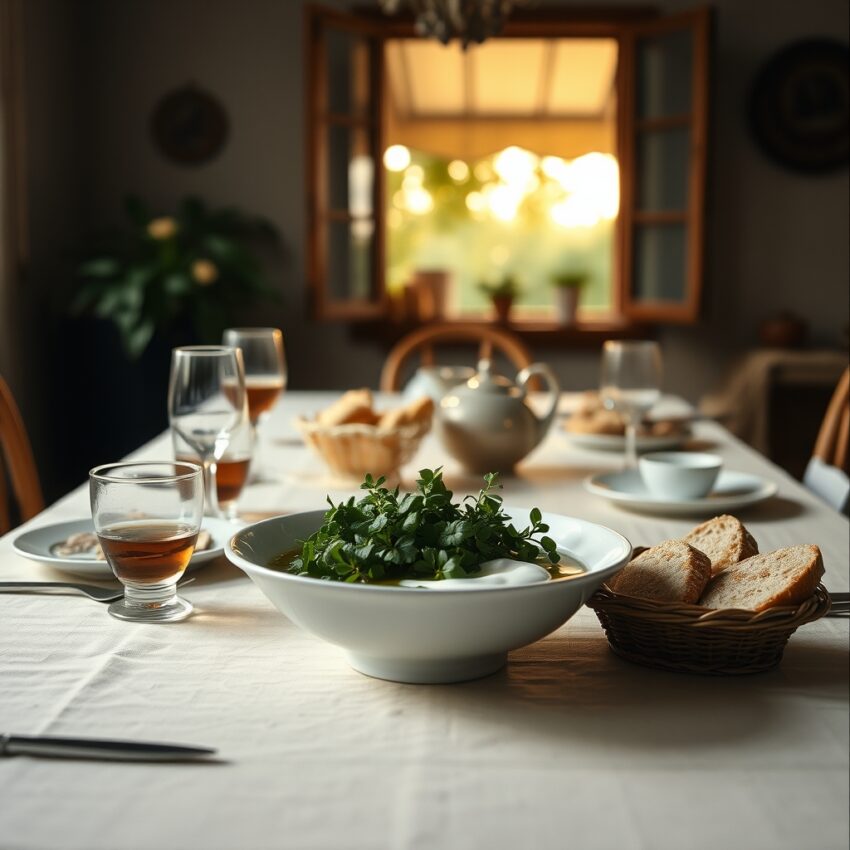
🇹🇷 Türkçe | kalabalık aile sofralarının unutulmayan tadı ile hatırlanan yoğurtlu semizotu: neden bugün bile ilk lokmada çocukluğu hatırlatıyor
Bazı yemekler gösterişli olmadıkları hâlde hafızada en derin yere yerleşir. Yoğurtlu semizotu da böyledir. Yaz akşamlarında kalabalık aile sofrası kurulurken sofranın en sessiz ama en tanıdık tabaklarından biri çoğu zaman oydu. Üzerine gezdirilmiş zeytinyağı, sarımsağın yoğurtla karışan hafif keskinliği, semizotunun serin ve diri dokusu; daha ilk bakışta ev içi bir huzur taşırdı. Büyük tencerelerde pişen ana yemeklerin ya da fırından yeni çıkan böreklerin yanında onun mütevazı varlığı başka bir güven duygusu verirdi. Çünkü yoğurtlu semizotu çoğu evde yemeğin tamamlayıcısı değil, sofranın dengesini kuran sakin lezzetti. İlk lokmada çocukluğu hatırlatmasının bir nedeni de budur: insan kendini yalnız bir tada değil, tanıdık bir ev düzenine geri dönmüş gibi hisseder.
Damak Hafızası açısından yoğurtlu semizotu, mevsimle ev arasındaki ilişkinin en berrak örneklerinden biridir. Semizotu pazardan ya da bahçeden geldiğinde önce ayıklanır, uzun uzun yıkanır, sapları çıtır kalacak ölçüde hazırlanırdı. Yoğurt ayrı bir kapta ezilmiş sarımsakla karıştırılır, bazen üstüne kuru nane, bazen pul biber, bazen de yalnız parlak bir zeytinyağı gezdirilirdi. Bu hazırlık süreci mutfakta büyük bir gösteri yaratmaz; ama evin içinde derli toplu bir yaz düzeni kurardı. Çocuklar için bu tabak çoğu zaman “annemin eli değmiş” hissinin doğrudan karşılığıydı. Çünkü malzemeleri basit olsa da, kıvamı ve oranı her evde biraz farklı olur; o fark da aileye özgü tadın en belirgin işareti sayılırdı.
Kalabalık aile sofralarının unutulmayan tadı oluşu, yoğurtlu semizotunun paylaşım biçimiyle de ilgilidir. Bu yemek genellikle tek kişilik bir tabak gibi değil, ortaya konan ve herkesin kaşığını uzattığı bir eşlikçi olarak yaşardı. Bir yandan ana yemek servis edilirken öte yandan “semizotundan da al” cümlesi sofrada mutlaka dolaşırdı. Çocuk ilk başta yüzünü buruştursa bile, yoğurdun serinliği ve semizotunun hafif ekşiliği zamanla sevilir; sonra aynı tat büyüdüğünde birdenbire en güçlü anı kapılarından birine dönüşürdü. Çünkü bu lezzet sadece ağızda değil, sofradaki seslerde de saklanır: tabak çınlamasında, sürahinin doluşunda, ekmek uzatan elde, pencereyi hafif aralayan yaz rüzgârında. İlk lokma, bütün bu eşlik eden ayrıntıları da birlikte geri getirir.
Bu yemeğin çocukluğu hatırlatması biraz da mevsimsel sadeliğinden gelir. Yazın ağır olmayan, serinleten, sofrayı ferahlatan yemekleri arasında yoğurtlu semizotu evin gündelik bilgeliğini temsil ederdi. İsraf etmeyen, gösteriş aramayan ama lezzetten de taviz vermeyen bir mutfak anlayışı vardı içinde. Anneanneler semizotunun faydasından söz eder, anneler sarımsağı fazla kaçırmamaya dikkat eder, çocuklar ise ekmeğin ucuyla tabakta kalan yoğurdu toplamayı severdi. Böylece yemek, beslenme ile sevgi arasında kurulan sessiz bir köprü hâline gelirdi. O tabak, aynı anda hem sağlık, hem yaz, hem de aile içi şefkat duygusu taşırdı.
Bugün yoğurtlu semizotu neden ilk lokmada çocukluğu hatırlatıyor diye sorulduğunda, cevap sadece tadında değildir. Asıl mesele, bu yemeğin kalabalık sofralarda taşıdığı düzen ve yakınlık hissidir. Herkesin birbirini beklediği, tabakların ortaya geldiği, serin bir yaz akşamının eve dağıldığı o anlar; semizotunun yoğurtla birleşen hafif tadına sinmiş durumda. İnsan bugün aynı lezzeti yediğinde damağı kadar hafızası da çalışır. Bir sandalye gıcırtısı, bir cam bardak sesi, bir büyüğün “biraz daha al” deyişi eşlik eder buna. Yoğurtlu semizotu bu yüzden unutulmazdır: yalnız yemek olarak değil, çocukluğun kalabalık ve güvenli sofra duygusunu bugüne taşıyan sade bir yaz mirası olarak.
🇬🇧 English | Purslane with Yogurt, Remembered with the Unforgotten Taste of Crowded Family Tables: Why Does It Still Recall Childhood at the First Bite Even Today?
Some foods settle in memory most deeply precisely because they are not showy. Purslane with yogurt is one of them. On summer evenings, when a crowded family table was being laid, it was often one of the quietest yet most familiar dishes on the table. The olive oil drizzled over it, the mild sharpness of garlic blended into yogurt, and the cool, lively texture of the purslane carried an immediate domestic peace. Beside large pots of the main meal or pastries fresh from the oven, its modest presence gave another kind of reassurance. In many homes, purslane with yogurt was not merely a side dish, but the calm flavor that balanced the whole table. That is one reason why it recalls childhood at the very first bite: one feels returned not only to a taste, but to a familiar order of home.
From the perspective of taste memory, purslane with yogurt is among the clearest examples of the bond between season and household. When purslane arrived from the market or the garden, it was first picked over and washed at length, then prepared so that its stems would remain slightly crisp. Yogurt was mixed in a separate bowl with crushed garlic; sometimes dried mint was added, sometimes red pepper flakes, and sometimes only a bright thread of olive oil. This process did not create a dramatic performance in the kitchen, yet it established a neat summer order inside the home. For children, this dish often stood as the most direct form of the feeling that “my mother’s hand has touched this.” Its ingredients were simple, yet the consistency and proportions differed slightly from one house to another, and that difference became the clearest mark of a family-specific taste.
Its becoming the unforgettable taste of crowded family tables is also tied to the manner in which it was shared. This dish was rarely lived as an individual plate; it belonged to the center of the table, reached toward by everyone with a spoon. While the main dishes were being served, the sentence “have some of the purslane too” almost always moved around the table. A child might first make a face, yet over time the coolness of the yogurt and the faint sour freshness of the purslane became beloved. Later, in adulthood, the same taste could suddenly open one of memory’s strongest doors. That is because this flavor is preserved not only in the mouth, but in the sounds around the table as well: in the clink of plates, the filling of the water jug, the hand passing bread, and the summer breeze slightly pushing open the window. The first bite brings all those accompanying details back with it.
Part of the reason this dish recalls childhood lies in its seasonal simplicity. Among the lighter, cooling foods of summer, purslane with yogurt represented the quiet wisdom of the household. It belonged to a kitchen understanding that avoided waste, did not seek display, yet never gave up flavor. Grandmothers spoke of the virtues of purslane, mothers took care not to overdo the garlic, and children liked gathering the remaining yogurt with a piece of bread. In that way the dish became a quiet bridge between nourishment and affection. That plate held health, summer, and domestic tenderness all at once.
When asked today why purslane with yogurt still recalls childhood at the first bite, the answer lies in more than flavor alone. What matters is the feeling of order and closeness the dish carried at crowded tables. Those moments when everyone waited for one another, dishes were set at the center, and a cool summer evening spread through the house have settled into the mild taste of purslane joined with yogurt. When a person eats it today, memory works alongside the palate. The creak of a chair, the sound of a glass, the voice of an elder saying, “take a little more,” all seem to accompany it. That is why purslane with yogurt remains unforgettable: not only as food, but as a simple inheritance of summer carrying the crowded and secure feeling of childhood tables into the present.
🇧🇷 Português (Brasil) | A Beldroega com Iogurte, Lembrada pelo Sabor Inesquecível das Mesas de Família Cheias: Por que Ainda Hoje Faz Lembrar a Infância na Primeira Mordida?
Alguns pratos se instalam mais fundo na memória justamente por não serem vistosos. A beldroega com iogurte é um deles. Nas noites de verão, quando a mesa grande da família era posta, ela costumava ser um dos pratos mais silenciosos e ao mesmo tempo mais familiares. O fio de azeite por cima, a leve intensidade do alho misturado ao iogurte e a textura fresca e firme da beldroega já traziam à primeira vista uma paz doméstica. Ao lado das panelas do prato principal ou das tortas recém-saídas do forno, sua presença modesta transmitia outro tipo de segurança. Em muitas casas, a beldroega com iogurte não era apenas um acompanhamento, mas o sabor tranquilo que dava equilíbrio à mesa inteira. É uma das razões pelas quais ela ainda lembra a infância na primeira mordida: a pessoa sente que retorna não só a um sabor, mas a uma ordem familiar da casa.
Do ponto de vista da memória gustativa, a beldroega com iogurte é um dos exemplos mais claros da relação entre a estação e o lar. Quando a beldroega vinha da feira ou do jardim, era primeiro escolhida e lavada longamente, depois preparada de modo que os talos permanecessem levemente crocantes. O iogurte era mexido à parte com alho amassado; às vezes recebia hortelã seca, às vezes pimenta em flocos, e às vezes apenas um brilho de azeite. Esse preparo não fazia um grande espetáculo na cozinha, mas criava dentro de casa uma ordem serena de verão. Para as crianças, esse prato muitas vezes era a forma mais direta do sentimento de “foi a mão da minha mãe que fez”. Os ingredientes eram simples, mas o ponto e a proporção variavam um pouco de uma casa para outra, e essa diferença era o sinal mais evidente do sabor próprio de cada família.
O fato de ter se tornado o gosto inesquecível das mesas cheias também está ligado à forma como era compartilhado. Esse prato quase nunca existia como porção individual; ele era colocado no centro, para que todos alcançassem com a colher. Enquanto os pratos principais eram servidos, a frase “pega um pouco da beldroega também” certamente circulava pela mesa. A criança talvez torcesse o rosto no começo, mas com o tempo a frescura do iogurte e a leve acidez da beldroega se tornavam queridas. Mais tarde, já adulta, a mesma combinação abria de repente uma das portas mais fortes da lembrança. Isso porque esse sabor fica guardado não apenas na boca, mas também nos sons ao redor da mesa: no tilintar dos pratos, na jarra sendo enchida, na mão que passa o pão e no vento de verão empurrando de leve a janela. A primeira mordida traz tudo isso de volta.
O fato de esse prato lembrar a infância também vem de sua simplicidade sazonal. Entre as comidas mais leves e refrescantes do verão, a beldroega com iogurte representava a sabedoria silenciosa da casa. Havia nela uma ideia de cozinha que não desperdiçava, não buscava ostentação, mas também não abria mão do sabor. As avós falavam dos benefícios da beldroega, as mães tomavam cuidado para não exagerar no alho, e as crianças gostavam de passar o pão no iogurte que sobrava no prato. Assim, a comida se transformava numa ponte discreta entre alimento e afeto. Aquele prato carregava ao mesmo tempo saúde, verão e ternura doméstica.
Quando se pergunta hoje por que a beldroega com iogurte ainda faz lembrar a infância na primeira mordida, a resposta não está apenas no sabor. O principal está no sentimento de ordem e proximidade que ela carregava nas mesas grandes. Os momentos em que todos esperavam uns pelos outros, os pratos eram colocados no centro e o frescor da noite de verão se espalhava pela casa ficaram impregnados no gosto leve da beldroega misturada ao iogurte. Ao comer isso hoje, não é só o paladar que trabalha, mas também a memória. O ranger de uma cadeira, o som de um copo, a voz de alguém mais velho dizendo “pega mais um pouco” parecem acompanhar cada garfada. É por isso que a beldroega com iogurte permanece inesquecível: não apenas como comida, mas como uma simples herança de verão que leva para o presente a sensação segura e cheia das mesas da infância.