🇹🇷 Türkçe | okul dönüşü tabağa ilk uzanan kaşık ile hatırlanan ev yapımı vişne şerbeti: aile tarifleri içinde neden özel bir yere sahip
Bir zamanlar okul dönüşü evin kapısı açıldığında insanı karşılayan şey yalnız yemek kokusu değildi; mutfağın serin bir köşesinde bekleyen vişne şerbetinin koyu rengi de günün yorgunluğunu hafifleten bir davet gibiydi. Çocuk çantasını bırakır bırakmaz kapağı aralanan tencereye ya da sürahiye bakar, tabağa ilk uzanan kaşık bazen yemekten önce o tatlı ekşili serinliği arardı. Ev yapımı vişne şerbeti, basit bir içecek olmaktan çok daha fazlasıydı. İçinde yazdan saklanan meyvenin sabrı, annenin ya da anneannenin ölçüyü göz kararı tutan eli ve evin her ferdine göre değişen kıvam anlayışı vardı. Bu yüzden onun tadı, sadece damakta değil, aile içinde paylaşılan bakım duygusunda da yer ederdi.
Damak Hafızası açısından bakıldığında vişne şerbetinin özel yeri, mevsimlik bolluğu ev içi düzenle birleştirmesinden gelir. Vişne zamanı geldiğinde meyveler seçilir, sapları ayıklanır, büyük kaplarda kaynatılır, köpüğü alınır ve kimi evde şeker oranı biraz azaltılır, kimi evde limonla dengelenirdi. Tarif yazılı bir reçete olmaktan çok, evin kadınlarının el hafızasında yaşayan bir bilgiydi. Eski mutfaklarda saklama, serin tutma ve ikram etme biçimleri de en az tarif kadar önemliydi. Şerbetin hangi cam sürahide sunulacağı, yanında neyin ikram edileceği, sofra kurulmadan önce mi sonra mı verileceği bile evden eve değişen küçük üslupları gösterirdi. Aile tarifleri içinde özel bir yer edinmesi, tam da bu değişmez çekirdekle kişisel dokunuşların birleşmesindendir.
Okul dönüşü bu içeceğin ayrı bir anlam taşıması ise çocukluğun gündelik ritmiyle ilgilidir. Sokaktan eve giren çocuk için mutfakta onu bekleyen serin bir şerbet, yalnız susuzluğu gidermiyordu; evin koruyucu düzenine yeniden kabul edilmenin işareti gibi hissediliyordu. Tabağa ilk uzanan kaşık ifadesi boşuna güçlü değildir. Çünkü birçok evde yemek henüz tam başlamadan, tencereden ya da sürahiden tadına bakmak küçük bir ayrıcalık sayılırdı. Vişnenin dilde bıraktığı hafif mayhoşluk, ardından gelen şekerli yumuşama ve bardağın kenarında kalan kırmızı iz, çocukluk hafızasında kolay kolay silinmeyen ayrıntılardı. Şerbetin lezzeti kadar, onu kimin hazırladığı ve nasıl sunduğu da tadın bir parçasıydı.
Bu tarifin aile içinde özel bir yerde durmasının bir başka nedeni de, kuşaklar arası aktarımı görünür kılmasıdır. Her evde vişne şerbeti aynı adımlarla yapılsa da sonuç asla bütünüyle aynı olmazdı. Bir evde daha yoğun, bir evde daha sulu, bir evde karanfille hafif kokulandırılmış, bir evde sadece meyvenin kendi asidine bırakılmış olurdu. Böylece tarif, ailenin damak zevkini ve ev içi karakterini yansıtan sessiz bir imzaya dönüşürdü. Çocuk büyüyüp başka bir yerde aynı içeceği içtiğinde çoğu zaman ilk karşılaştırdığı şey şeker oranı değil, kendi evindeki o tanıdık öğleden sonranın geri gelip gelmediğiydi. Çünkü bazı tatlar ölçüyle değil, hayatla hatırlanır.
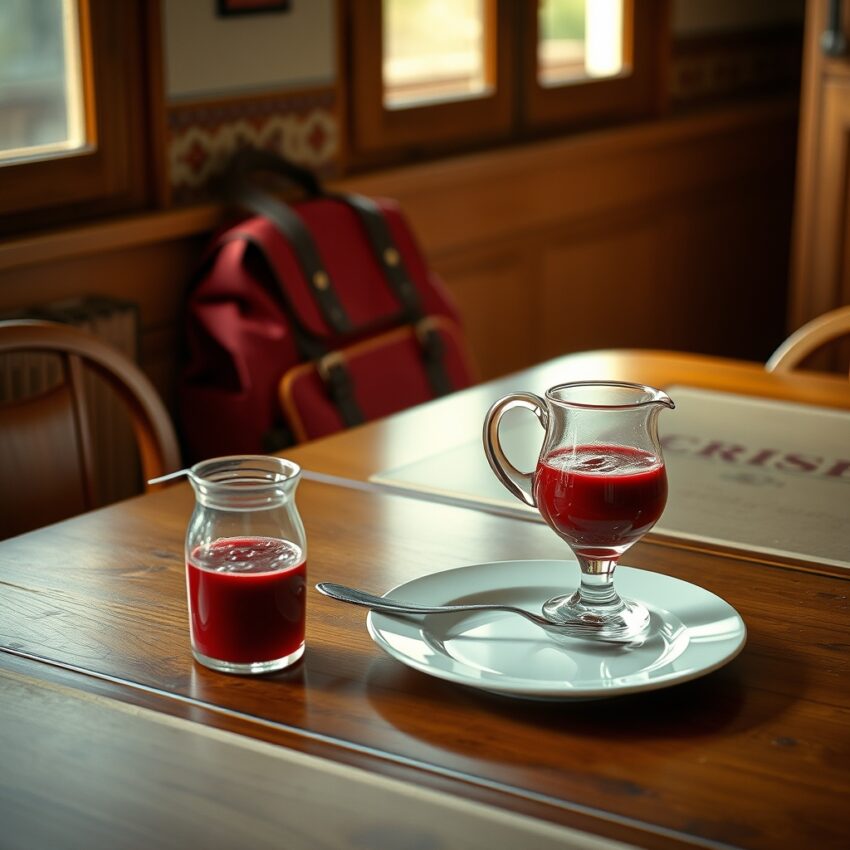
Bugün ev yapımı vişne şerbetini düşündüğümüzde, aklımıza sadece meyve, şeker ve su gelmiyor. Okul dönüşü sıcaklığı, mutfak sessizliği, bir tabağın kenarında bekleyen kaşık, cam bardakta duran kırmızı serinlik ve ailece kurulan bakım dili de birlikte geliyor. Aile tarifleri içinde özel bir yere sahip olmasının nedeni tam burada saklı. Vişne şerbeti, mevsimi muhafaza ettiği kadar bir evin duygusal iklimini de koruyordu. İlk kaşıkla hatırlanan şey yalnız lezzet değil; eve dönmenin huzuruydu.
🇬🇧 English | Homemade Sour Cherry Sherbet Remembered With the First Spoon Reaching the Plate After School: Why Does It Hold a Special Place Within Family Recipes?
There was a time when opening the door after school meant being met not only by the smell of food, but also by the deep color of sour cherry sherbet waiting in a cool corner of the kitchen like an invitation that softened the tiredness of the day. No sooner had the child set down the schoolbag than the lid of the pot or pitcher was lifted, and sometimes the first spoon reaching the plate looked for that sweet-and-tart coolness even before the meal began. Homemade sour cherry sherbet was far more than a simple drink. It carried the patience of fruit saved from summer, the hand of a mother or grandmother who measured by instinct, and a sense of consistency that shifted slightly according to each person in the house. For that reason, its taste settled not only on the tongue, but within the feeling of care shared by the family.
Seen through the lens of taste memory, the sherbet’s special place comes from the way it joined seasonal abundance to domestic order. When sour cherry season arrived, the fruit was sorted, stems removed, and large pots set to boil. Foam was skimmed away, sugar reduced in some homes, balanced with lemon in others. The recipe lived less as something written than as knowledge held in the hands of the women of the house. In older kitchens, the ways of storing, cooling, and serving the sherbet mattered almost as much as the recipe itself. The glass pitcher chosen, what was served beside it, and whether it appeared before or after the table was fully set all revealed small household styles that differed from one home to another. It found its special place among family recipes precisely because a stable core met personal touch.
Its particular meaning after school belonged to the daily rhythm of childhood. For a child stepping in from the street, the cool sherbet waiting in the kitchen did more than quench thirst. It felt like a sign of being welcomed back into the protective order of the home. The image of the first spoon reaching the plate carries weight for a reason. In many homes, tasting the sherbet from the pot or pitcher before the meal properly began counted as a small privilege. The gentle tartness left by the sour cherries, the soft sweetness that followed, and the red trace remaining at the rim of the glass became details that childhood memory rarely erased. As much as the flavor itself, the identity of the person who prepared it and the manner in which it was offered became part of the taste.
Another reason this recipe occupied such a special place within the family was that it made generational transmission visible. Although sour cherry sherbet might be made through similar steps in every house, the result was never entirely the same. In one home it was denser, in another lighter, in one lightly scented with clove, in another left to the fruit’s own acidity. In this way the recipe became a quiet signature of a household’s palate and character. When the child grew up and tasted the same drink somewhere else, the first comparison was often not the amount of sugar, but whether that familiar afternoon from home had returned. Some flavors are remembered not by measurement, but by life.
When we think of homemade sour cherry sherbet today, we do not imagine only fruit, sugar, and water. We also remember the warmth of returning from school, the stillness of the kitchen, a spoon waiting beside a plate, the cool red held in a glass, and the language of care established inside a family. The reason it holds such a special place among family recipes lies exactly there. Sour cherry sherbet preserved not only a season, but the emotional climate of a household. What the first spoon remembers is not only flavor, but the peace of coming home.
🇧🇷 Português (Brasil) | O Sherbet Caseiro de Cereja Ácida Lembrado com a Primeira Colher que Alcançava o Prato ao Voltar da Escola: Por Que Ocupa um Lugar Especial Entre as Receitas de Família?
Houve um tempo em que abrir a porta ao voltar da escola significava encontrar não só o cheiro da comida, mas também a cor intensa do sherbet de cereja ácida esperando num canto fresco da cozinha como um convite capaz de aliviar o cansaço do dia. Mal a criança deixava a mochila, a tampa da panela ou da jarra era erguida, e às vezes a primeira colher que alcançava o prato procurava aquela frescura agridoce antes mesmo de a refeição começar. O sherbet caseiro de cereja ácida era muito mais do que uma bebida simples. Ele carregava a paciência da fruta guardada do verão, a mão da mãe ou da avó que media tudo por hábito, e uma noção de consistência que mudava discretamente conforme cada pessoa da casa. Por isso seu sabor ficava não apenas na língua, mas também no sentimento de cuidado compartilhado pela família.
Vista pela memória do paladar, a posição especial dessa bebida vem da forma como unia a abundância da estação à ordem doméstica. Quando chegava o tempo das cerejas ácidas, as frutas eram separadas, os cabinhos retirados e grandes panelas iam ao fogo. A espuma era retirada, em algumas casas o açúcar diminuía, em outras o equilíbrio vinha com limão. A receita vivia menos num papel escrito do que nas mãos das mulheres da casa. Nas cozinhas antigas, a maneira de guardar, manter fresco e servir o sherbet era quase tão importante quanto a receita em si. A jarra de vidro escolhida, o acompanhamento servido junto e o momento em que a bebida aparecia, antes ou depois de a mesa estar posta, revelavam estilos domésticos diferentes de uma casa para outra. Ela ocupava um lugar especial entre as receitas de família justamente porque juntava um núcleo estável a um toque pessoal.
Seu significado particular depois da escola pertencia ao ritmo cotidiano da infância. Para a criança que entrava vinda da rua, o sherbet fresco esperando na cozinha fazia mais do que matar a sede. Parecia um sinal de reentrada na ordem protetora da casa. A imagem da primeira colher alcançando o prato é forte por um motivo. Em muitas casas, provar um pouco do sherbet da panela ou da jarra antes de a refeição começar de verdade era um pequeno privilégio. A leve acidez deixada pela fruta, a doçura suave que vinha depois e a marca vermelha na borda do copo se tornavam detalhes que a memória infantil quase nunca apagava. Tanto quanto o sabor, a pessoa que preparava a bebida e a forma como a oferecia também passavam a fazer parte do gosto.
Outra razão para essa receita ocupar um lugar tão especial na família é que ela tornava visível a transmissão entre gerações. Ainda que o sherbet de cereja ácida fosse feito por etapas parecidas em todas as casas, o resultado jamais era inteiramente igual. Numa casa era mais denso, noutra mais leve, numa ganhava um toque de cravo, noutra ficava entregue apenas à acidez natural da fruta. Assim, a receita se transformava numa assinatura silenciosa do paladar e do caráter daquela família. Quando a criança crescia e provava a mesma bebida em outro lugar, a primeira comparação quase nunca era apenas a quantidade de açúcar, mas se aquela tarde conhecida de casa tinha ou não voltado. Alguns sabores não são lembrados por medida, mas pela vida.
Quando hoje pensamos no sherbet caseiro de cereja ácida, não pensamos apenas em fruta, açúcar e água. Também lembramos do calor da volta da escola, do silêncio da cozinha, de uma colher esperando ao lado do prato, do vermelho fresco no copo e da linguagem de cuidado estabelecida dentro da família. O motivo de ele ocupar um lugar tão especial entre as receitas de família está exatamente aí. O sherbet preservava não só a estação, mas também o clima afetivo da casa. O que a primeira colher recorda não é apenas o sabor, mas a paz de voltar para casa.