🇹🇷 Türkçe | dantel örtü ve koleksiyonerlerin iz sürdüğü geçmişi: bir dönemin zevk anlayışını nasıl yansıttı
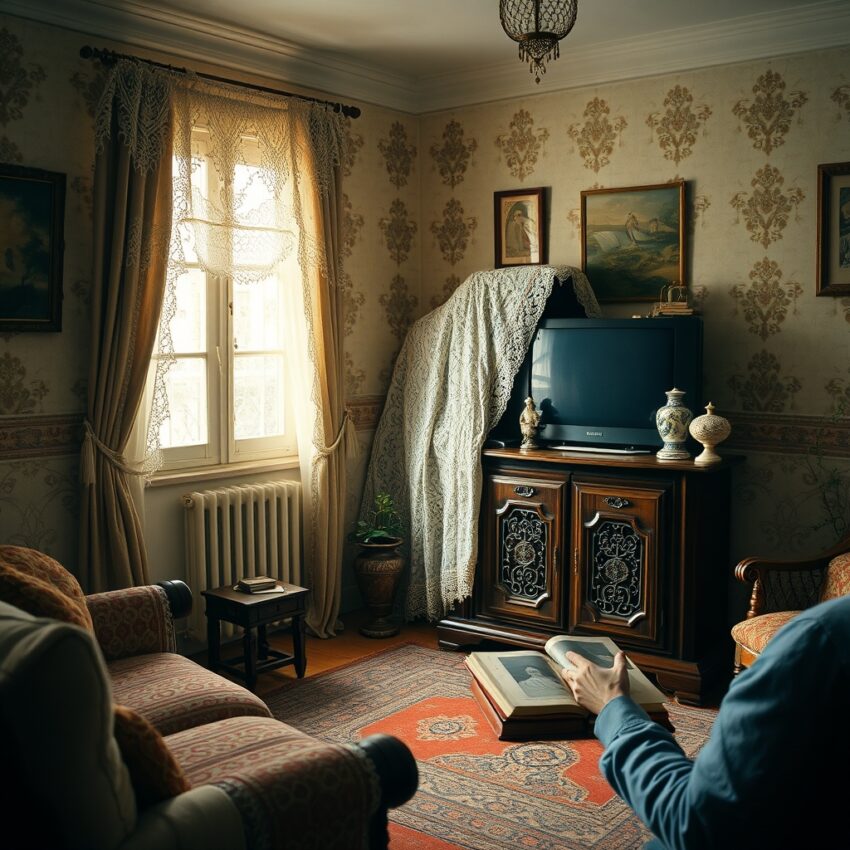
Bir zamanlar evlerin en görünür sessizliklerinden biri dantel örtülerdi. Televizyonun üstünde, vitrin rafında, konsolun kenarında ya da misafir odasının sehpasında duran bu ince işçilikli parçalar, yalnız eşyayı koruyan bir kumaş değil; ev sahibinin zevkini, sabrını ve dünyaya bakışını gösteren küçük işaretlerdi. Üzerlerine konan porselen biblo, kristal şekerlik ya da aile albümü, dantelin çizdiği çerçeveyle başka bir anlam kazanırdı. Bugün koleksiyonerlerin eski evlerden, sandıklardan ve bit pazarlarından izini sürdüğü bu örtüler, bir dönemin estetik anlayışını sessiz ama çok güçlü biçimde taşımaya devam ediyor. Çünkü dantel, gündelik eşyanın üstüne serilmiş bir beğeni diliydi.
Obje Hikayeleri açısından bakıldığında dantel örtünün değeri, yalnız el emeğinde değil, ev içi yerleşimi biçimlendiren görünmez kurallarında da saklıdır. Özellikle 1950’lerden 1980’lere uzanan dönemde ev düzeni, temizliğin ve özenin görünür olması üzerinden okunurdu. Dantel, bu özenin en zarif araçlarından biriydi. Mobilyanın yüzeyini yumuşatır, eşyanın resmiyetini hafifletir, evin “bakımlı” olduğunu söze ihtiyaç duymadan anlatırdı. Genç kız çeyizlerinde yer alması, misafir odalarında özenle sergilenmesi ve özel günlerde yeniden düzeltilmesi boşuna değildi. Her motif, ev içi emeğin estetikle buluştuğu bir yere işaret ediyordu.
Koleksiyonerlerin bugün bu örtülerin peşine düşmesi de bu yüzden anlamlıdır. Eski bir dantelin kenar oyasında, ipliğin cinsinde, sararmış dokusunda ve elde atılmış son ilmeğinde yalnız yaş değil, zevk tarihi saklıdır. Kimi örtü daha sade bir şehirli beğeniyi, kimi daha gösterişli bir salon hayalini, kimi de taşradan şehre taşınmış alışkanlıkların izini taşır. Bir vitrinde duran dantel, çevresindeki objelerle birlikte dönemin hangi parlaklığı sevdiğini, hangi düzeni “şık” saydığını ve hangi emeği görünür kılmak istediğini anlatır. Bu yüzden koleksiyoncular aslında bir kumaş değil, bir dönemin estetik terbiyesini toplarlar.
Dantel örtünün geçmişi iz sürmeye açık kılan yanı, onun gündelik hayata çok yakın ama aynı zamanda törensel oluşudur. Her gün göz önündedir, ama hep temiz tutulur; dokunulur, ama gelişi güzel kullanılmaz. Çocuklara “çekme, bozulur” denmesi, annelerin ya da anneannelerin örtüyü iki parmakla düzeltişi, bu objeye yüklenen saygıyı gösterir. Eşyanın üstüne serilen bu zarif katman, evde düzen fikrinin de bir uzantısıdır. Dantelin altında duran radyo, televizyon ya da sehpa modern hayatın nesnesiyse; üstündeki örtü ona ev içi bir yumuşaklık, hatta mahremiyet verir. Belki de bir dönemin zevk anlayışı tam burada görünür olur: yeni olanı, elde yapılan bir incelikle ehlileştirme arzusunda.
Bugün minimalist evler ve hızlı dekorasyon modaları arasında dantel örtü kimilerine eski moda görünebilir. Ama koleksiyonerlerin iz sürdüğü geçmiş, onun basit bir nostalji nesnesi olmadığını gösteriyor. Dantel örtü, bir dönemin güzellik ölçüsünü, temiz ev idealini, kadın emeğinin görünür olma biçimini ve gündelik nesnelere yüklenen itibarı anlatan güçlü bir belge gibi duruyor. Bu yüzden ona bakmak, yalnız bir kumaşa değil; zevk, düzen ve aile hayatı arasındaki ince ilişkiye bakmaktır. Dantel örtülerin sessiz ısrarı, geçmişin estetik dilini bugün hâlâ okunabilir kılıyor.
🇬🇧 English | The Lace Cover and the Past Traced by Collectors: How Did It Reflect the Taste of an Era
There was a time when one of the most visible silences in the home was the lace cover. Resting on top of the television, along the shelf of a display cabinet, on the sideboard, or on the coffee table in the guest room, these finely worked pieces were more than cloth protecting an object; they were small signs showing the homeowner’s taste, patience, and way of looking at the world. The porcelain figurine, crystal sugar bowl, or family album placed upon them acquired another meaning within the frame drawn by lace. Today, as collectors track these covers through old homes, trunks, and flea markets, they continue to carry the aesthetic understanding of an era in a quiet yet powerful form. Lace was a language of taste laid over everyday objects.
Seen through the lens of object stories, the value of the lace cover lies not only in hand labor, but also in the invisible rules that shaped domestic arrangement. From the 1950s to the 1980s especially, the order of the home was read through visible signs of cleanliness and care. Lace was one of the most elegant instruments of that care. It softened the surface of furniture, lightened the formality of objects, and announced that the house was well kept without needing words. There was a reason it occupied a place in dowries, was carefully displayed in guest rooms, and was straightened again on special days. Every motif pointed to a place where domestic labor met aesthetics.
That is also why it is meaningful that collectors pursue these covers today. In the edge pattern of an old lace piece, in the kind of thread, in its yellowed texture, and in the final loop once made by hand, there survives not only age, but a history of taste. One cover may carry a restrained urban elegance, another the dream of a more ornate salon, another the habits brought from provincial life into the city. Lace displayed in a cabinet tells, together with the objects around it, what kind of shine the era loved, what arrangement it considered refined, and what form of labor it wished to keep visible. In that sense, collectors gather not simply cloth, but the aesthetic discipline of a whole period.
What makes the lace cover so open to tracking the past is that it stood close to daily life and yet was also ceremonial. It remained in sight every day, yet was kept carefully clean; it could be touched, but not used carelessly. Children being told, “don’t pull it, it will lose its shape,” and mothers or grandmothers straightening it with two fingers reveal the respect attached to the object. This graceful layer spread over things was also an extension of the idea of order within the home. If the radio, television, or table beneath it belonged to modern life, the lace laid over it granted those objects a domestic softness, even a sense of intimacy. Perhaps the taste of an era became visible exactly there: in the desire to tame the new through a delicacy made by hand.
Today, among minimalist interiors and quick decoration fashions, the lace cover may appear old-fashioned to some. Yet the past traced by collectors shows that it is not merely an object of nostalgia. The lace cover stands like a powerful document telling of an era’s measure of beauty, its ideal of a well-kept home, the visible presence of women’s labor, and the value bestowed upon everyday things. To look at it, then, is to look not only at fabric, but at the subtle relationship between taste, order, and family life. The quiet persistence of lace still makes the aesthetic language of the past readable today.
🇧🇷 Português (Brasil) | A Toalha de Renda e o Passado Seguido pelos Colecionadores: Como Ela Refletiu o Gosto de uma Época
Houve um tempo em que um dos silêncios mais visíveis da casa era a toalha de renda. Sobre a televisão, na prateleira da cristaleira, no aparador ou na mesinha da sala de visitas, essas peças de trabalho delicado eram mais do que um pano protegendo um móvel; eram pequenos sinais do gosto, da paciência e da maneira de ver o mundo de quem morava ali. O bibelô de porcelana, a açucareira de cristal ou o álbum de família colocados sobre a renda ganhavam outro sentido dentro da moldura desenhada por ela. Hoje, quando colecionadores seguem o rastro dessas peças em casas antigas, baús e feiras de antiguidades, elas continuam carregando de forma silenciosa e poderosa a visão estética de uma época. A renda era uma linguagem de gosto espalhada sobre os objetos do cotidiano.
Pela perspectiva das histórias dos objetos, o valor da toalha de renda não está apenas no trabalho manual, mas também nas regras invisíveis que organizavam o espaço doméstico. Especialmente entre as décadas de 1950 e 1980, a ordem da casa era lida por sinais visíveis de limpeza e cuidado. A renda era um dos instrumentos mais elegantes desse cuidado. Ela suavizava a superfície do móvel, tornava o objeto menos rígido e dizia sem palavras que aquela casa era bem cuidada. Não era à toa que ela ocupava lugar no enxoval, aparecia com destaque nas salas de visitas e era ajeitada novamente em dias especiais. Cada motivo apontava para um ponto em que o trabalho doméstico encontrava a estética.
É por isso também que o interesse dos colecionadores por essas peças faz tanto sentido hoje. Na borda de uma renda antiga, no tipo de fio, na textura amarelada e no último ponto dado à mão, permanece não só a idade, mas uma história do gosto. Uma peça pode carregar uma elegância urbana mais sóbria; outra, o sonho de uma sala mais ornamentada; outra ainda, hábitos vindos do interior para a cidade. A renda exposta numa cristaleira conta, junto com os objetos ao redor, que tipo de brilho aquela época apreciava, que arranjo considerava refinado e que forma de trabalho desejava tornar visível. Nesse sentido, os colecionadores não recolhem apenas tecido, mas a disciplina estética de todo um período.
O que torna a toalha de renda tão propícia a seguir o passado é o fato de ela ser próxima da vida cotidiana e, ao mesmo tempo, cerimonial. Ela ficava à vista todos os dias, mas era mantida limpa com rigor; podia ser tocada, mas nunca de qualquer jeito. As crianças ouvindo “não puxa, vai estragar” e as mães ou avós ajeitando a peça com dois dedos mostram o respeito associado a esse objeto. Essa camada delicada espalhada sobre as coisas também prolongava a ideia de ordem dentro de casa. Se o rádio, a televisão ou a mesa embaixo dela pertenciam à vida moderna, a renda lhes dava maciez doméstica e até certa intimidade. Talvez o gosto de uma época se revele justamente aí: no desejo de domesticar o novo por meio de uma delicadeza feita à mão.
Hoje, entre interiores minimalistas e modas rápidas de decoração, a toalha de renda pode parecer antiga para algumas pessoas. Mas o passado seguido pelos colecionadores mostra que ela não é apenas um objeto nostálgico. A renda permanece como um documento forte do padrão de beleza de uma época, do ideal de casa bem cuidada, da forma visível do trabalho feminino e do valor atribuído aos objetos cotidianos. Olhar para ela, portanto, é olhar não só para um tecido, mas para a relação sutil entre gosto, ordem e vida familiar. A persistência silenciosa da renda mantém a linguagem estética do passado legível ainda hoje.