🇹🇷 Türkçe | ajurlu masa örtüsü ve gündelik kullanımın içinde görünmeden bıraktığı iz: neden bugün yeniden ilgi görüyor
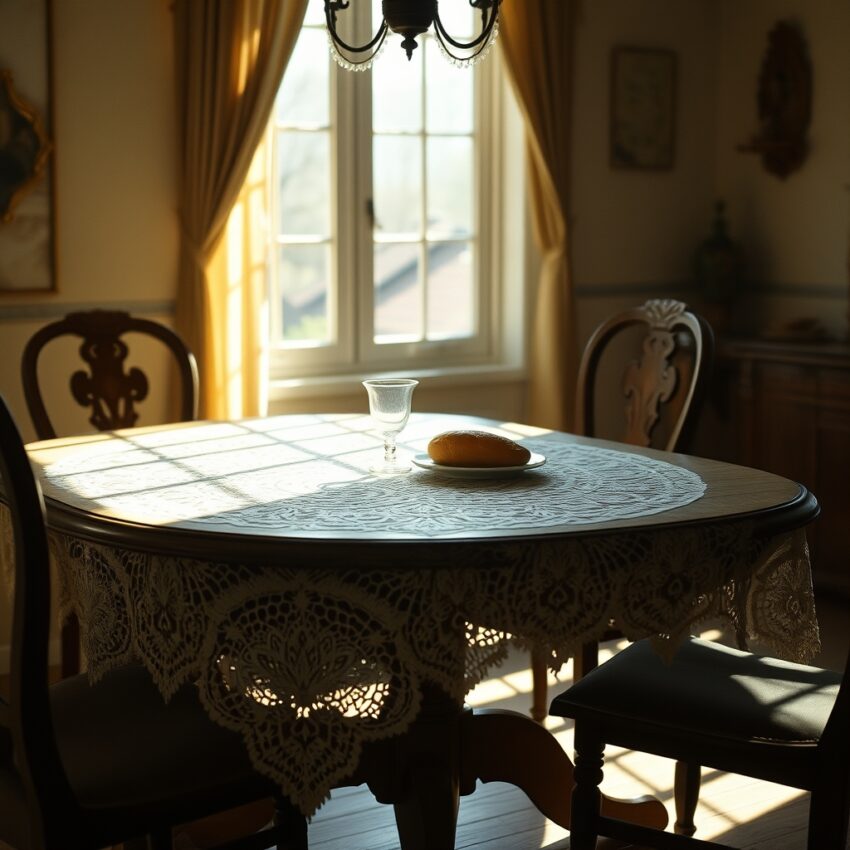
Bir zamanlar evlerin en sessiz ama en belirleyici eşyalarından biri masa örtüsüydü. Ajurlu olanları ise özellikle dikkati bağırmadan çeken, masanın üzerine yalnız bir kumaş değil bir ev terbiyesi seren parçalardı. Güneş pencere tülünden içeri süzüldüğünde, masa örtüsünün delikli desenleri tahta yüzeye küçük gölgeler düşürür; çay bardağının halkası, reçel tabağının parlaklığı ve ekmek kırıntıları bu desenlerin içine gündelik hayatın izlerini bırakırdı. Üstelik bu nesne çoğu zaman özel gün vitrininin değil, tam tersine sıradan kullanımın içindeydi. Görünmeden bıraktığı iz tam da buradan gelir: her gün orada durur, aile sofrasına, misafir konuşmasına, ödev saatine ve ikindi çayına eşlik ederdi.
Obje Hikayeleri açısından ajurlu masa örtüsü, tasarımın gündelik kullanımla nasıl kaynaştığını gösteren güçlü bir örnektir. El işi, dantel, örgü ve kumaş terbiyesi uzun yıllar boyunca yalnız estetik tercih değil, ev içi emeğin görünür biçimleriydi. Bir örtünün kenar kıvrımı, iplik inceliği, orta bölümdeki motif dengesi ya da altındaki masayı ne kadar gösterdiği bile sahip olduğu dönemin beğeni anlayışını yansıtırdı. Koleksiyon objesi olarak bugün yeniden ilgi görmesinin nedeni yalnız nostalji değildir; aynı zamanda seri üretimin pürüzsüzlüğüne karşı el emeğinin hafif kusurlu ama karakterli yüzünü göstermesidir. İnsanlar ajurlu bir örtüye baktığında yalnız bir masa düzeni değil, zaman harcanmış bir yaşam düzeni de görür.
Bu örtülerin görünmeden bıraktığı iz, ev içindeki ritmi düzenleme biçiminde saklıydı. Sabah kahvaltısından sonra örtü silkelenir, bazen köşesi düzeltilir, bazen altına bir başka ince bez serilirdi. Çocuklar kalem izini masaya geçirmesin diye altlık koyar, anneler misafir gelmeden önce örtünün düzgün durup durmadığını eliyle kontrol ederdi. Dikiş bilen bir teyze sökülen bir ilmeği hemen fark eder, tamir eder, objenin ömrünü sessizce uzatırdı. Böylece ajurlu masa örtüsü hem estetik hem kullanım nesnesi olarak yaşardı. Üzerinde lekeler oluşur, yıkanır, kurutulur, yeniden serilirdi. Gündelikliğin içinde bu kadar çok işlev görmesi, onu göz önünde ama çoğu zaman söz dışı bırakan bir eşya haline getirirdi.
Bugün yeniden ilgi görmesinin bir nedeni de çağdaş evlerin steril ve hızlı düzeni içinde böyle nesnelerin sıcak bir doku sunmasıdır. Düz yüzeyler, tek renk masalar, kolay silinen malzemeler pratiklik sağlıyor; fakat ajurlu örtü, eve kusurlu bir şiirsellik getiriyor. Desenler ışıkla değişiyor, masa ile örtü arasında bir derinlik oluşuyor, nesneye el değmiş olduğu hissediliyor. Üstelik birçok kişi için bu örtüler anneanne sandığını, bayram hazırlığını ya da pazar günü kurulan biraz özenli sofrayı anımsatıyor. Tasarım meraklıları onları retro bir parça gibi görse de asıl güçleri, süs ile kullanım arasında kurdukları dengede yatıyor. Sadece bakılacak kadar kırılgan değil, her gün yaşanacak kadar samimiler.
Belki de ajurlu masa örtüsünün bugün yeniden ilgi görmesi, geçmişin büyük sembollerinden değil küçük alışkanlıklarından birini geri çağırmasındandır. Sofrayı hazırlarken yüzeyi çıplak bırakmama isteği, gündelik eşyaya biraz özen katma arzusu, evin merkezindeki masayı sırf işlev için değil duygu için de kurma düşüncesi bu nesnede toplanır. Bu yüzden ajurlu örtü yalnız dantel işi bir obje olarak değil, ev hayatının zarif disiplinini taşıyan bir tanık olarak geri dönüyor. Onun görünmeden bıraktığı iz, bugün hâlâ birçok insanın evinde sıcaklık, emek ve süreklilik ararken fark ettiği eski bir çizgidir.
🇬🇧 English | The Lace Tablecloth and the Trace It Left Unseen Within Everyday Use: Why Is It Drawing Attention Again Today
There was a time when one of the quietest yet most defining objects in a home was the tablecloth. Lace ones in particular drew attention without raising their voice, spreading not only fabric over a table but a certain domestic refinement. When sunlight filtered through the curtain, the openwork patterns cast small shadows onto the wood, and the ring of a tea glass, the shine of a jam plate, and the crumbs of bread left the marks of daily life inside those designs. What matters is that this object often belonged not to a display cabinet for special occasions, but to ordinary use itself. The unseen trace it left came from exactly there: it stood in place every day, accompanying family meals, guest conversations, homework hours, and afternoon tea.
In terms of object stories, the lace tablecloth is a strong example of how design blends into ordinary use. Needlework, crochet, and fabric care were for many years not merely aesthetic choices, but visible forms of domestic labor. The curve of an edge, the fineness of the thread, the balance of motifs in the center, and even how much of the wood underneath remained visible all reflected the taste of a period. The reason it draws attention again today is not nostalgia alone. It also reveals the slightly imperfect yet deeply characterful face of handmade work against the smoothness of mass production. When people look at a lace tablecloth, they see not only a table setting, but a life pattern into which time was invested.
The trace these cloths left without being named lived in the way they organized rhythm inside the home. After breakfast the cloth was shaken out, one corner might be straightened, or a second thin fabric placed beneath it. Children used writing pads so pen marks would not transfer to the table, mothers checked with the palm of a hand whether the cloth sat properly before guests arrived, and an aunt skilled with stitching noticed at once when a loop had loosened and repaired it quietly. In that way the lace tablecloth lived as both an aesthetic and a functional object. It gathered stains, was washed, dried, and spread again. Because it served so many purposes inside daily life, it remained constantly visible while often escaping direct discussion.
One reason it attracts attention again today is that within the sterile speed of contemporary interiors, such objects offer warmth and texture. Flat surfaces, monochrome tables, and wipe-clean materials provide convenience, yet the lace cloth brings a slightly imperfect poetry into the room. Its patterns change with the light, depth appears between the fabric and the table, and the object carries the undeniable feeling of having been touched by human hands. For many people it also recalls a grandmother’s trunk, holiday preparations, or the slightly more careful table laid on a Sunday. Design enthusiasts may see it as a retro accent, but its real strength lies in the balance it keeps between ornament and use. It is not too fragile to live with, nor too ordinary to notice.
Perhaps the lace tablecloth is drawing attention again because it recalls not one of the grand symbols of the past, but one of its small habits. The wish not to leave a surface bare while setting the table, the desire to add a little care to ordinary things, and the belief that the central table of a home should be arranged for feeling as well as function all gather inside this object. For that reason, the lace cloth returns not merely as crochet decor, but as a witness carrying the graceful discipline of domestic life. The mark it left unseen is an old line that many people still recognize today when they look for warmth, effort, and continuity in a home.
🇧🇷 Português (Brasil) | A Toalha de Mesa Rendilhada e o Vestígio que Deixou sem Ser Notado no Uso Cotidiano: Por Que Volta a Despertar Interesse Hoje
Houve um tempo em que um dos objetos mais silenciosos, mas também mais definidores da casa, era a toalha de mesa. As rendilhadas, em especial, chamavam atenção sem levantar a voz, cobrindo a mesa não apenas com tecido, mas com certa educação doméstica. Quando a luz entrava através da cortina, os desenhos vazados projetavam pequenas sombras sobre a madeira, e a marca do copo de chá, o brilho do pratinho de geleia e as migalhas de pão deixavam dentro desses desenhos os sinais da vida cotidiana. O mais importante é que esse objeto quase nunca pertencia apenas a ocasiões especiais; pelo contrário, fazia parte do uso comum. O vestígio invisível que deixou vem justamente daí: estava ali todos os dias, acompanhando a refeição da família, a conversa com visitas, a hora da lição e o chá da tarde.
Nas histórias dos objetos, a toalha rendilhada é um exemplo forte de como o design se mistura ao uso cotidiano. Bordado, crochê e cuidado com o tecido foram durante muito tempo não apenas escolhas estéticas, mas formas visíveis do trabalho doméstico. A curva da borda, a espessura da linha, o equilíbrio dos motivos centrais e até quanto da mesa aparecia por baixo revelavam o gosto de uma época. O motivo de ela voltar a despertar interesse hoje não é só a nostalgia. É também o fato de mostrar, diante da lisura da produção em massa, o rosto levemente imperfeito, mas cheio de caráter, do trabalho manual. Quando as pessoas olham para uma toalha rendilhada, enxergam não só uma composição de mesa, mas também um modo de vida em que tempo foi investido.
O traço que essas toalhas deixaram sem serem nomeadas vivia na maneira como organizavam o ritmo da casa. Depois do café da manhã, a toalha era sacudida, uma ponta era alinhada, às vezes se colocava um pano mais fino por baixo. As crianças usavam apoio para não marcar a mesa com caneta, as mães conferiam com a mão se a toalha estava no lugar antes de a visita chegar, e uma tia que sabia costurar percebia de imediato um ponto desfeito e o consertava em silêncio. Assim, a toalha rendilhada existia como objeto estético e funcional ao mesmo tempo. Ganhava manchas, era lavada, secava no varal e voltava para a mesa. Por servir tanto à vida comum, permanecia sempre visível e, ao mesmo tempo, quase nunca virava assunto.
Uma razão para ela chamar atenção de novo hoje é que, dentro da rapidez estéril das casas contemporâneas, esse tipo de objeto oferece calor e textura. Superfícies lisas, mesas monocromáticas e materiais fáceis de limpar trazem praticidade; ainda assim, a toalha rendilhada introduz uma poesia levemente imperfeita no ambiente. Os desenhos mudam com a luz, forma-se profundidade entre tecido e madeira, e o objeto transmite a sensação de ter sido tocado por mãos humanas. Para muita gente, ela também lembra o baú da avó, os preparos das festas ou a mesa de domingo posta com um pouco mais de cuidado. Quem gosta de design pode vê-la como peça retrô, mas sua força real está no equilíbrio entre ornamento e uso. Não é frágil demais para viver, nem comum demais para passar despercebida.
Talvez a toalha rendilhada volte a despertar interesse porque convoca de volta não um grande símbolo do passado, mas um pequeno hábito. A vontade de não deixar a superfície nua ao arrumar a mesa, o desejo de acrescentar um pouco de cuidado às coisas de todo dia e a ideia de que a mesa central da casa deve servir à emoção tanto quanto à função se concentram nesse objeto. Por isso a toalha rendilhada retorna não apenas como peça de crochê decorativa, mas como testemunha da disciplina delicada da vida doméstica. O vestígio que deixou sem ser notado ainda aparece hoje para muita gente que procura calor, dedicação e continuidade dentro de casa.