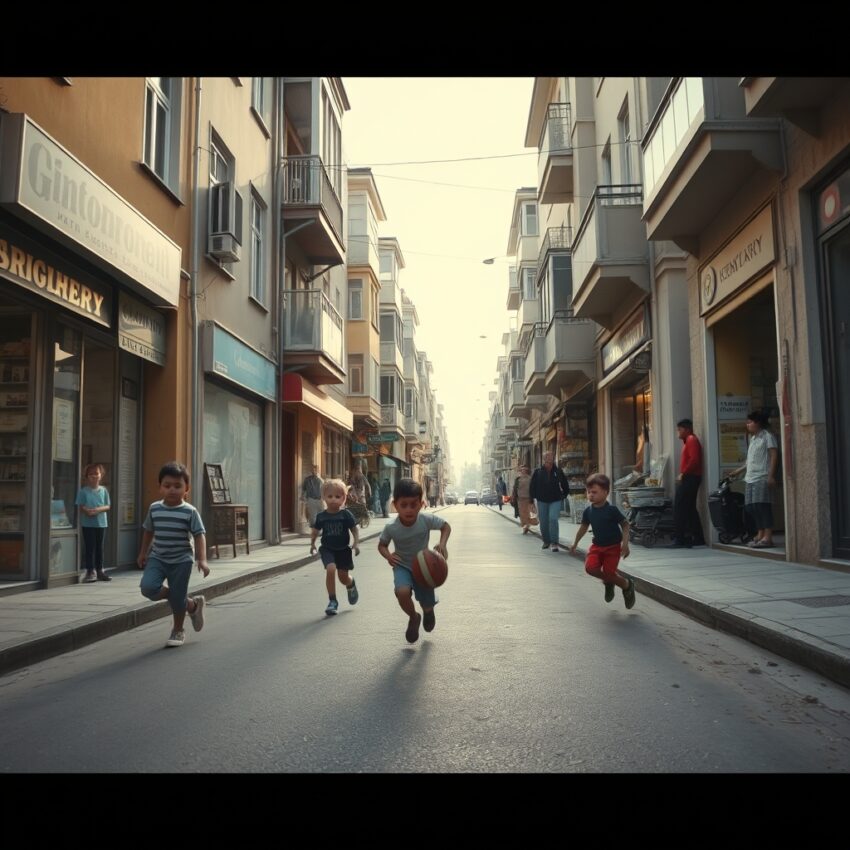
🇹🇷 Türkçe | Topun Peşinden Giderken Kurulan Mahalle Yakınlığı
Bir zamanlar okul dönemi başladığında mahallede yalnız ders düzeni değil, sokak ritmi de değişirdi. Yazın dağınık oyun saatleri yerini daha kısa ama daha yoğun okul sonrası buluşmalara bırakır, çocuklar çantalarını eve atar atmaz topun peşine düşerdi. Bu koşuşturmanın güzergâhı çoğu zaman yalnız sokak aralarıyla sınırlı kalmaz, bakkalın önü, fırının yanı, manavın tezgâhı, kırtasiyenin köşesi gibi esnafın günlük hayatına da değip geçerdi. Top bazen bir dükkânın kepengine çarpar, bazen kaldırım kenarındaki kasalara yaklaşır, bazen de bakkal amcanın “camlara dikkat” uyarısıyla yeniden oyuna dönerdi. Ama bu temas gerginlikten çok tanışıklık üretirdi. Çünkü çocukların sokakta varlığı ile esnafın kapı önü hayatı aynı mahallenin iki doğal yüzüydü.
Mahalle Kültürü açısından bakıldığında, top peşinde koşan çocukların esnafla bağı güçlendirmesi gündelik tekrarların doğal sonucuydu. Her gün aynı saatlerde görülen çocuk, bir süre sonra yalnız müşteri ailesinin ferdi değil, sokağın tanınan kişisi hâline gelirdi. Kimin hangi apartmanda oturduğu, hangi çocuğun kaleye geçtiği, hangisinin annesinin ekmek aldırdığı, esnaf tarafından bilinir olurdu. Bakkal zaman zaman oyunu izler, fırıncı tepsileri taşırken çocukları kenara çeker, kırtasiyeci okul açıldığı için yeni defter alanların aynı zamanda sokakta top oynayan yüzler olduğunu fark ederdi. Böylece alışveriş ilişkisi, göz aşinalığı ve günlük şakalaşma sayesinde sıcak bir bağa dönüşürdü. Çocuk da esnafı yalnız mal satan kişi olarak değil, mahallenin ritmini bilen büyüklerden biri olarak görmeye başlardı.
Okul dönemi dönüşleri bu bağı özellikle güçlendirirdi; çünkü sokak yeniden düzen kazanırdı. Çocukların oyun saatleri belirginleşir, teneffüs sohbetleri sokağa taşar, topun peşinden koşulan saatler mahallede yeni sezonun başladığını hissettirirdi. Dükkân önünde dizilen meyve kasaları, kırtasiye vitrininde görünen kaplı defterler, fırından yayılan ikindi ekmeği kokusu ve aralarından geçen top, aynı mevsim duygusunun parçalarıydı. Mahalle esnafı bu canlanmayı yalnız izlemekle kalmaz, onun parçası olurdu. Kaybolan topu geri veren, susayan çocuğa su uzatan, “şimdilik burada oynamayın” derken bile koruyucu bir ton kullanan bu insanlar, çocukların gözünde mahallenin güven halkasını genişletirdi.
Bu ilişki, görünüşte küçük ama hafızada kalıcı ayrıntılarla kurulur. Bir çocuk harçlığının kalanıyla gazoz kapağı ya da sakız alırken biraz önce top koşturduğu terle dükkâna girer; esnaf onun nefes nefese halinden oyunun gidişatını anlar. Bazen top dükkânın içine kaçmasa bile oyun dükkân önündeki sohbeti belirler. “Bugün kim kazandı?”, “top yine apartman boşluğuna mı gitti?”, “yarın maç var mı?” gibi sorular, mahalle hayatının samimi cümlelerine dönüşür. Böyle anlarda çocukluk ile yetişkinlik arasında sert bir duvar kurulmaz; tersine, sokak oyunu aracılığıyla karşılıklı bir tanınma doğar. Mahalle esnafıyla bağın güçlenmesi biraz da bu görünürlükten gelir.
Bugün geriye dönüp bakıldığında top peşinde koşan çocukların hikâyesi yalnız oyunla ilgili görünmez. O hikâye, sokağın insanları birbirine gösterdiği, gündelik hayatın farklı yaşları bir arada tuttuğu eski mahalle düzenini de anlatır. Okul dönemi dönüşlerinde topun izlediği rota, aslında çocuklarla esnaf arasında kurulan güvenin, şakanın ve tanışıklığın rotasıdır. Mahalle hafızasında bu yüzden top sesinin yanında kepenk, ekmek, defter ve kapı önü sohbeti de birlikte duyulur. Çünkü çocukların oyunu, esnafın sabrı ve mahallenin tekrar eden düzeni aynı sahnenin parçalarıydı.
🇬🇧 English | Neighborhood Closeness Built While Chasing the Ball
There was a time when, as the school season began, not only the rhythm of lessons but also the rhythm of the street changed in the neighborhood. The scattered play hours of summer gave way to shorter yet more intense meetings after school, and children would throw down their bags at home and immediately run after the ball. The route of this movement often extended beyond side streets alone and brushed past the front of the grocer, the side of the bakery, the produce stand of the greengrocer, and the corner of the stationery shop. Sometimes the ball struck a shop shutter, sometimes rolled toward crates on the pavement, and sometimes returned to play after the grocer’s familiar warning to mind the windows. Yet this contact produced not tension so much as familiarity. The presence of children in the street and the doorway life of shopkeepers were two natural faces of the same neighborhood.
From the perspective of neighborhood culture, the way children chasing a ball strengthened their bond with shopkeepers was the natural result of daily repetition. A child seen at the same hours every day gradually became not only part of a customer family, but one of the recognized figures of the street. Shopkeepers came to know which building a child lived in, who played goalkeeper, and whose mother often sent them to buy bread. The grocer watched the game from time to time, the baker pulled the children aside while carrying trays, and the stationer noticed that the same faces buying fresh notebooks at the start of school were also the ones playing football in the street. In that way, the relationship of purchase turned into a warm bond through visual familiarity and brief daily exchanges. The child, in turn, began to see the shopkeeper not merely as someone selling goods, but as one of the adults who knew the rhythm of the neighborhood.
The return of the school season strengthened this bond in particular because the street regained order. Children’s play hours became more defined, conversations from recess spilled into the road, and the time spent chasing a ball announced that a new season had begun in the neighborhood. Crates of fruit lined up in front of shops, covered notebooks in the stationery display, the smell of afternoon bread from the bakery, and the ball weaving through them all belonged to the same seasonal feeling. Neighborhood shopkeepers did not merely observe this revival; they became part of it. The people who returned a lost ball, handed a glass of water to a thirsty child, or said for now do not play here in a protective tone widened the circle of safety in the minds of children.
This relationship was built through details that seemed small yet remained in memory. A child, still sweaty from the game, entered the shop to buy a soda cap toy or chewing gum with the few coins left in his pocket, and the shopkeeper could understand the state of the match simply from that breathless face. Even when the ball did not actually roll inside the shop, the game shaped the conversation at the doorway. Questions like who won today, did the ball get lost in the apartment gap again, and is there a match tomorrow became the familiar language of neighborhood life. In such moments no hard wall was built between childhood and adulthood; rather, through street play a mutual recognition emerged. The bond with neighborhood shopkeepers grew stronger precisely from that visibility.
Looking back today, the story of children running after a ball does not seem to be only about play. It also tells of an older neighborhood order in which the street made people visible to one another and held different ages together within everyday life. The route followed by the ball during the return of the school season was also the route of trust, humor, and familiarity formed between children and shopkeepers. That is why, in neighborhood memory, the sound of the ball is still heard together with shutters, bread, notebooks, and doorway conversations. Children’s play, the patience of shopkeepers, and the repeated order of the neighborhood all belonged to the same scene.
🇧🇷 Português (Brasil) | A Proximidade do Bairro Construída Enquanto se Corria Atrás da Bola
Houve um tempo em que, com a volta do período escolar, mudava no bairro não apenas o ritmo das aulas, mas também o ritmo da rua. As horas espalhadas de brincadeira do verão davam lugar a encontros mais curtos, porém mais intensos, depois da escola, e as crianças mal jogavam a mochila em casa já saíam correndo atrás da bola. O trajeto dessa correria muitas vezes não ficava limitado às ruas laterais; passava pela frente do mercadinho, ao lado da padaria, perto da banca do verdureiro e pela esquina da papelaria. Às vezes a bola batia na porta de metal de uma loja, às vezes se aproximava das caixas sobre a calçada e às vezes voltava ao jogo depois do alerta do comerciante para cuidar dos vidros. Ainda assim, esse contato produzia menos tensão do que familiaridade. A presença das crianças na rua e a vida dos comerciantes na porta do negócio eram duas faces naturais do mesmo bairro.
Do ponto de vista da cultura de bairro, o fato de crianças correndo atrás da bola fortalecerem o vínculo com os comerciantes era o resultado natural da repetição diária. A criança vista no mesmo horário todos os dias deixava de ser apenas parte de uma família cliente e se tornava uma figura conhecida da rua. Os comerciantes passavam a saber em que prédio cada um morava, quem jogava no gol e quem era mandado pela mãe para comprar pão. O dono do mercadinho às vezes acompanhava a partida, o padeiro afastava as crianças enquanto carregava as bandejas, e o dono da papelaria percebia que os mesmos rostos que compravam cadernos novos na volta às aulas também jogavam bola na rua. Assim, a relação de compra se transformava num vínculo quente por meio do reconhecimento visual e das pequenas conversas diárias. A criança, por sua vez, começava a ver o comerciante não apenas como alguém que vendia produtos, mas como um dos adultos que conheciam o ritmo do bairro.
A volta do período escolar fortalecia especialmente esse laço porque a rua recuperava um senso de ordem. Os horários de brincadeira ficavam mais definidos, as conversas do recreio transbordavam para fora e os momentos em que se corria atrás da bola faziam sentir que uma nova estação havia começado no bairro. As caixas de fruta alinhadas na frente das lojas, os cadernos encapados na vitrine da papelaria, o cheiro do pão da tarde saindo da padaria e a bola passando no meio de tudo pertenciam ao mesmo clima de estação. Os comerciantes não apenas observavam esse movimento; faziam parte dele. Quem devolvia a bola perdida, oferecia água à criança com sede ou dizia por enquanto não joguem aqui num tom protetor ampliava, no olhar infantil, o círculo de segurança do bairro.
Essa relação era construída por detalhes aparentemente pequenos, mas duradouros na memória. Uma criança entrava na loja, ainda suada do jogo, para comprar um chiclete ou uma tampinha com as poucas moedas que sobravam, e o comerciante entendia pelo rosto ofegante como a partida estava indo. Mesmo quando a bola não entrava de fato na loja, o jogo determinava a conversa diante da porta. Perguntas como quem ganhou hoje, a bola caiu de novo no vão do prédio e tem jogo amanhã viravam frases íntimas da vida do bairro. Nesses momentos, não se erguia um muro rígido entre infância e vida adulta; ao contrário, pela brincadeira de rua nascia um reconhecimento mútuo. O vínculo com os comerciantes se fortalecia justamente por causa dessa visibilidade.
Hoje, olhando para trás, a história das crianças correndo atrás da bola parece maior do que um simples jogo. Ela conta também uma antiga ordem de bairro em que a rua mostrava as pessoas umas às outras e mantinha idades diferentes dentro da mesma vida cotidiana. O caminho seguido pela bola na volta do período escolar era também o caminho da confiança, da brincadeira e da familiaridade construídas entre crianças e comerciantes. Por isso, na memória do bairro, o som da bola ainda é ouvido junto com as portas metálicas, o pão, os cadernos e as conversas à entrada das lojas. A brincadeira das crianças, a paciência dos comerciantes e a ordem repetida do bairro faziam parte da mesma cena.