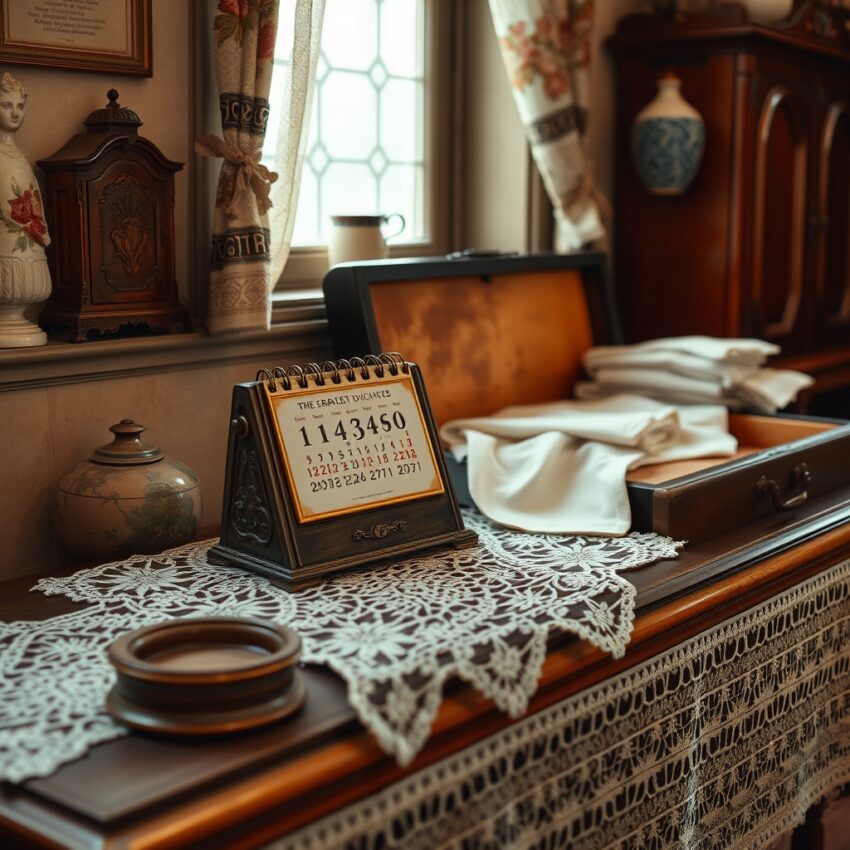
🇹🇷 Türkçe | Takvimliğin Sessiz Zarafeti ve Ev İçi Zevkin Dili
Bir zamanlar masa üstü takvimlikler evlerin en gösterişli ama en sessiz köşelerinde dururdu. Konsolun bir kenarında, dantel örtünün üstünde, çalışma masasının tam görünen yerinde ya da telefon sehpasının yanında yer alırlar; günleri saymaktan çok evin zevkini gösterirlerdi. Pirinçten yapılmış olanı da vardı, ahşap oyma gövdelisi de, plastik ama şaşırtıcı biçimde özenli tasarlanmış olanı da. Ön yüzünde küçük yaprak takvimin oturduğu bölüm, yanında kalemlik ya da notluk taşıyan çeşidi, bazen küçük bir çiçek motifiyle süslenen modeli, hepsi aynı şeyi söylerdi: gündelik hayatın sıradan araçları bile estetik bir dikkatle seçilirdi. Bugün bir sandığın dibinden çıkan eski bir takvimlik, bu yüzden yalnız bir eşya değil, bir dönemin ev içi terbiyesinin küçük özeti gibi görünür.
Obje Hikayeleri açısından takvimliğin ince hikâyesi, zamanla eşyanın nasıl karakter kazandığını gösterir. O nesne yalnız tarihi işaretlemez, evde günlerin nasıl karşılandığını da anlatırdı. Sabah kahvaltıdan sonra takvim yaprağını koparan el ile akşam misafir gelmeden masayı düzelten el çoğu zaman aynı dikkat kültürüne bağlıydı. Takvimlik, evin düzen duygusunu görünür kılan küçük bir merkezdi. Çocuklar ayların adını oradan öğrenir, büyükler bayram tarihlerini ya da maaş gününü oraya bakarak hatırlardı. Eşyanın görünüşü ise işlevinden bağımsız değildi; tam tersine işlevin zarafetle birleşmiş halini temsil ederdi. Kullanışlı olmak, güzel görünmeye engel sayılmazdı.
Sandıkların dibinden çıkmaları da tesadüfi değildir. Çünkü bu tür nesneler, hızlı tüketimin değil, saklamanın ve ileride yine anlam kazanacağına inanmanın ürünüdür. Eski evlerde sandık yalnız çeyiz ya da kumaş için değil, zamanı saklamak için de vardı. Kullanılmayan ama atılmayan, bir gün yeniden elde tutulduğunda geçmişi geri çağıracak eşyalar burada beklerdi. Masa üstü takvimlik de çoğu zaman işte bu bekleyişten çıkar. Üzerindeki hafif kararma, tabanında biriken toz, köşesindeki küçük çizik, onun uzun süre bir evde yaşadığını gösterir. Bu izler sayesinde nesne, yalnız tasarımıyla değil, taşımış olduğu hayatla da kıymet kazanır.
Bir dönemin zevk anlayışını yansıtması tam da buradan gelir. O yıllarda ev eşyaları yalnız pratik işlevlerine göre değil, odaya kattıkları hava ve aileyi temsil etme biçimlerine göre değerlendirilirdi. Masa üstü takvimlik, modernleşme isteğinin mütevazı ama belirgin bir göstergesi olabilirdi. Evine düzen getirmek isteyen, gündelik hayatta şıklık arayan, misafir geldiğinde küçük ayrıntılarla fark yaratmayı önemseyen kuşaklar için bu nesne masum bir dekor değildi. O, zamanı estetikle birlikte tutma arzusuydu. Her gün koparılan ince bir yaprak, hem geçiciliği hem düzeni görünür kılar; takvimlik de bu geçişi zarif bir çerçeveye yerleştirirdi.
Bugün bir takvimliğe bakınca insan yalnız geçmiş günleri değil, o günleri yaşama biçimini de hatırlar. Sandığın dibinden çıkan bu ince hikâye, zevkin büyük salon takımlarında ya da pahalı eşyalarda değil, gündelik nesnelere gösterilen özen içinde de yaşadığını anlatır. Masa üstü takvimlik, bir dönemin sade ama bilinçli estetik anlayışını, zamanı bile düzgün ve güzel tutma arzusunu taşıdığı için hafızada kalır. Küçük oluşu, etkisini azaltmaz; tam tersine, geçmişin en kalıcı imzalarından bazıları tam da böyle sessiz nesnelerin üstünde bulunur.
🇬🇧 English | The Quiet Elegance of the Calendar Holder and the Language of Domestic Taste
There was a time when desktop calendar holders stood in the most visible yet quietest corners of the home. They rested on one side of a sideboard, on top of lace cloth, in the clearest part of a writing desk, or beside the telephone stand, serving not only to count the days but also to display the household’s sense of taste. Some were made of brass, some carved from wood, and some fashioned from plastic in a surprisingly careful design. The section in front that held the daily tear-off calendar, the versions with a pen holder or note compartment, the models decorated with a small floral motif, all said the same thing: even ordinary tools of everyday life were chosen with aesthetic attention. That is why an old calendar holder taken today from the bottom of a chest appears not merely as an object, but as a small summary of an era’s domestic refinement.
From the perspective of object stories, the delicate history of the calendar holder shows how an object gains character over time. It did not simply indicate the date; it also expressed how days were received inside the home. The hand that tore off the calendar page after breakfast and the hand that straightened the table before guests arrived often belonged to the same culture of attention. The holder was a small center that made the house’s sense of order visible. Children learned the names of the months from it, and adults remembered holidays or payday by looking at it. Its appearance was not separate from its function; on the contrary, it represented function joined with grace. Being useful was never considered an obstacle to being beautiful.
The fact that such pieces emerged from the bottoms of chests is no accident either. Objects like these belong to a world not of rapid consumption, but of keeping, storing, and believing that something might one day recover its meaning. In older homes, the chest existed not only for dowry cloths or folded textiles, but also for storing time itself. Unused but not discarded things waited there, ready to call the past back when held again in the hand. The desktop calendar holder often returns from precisely that waiting. The slight tarnish upon it, the dust gathered at its base, the tiny scratch on one corner, all reveal that it lived for a long while within a household. Through these marks, the object gains value not only from its design, but from the life it carried.
Its ability to reflect the taste of an era comes exactly from this. Household goods of those years were judged not only by their practical task, but by the atmosphere they gave to a room and the way they represented the family. A desktop calendar holder could be a modest yet clear sign of the desire for modernity. For generations who wanted to bring order into the home, sought elegance in daily life, and cared about making a difference through small details when guests arrived, this object was never an innocent decoration. It was a wish to hold time together with beauty. A thin page torn away each day made both transience and order visible, and the holder placed that passage inside a graceful frame.
Today, looking at such a holder, people remember not only past days, but the way those days were lived. This subtle story emerging from the bottom of a chest tells us that taste resided not only in expensive furniture or large salon sets, but also in the care shown to ordinary objects. The desktop calendar holder remains memorable because it carried an era’s simple yet conscious aesthetic, a desire to keep even time itself neat and beautiful. Its small size does not lessen its effect; on the contrary, some of the most lasting signatures of the past are found precisely on quiet objects like this.
🇧🇷 Português (Brasil) | A Elegância Silenciosa do Calendário de Mesa e a Linguagem do Gosto Doméstico
Houve um tempo em que os calendários de mesa ficavam nos cantos mais visíveis e ao mesmo tempo mais silenciosos da casa. Eles apareciam na ponta do aparador, sobre uma renda, na parte mais evidente da escrivaninha ou ao lado da mesinha do telefone; serviam não apenas para marcar os dias, mas para mostrar o gosto da casa. Havia os de latão, os de madeira entalhada e até os de plástico com um desenho surpreendentemente cuidadoso. A parte frontal onde se encaixava a folhinha, as versões com porta-caneta ou bloco de notas, os modelos com pequenos motivos florais, todos diziam a mesma coisa: até os instrumentos mais comuns do cotidiano eram escolhidos com atenção estética. Por isso, quando um calendário antigo sai hoje do fundo de um baú, ele parece não apenas um objeto, mas um pequeno resumo da delicadeza doméstica de uma época.
Do ponto de vista das histórias dos objetos, a narrativa delicada do calendário de mesa mostra como uma peça ganha caráter com o tempo. Ele não indicava apenas a data; também dizia como os dias eram recebidos dentro da casa. A mão que arrancava a folha depois do café da manhã e a mão que arrumava a mesa antes da chegada de visitas costumavam pertencer à mesma cultura de atenção. O suporte do calendário era um pequeno centro que tornava visível o senso de ordem da casa. As crianças aprendiam ali os nomes dos meses, e os adultos lembravam feriados ou o dia do pagamento olhando para ele. Sua aparência não era separada da função; ao contrário, representava a função unida à graça. Ser útil nunca era visto como impedimento para ser bonito.
O fato de esses objetos surgirem do fundo dos baús também não é acaso. Peças assim pertencem a um mundo não de consumo veloz, mas de guardar, conservar e acreditar que algo pode voltar a ter sentido no futuro. Nas casas antigas, o baú existia não só para enxovais ou tecidos, mas também para guardar o próprio tempo. Ali esperavam coisas fora de uso, mas não descartadas, prontas para trazer o passado de volta quando voltassem à mão. O calendário de mesa reaparece justamente dessa espera. O leve escurecimento na superfície, a poeira acumulada na base e o pequeno risco num canto mostram que ele viveu muito tempo dentro de uma casa. Graças a essas marcas, o objeto ganha valor não apenas pelo desenho, mas pela vida que carregou.
É daí que vem sua capacidade de refletir o gosto de uma época. Os objetos da casa eram avaliados não só pela utilidade prática, mas também pelo clima que davam ao ambiente e pela maneira como representavam a família. Um calendário de mesa podia ser um sinal modesto, porém claro, do desejo de modernidade. Para gerações que queriam trazer ordem para casa, buscavam elegância no cotidiano e valorizavam pequenos detalhes na hora de receber visitas, esse objeto nunca foi um simples adorno. Era o desejo de manter o tempo junto da beleza. Uma folha fina arrancada a cada dia tornava visíveis tanto a passagem quanto a ordem, e o suporte colocava essa transição dentro de uma moldura delicada.
Hoje, ao olhar para um calendário desses, a pessoa se lembra não apenas dos dias passados, mas do modo como eles eram vividos. Essa história sutil que sai do fundo do baú mostra que o gosto não morava apenas em móveis caros ou grandes conjuntos de sala, mas também no cuidado dedicado aos objetos do dia a dia. O calendário de mesa permanece na memória porque carregava a estética simples, porém consciente, de uma época e o desejo de manter até o próprio tempo de maneira bonita e ordenada. Seu tamanho pequeno não diminui seu efeito; ao contrário, algumas das marcas mais duradouras do passado estão justamente em objetos silenciosos como esse.