🇹🇷 Türkçe | porselen şekerlik ve taşınmalar boyunca eve eşlik eden hatırası: bir dönemin zevk anlayışını nasıl yansıttı
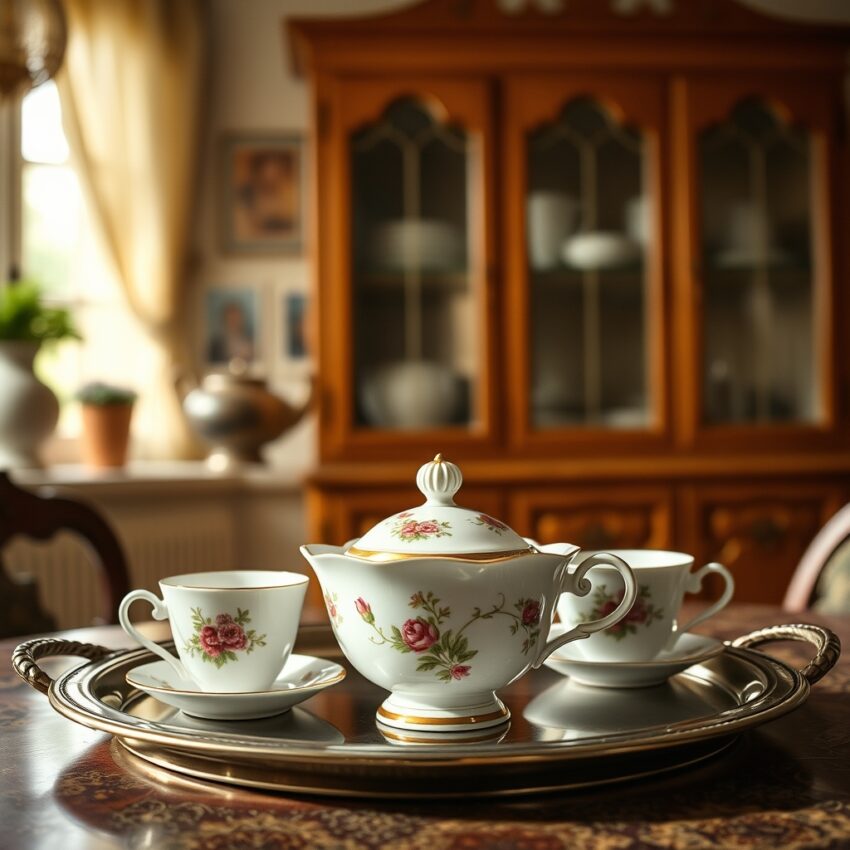
Bazı eşyalar evin en görünür yerinde durdukları hâlde gürültü çıkarmaz; yine de aile tarihinin en sabit tanıkları olurlar. Porselen şekerlik tam da böyle bir nesneydi. Salon vitrininde ya da yemek masasının en düzenli köşesinde duran bu zarif parça, gündelik kullanım ile gösteriş arasındaki ince çizgide yaşardı. Kapağındaki altın yaldız hafifçe aşınmış olsa da, kulbundaki incelik ve üzerindeki çiçek desenleri çoğu evde özel bir dikkat görürdü. Şekerlik, yalnız şeker saklayan bir kap değil; eve gelen misafire sunulan özenin, çay saatine verilen önemin ve “düzenli ev” fikrinin küçük ama etkili bir sembolüydü. Bu yüzden taşınmalar boyunca gazete kâğıdına en dikkatli sarılan eşyalar arasında yer alması tesadüf değildi.
Obje Hikayeleri açısından şekerlik, bir dönemin zevk anlayışını gündelik hayatın içine yerleştiren nesnelerden biridir. Evlerde kullanılan porselenler, yalnız maddi durumun değil, estetik beklentinin de göstergesiydi. İnce işçilik, kabartma kenarlar, pastel renkli güller ya da altın çizgiler, kullanım kadar görünüşün de önemsendiğini anlatırdı. Çay ikramı sıradan bir ihtiyaç değil, bir ev terbiyesi sahnesi olarak görülürdü. Şekerliğin masaya yerleşme biçimi bile bunun parçasıydı; fincan takımına uyumlu olması, tepside kendine ayrılmış küçük bir alanı bulunması, kaşığının eksik olmaması beklenirdi. Bu dikkat, dönemin zevk anlayışının fazlalıkla değil ölçülü zarafetle kurulduğunu gösterir. İnsanlar büyük gösterilerden çok küçük uyumları önemserdi.
Taşınmalar sırasında bu nesnenin eve eşlik eden hatıraya dönüşmesi de yine bu yüzden anlamlıdır. Bir evden çıkılırken hangi eşyanın nasıl paketleneceği, ailelerin eşyalara yüklediği anlamı açık eder. Ağır mobilyalar sökülür, perdeler indirilir, kitaplar koliye girer; ama porselen şekerlik çoğu zaman ayrı bir kutuya, daha yumuşak bir sarışa kavuşur. Çünkü kırılması, yalnız bir eşyanın eksilmesi değil, evin bir devamlılık işaretinin kaybı gibi hissedilir. Yeni eve taşınıldığında da yerleşimi gecikmez. Henüz halılar tam serilmemiş, mutfak rafları düzenlenmemiş olabilir; ama vitrinin bir köşesinde ya da çay tepsisinin yanında tanıdık yerini aldığında, ev biraz daha ev görünür. Onun varlığı, mekânın değişse de alışkanlığın sürdüğünü söyler.
Şekerliğin bir dönemin zevk anlayışını yansıtması, yalnız biçiminde değil kullanımında da saklıdır. Misafir geldiğinde küp şekerin maşayla tutulması, ev halkının gündelikte toz şeker kullanıp özel zamanlarda porselen şekerliği çıkarması, çocukların kapağını izinsiz açmamaları için uyarılması, bütün bunlar nesnenin toplumsal rolünü büyütürdü. O artık yalnızca masa üstü objesi değil, ev içi davranış düzeninin parçasıydı. Zarafet biraz da böyle öğrenilirdi: bir eşyanın nasıl tutulacağından, nereye konacağından, kim geldiğinde ortaya çıkarılacağından. Şekerlik, küçük boyutuna rağmen evin sınıf, görgü ve estetik hayalinin taşıyıcısı hâline gelirdi. Bu nedenle onun üzerindeki en ufak çatlak bile bazen bir aile hikâyesi kadar uzun konuşulabilirdi.
Bugün porselen şekerliğin neden bu kadar dokunaklı göründüğünü sorduğumuzda, cevabı büyük ölçüde süreklilik duygusunda buluruz. O, evlerin taşındığı, perdelerin değiştiği, koltukların yenilendiği yıllarda bile aynı zarif ısrarla varlığını koruyan küçük bir merkez gibiydi. Bir dönemin zevk anlayışı, belki de tam olarak böyle nesnelerde okunur: kullanışlı ama gösterişli değil, süslü ama abartılı değil, kırılgan ama vazgeçilmeyen. Porselen şekerlik taşınmalar boyunca eve yalnız eşya olarak eşlik etmedi; evin kendisiyle ilgili bir fikri de beraberinde taşıdı. Düzenin, zarafetin ve hatıranın aynı kapakta buluşabildiğini gösterdi.
🇬🇧 English | The Porcelain Sugar Bowl and the Memory That Accompanied the Home Through Moves: How Did It Reflect the Taste of an Era?
Some objects stand in the most visible place in a home without making any noise, yet they become the most stable witnesses of family history. The porcelain sugar bowl was exactly such an object. Resting in the glass cabinet of the living room or on the neatest corner of the dining table, it lived on the fine line between daily use and display. Even when the gold trim on its lid had slightly worn away, the delicacy of its handle and the floral designs upon it continued to receive special attention in many homes. The sugar bowl was not merely a container for sugar. It was a small but powerful symbol of care shown to guests, of the importance attached to tea time, and of the idea of an orderly home. That is why it was among the objects wrapped most carefully in newspaper during moves.
From the perspective of object stories, the sugar bowl was one of those items that placed an era’s sense of taste directly into daily life. The porcelains used in homes reflected not only material means, but aesthetic expectation. Fine workmanship, raised edges, pastel roses, or delicate gold lines suggested that appearance mattered alongside use. Serving tea was not regarded as a simple necessity, but as a scene of domestic refinement. Even the way the sugar bowl sat upon the table belonged to that scene. It was expected to match the cups, to have its own small place on the tray, and never to be without its spoon. This attention shows that the taste of the period was built not on excess, but on measured elegance. People valued small harmonies more than large displays.
Its transformation into a memory accompanying the home through moves becomes meaningful for the same reason. The way an object is packed while leaving one home reveals the meaning placed upon it by a family. Heavy furniture is dismantled, curtains are taken down, books disappear into boxes, yet the porcelain sugar bowl often receives a separate package and a softer wrapping. Its breaking would feel not merely like the loss of an item, but like the loss of a sign of continuity within the home. In the new house too, its placement is rarely delayed. The rugs may still be unrolled and kitchen shelves not yet arranged, but once it takes its familiar place in a cabinet corner or beside the tea tray, the house begins to look more like home. Its presence says that although the space has changed, habit continues.
The way it reflected an era’s taste was hidden not only in its form, but also in its use. When guests arrived, sugar cubes might be lifted with tongs; the household might use loose sugar daily but bring out the porcelain sugar bowl for special moments; children might be warned not to open its lid without permission. All of this enlarged the object’s social role. It was no longer simply a tabletop item, but part of the choreography of domestic behavior. Elegance was often learned in exactly this way: through how an object was held, where it was placed, and for whom it was brought out. Despite its small size, the sugar bowl became a carrier of the home’s dream of class, manners, and beauty. That is why even the smallest crack upon it could sometimes be discussed as long as a family story.
When we ask today why the porcelain sugar bowl appears so touching, the answer lies largely in its sense of continuity. It was like a small center that kept its existence with graceful insistence through years when homes were moved, curtains changed, and sofas replaced. Perhaps the taste of an era can be read most clearly in such objects: useful but not showy, decorated but not excessive, fragile yet never abandoned. The porcelain sugar bowl did not accompany the home through moves as a thing alone. It also carried an idea of what a home should be. It showed that order, elegance, and memory could meet beneath a single lid.
🇧🇷 Português (Brasil) | O Açucareiro de Porcelana e a Lembrança que Acompanhou a Casa ao Longo das Mudanças: Como Ele Refletiu o Gosto de uma Época?
Alguns objetos ficam na parte mais visível da casa sem fazer barulho algum, e mesmo assim se tornam as testemunhas mais estáveis da história de uma família. O açucareiro de porcelana era exatamente esse tipo de objeto. Na cristaleira da sala ou no canto mais arrumado da mesa de jantar, ele vivia nessa linha fina entre o uso cotidiano e a exibição. Mesmo quando o dourado da tampa já estava um pouco gasto, a delicadeza da alça e os desenhos florais continuavam recebendo atenção especial em muitas casas. O açucareiro não era apenas um recipiente para açúcar. Era um símbolo pequeno, mas muito eloquente, do cuidado oferecido à visita, da importância dada à hora do chá e da própria ideia de casa organizada. Por isso não surpreende que estivesse entre os objetos embrulhados com mais cuidado em jornal durante as mudanças.
No universo das histórias dos objetos, o açucareiro era uma dessas peças que colocavam o gosto de uma época dentro da vida cotidiana. As porcelanas presentes nas casas refletiam não apenas condição material, mas também expectativa estética. Trabalho delicado, bordas em relevo, rosas em tons pastéis ou filetes dourados sugeriam que a aparência importava tanto quanto a utilidade. Servir chá não era visto como uma necessidade comum, mas como uma cena de refinamento doméstico. Até a forma de posicionar o açucareiro na mesa fazia parte disso. Esperava-se que ele combinasse com as xícaras, tivesse um pequeno espaço reservado na bandeja e nunca ficasse sem colher. Essa atenção mostra que o gosto daquele período era construído não pelo excesso, mas por uma elegância medida. As pessoas valorizavam mais as pequenas harmonias do que os grandes espetáculos.
O fato de ele se transformar numa lembrança que acompanhava a casa ao longo das mudanças também é significativo por esse motivo. O jeito como um objeto é embalado ao sair de uma casa revela o sentido que a família deposita nele. Móveis pesados são desmontados, cortinas são retiradas, livros entram em caixas, mas o açucareiro de porcelana muitas vezes ganha uma embalagem à parte e um embrulho mais macio. Quebrá-lo pareceria não apenas perder uma peça, mas perder um sinal de continuidade dentro da casa. Na nova moradia, sua colocação também raramente demora. Os tapetes ainda podem não estar no lugar e as prateleiras da cozinha ainda podem não ter sido organizadas, mas quando ele assume seu espaço familiar na cristaleira ou ao lado da bandeja de chá, a casa passa a parecer mais casa. Sua presença diz que, mesmo mudando o espaço, o hábito continua.
O modo como ele refletia o gosto de uma época estava escondido não só na forma, mas também no uso. Quando chegavam visitas, os cubos de açúcar podiam ser apanhados com pinça; no dia a dia a casa talvez usasse açúcar solto, mas em ocasiões especiais era o açucareiro de porcelana que surgia; as crianças podiam ser advertidas a não abrir a tampa sem permissão. Tudo isso ampliava o papel social do objeto. Ele já não era apenas uma peça sobre a mesa, mas parte da coreografia do comportamento doméstico. Muitas vezes a elegância era aprendida justamente assim: pelo modo de segurar um objeto, pelo lugar onde ele ficava e por quem ele era trazido à cena. Apesar de pequeno, o açucareiro se tornava portador do sonho de classe, boas maneiras e beleza daquela casa. Por isso até a menor rachadura nele podia ser comentada quase como uma longa história de família.
Quando perguntamos hoje por que o açucareiro de porcelana parece tão comovente, a resposta está em grande parte nesse sentimento de continuidade. Ele funcionava como um pequeno centro que mantinha sua presença com insistência delicada ao longo dos anos em que casas mudavam, cortinas eram trocadas e sofás renovados. Talvez o gosto de uma época possa ser lido com mais clareza justamente em objetos assim: úteis, mas não ostensivos; ornamentados, mas não exagerados; frágeis, mas nunca descartados. O açucareiro de porcelana não acompanhou a casa nas mudanças apenas como um objeto. Levou consigo também uma ideia do que era o próprio lar. Mostrou que ordem, elegância e lembrança podiam se encontrar sob uma única tampa.