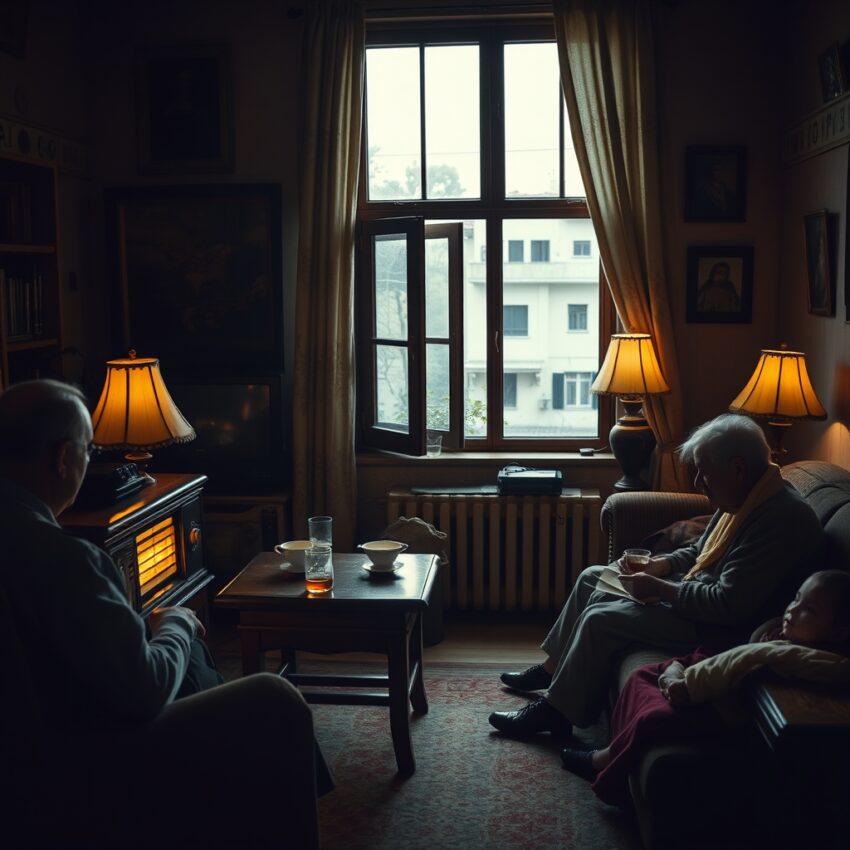
🇹🇷 Türkçe | radyo: salonda toplanan ailelerin sessiz heyecanı içinde analog çağın unutulmayan heyecanını anlatıyor mahalle seslerinin arasında dilden dile taşınan bir hatıra gibi
Bazı sesler kapıyı çalmadan eve girer ve bir ailenin akşamını usulca aynı noktada toplar. Radyo tam da böyle bir varlıktı. Özellikle salonun baş köşesinde duran ahşap kasalı ya da kumaş ızgaralı radyolar, konuşmaya ara verdiren bir saygı yaratırdı. Akşam yemeği yeni kalkmış, çay bardakları sehpanın kenarına bırakılmış, sokaktan çocuk sesleri yavaş yavaş azalmış olurdu. O sırada radyonun düğmesi çevrilir, hafif bir cızırtının ardından tanıdık bir spiker sesi odaya yayılırdı. Bu an, gürültülü bir coşku değil; sessiz ama yoğun bir heyecan üretirdi. Herkes aynı yere bakmak zorunda değildi, ama herkes aynı sesi dinlerdi. Analog çağın unutulmayan duygusu biraz da bu ortak dinleme hâlinde saklıdır.
Teknoloji Mirası açısından radyo, yalnız teknik bir cihaz değil, toplu dikkatin en sıcak araçlarından biriydi. Bugün bireysel ekranlara ve kulaklıklara bölünmüş olan ses deneyimi, o yıllarda salonun ortasında paylaşılan bir bekleyişti. Haber saati geldiğinde cümleler daha dikkatli kurulurdu; radyo tiyatrosu başladığında çocuklar biraz daha yaklaşır, büyükler gündelik işlerini el yavaşlığıyla sürdürürdü. Müzik programlarında sevilen sanatçının sesi mahalle seslerine karışır; açık pencereden gelen ayak sesi, sokaktan geçen simitçi ya da uzaktan duyulan başka bir evin radyosu bu ortak işitme dünyasının parçası olurdu. Dilden dile taşınan hatıra denilen şey de burada başlar. Çünkü radyo dinlemek çoğu zaman sonrasında anlatılacak bir şey üretirdi: “Dün akşam ne dedi?”, “O türkü çaldı mı?”, “Haberi duydunuz mu?” Ses, bir kez yayıldıktan sonra evden eve taşınırdı.
Bu cihazın analog çağın heyecanını neden hâlâ anlattığını anlamak için onun etrafında biriken beden diline bakmak yeterlidir. Bir istasyon netleşsin diye düğmenin dikkatle çevrilmesi, antenin yönünün ayarlanması, en sevilen program başlamadan hemen önce odadaki küçük telaş, bunların hepsi görünmez bir ritüelin parçalarıydı. Çocuk için radyo biraz gizemdi; görünmeyen insanların konuşması, hiç gidilmeyen şehirlerden gelen şarkılar, adı duyulan ama yüzü bilinmeyen sanatçılar hayal gücünü beslerdi. Büyükler içinse radyo, dünyaya açılan ama evin sıcaklığını bozmayan kontrollü bir pencereydi. Mahalle sesleriyle beraber duyulduğunda daha da yerli ve tanıdık hale gelirdi. Çünkü radyo hiçbir zaman dış dünyanın tamamen yabancı bir temsili olmadı; onu ev düzeninin içine taşıyan bir araç oldu.
Salonda toplanan ailelerin sessiz heyecanı biraz da birlikte susabilme alışkanlığından beslenirdi. Herkesin tek tek fikrini söylemediği ama aynı anda kulak verdiği anlar, aile hafızasında özel bir yer tutar. Bir haber bülteninden sonra yapılan kısa yorum, bir şarkı biter bitmez söylenen “bunu annen de severdi” cümlesi, çocukların spiker taklidi yapması, radyoda adı geçen şehirleri hayal ederek sorular sorması, bütün bunlar cihazın kendisinden daha uzun ömürlü izler bıraktı. O yüzden radyo bugün yalnız bir obje olarak hatırlanmaz; sesle kurulmuş bir yakınlık biçimi olarak anılır. İçinden çıkan cızırtı bile eksiklik değil, dönemin gerçekliğiydi. Netlik her zaman kusursuz değildi ama tam da bu yüzden daha kıymetliydi.
Bugün mahalle seslerinin arasında dilden dile taşınan bir hatıra gibi görünmesinin nedeni de budur. Radyo, sesi tek yönlü ileten bir araç olmaktan çok, ortak yaşamı örten ince bir işitme örtüsü gibiydi. Bir evde dinlenen türkü komşuda konuşulur, akşam haberleri ertesi sabah bakkal önünde yeniden yorumlanır, çocuklar radyoda duyduğu reklam cümlelerini oyuna çevirirdi. Teknoloji böylece soğuk bir yenilik olmaktan çıkar, mahalle dolaşımına karışırdı. Analog çağın unutulmayan heyecanı, belki de tam bu paylaşılan yarım karanlıkta saklıdır: bir salon, bir radyo, birkaç dikkatli yüz ve dışarıdan içeri süzülen mahalle sesi. Hafızada kalan, yalnız neyin dinlendiği değil; nasıl birlikte dinlendiğidir.
🇬🇧 English | Radio: Within the Quiet Excitement of Families Gathering in the Living Room, It Tells the Unforgotten Thrill of the Analog Age Like a Memory Passed from Tongue to Tongue Among Neighborhood Sounds
Some sounds enter a home without knocking and gently gather an entire family’s evening at one point. Radio was exactly that kind of presence. Especially those radios with wooden bodies or fabric grilles placed in the best corner of the living room created a kind of respect that interrupted conversation. Dinner had just ended, tea glasses were resting on the side table, and the sounds of children in the street were beginning to fade. Then someone turned the dial, and after a slight crackle the voice of a familiar announcer spread through the room. This moment did not produce loud excitement, but a quiet and concentrated one. No one had to look at the same place, yet everyone listened to the same sound. Part of the unforgettable feeling of the analog age is hidden in that shared act of listening.
As technological heritage, radio was never just a device. It was one of the warmest tools of collective attention. What is now divided among individual screens and headphones was then a common waiting experienced in the center of the living room. When the news hour came, sentences in the room were spoken more carefully. When the radio play began, children moved a little closer while adults continued their tasks with slower hands. During music programs, the voice of a beloved singer mingled with neighborhood sounds. Footsteps from the open window, the simit seller passing outside, or the faint radio of another house became part of the same listening world. This is where the memory passed from tongue to tongue begins. Listening to the radio often created something to be repeated later: “What did he say last night?”, “Did they play that folk song?”, “Did you hear the news?” Once sound spread, it moved from home to home.
To understand why this device still tells the thrill of the analog age, it is enough to look at the body language gathered around it. The careful turning of the knob to clarify a station, the adjustment of the antenna, the little stir in the room just before a favorite program began, all these were parts of an invisible ritual. For a child, radio carried mystery. Voices of unseen people, songs from cities never visited, and artists known by name but not by face all fed the imagination. For adults, radio was a controlled window opening to the world without disturbing the warmth of the household. Heard together with neighborhood sounds, it became even more local and familiar. Radio never functioned as a completely foreign representation of the outside world. It was a way of bringing that world into the order of the home.
The quiet excitement of families gathering in the living room was nourished partly by the habit of being silent together. Moments in which not everyone spoke individually, yet all gave their ears to the same thing, held a special place in family memory. A brief comment after the news bulletin, someone saying “your mother loved this one too” as soon as a song ended, children imitating the announcer, or asking questions while imagining cities mentioned on air all left traces more durable than the object itself. That is why radio is not remembered merely as an item. It is recalled as a form of closeness built through sound. Even the static that came from it was not a flaw, but part of the truth of the period. Clarity was not always perfect, and for that reason it felt more precious.
This is also why it survives today like a memory passed from tongue to tongue among neighborhood sounds. Radio was less a one-way instrument delivering sound than a thin layer of listening laid over common life. A folk song heard in one house was discussed next door, the evening news was interpreted again the following morning in front of the grocer, and children turned radio slogans into games. Technology ceased to be a cold novelty and mixed into neighborhood circulation. The unforgettable thrill of the analog age may be hidden exactly there: in a half-dark room, one radio, several attentive faces, and the sounds of the neighborhood slipping in from outside. What remains in memory is not only what was heard, but how it was heard together.
🇧🇷 Português (Brasil) | rádio: no entusiasmo silencioso das famílias reunidas na sala, ele conta a emoção inesquecida da era analógica como uma lembrança passada de boca em boca entre os sons do bairro
Alguns sons entram em casa sem bater à porta e reúnem com delicadeza a noite inteira de uma família num só ponto. O rádio era exatamente esse tipo de presença. Principalmente aqueles aparelhos com caixa de madeira ou grade de tecido colocados no canto mais importante da sala criavam um respeito que fazia a conversa diminuir. O jantar já tinha terminado, os copos de chá estavam apoiados na mesinha, e os sons das crianças na rua começavam a desaparecer. Então alguém girava o botão e, depois de um leve chiado, a voz conhecida do locutor se espalhava pelo cômodo. Esse instante não produzia uma euforia barulhenta, mas uma emoção silenciosa e intensa. Ninguém precisava olhar para o mesmo lugar, mas todos ouviam o mesmo som. Uma parte importante da sensação inesquecível da era analógica está escondida nessa escuta compartilhada.
Como herança tecnológica, o rádio nunca foi apenas um aparelho. Foi uma das formas mais calorosas de atenção coletiva. O que hoje está dividido entre telas individuais e fones de ouvido era, naquele tempo, uma espera comum vivida no centro da sala. Quando chegava a hora do noticiário, as frases dentro de casa eram ditas com mais cuidado. Quando começava a radionovela ou a peça radiofônica, as crianças se aproximavam um pouco mais, enquanto os adultos continuavam suas tarefas com movimentos mais lentos. Nos programas musicais, a voz do cantor querido se misturava aos sons do bairro. Passos vindos da janela aberta, o vendedor ambulante passando na rua ou o rádio distante de outra casa entravam nesse mesmo universo de escuta. É aí que nasce a lembrança passada de boca em boca. Ouvir rádio quase sempre produzia algo para ser repetido depois: “O que ele disse ontem à noite?”, “Tocaram aquela canção?”, “Você ouviu a notícia?” Depois de se espalhar, o som ia de casa em casa.
Para entender por que esse aparelho ainda conta a emoção da era analógica, basta observar a linguagem do corpo ao redor dele. O giro cuidadoso do botão para limpar a sintonia, o ajuste da antena, a pequena agitação antes do programa preferido começar, tudo isso fazia parte de um ritual invisível. Para a criança, o rádio carregava um certo mistério. As vozes de pessoas nunca vistas, as músicas vindas de cidades jamais visitadas e os artistas conhecidos só pelo nome alimentavam a imaginação. Para os adultos, o rádio era uma janela controlada para o mundo, sem romper o calor da casa. Quando ouvido junto com os sons do bairro, ele se tornava ainda mais próximo e familiar. O rádio nunca foi uma representação totalmente estranha do lado de fora. Foi uma maneira de levar esse mundo para dentro da ordem doméstica.
O entusiasmo silencioso das famílias reunidas na sala também se alimentava do costume de saber ficar em silêncio juntas. Os momentos em que nem todos falavam, mas todos entregavam o ouvido à mesma coisa, ocupavam um lugar especial na memória da família. Um comentário breve depois do boletim de notícias, alguém dizendo “sua mãe também gostava dessa” assim que a música acabava, as crianças imitando o locutor ou perguntando sobre as cidades citadas no programa, tudo isso deixou marcas mais duradouras do que o próprio objeto. Por isso o rádio não é lembrado apenas como peça antiga. Ele é lembrado como uma forma de proximidade construída pelo som. Até o chiado não era defeito, mas parte da verdade daquele tempo. A nitidez nem sempre era perfeita e, justamente por isso, parecia mais preciosa.
É por isso também que ele continua hoje como uma lembrança passada de boca em boca entre os sons do bairro. O rádio era menos um instrumento de transmissão em sentido único e mais uma fina camada de escuta colocada sobre a vida comum. Uma canção ouvida numa casa era comentada na casa ao lado, o noticiário da noite era reinterpretado na manhã seguinte diante da mercearia, e as crianças transformavam frases publicitárias do rádio em brincadeira. A tecnologia deixava, assim, de ser uma novidade fria e se misturava à circulação do bairro. Talvez a emoção inesquecida da era analógica esteja exatamente aí: numa sala em meia-luz, um rádio, alguns rostos atentos e os sons do bairro entrando pela janela. O que permanece na memória não é apenas o que foi ouvido, mas a maneira como se ouviu junto.