🇹🇷 Türkçe | anteni çevirdikçe netleşen umut eşliğinde boombox kullanmak neden başlı başına bir törendi uzayan ikindi gölgelerinde gündüzden geceye uzanan ritimle
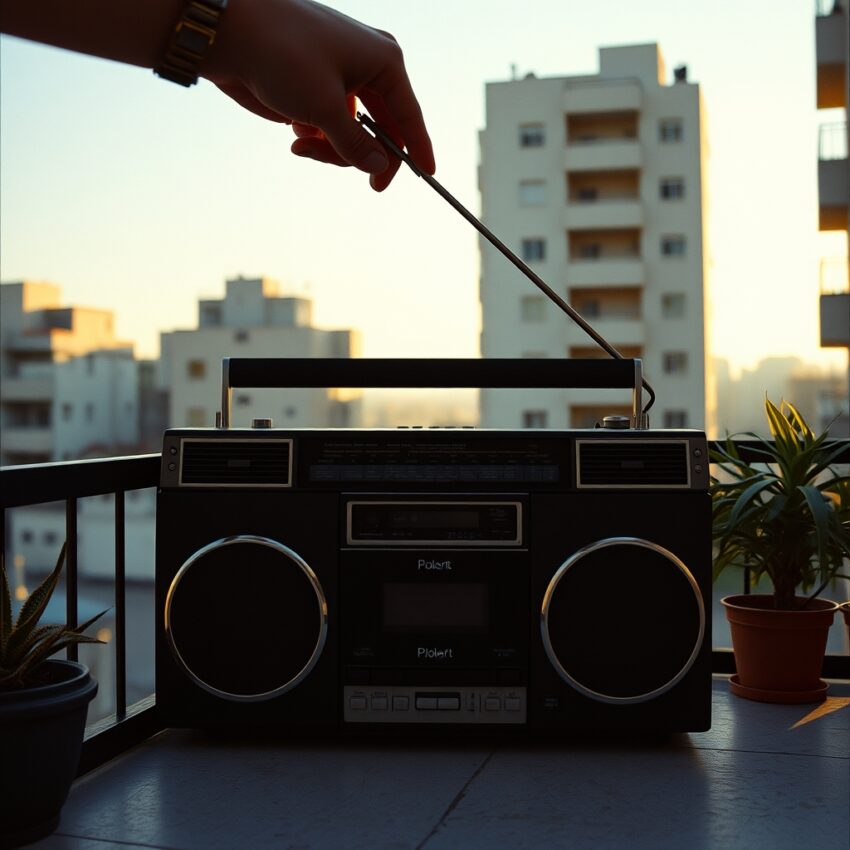
Bir zamanlar müzik yalnız dinlenen bir şey değildi; bulunur, yakalanır, ayarlanır ve adeta emek verilerek eve ya da sokağa çağrılırdı. İkindinin gölgesi apartman duvarlarına uzarken, balkonda ya da pencere önünde duran boombox birden evin merkezine dönüşürdü. Kaset kapağı açık, piller yeni kontrol edilmiş, anten yavaşça yukarı çekilmiş olurdu. Sonra asıl törensel hareket başlardı: İstasyonu net bulmak için cihaz hafifçe çevrilir, anten milim milim oynatılır, cızırtı içinden temiz bir ses yakalanmaya çalışılırdı. O anda herkesin yüzünde küçük ama gerçek bir beklenti belirirdi. Haber bülteni mi gelecek, sevilen şarkı mı başlayacak, yoksa akşamüstü programındaki o tanıdık sunucu mu konuşacaktı? Boombox kullanmak tam da bu yüzden sıradan bir cihaz deneyimi değil, gündüzden geceye uzanan ritmi yöneten küçük bir merasimdi.
Teknoloji Mirası açısından boombox, taşınabilir sesin mahalleyle kurduğu ilişkinin en canlı sembollerinden biriydi. İçinde radyo, kasetçalar ve çoğu zaman güçlü hoparlörleri birlikte taşıyan bu cihaz, analog çağın hem mühendislik pratikliğini hem de sosyal arzusunu yansıtırdı. O yıllarda sesi yalnız duymak yetmez, onu doğru frekansta, doğru anda ve doğru ortamda kurmak gerekirdi. Antenin yönü, pilin gücü, cihazın konduğu yüzey ve hatta pencerenin açık mı kapalı mı olduğu bile sonucu değiştirirdi. Bu yüzden boombox başında geçirilen birkaç dakika, teknik bir ayar kadar sabır ve dikkat eğitimi de sayılırdı. Gençler cihazı omza alıp sokağa iner, çocuklar mahalle arasında dans eder, büyükler haber saatinde radyoya kulak kesilirdi. Aynı alet, günün farklı saatlerinde bambaşka bir toplumsal işlev kazanırdı.
Bu deneyimi törene dönüştüren şey biraz da birlikte yaşanmasıydı. Bir şarkıyı tek başına duymaktan çok, “geldi, geldi” diyerek netleşen sesi başkalarıyla paylaşmak önemliydi. Balkon demirine yaslanan kardeşler, mutfaktan seslenen anne, salondan radyonun biraz açılmasını isteyen baba, hepsi aynı frekansın etrafında birleşirdi. Kaset dönemi de bu ritme ayrı bir katman eklerdi. Sevilen bir şarkı radyoda çalınca kayda girmek için herkes bir an susar, sunucunun sesinin girişe karışmaması umulurdu. Kaydedilen parça kusursuz olmayabilirdi; başında biraz cızırtı, sonunda anons kalabilirdi. Ama tam da bu eksikler şarkıyı o eve ait kılar, cihazın hafızasını ailenin hafızasına bağlardı.
Uzayan ikindi gölgelerinin bu anlatıda özel bir yeri vardır. Çünkü boombox çoğu zaman tam o saatlerde en anlamlı hâline gelirdi. Gündüzün işi bitmiş, akşamın sessizliği henüz başlamamışken, şehir hem hareketli hem de dinlemeye müsait olurdu. Balkon kapısından gelen serinlik, sokaktan yükselen çocuk sesleri, uzakta geçen minibüsün motoru ve radyodan gelen melodiler birbirine karışırdı. Boombox, evin içi ile dışarısı arasında köprü kurar; ritmi yalnız duvara değil havaya da yayardı. Bugün tek dokunuşla açılan kusursuz dijital sesin içinde eksik kalan duygu belki de budur: eskiden müziğe ulaşmak biraz aramak, biraz beklemek ve biraz da umut etmek demekti.
Geçmişe dönüp bakınca boombox neden başlı başına bir tören gibi hatırlanıyor sorusunun cevabı burada saklıdır. O cihaz yalnız müzik çalmıyor, insanların zamanı paylaşma biçimini düzenliyordu. Anteni çevirirken netleşen ses, aslında birlikte yaşamanın da ayarını tutturuyordu. Akşam olmadan önce yakalanan bir şarkı, haber saatinde bulunan temiz bir frekans ya da kasete başarıyla alınan bir parça, küçük ama unutulmaz bir başarı hissi yaratıyordu. Bu yüzden boombox, analog dünyanın en gürültülü değil belki ama en törensel cihazlarından biri olarak hafızada yaşamayı sürdürüyor.
🇬🇧 English | Why Using a Boombox with Hope Growing Clearer as the Antenna Was Turned Became a Ceremony in Itself, with a Rhythm Stretching from Day into Night Through Lengthening Afternoon Shadows
There was a time when music was not simply something to hear. It had to be found, caught, adjusted, and almost invited into the house or the street through a small effort of care. As afternoon shadows lengthened along apartment walls, the boombox standing near the balcony or window suddenly became the center of domestic life. The cassette door might be open, the batteries freshly checked, the antenna slowly extended. Then the truly ceremonial movement began: the device was turned a little, the antenna shifted millimeter by millimeter, and a clean sound was searched for inside the static. In that moment, a small but real expectation appeared on every face. Would it be the news bulletin, a beloved song, or the familiar host of an evening program? That is why using a boombox never felt like an ordinary encounter with a machine. It was a modest ritual that organized the rhythm from day toward night.
As technological heritage, the boombox stands as one of the liveliest symbols of how portable sound entered neighborhood life. Bringing together radio, cassette player, and often powerful speakers in one object, it reflected both the practical ingenuity and the social desires of the analog age. Hearing sound was not enough; it had to be assembled in the right frequency, at the right moment, within the right atmosphere. The angle of the antenna, the strength of the batteries, the surface the machine stood on, even whether the window was open or shut could change the result. Because of that, the minutes spent with a boombox were as much a lesson in patience and attention as a technical adjustment. Teenagers slung it over a shoulder and carried it into the street, children danced in alleyways, adults leaned in during radio news hours. The same object performed a different social role at each hour of the day.
Part of what made it ceremonial was the fact that it was shared. More important than hearing a song alone was the collective thrill of saying, “there, it’s clear now,” when the sound sharpened for everyone at once. Siblings leaned on balcony railings, a mother called out from the kitchen, a father asked from the living room for the volume to go a little higher. All gathered around the same frequency. The cassette era added another layer to this rhythm. If a favorite song began on the radio, everyone fell silent for a second so the host’s voice would not spill into the recording. The result was rarely perfect. A little static might remain at the beginning, or an announcement might overlap at the end. Yet those imperfections were exactly what made the song belong to that household, binding the memory of the machine to the memory of the family.
The long shadows of late afternoon hold a special place in this story because the boombox was often most meaningful at that hour. The work of the day had finished, but the silence of evening had not yet fully begun. The city was still active, yet ready to listen. Cool air entered through the balcony door, children shouted in the street below, a minibus engine passed somewhere in the distance, and melodies from the radio mixed into all of it. The boombox created a bridge between inside and outside, sending rhythm not only against the wall, but into the air itself. Perhaps that is the feeling missing from today’s flawless digital audio: once, reaching music meant searching a little, waiting a little, and hoping a little.
The reason the boombox is remembered now as a ceremony in itself lies exactly there. It did more than play songs. It arranged how people shared time. The sound clearing as the antenna turned was also the sound of living together finding its balance. A song caught before evening, a clean frequency found in time for the news, a track successfully recorded onto tape all brought a small but unforgettable sense of accomplishment. For that reason, the boombox remains in memory not merely as one of the loud devices of the analog world, but as one of its most ritual-filled.
🇧🇷 Português (Brasil) | Por que Usar um Boombox com a Esperança Ficando Mais Nítida à Medida que a Antena Era Girada Virava um Ritual em Si, com um Ritmo que Ia do Dia à Noite nas Longas Sombras da Tarde
Houve um tempo em que música não era apenas algo para ouvir. Era algo a encontrar, captar, ajustar e quase convidar para dentro de casa ou da rua com um pequeno esforço cuidadoso. Quando as sombras da tarde se alongavam pelas paredes do prédio, o boombox perto da varanda ou da janela virava de repente o centro da casa. A tampa do cassete podia estar aberta, as pilhas recém-verificadas, a antena puxada devagar para cima. Então começava o gesto realmente cerimonial: o aparelho era girado um pouco, a antena mexida milímetro por milímetro, e procurava-se uma voz limpa no meio da estática. Nesse instante, aparecia no rosto de todos uma expectativa discreta, mas verdadeira. Seria o noticiário, a música preferida ou o apresentador conhecido do programa do fim da tarde? Por isso usar um boombox nunca foi apenas operar uma máquina. Era um pequeno ritual que conduzia o ritmo do dia até a chegada da noite.
Como herança tecnológica, o boombox é um dos símbolos mais vivos da entrada do som portátil na vida do bairro. Reunindo rádio, toca-fitas e, muitas vezes, caixas potentes num só objeto, ele refletia tanto a praticidade de engenharia quanto o desejo social da era analógica. Não bastava ouvir o som; era preciso construí-lo na frequência certa, na hora certa e no ambiente certo. A posição da antena, a força das pilhas, a superfície em que o aparelho estava apoiado e até o fato de a janela estar aberta ou fechada mudavam o resultado. Por isso, os minutos passados diante do boombox eram ao mesmo tempo ajuste técnico e aprendizado de paciência. Jovens o levavam no ombro para a rua, crianças dançavam no meio do quarteirão, adultos se aproximavam na hora do noticiário. O mesmo aparelho assumia funções sociais diferentes ao longo do dia.
Parte do que transformava essa experiência em ritual era o fato de ela ser compartilhada. Mais importante do que ouvir sozinho era dizer “agora ficou limpo” e dividir esse instante com outros. Irmãos se apoiavam na grade da varanda, a mãe chamava da cozinha, o pai pedia da sala para aumentar um pouco o volume. Todos se reuniam em torno da mesma frequência. A era das fitas ainda acrescentava outra camada a esse ritmo. Quando uma música querida tocava no rádio, todos se calavam por um momento para que a voz do locutor não entrasse na gravação. O resultado raramente era perfeito. Havia um pouco de chiado no começo, um anúncio no final. Mas eram justamente essas pequenas falhas que faziam a música pertencer àquela casa, ligando a memória do aparelho à memória da família.
As longas sombras da tarde têm lugar especial nessa narrativa porque era justamente nesse horário que o boombox parecia mais significativo. O trabalho do dia já tinha passado, mas o silêncio da noite ainda não tinha chegado por completo. A cidade seguia viva e, ao mesmo tempo, pronta para escutar. Entrava pela porta da varanda um ar mais fresco, subiam da rua as vozes das crianças, passava ao longe o motor de uma lotação, e as melodias do rádio se misturavam a tudo isso. O boombox criava uma ponte entre dentro e fora, espalhando ritmo não só pelas paredes, mas pelo ar. Talvez seja essa a sensação que falta no áudio digital perfeito de hoje: antes, alcançar a música significava procurar um pouco, esperar um pouco e também esperar com esperança.
Quando olhamos para trás, a razão de o boombox parecer um ritual em si está justamente aí. Ele fazia mais do que tocar músicas. Organizada a forma como as pessoas partilhavam o tempo. O som ficando nítido à medida que a antena era girada também era o som da convivência encontrando ajuste. Uma música capturada antes do anoitecer, uma frequência limpa na hora do noticiário, uma faixa gravada com sucesso na fita traziam uma sensação pequena, mas inesquecível de conquista. Por isso, o boombox continua vivo na memória não apenas como um aparelho barulhento da era analógica, mas como um de seus objetos mais cheios de cerimônia.