🇹🇷 Türkçe | Limonata Bardağında Serinleyen Çocukluk ve Mutfak Hatırası
Bir zamanlar yaz ikindileri, güneşin ağırlaştığı saatlerde mutfakta başlayan serin bir hazırlıkla hatırlanırdı. Tezgâhın üstünde limon kabukları birikir, şekerli su cam sürahide durulurken mutfağın içine ferah bir koku yayılır, tabaklara dizilen kek, kurabiye ya da meyveli tatlılar gölgeli bir masaya taşınırdı. Limonatalı yaz ikindisi, yalnız susuzluğu gideren bir mola değil; evin sıcakla baş etme biçimiydi. Çocuk için bu ikindi, oyundan eve çağrılmakla, mutfak kapısında terli avuçlarla bardağa uzanmakla ve ilk lokmada evin serin şefkatini tatmakla ilgiliydi. Bu yüzden bugün bile benzer bir tat alındığında çocukluk bir anda geri döner; çünkü o lezzet yalnız damağa değil, günün bütün duygusuna bağlıdır.
Damak Hafızası açısından limonatalı ikindiler, eski mutfak kültürünün yalın ama özenli yanını çok iyi gösterir. Hazır içeceklerin, paketli atıştırmalıkların ve hızla kurulup dağılan sofraların öncesinde, ev mutfağı mevsime göre küçük ritüeller üretirdi. Yaz geldiğinde su sürahileri soğuk tutulur, limon rendesi boşa gitmesin diye reçel ya da tatlıya ayrılır, bardaklar önceden serinletilir, ikindilik eşlikler evde ne varsa ona göre hazırlanırdı. Buradaki esas zenginlik çeşit bolluğundan değil, düşünülmüş sadelikten gelirdi. Az malzemeyle ferah bir sofra kurmak, eski mutfağın en güçlü becerilerinden biriydi. Limonata da tam bu becerinin içeceğe dönüşmüş hâliydi.
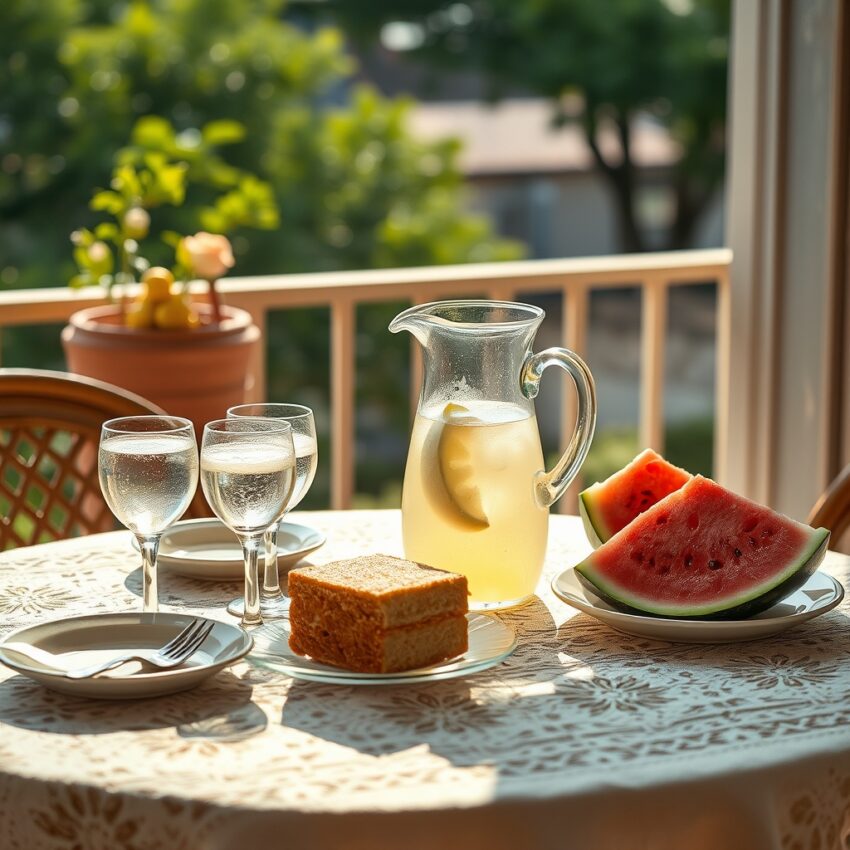
İlk lokmada çocukluğu hatırlatan şey yalnız tat değildir; eşlik eden atmosferdir. Limonatanın buğulu bardağı, balkon kapısından gelen sıcak rüzgâr, mutfakta çalışan vantilatör sesi, masadaki dantel örtü, tabakta bekleyen dilim kek ya da incecik kesilmiş karpuz, bellekte birlikte yer eder. Çocuk o saatlerde oyunun içinden kısa süreliğine eve döner; dizinde toz, alnında ter, elinde hâlâ dışarının aceleciliği vardır. Ama bardak dudağa değdiği anda gün yumuşar. İlk lokma ve ilk yudum, dış dünyanın hızından eve ait bir serinliğe geçiş gibidir. İşte bu geçiş duygusu, yıllar sonra bile aynı tadı alınca insanın içinde aniden belirir.
Gündelik hayatın ayrıntıları eski mutfak kültürünün nasıl yaşadığını burada açıkça gösterir. Bazı evlerde limonata nane yaprağıyla sunulur, bazı evlerde içine birkaç damla gül suyu katılır, kimi sofrada yanında tuzlu çörek olur, kimi evde reçelli kurabiye. Buz her zaman bol olmayabilir; ama sürahinin üstüne örtülen ince bezle serinlik korunmaya çalışılır. Anneler ya da anneanneler, “önce bir şey ye, sonra dışarı çıkarsın” derken sadece açlığı değil, günün dengesini de yönetirdi. Mutfak, ikindiyi boş bir ara saat olarak değil, toparlayan bir zaman parçası olarak kurardı. Bu yüzden limonatalı yaz ikindisi, lezzetten çok bir ev düzeninin hafızasını taşır.
Bugün benzer bir içecek ya da ilk lokma neden hâlâ çocukluğu hatırlatıyor sorusunun cevabı da burada saklıdır. Çünkü bazı tatlar, yalnız tarif olarak değil, bir yaşam düzeni olarak hafızaya kaydolur. Limonata; mevsim bilgisi, ev içi özen, misafirlik geleneği ve çocuk dönüşünü hesaba katan mutfak aklıyla birlikte yaşar. Eski mutfak kültürünü bugün de yaşatan şey, belki tam olarak aynı masayı kurmak değil; o özenin mantığını sürdürmektir. Serinletmek, karşılamak, eldeki malzemeyle incelik kurmak ve günü küçük bir sofra etrafında yumuşatmak. Bu yüzden limonatalı yaz ikindisi, ilk lokmada çocukluğu hatırlatırken aynı anda geçmişten gelen bir mutfak terbiyesini de bugüne taşımayı sürdürür.
🇬🇧 English | Childhood Cooled in a Glass of Lemonade and the Memory of the Kitchen
There was a time when summer afternoons were remembered through a cool preparation that began in the kitchen just as the sun grew heavy. Lemon peels gathered on the counter, sugared water rested in a glass pitcher, and a fresh scent spread through the room while slices of cake, cookies, or simple fruit desserts were carried to a shaded table. A summer afternoon with lemonade was not merely a pause to quench thirst. It was the household’s way of answering heat. For a child, that hour meant being called in from play, reaching toward a glass with dusty and sweaty hands, and tasting the cool kindness of home in the first bite. That is why a similar flavor can still bring childhood back at once today. The taste belongs not only to the tongue, but to the emotional atmosphere of the whole hour.
From the perspective of taste memory, afternoons with lemonade reveal the simple yet attentive character of old kitchen culture. Before packaged drinks, ready-made snacks, and quickly assembled tables took over, the home kitchen created small seasonal rituals. When summer arrived, pitchers of water were kept cool, lemon zest was saved for jam or dessert, glasses were chilled in advance, and the accompanying afternoon foods were prepared according to what the house already had. The richness here did not come from abundance, but from thoughtful simplicity. To build a refreshing table with modest ingredients was one of the strongest skills of the old kitchen. Lemonade was the drink-form of that skill.
What recalls childhood in the first bite is therefore not taste alone, but the atmosphere surrounding it. The misted glass of lemonade, the warm breeze through the balcony door, the sound of a fan working in the kitchen, the lace cloth on the table, and the slice of cake or thin-cut watermelon waiting beside the glass all settle into memory together. At that hour the child returns briefly from the world of play, still carrying its dust on the knees, sweat on the forehead, and urgency in the hands. Yet the moment the glass touches the lips, the day softens. The first bite and the first sip become a passage from the speed of the outside world into the cooling shelter of home. That feeling of transition rises unexpectedly even years later when the same taste appears again.
The details of everyday life show very clearly how old kitchen culture stays alive in this memory. In some homes the lemonade was served with mint leaves; in others a few drops of rose water were added. One table offered savory pastry beside it, another placed jam-filled cookies nearby. Ice was not always plentiful, yet a thin cloth wrapped around the pitcher tried to preserve the coolness. Mothers and grandmothers saying, “eat something first, then you can go back outside,” were not managing hunger alone, but the balance of the day itself. The kitchen treated afternoon not as an empty gap between hours, but as a moment to gather everyone again. For that reason, a summer afternoon with lemonade carries the memory of a domestic order as much as it carries flavor.
The answer to why a similar drink or first bite can still recall childhood so strongly lies exactly here. Some tastes are stored not merely as recipes, but as ways of living. Lemonade survives together with seasonal knowledge, domestic care, hospitality traditions, and the kitchen intelligence that anticipates the child’s return. What keeps old kitchen culture alive today may not be recreating the exact same table, but preserving the logic of that care: cooling, welcoming, making something graceful from what is already at hand, and softening the day around a small table. That is why the summer afternoon with lemonade recalls childhood in the first bite while also carrying an older kitchen discipline gently into the present.
🇧🇷 Português (Brasil) | A Infância Refrescada num Copo de Limonada e a Memória da Cozinha
Houve um tempo em que as tardes de verão eram lembradas por uma preparação fresca que começava na cozinha quando o sol ficava mais pesado. Cascas de limão se acumulavam sobre a bancada, a água com açúcar descansava na jarra de vidro e um cheiro leve tomava o ambiente enquanto fatias de bolo, biscoitos ou doces simples de fruta eram levados para uma mesa sombreada. A tarde de verão com limonada não era apenas uma pausa para matar a sede. Era o modo como a casa respondia ao calor. Para a criança, essa hora significava ser chamada de volta da brincadeira, estender a mão suada e empoeirada para o copo e provar no primeiro pedaço a gentileza fresca do lar. É por isso que um sabor semelhante ainda hoje pode trazer a infância de volta de repente. Esse gosto pertence não só ao paladar, mas ao clima emocional da hora inteira.
Do ponto de vista da memória do sabor, as tardes com limonada revelam muito bem o lado simples e cuidadoso da antiga cultura da cozinha. Antes das bebidas prontas, dos lanches industrializados e das mesas montadas e desmontadas com pressa, a cozinha doméstica criava pequenos rituais de estação. Quando chegava o verão, as jarras eram mantidas frias, as raspas de limão eram guardadas para geleia ou sobremesa, os copos eram resfriados antes e os acompanhamentos da tarde eram preparados conforme o que já havia em casa. A riqueza aqui não vinha da abundância, mas da simplicidade pensada. Montar uma mesa refrescante com poucos ingredientes era uma das maiores habilidades da antiga cozinha. A limonada era a forma líquida dessa habilidade.
O que faz a infância voltar logo na primeira mordida não é apenas o sabor, mas a atmosfera ao redor dele. O copo embaçado de limonada, o vento quente entrando pela porta da varanda, o som do ventilador na cozinha, a toalha rendada sobre a mesa e a fatia de bolo ou a melancia cortada fina ao lado do copo ficam guardados juntos na memória. Nessa hora, a criança retorna por um instante do mundo da brincadeira, ainda com poeira no joelho, suor na testa e pressa nas mãos. Mas no momento em que o copo toca os lábios, o dia amolece. A primeira mordida e o primeiro gole se tornam uma passagem da velocidade do lado de fora para o abrigo fresco da casa. Esse sentimento de transição reaparece de repente mesmo muitos anos depois, quando o mesmo gosto volta.
Os detalhes da vida cotidiana mostram com clareza como a antiga cultura da cozinha continua viva nessa lembrança. Em algumas casas a limonada era servida com folhas de hortelã; em outras, recebia algumas gotas de água de rosas. Numa mesa havia um salgado ao lado; noutra, biscoitos recheados com geleia. Gelo nem sempre existia em abundância, mas um pano fino enrolado na jarra tentava conservar o frescor. Quando mães ou avós diziam “coma primeiro, depois você volta para fora”, elas não cuidavam apenas da fome, mas do equilíbrio do dia. A cozinha não tratava a tarde como um intervalo vazio, e sim como um momento de reunir a casa de novo. Por isso, a tarde de verão com limonada carrega tanto a memória de uma ordem doméstica quanto de um sabor.
É exatamente aí que está a resposta para o motivo de uma bebida parecida ou de uma primeira mordida ainda hoje fazer lembrar tão fortemente a infância. Certos sabores ficam guardados não apenas como receita, mas como forma de viver. A limonada permanece junto do saber das estações, do cuidado doméstico, da tradição de receber e da inteligência da cozinha que antecipa a volta da criança. O que mantém viva a antiga cultura da cozinha hoje talvez não seja repetir a mesa exatamente igual, mas preservar a lógica desse cuidado: refrescar, acolher, criar delicadeza com o que se tem e amaciar o dia em torno de uma pequena mesa. Por isso, a tarde de verão com limonada faz a infância voltar na primeira mordida e, ao mesmo tempo, continua trazendo com suavidade uma antiga disciplina da cozinha para o presente.